The Ultimate Playbook: Your Guide to Korean Hiking Culture and the Summit ‘Peak-nic’
If you’ve spent any time watching Kdramas, you’ve definitely noticed something: Koreans love their mountains. It might seem surprising for a country not known for its sheer size, but South Korea is approximately 70% mountainous. The best part? These mountains aren’t tucked away in remote areas; they are literally right next to major cities like Seoul and Busan. This makes hiking not just a demanding exercise, but a core part of the klifestyle, perfectly combining physical challenge, history, and a unique social experience. If you visit Korea, you absolutely should carve out a day to immerse yourself in this culture.
For visitors, tackling a mountain near the capital is an absolute must. Unlike parks in other countries, Korean mountains are cultural treasures. Almost every major peak features an ancient, beautiful temple nestled on its slopes, some with histories spanning over 1,000 years. This means you get a challenging workout, a deep dive into history, and a moment of zen all in one trip. It truly is the ultimate Korean cultural hack. *For a more serious and comprehensive guide to hiking in Korea, please refer to ‘Hiking in Korea: The Complete Guide for Foreign Travelers‘.
The Tradition: Fueling the Climb with a ‘Peak-nic’
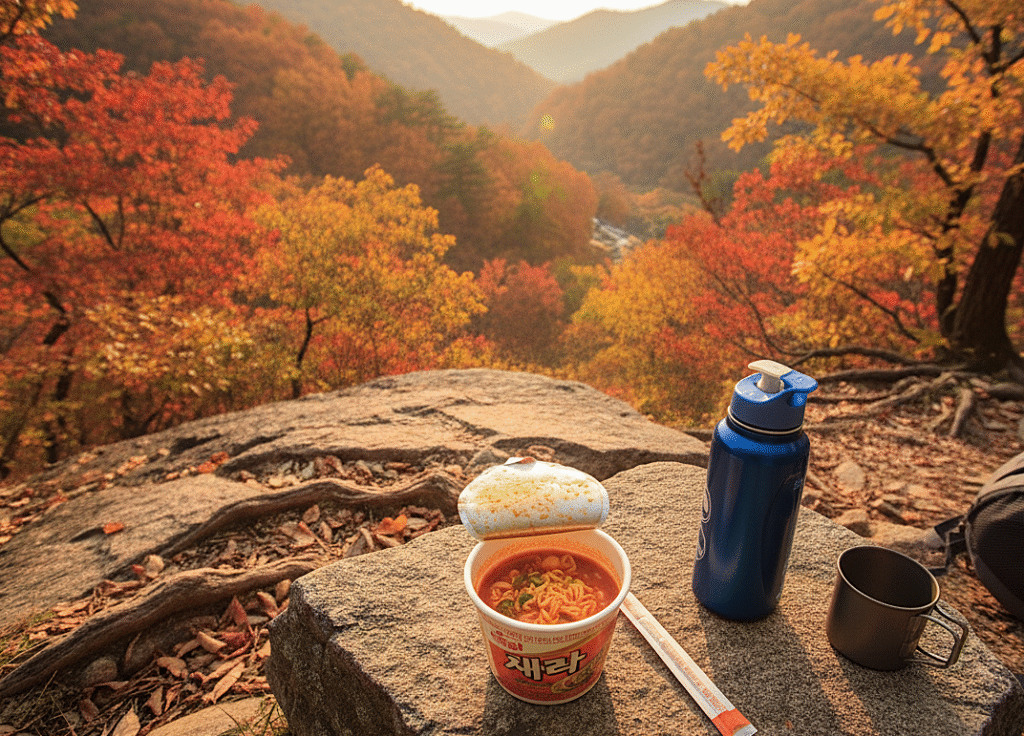
The journey up the mountain is only half the experience; the culinary reward at the summit is the other half. Koreans don’t rely on expensive, pre-packaged hiking meals. Instead, the tradition is a self-made “Peak-nic” (peak + picnic). This summit feast is a non-negotiable part of the adventure you need to try.
As you approach the trailhead, you’ll see people buying pre-made snacks or packing favorites from home.
Essentials for Your Summit Feast
- Gimbap (김밥) 🍙: This is the undefeated champion of hiking food. These seaweed rice rolls are easy to pack, filling, and delicious when eaten in the cold mountain air. Make sure to grab one from a convenience store or a specialty gimbap-jeonmunjeom near the subway station.
- Fresh Produce: Many Koreans bring simple, refreshing snacks like sliced cucumbers, apples, or tangerines. These provide hydration and a clean taste after a long climb.
- The Hot Treat (Optional): While not the main focus, some ambitious hikers do bring a small thermos of hot water to prepare a cup of ramyeon at the summit. If you can manage the thermos, try the piping hot ramyeon for an unforgettable experience.
You may even spot vendors on very popular, high-traffic mountains near Seoul during the summer, sometimes selling icy treats or beverages near the summit—a surprising, welcome sight after a challenging ascent!
Seoul’s Signature Peaks: High Challenge & Grand Views
For travelers seeking a genuinely intense workout and breathtaking panoramic views of the entire city, these three mountains—easily accessible by subway—are Seoul’s signature granite giants. However, be warned: though their elevations may not seem extreme (around 800m), the trails are rugged, steep, and demanding. Proper gear is non-negotiable.
- Bukhansan (북한산): Located right inside Seoul, this National Park is the most famous. Its steep granite ridges and sheer rock faces require concentration and good footwear. It’s perfect for the traveler who wants to claim they conquered a mountain right in the heart of the capital.
- Dobongsan (도봉산): Located just north of Seoul, often considered part of the larger Bukhansan area. It’s known for its dramatic rock formations and temples, offering equally challenging—and often less crowded—routes than its neighbor.
- Gwanaksan (관악산): Located south of the Han River, this mountain offers spectacular views over the southern districts of Seoul. The difficult climb is rewarded by the iconic Yeonjudae Peak (연주대), a small hermitage perched precariously on a rocky ledge, providing one of the most stunning photo opportunities in the region.
🌳 Accessible City Trails: History, Walls, and Views
If a full 800m climb is too much for your schedule or skill level, Seoul offers a fantastic network of lower mountains and trails that still provide great exercise, beautiful views, and a taste of nature and history without the same intensity. These are perfect for a half-day trip or an easier walk.
- Namsan (남산): The most famous, known for the N Seoul Tower. The hike is largely paved, easy, and offers the best night view of the city center.
- Inwangsan (인왕산): A short, steep hike known for its rock formations and incredible views of the Blue House, Gyeongbokgung Palace, and the surrounding city. It is often combined with a walk along the historic Seoul City Wall.
- Bugaksan (북악산): Part of the Seoul City Wall trail, this is the mountain directly behind the Blue House. It was restricted for decades and now offers a fascinating walk with restored wall sections and stunning historical views.
- Achasan (아차산): Located in Eastern Seoul, known for its gentle trails and fantastic views of the Han River and Lotte Tower. It’s a popular spot for locals to watch the sunrise.
- Ansan (안산): Known for its “Jarak-gil” (둘레길, loop trail), which is a largely flat, wooden deck trail built around the mountain, making it extremely accessible for all ages.
⚠️ Gear and Safety: The Non-Negotiable Rules
Korean mountains, especially the high peaks with granite rock, demand respect. Proper preparation is essential to avoid injury and ensure a pleasant experience.
- Proper Footwear: The granite terrain is tougher than it looks. Please, do not hike in casual sneakers. Wear hiking boots or sturdy running shoes with excellent grip. The terrain is often steep and potentially slippery.
- Layered Clothing: You will sweat intensely hiking up, but the summits are windy and cold, especially when you stop to eat. Wear layers: a t-shirt, a fleece, and a windproof/waterproof shell.
- Trail Confirmation: Check the trail map, the estimated time for ascent and descent, and note your starting and finishing points before you begin.
⚠️ WINTER WARNING: CRAMPONS (아이젠 – ‘Eisen’)
If you are hiking anytime in the winter or when trails are icy (typically December through February), you MUST have simple, stretchy rubber-and-chain crampons that pull on over your shoes. You can buy them cheaply at convenience stores or from vendors near the base of major mountain subway stations. Do not risk injury by hiking on icy paths without them.
🎉 The Post-Hike Party: Makgeolli and Pajeon
The experience doesn’t end when you get back down. Koreans often hike together—with friends, family, or clubs—and the collective effort demands a collective reward. This is the tradition of dwit-pool-ee (뒷풀이, a celebratory get-together). Trust me, this is the perfect cultural capstone to your hike.
After finishing a demanding hike, the tradition is to visit a nearby restaurant at the base of the mountain. These restaurants specialize in simple, comforting traditional Korean foods that perfectly pair with Makgeolli (막걸리), a milky Korean rice wine.
The classic post-hike dishes include:
- Pajeon (파전) or Kimchi Jeon (김치전): Savory Korean pancakes, crispy on the edges.
- Gamja Jeon (감자전): Potato pancake.
- Dotori Muk (도토리묵): Acorn jelly salad, usually served with a savory, spicy dressing.
Due to this strong tradition, you will find a high concentration of restaurants catering specifically to hikers near the entrance of every major mountain. It’s the perfect way to cap off your experience and soak in the authentic klifestyle.
My Final Thoughts
Hiking in Korea is not just a sport—it’s an authentic cultural experience that connects you directly to the country’s landscape and its people’s spirit. From the moment you pick up your gimbap at the convenience store to the final toast with Makgeolli and Pajeon, you are participating in a beloved local ritual.
So, on your trip to Seoul, make sure you don’t just admire the mountains from afar. Pack your sturdy shoes, brave a climb on Bukhansan or Inwangsan, enjoy your summit ‘Peak-nic’ of gimbap and fresh fruit, and cap the day off with a well-earned *dwit-pool-ee*. It will undoubtedly be one of the most rewarding and authentic memories you take home.
Korean Culture portal KCulture.com
Join the mailing service and add to your favorites.

Founder of Kculture.com and MA in Political Science. He shares deep academic and local insights to provide an authentic perspective on Korean history and society.