Hello, world! It’s Min again, your local Korean culture enthusiast and food expert!
Lately, I’ve been seeing so many of my international friends posting pictures of Kimchi or trying “Gochujang pasta” on social media. It makes my heart swell with pride! Did you know that in 2023, Korean fermented food exports hit record highs? From New York to London, people are falling in love with the deep, complex “Umami” that only time and microorganisms can create.
As someone who spent years mastering the delicate balance of Korean flavors for my culinary certifications, I want to take you on a journey beyond just “salty” or “spicy.” We are going into the world of Fermentation—the soul of Korean cuisine. Grab a cup of tea, and let’s explore why Korean fermented food is a literal life-saver!
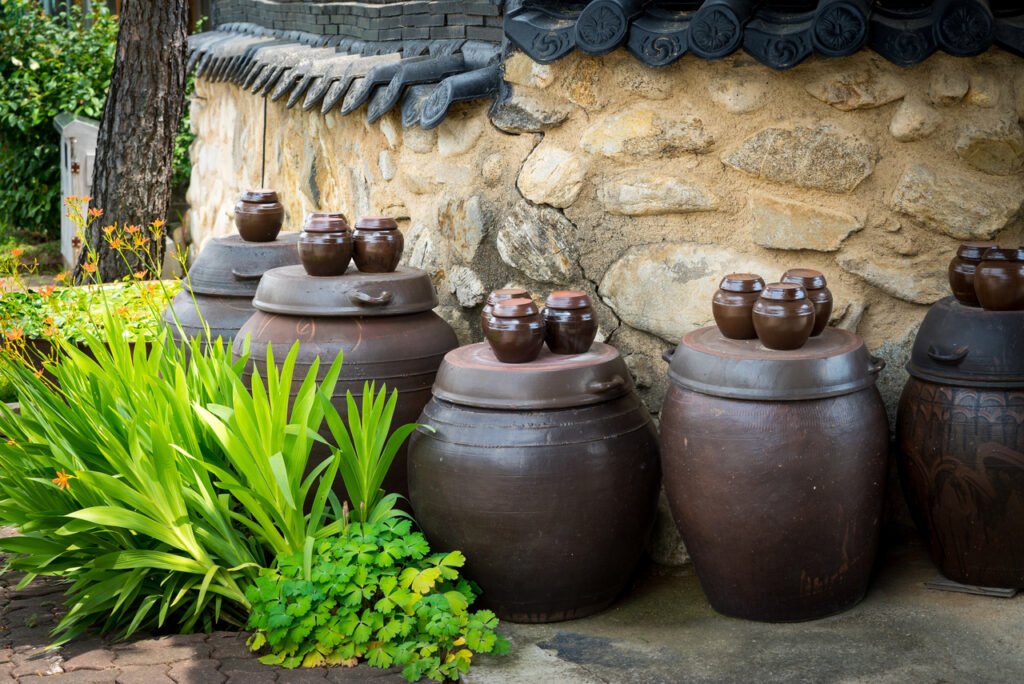
1. The Science of Life: What is Fermentation?
Before we eat, let’s talk science (but the fun kind!). You might wonder, “Min, what’s the difference between fermented food and spoiled food?” It’s all about the intention! Fermentation is a process where “good” microorganisms (like bacteria, yeast, or mold) break down organic matter using their enzymes.
- Fermentation: Creates something useful, delicious, and healthy (like yogurt or Kimchi).
- Rotting (Putrefaction): Creates foul smells and harmful toxins.
In Korea, we have harnessed the power of lactic acid, acetic acid, and amino acid fermentation for thousands of years. This process doesn’t just preserve food; it creates new nutrients, vitamins, and flavors that didn’t exist in the raw ingredients. It turns a simple soybean into a nutritional powerhouse!
2. A Legacy of Health: The History and Power of “Jang”
Korea has always been an agricultural society. Our ancestors needed a way to keep nutrients alive through the harsh, freezing winters. This led to the birth of Jang (fermented sauces) and Kimchi.
The history goes way back! Records from the Samguk-ji (3rd Century) and Samguk-Sagi (683 AD) mention fermented soy and jerky. For a Korean household, making Jang was the most important event of the year. We even used to choose “auspicious days” (Lucky Days) to start the fermentation to ensure the best flavor!
Why is it so good for you?
- Vascular Health: Soy-based ferments are rich in linolenic acid, which helps prevent skin diseases and clears your blood vessels.
- Brain Power: The lecithin in soybeans boosts memory and concentration—perfect for students!
- Gut Harmony: Fermented foods are packed with probiotics (good bacteria). They are like a spa day for your digestive system, boosting your immunity and even improving your mood.
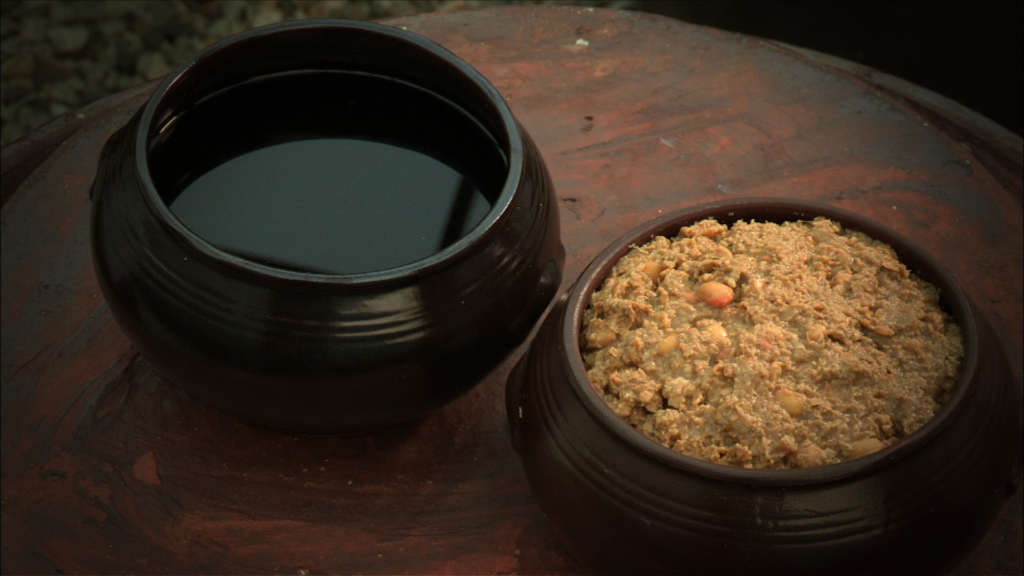
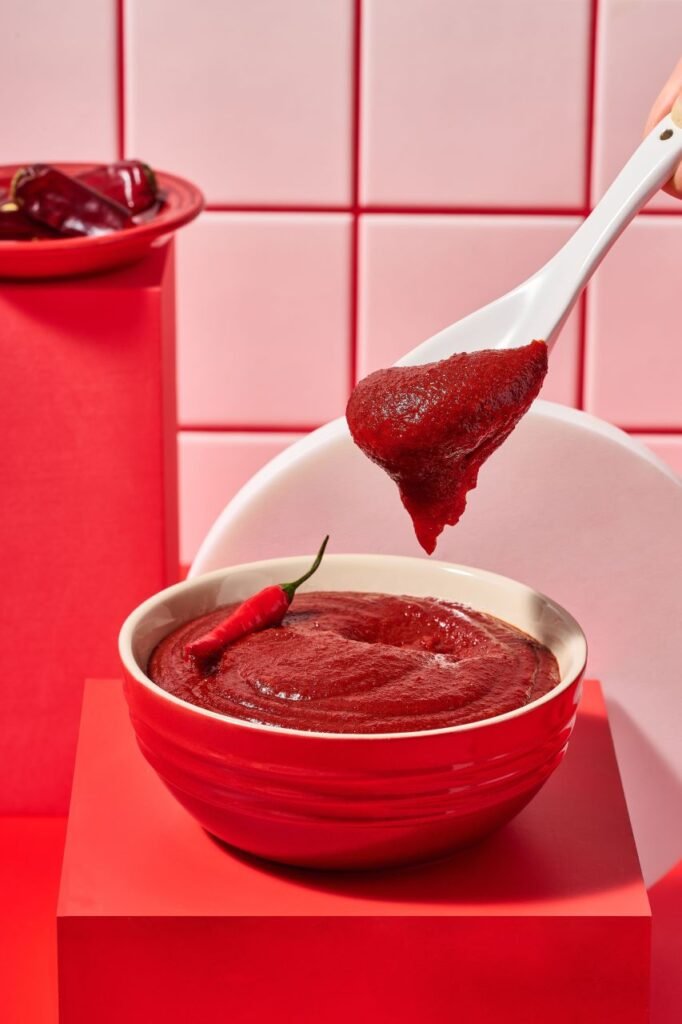
3. Meet the Stars: Korea’s Fermented Hall of Fame
🟤 Doenjang (Fermented Soybean Paste)
If Tofu is “White Gold,” Doenjang is “Brown Diamond.” It’s made by fermenting boiled soybeans into blocks (Meju) and soaking them in brine.
- The Flavor: Deep, earthy, and nutty.
- The Benefit: It has higher protein absorption than plain soybeans because the microbes have already “pre-digested” the protein into amino acids. It’s also rich in antioxidants that help slow down aging.
🔴 Gochujang (Fermented Chili Paste)
This isn’t just “hot sauce.” It’s a complex mix of chili powder, glutinous rice, fermented soy powder, and salt.
- The Flavor: A perfect balance of spicy, sweet, and savory.
- The Benefit: The Capsaicin from the chilies boosts metabolism (great for weight management!) and strengthens the immune system.
⚫ Ganjang (Soy Sauce)
The liquid gold of Korean cooking! We categorize it by age:
- Light Ganjang (1-2 years): Salty and clear, used for soups.
- Medium Ganjang: Great for stir-fries and seasoned vegetables.
- Jin-ganjang (5+ years): Dark, sweet, and thick. It’s used for premium dishes like Abalone-cho. Imagine the patience required to wait 5 years for a sauce!
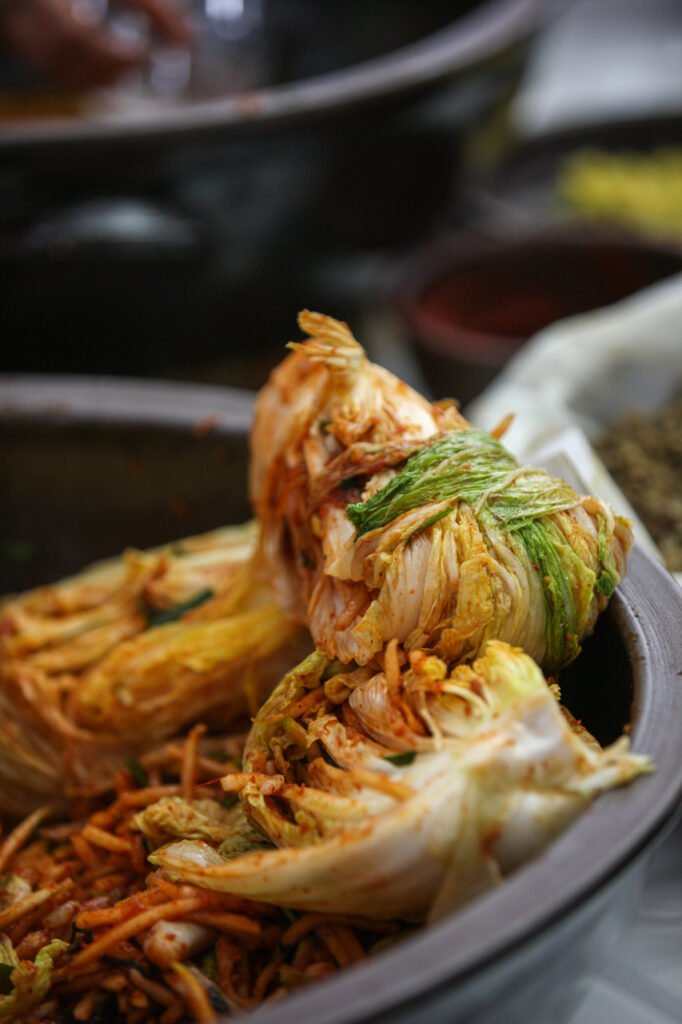
🥬 Kimchi (The Icon)
The world’s favorite superfood! When cabbage and radish meet garlic, ginger, and scallions, a fermentation miracle happens.
- The Health Factor: The Allicin in garlic is an anti-cancer warrior, while the Sitosterol in cabbage lowers cholesterol. It’s a probiotic bomb that keeps your gut flora happy and healthy.
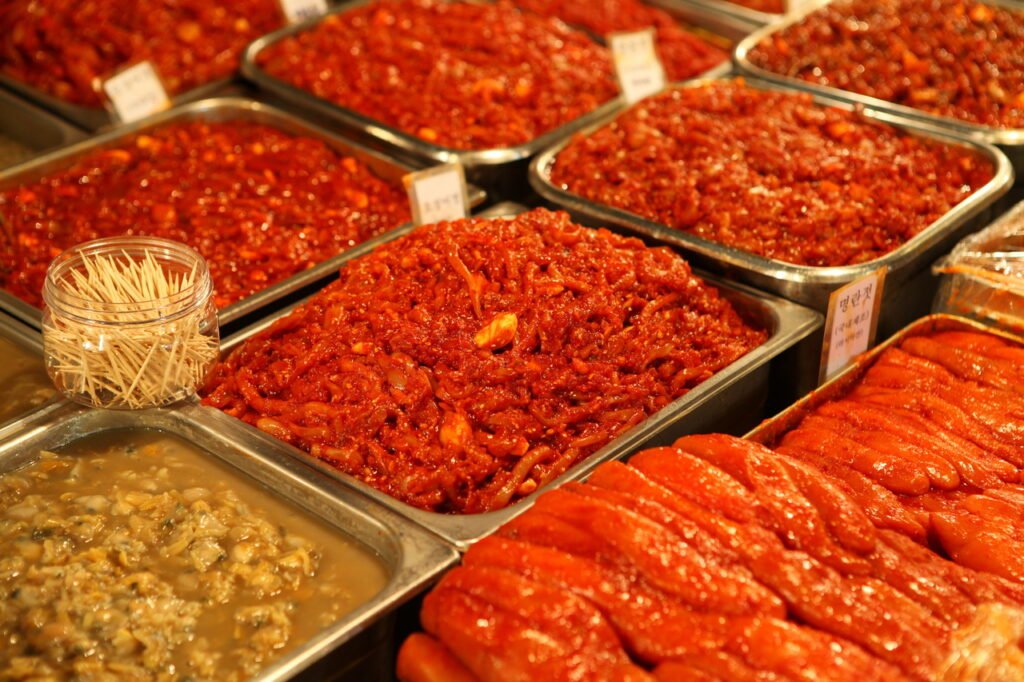
🦐 Jeotgal (Salted Seafood)
For those who love a savory punch! We ferment shrimp, oysters, or anchovies in salt.
- The Flavor: It provides that “secret X-factor” in Korean dishes. It’s rich in essential amino acids and incredibly easy for the body to absorb.
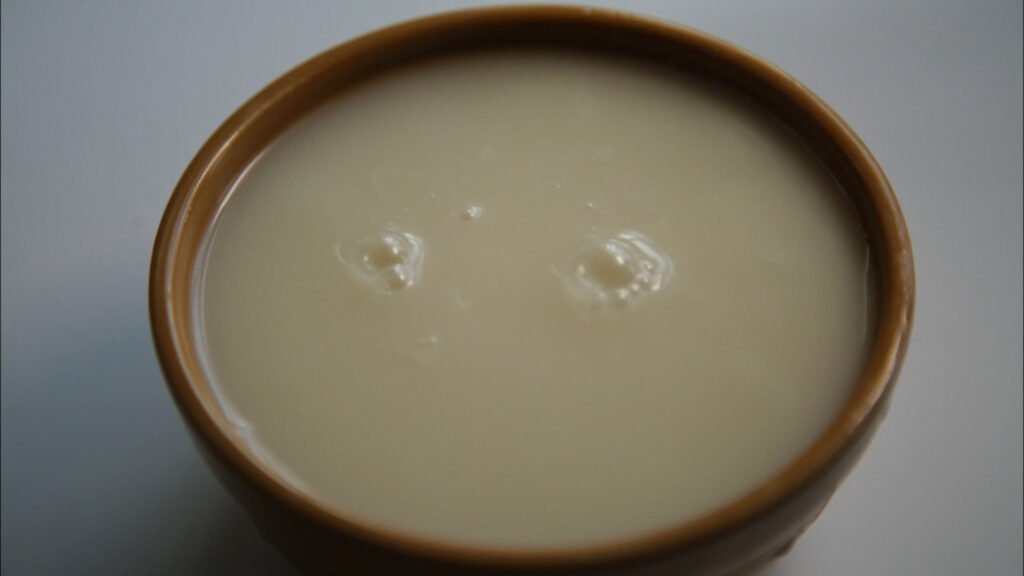
🍶 Fermented Vinegar & Rice Wine
Korean natural vinegars (made from brown rice or fruits) are “nature’s fatigue relievers.” They prevent the buildup of lactic acid in your muscles (the stuff that makes you feel tired). And don’t forget Makgeolli (Cloudy Rice Wine)—a fizzy, tangy drink that is actually a “living” probiotic beverage!
4. Min’s Cozy Kitchen: Zucchini & Tofu Doenjang-jjigae
(Perfect for 1 Person)
Ready to try it? This is the most iconic “Home Food” (Jip-bap) in Korea. It’s warm, savory, and smells like a hug from a Korean grandmother.
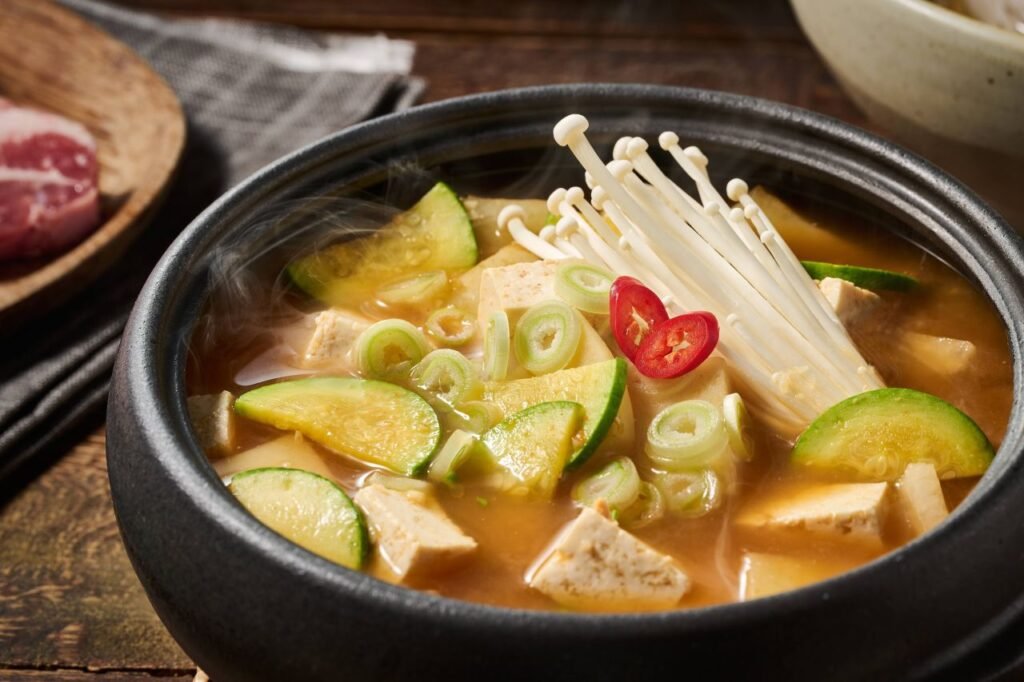
Ingredients:
- The Base: 1.5 cups of water (even better if it’s anchovy/kelp broth!)
- The Soul: 1.5 tbsp Doenjang (Soybean paste)
- The Body: 1/4 Zucchini (sliced into half-moons), 1/4 block of Firm Tofu (cubed)
- The Aromatics: 1/4 onion (chopped), 1 clove garlic (minced), a bit of green onion.
- The Kick: 1/2 tsp Gochugaru (optional)
Instructions:
- The Broth: Bring your water to a boil. Add the Doenjang through a small strainer to make the soup silky smooth.
- The Veggies: Add the onions and zucchini. Let them dance in the boiling broth for about 3 minutes until they soften.
- The Tofu: Gently slide in your tofu cubes and minced garlic. Be careful not to break the tofu!
- The Finish: Let it bubble for 2 more minutes. Throw in the green onions and a sprinkle of Gochugaru for color.
- Serve: Best enjoyed with a bowl of steaming hot white rice. Pour a spoonful of soup over the rice, mash a bit of tofu into it, and enjoy!
Korean fermentation is a gift from the past to the future. It’s about waiting, breathing, and nurturing life within our food. Next time you see a jar of Kimchi or a tub of Doenjang, remember—it’s not just a condiment; it’s a living masterpiece!

A certified Korean chef and baker. Min shares authentic tastes of Korea, from hidden local gems to traditional recipes and everyday lifestyle.