Hello there! I’m Min, your local guide. As someone who holds certifications in both Korean cuisine and professional baking, I spend a lot of time thinking about how ingredients transform from simple earth-born treasures into dishes that heal the soul.
Lately, I’ve noticed something wonderful while walking around Insadong or visiting mountain temples. I see more and more of my international friends seeking out Korean Temple Food (Sachal Eumsik). It’s no longer just a “monk’s meal”; it has become a global sensation for anyone craving a mindful, healthy, and deeply flavorful lifestyle.
Today, I’m taking you on a delicious journey into the world of temple food. Grab a cup of warm tea, and let’s dive in! 🍵✨

1. What Exactly is Temple Food? (Beyond Just “Vegan”)
When we talk about Temple Food, we aren’t just talking about “vegetarianism.” In Korea, temple food refers to the cuisine developed over 1,700 years within Buddhist temples.
But here’s the secret: It’s more than just a diet. It’s a spiritual practice. Every step—from growing the vegetables to washing the rice and even cleaning the bowl—is considered a form of meditation. We believe that the energy of the person cooking flows into the food, and the energy of the food flows into the body. It’s the ultimate “slow food” that respects all living beings.
2. The Unique Characteristics: No Garlic? No Problem!
If you’ve ever had Korean BBQ, you know we love our garlic and onions. But in a temple kitchen, you won’t find them! Temple food follows two major rules:
The Ban on ‘Osinchae’ (Five Pungent Herbs)
Temple food strictly excludes five specific ingredients: Garlic, Green Onions, Chives, Korean Wild Chives and Asafetida. Why? In Buddhism, these are believed to create too much “heat” or “energy” in the body, which can interfere with calm meditation.
- The Flavor Magic: Without these strong aromatics, the natural, subtle flavors of the vegetables themselves—like the earthy sweetness of a mountain radish or the floral scent of a perilla leaf—really shine through.
Natural Seasonings Only
Forget MSG or heavy artificial additives. We use:
- Fermented sauces: Soy sauce aged for decades (the “liquid gold” of Korea) and soybean paste (Doenjang).
- Powdered magic: Dried shiitake mushrooms, kelp, and perilla seeds provide that deep, savory umami that makes you forget there’s no meat!

3. A Taste of History: 1,700 Years in the Making
Korean Temple Food dates back to the Three Kingdoms period when Buddhism first arrived in Korea. It flourished during the Goryeo Dynasty (the golden age of Buddhism) but remained a humble, hidden treasure during the Joseon Dynasty.
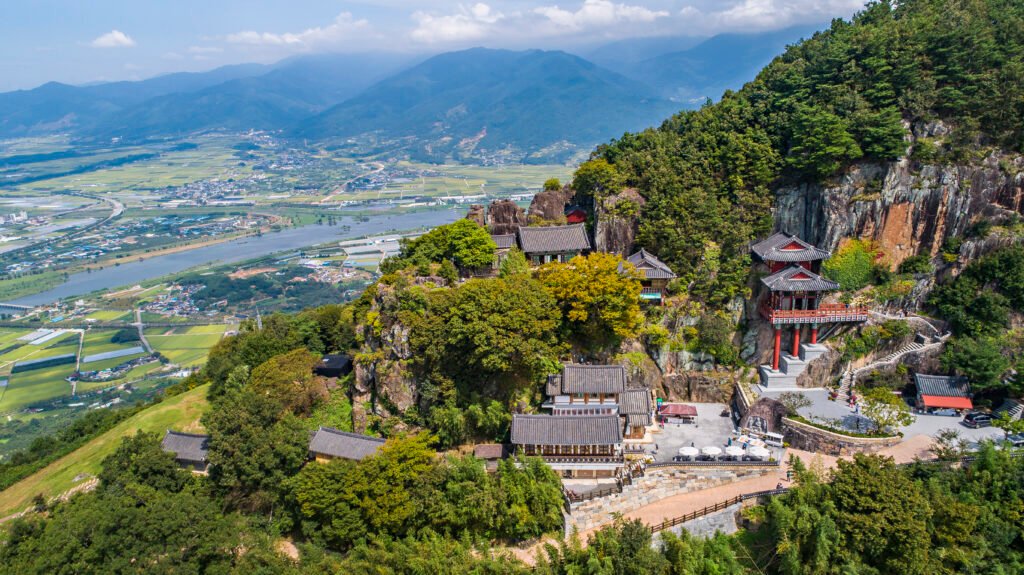
Historically, temples were located deep in the mountains. This meant monks had to be masters of preservation. They learned to dry mountain herbs, ferment vegetables for the winter, and pick wild greens (Namul) that most people wouldn’t even recognize as edible. Today, this ancient wisdom is being hailed as the pinnacle of sustainable eating.
4. Balwoo Gongyang: The Art of Mindful Eating
Have you ever finished a meal and realized you didn’t even taste it? Balwoo Gongyang is the antidote to that.
Balwoo Gongyang is a traditional Buddhist meal ritual practiced by monks and nuns. It is eaten in silence using special bowls called balwoo.
The meal teaches mindfulness, gratitude, and not wasting food. Each movement is calm and respectful, turning eating into a form of meditation. Through this practice, people learn simplicity and appreciation for all life.
- Gratitude: Before eating, you contemplate the hard work of the farmers and the nature that provided the meal.
- No Waste: You take only what you need.
- The Final Step: After finishing the meal, you pour a bit of warm water into your bowl, use a piece of yellow radish to “scrub” the remaining crumbs, and drink that water. It sounds intense, but it symbolizes leaving no trace and wasting nothing of the earth’s gifts. It’s incredibly grounding!

5. Meet the Masters: The Guardians of Flavor
The Korean Buddhist tradition honors “Masters of Temple Food.” While many monks are incredible cooks, a few have become global icons:
- Ven. Seonjae: The first recognized master, known for her deep knowledge of fermented sauces.
- Ven. Gyeho, Ven. Jeokmun, Ven. Daean, and Ven. Woogwan: Each brings a unique artistic flair to temple cuisine.
The Rock Star: Venerable Jeong Kwan
You might recognize her from Netflix’s Chef’s Table. Ven. Jeong Kwan lives at Baekyangsa Temple. She doesn’t have a restaurant or a Michelin star, but the world’s top chefs travel to Korea just to learn from her.
She treats ingredients like living beings. Watching her make Shiitake Mushrooms Braised in Grain Syrup is like watching a master painter. The mushrooms become glossy, chewy, and burst with a woody sweetness that feels like a hug from the forest. She famously said, “I am not a chef, I am a monk.” That humility is the secret ingredient in her food.

6. Ready to Try? Join a Cooking Class in Seoul!
You don’t have to hike up a mountain to experience this! If you’re visiting Seoul, I highly recommend the Korean Temple Food Center. It’s located right in Ankuk-dong, near the famous Gyeongbokgung Palace.
Experience Details:
- Where: 2F, New Building, Anguk Bldg, 39 Yulgok-ro, Jongno-gu, Seoul.
- Programs: Tea & Traditional Snacks: Usually around 10,000 KRW.
- One-day Cooking Class: Around 20,000 KRW (very affordable for the quality!).
- Website (English): koreatemplefood.com/EN
- Bookings: Short-term Experience List
Min’s Closing Thought 🌿
In a world that’s constantly moving at 100 mph, temple food asks us to slow down. Whether it’s a bowl of steaming Yeonip-bap (rice steamed in a lotus leaf) or a simple dish of seasoned mountain greens, this food is about kindness—to yourself and the planet.


A certified Korean chef and baker. Min shares authentic tastes of Korea, from hidden local gems to traditional recipes and everyday lifestyle.