I mean, when you think of Korean music, your mind probably jumps straight to K-Pop, right? And honestly, who could blame you? It’s phenomenal! But let me tell you, there is a whole, deep, and incredibly soulful world of Korean music that you absolutely need to explore: it’s called Gugak (국악). It’s Korea’s traditional music, and it carries the weight of centuries of history and emotion. I recently had an experience at the National Gugak Center in Seoul, and honestly, it was breathtaking. It felt like stepping back in time, yet the music was so vivid and alive! You know, it’s not just music; it’s storytelling, history, and pure, raw Korean spirit. This is your essential guide for a Traditional Culture deep dive.
- What Exactly is Gugak? The Umbrella of Korean Music
- The Sounds You’ve Already Heard: Gugak in the Global Spotlight
- Pansori: The Epic Narrative from the People and Its Legacy
- Your Guide to the National Gugak Center: An Essential Playbook
- Finding Gugak Beyond Seoul and At Home
What Exactly is Gugak? The Umbrella of Korean Music
So, Gugak literally translates to “national music.” It’s an umbrella term for all the traditional music genres of Korea, developed over centuries in both the royal court and among the common people. Traditional Korean music is broadly classified into categories like Court Music (Jeongak), Folk Music (Minsokak), Ritual Music (Uisik Eumak), and contemporary adaptations (Changjak Gugak).
Unlike Western music’s equal temperament, Gugak uses a pentatonic scale (five main tones) and is famous for its unique rhythmic patterns, known as Jangdan, and its delicate ornamentation techniques, or Sigimsae. This is why it sounds so distinctive—it’s full of subtle nuances that really tug at your heartstrings.
Key Traditional Music Classifications
- Jeongak (Court Music): This is characterized by its elegant and refined nature, including music for court rituals (A-ak) and specific vocal genres (Ga-ak: Gagok, Gasa, Sijo). It also includes court music (Gungjung Eumak) and refined, elegant music (Jeongak).
- Minsokak (Folk Music): Expressing the lives and emotions of the common people, this group includes Pansori, Sanjo (instrumental solo), Minyo, and Nongak (farmers’ music).
- Uisik Eumak (Ritual Music): Music used for state or religious ceremonies, such as the Jongmyo Jeryeak (Royal Ancestral Rite Music).
- Changjak Gugak (Contemporary Traditional Music): New works created by blending traditional elements with modern sensibilities.
The Sounds You’ve Already Heard: Gugak in the Global Spotlight
As a local, I can tell you that Korea’s traditional sounds are constantly being reinterpreted and introduced through global media. Chances are, you’ve already experienced them firsthand.
The Majestic Power of Daechwita and Ritual Music
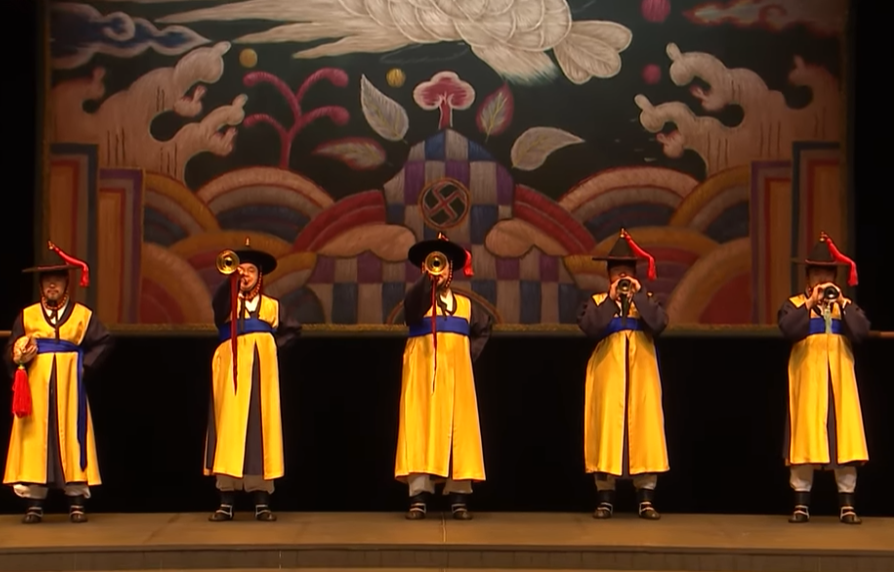
Have you ever heard the booming, powerful music of the military procession? That’s Daechwita. This form of instrumental music is played by an ensemble featuring brass and percussion. The unique sound of the Tae-pyeongso (a conical oboe) has recently garnered global attention, having been sampled and used by BTS member Agust D (Suga) in his solo track, also titled “Daechwita,” introducing this powerful traditional form to millions worldwide.
Another sound that connects the past and present is the solemn Jongmyo Jeryeak. This ritual music and dance, performed for the Royal Ancestral Rite, often appears in historical dramas and documentaries, embodying the profound solemnity of Korea’s heritage. The music’s dignity and slow tempo are unlike anything else you’ll hear.
Pansori: The Epic Narrative from the People and Its Legacy
If you want to feel the raw, passionate heart of Korea, you need to seek out Pansori (판소리). This is arguably Korea’s most dramatic vocal art, a long, musical storytelling performance done by a single vocalist (sorikkun) and a drummer (gosu). The vocalist narrates, sings, and acts out all the characters in an epic tale, often for hours! Pan means “a place where people gather” and sori means “sound.”
🎬 Pansori in Film: Seopyeonje To truly understand the soulful depth of Pansori, I highly recommend the classic 1993 Korean film Seopyeonje (서편제). It centers around a family of Pansori singers and powerfully captures the intense training, the sacrifice, and the profound emotional expression required of the art form, particularly the melancholic Southern-style folk music (Namdo Minyo).

Pansori’s Relationship with Drama and Vocal Art
The intense vocal training and dramatic expression inherent in Pansori laid the foundation for other related genres. Changgeuk (창극), a traditional Korean opera, is essentially Pansori performed by multiple singers acting out the roles. Furthermore, the vocal techniques and deep, expressive melodies often heard in historical K-Dramas (sometimes called Changga, meaning “song”) draw their roots from the folk vocal traditions of Pansori and Minyo. The controlled yet emotionally raw delivery of traditional singing is a direct lineage from this UNESCO-recognized art form.
Your Guide to the National Gugak Center: An Essential Playbook
If you’re in Seoul and want to experience Gugak firsthand, the National Gugak Center (국립국악원 / 2364 Nambusunhwan-ro Seocho-gu Seoul) is the premier place to go. Located in Seocho-gu, it’s an organization dedicated to preserving and developing Korean traditional music and dance, continuing a tradition that dates back to the Silla Dynasty! The center features performances by its different groups—the Court Music Orchestra, the Folk Music Group, the Dance Company, and the Contemporary Gugak Orchestra.
The Must-See: Saturday Gugak Concert
Seriously, if you only have time for one performance, make it the Saturday Gugak Concert (Tōyō Myeongpum, or ‘Extraordinary Encounter on Saturday’). It’s the perfect introduction as it combines several genres—singing, instrumental music, and traditional dance—on one stage.
- When: Every Saturday at 3:00 PM (Showtime is usually 70 minutes).
- Where: Umyeondang Hall, National Gugak Center.
- Program Variation: The performance content changes weekly! Check the official schedule, as the first Saturday of the month often features UNESCO World Intangible Cultural Heritage pieces (like a specific Pansori or Court Dance).
- Assistance: They often provide English-language subtitles or synopses for pieces, which is super helpful for following the dramatic narratives.
- Booking: You can usually book tickets directly through the official National Gugak Center website. Book in advance, especially for the popular Saturday show!
Finding Gugak Beyond Seoul and At Home
Gugak isn’t confined to Seoul. You can also visit the Gugak Museum on the premises of the National Gugak Center, which is a great starting point for understanding the instruments and history.
Furthermore, for those abroad, many countries host a Korean Cultural Center. These centers frequently offer opportunities to engage with Korean traditional music through performances, exhibitions, and educational programs. Checking their schedules is an excellent way to continue your Korean Culture Insight journey from home. If you want a complete Korean cultural experience that goes deeper than the surface, you have to witness Gugak. It’s the sound of Korea’s heart, you know?
Korean Culture portal KCulture.com
Join the mailing service and add to your favorites.

Founder of Kculture.com and MA in Political Science. He shares deep academic and local insights to provide an authentic perspective on Korean history and society.