Is Your Favorite K-Drama CEO Real? The Truth Behind Korea’s “Chaebol”
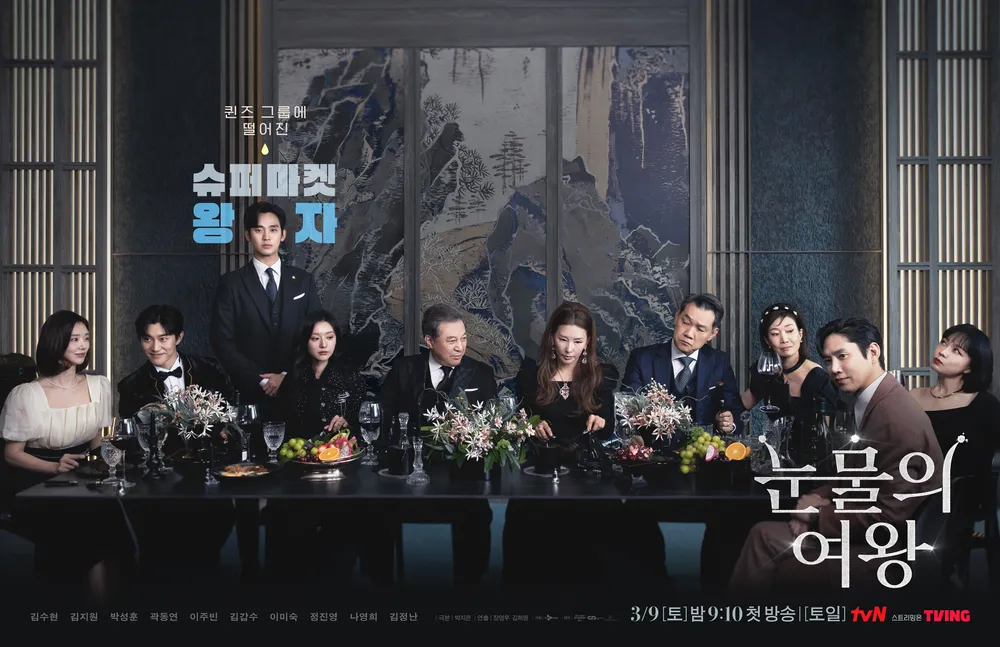
If you are a fan of K-dramas, you know the trope by heart: the cold, handsome heir to a massive business empire, wearing sharp suits and fighting for control over the company against envious siblings. We’ve seen it in global hits like Reborn Rich, Queen of Tears, and The Heirs.
But as a local living in Korea, I often get asked: “Are these stories real?”
The answer is a complicated “yes and no.” These business empires are called Chaebols (재벌). They are the giants that power the Korean economy—names you definitely know, like Samsung, Hyundai, and LG. But the reality of their history, their “octopus-style” expansion, and their dramatic family feuds is often stranger and more intense than fiction. Let’s dive deep into the real world of Korea’s corporate dynasties.
What Exactly is a “Chaebol”?
Before we get into the gossip, we need to define the term. The word “Chaebol” comes from the combination of the characters for “wealth” (jae) and “clan” (bol). Unlike Western corporations run by professional CEOs, Chaebols have a very specific characteristic:
💡 Definition: A Chaebol is a large industrial conglomerate that is run and controlled by an individual or a family. They own numerous international enterprises, but the decision-making power rests with the founding family.
While you might know them for smartphones or cars, these groups operate in a way we call “Octopus-style expansion” (Muneobal-sik). Just like an octopus reaching out its tentacles, a single Chaebol might own a construction company, a department store, a baseball team, an insurance firm, and even a bakery chain. This structure allows the Chairman and his family to maintain vast economic wealth and control over the entire group, even with a small percentage of direct ownership.
The Origin Story: Dictatorship and the “Miracle on the Han River”
To understand the power of the Chaebol, we have to look back at the 1960s and 70s. Following the Korean War, South Korea was one of the poorest nations on earth. Enter President Park Chung-hee.
Park’s military government pushed for rapid industrialization. However, the government had limited resources. Instead of spreading these resources thin, Park chose a strategy of “Selection and Concentration.” The government selected a few promising businessmen and gave them massive benefits:
- Cheap Loans: Access to government funds at incredibly low interest rates.
- Tax Breaks: Massive reductions in corporate taxes.
- Protection: Shielding them from foreign competition.
In exchange, these companies had to meet export quotas and build the nation’s infrastructure. It was a transactional relationship. The companies grew into global titans, and in return, the government got economic results—and often, political slush funds. This close, often corrupt, relationship between politics and business is the root of many modern controversies.

The Big Four: More Than Just Brands
While there are many conglomerates, a few stand at the absolute top. Here is a quick look at the heavyweights:
| Group | Key Industries | Local Insight |
|---|---|---|
| Samsung | Electronics, Insurance, Construction | The undisputed leader. It is often joked that Korea is the “Republic of Samsung.” |
| Hyundai | Automobiles, Heavy Industry | Founded by the legendary Chung Ju-yung, representing the “can-do” spirit of Korea. |
| LG | Chemicals, Displays, Household Goods | Historically known for a slightly “gentler” corporate culture compared to others. |
| Hanwha | Defense, Energy, Finance | Originally an explosives company, now a massive player in solar energy and aerospace. |
Real-Life Dramas: Scandals, Succession, and “Gapjil”
K-dramas aren’t making things up—they are often watering them down. The lives of these families have been marked by public scandals that shocked the nation.
1. The Succession Wars
In dramas, siblings fight for the Chairman’s seat. In reality, the “Prince Wars” at Hyundai in the early 2000s led to the massive group splitting into several smaller subgroups (Hyundai Motor Group, HD Hyundai, etc.) because the sons could not agree on power sharing.
Samsung has also faced intense scrutiny regarding the transfer of power from the late Chairman Lee Kun-hee to his son, Lee Jae-yong. This process involved complex mergers and legal battles that even led to prison time for the heir, highlighting the murky intersection of corporate inheritance and law.
2. The “Gapjil” Culture
One of the most uniquely Korean terms you might hear is “Gapjil” (power harassment). This refers to the abuse of power by those in superior positions against subordinates.
- The “Nut Rage” Incident: While not one of the “Big 4,” the Hanjin Group (Korean Air) scandal is the textbook example. A Vice President delayed a flight because macadamia nuts were served in a bag, not a plate. It became a global symbol of Chaebol entitlement.
- The “Revenge Assault”: A Chairman of Hanwha famously hired gangsters to beat up bar employees who had gotten into a fight with his son. It was a shocking moment that showed some owners felt they were above the law.
The Double-Edged Sword: A Necessary Evil?
So, are Chaebols the villains? It’s not that simple.
Critics argue that the concentration of wealth prevents small businesses (SMEs) from growing and that the circular shareholding structures are unfair. The “Chaebol Republic” creates a glass ceiling for ordinary citizens.
However, we cannot ignore their contribution. The “Miracle on the Han River”—Korea’s transformation from war-torn poverty to a top-10 global economy—was driven by these companies. They built the ships, the cars, and the semiconductors that the world uses today. They employ hundreds of thousands of people and drive the nation’s innovation.
Conclusion
When you watch the next episode of a corporate K-drama, remember that the glossy offices and intense boardroom battles are rooted in a very real, very complex history. The Chaebol system is a legacy of Korea’s desperate drive for survival and success. It is a source of national pride for their global achievements, yet a source of frustration for their monopolistic power.
Korea is currently in a transition period, trying to reform these governance structures while maintaining economic stability. It’s a storyline that is still being written.
Korean Culture portal KCulture.com
Join the mailing service and add to your favorites.

Founder of Kculture.com and MA in Political Science. He shares deep academic and local insights to provide an authentic perspective on Korean history and society.