Introduction & Synopsis: The Great Family Collision
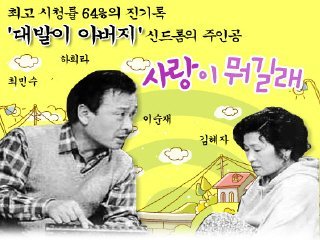
Imagine a stubbornly traditional, patriarchal family and a fiercely modern, progressive family being forced to merge through marriage. This is the brilliant and hilarious premise of What Is Love (사랑이 뭐길래), a foundational family sitcom-drama that captured the soul of a nation in transition. The story centers on the romance between Daebal (Choi Min-soo), the chauvinistic but good-hearted son of a loud, authoritarian household, and Jieun (Ha Hee-ra), the educated and independent daughter of a quiet, intellectual family led by her forward-thinking mother. When they decide to marry, their worlds don’t just collide—they explode in a comedic and poignant exploration of family, tradition, and the very meaning of love.
Aired in the early 90s, this legendary MBC production is more than just a classic; it’s a cultural artifact that offers a perfect window into the Korean society of its time.
A Nation in Transition: Cultural Context
To understand the monumental success of What Is Love, one must understand the South Korea of 1991. The country was in the throes of a massive societal shift. Decades of authoritarian rule had given way to a burgeoning democracy, and rapid economic growth was creating a new, educated middle class. This progress, however, created a deep cultural rift. The old guard, raised on rigid Confucian principles of patriarchy and filial piety, found their values challenged by a younger generation that embraced individualism, gender equality, and Western ideals.
What Is Love brilliantly dramatized this national identity crisis by embodying it in two families. Daebal’s family, ruled by a tyrannical father whose every command is law, represented the Korea of the past. Jieun’s family, where the mother is an respected intellectual and decisions are made through calm discussion, symbolized the progressive future. The drama wasn’t just a story about in-laws; it was a national conversation about which version of Korea would prevail. The conflict between the two households served as a powerful allegory for the social anxieties and hopes of an entire generation.
Narrative Analysis: Comedy Forged in Conflict
Without giving away key plot points, the narrative genius of What Is Love lies in its ability to find profound heart and humor in deep-seated conflict. The storytelling avoids taking sides. Instead, it uses the exaggerated clash of values as a constant source of situational comedy. The patriarch’s comical struggle to maintain his authority in a world that no longer respects it, and the modern family’s bewildered attempts to navigate baffling traditional customs, create a cycle of hilarious and relatable misunderstandings.
The drama masterfully balances its comedic tone with genuine emotional depth. Beneath the laughter, it poses a serious question: can people with fundamentally different worldviews learn to love and respect one another? The series compellingly argues that they can, not by abandoning their identities, but through the slow, difficult, and often funny process of empathy and compromise. It suggests that love isn’t a magical solution but a commitment to understanding, making its themes universally resonant even decades later.
The Pulse of the Time: A National Phenomenon
It is difficult to overstate the impact What Is Love had on Korean society. The drama was a ratings juggernaut, achieving an average viewership of 59.6% and a peak of 64.9%—a figure almost unimaginable in today’s fragmented media landscape. Streets would reportedly empty out when the show aired, as the entire nation tuned in to watch the latest chapter in the families’ saga.
The drama’s influence permeated popular culture. The patriarch’s booming, frustrated cry of “대발아~” (Daebal-ah~) became an instantly recognizable catchphrase, mimicked across the country. The characters were not just fictional figures; they were national archetypes that sparked countless debates in homes and offices about marriage, family dynamics, and the role of women in modern society. Its popularity also made it one of the very first Hallyu (Korean Wave) dramas to achieve massive success abroad, particularly in China, paving the way for the global K-drama phenomenon we know today.
Cast Spotlight: The Birth of Icons
Choi Min-soo as Lee Daebal
Choi Min-soo delivered a career-defining performance as the flawed but lovable Daebal. He perfectly captured the character’s internal conflict between the traditional values he was raised with and his genuine love for his modern wife. He made a potentially unlikable chauvinist relatable and charming, cementing his status as a top leading man.
Ha Hee-ra as Park Jieun
As Jieun, Ha Hee-ra became the face of the “new Korean woman.” She portrayed a character who was strong and principled without being abrasive, fighting for her independence while still valuing family. Her graceful performance provided the drama’s emotional anchor.
Kim Hye-ja as Jieun’s Mother
Already a revered actress known as the “National Mother,” Kim Hye-ja’s role was groundbreaking. She portrayed a matriarch defined not by sacrifice and submission, but by intelligence, reason, and quiet strength. She was the calm, modern center in a storm of traditionalist chaos, offering a refreshing and aspirational model of womanhood.
Global Viewing Guide
For international fans looking to discover this essential classic, several platforms are dedicated to preserving and sharing vintage K-dramas:
- MBC Drama Classic YouTube: The official broadcaster’s channel is often the best place to find episodes of What Is Love. Subtitle availability may vary but often includes English community contributions or official captions.
- Kocowa: This streaming service, a joint venture of Korea’s major broadcasters (including MBC), frequently features classic titles in its library with professional subtitles.
- Viki: A popular platform for its extensive library of Asian dramas, Viki often hosts classic shows, with subtitles provided by a dedicated volunteer community.
Final Verdict
What Is Love is more than just a nostalgic throwback; it is a masterclass in family storytelling and a vital piece of Korean cultural history. Its humor is timeless, its characters are unforgettable, and its exploration of social change remains surprisingly relevant. For any global fan who wants to understand the roots of modern K-drama and the cultural conversations that shaped a nation, this series is essential viewing. It’s a hilarious, heartwarming, and insightful reminder that the question of what love is has always been at the heart of the human experience.

The KCulture Editorial Team is dedicated to providing deep insights and accurate information about the vibrant world of Korean culture.