Introduction & Synopsis
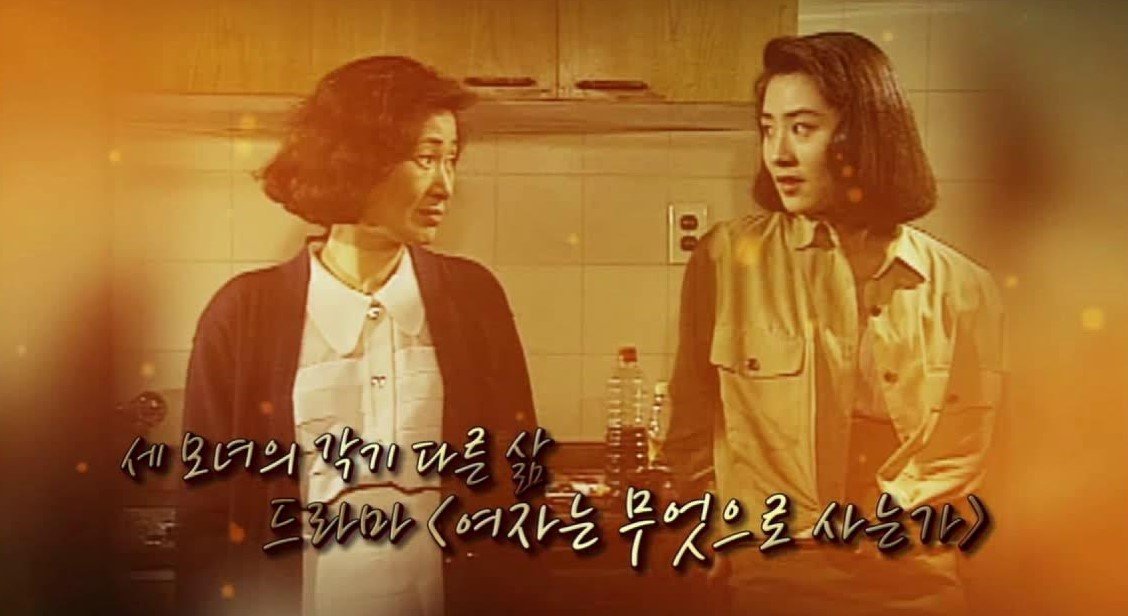
At its heart, What Women Live For (여자는 무엇으로 사는가) is a compelling tale of two friends, Cha Young-mi (Kim Hee-ae) and Jeong-eun (Ha Hee-ra), navigating the turbulent waters of early adulthood. Young-mi is the epitome of the modern woman: ambitious, sharp-witted, and fiercely determined to build a career on her own terms. In contrast, Jeong-eun embodies a more traditional path, seeking happiness through love and family, yet still wrestling with her own desires for identity. Their intertwined lives, marked by steadfast friendship, professional rivalry, and romantic entanglements, serve as the canvas for a profound exploration of female identity and purpose. Aired in 1990, this landmark MBC production dared to ask a question that was ringing in the minds of a generation of Korean women: in a rapidly changing world, what is truly worth living for?
Deep Cultural/Historical Insight
To understand the seismic impact of What Women Live For, one must look at South Korea in 1990. The nation was still basking in the afterglow of the 1988 Seoul Olympics, a global coming-out party that showcased its “Miracle on the Han River.” Decades of authoritarian rule had given way to democracy, and explosive economic growth had created a new, educated urban middle class. For the first time, significant numbers of women were entering universities and the professional workforce. Yet, this newfound opportunity clashed fiercely with centuries-old patriarchal and Confucian expectations that a woman’s ultimate role was that of a wife and mother (“wise mother, good wife”).
This drama captured that societal friction perfectly. It was one of the first mainstream television series to portray female ambition not as a villainous trait but as a valid life choice. The characters’ struggles—balancing a demanding career with societal pressure to marry, fighting for recognition in male-dominated offices, and asserting their own agency in relationships—were not just fictional plot points; they were the lived realities of its viewers. The series gave voice to the anxieties and aspirations of a generation of “New Women” caught between tradition and modernity, making it a crucial cultural document of its time.
Narrative Analysis
The storytelling in What Women Live For is refreshingly direct and character-driven. It avoids simplistic moral binaries, presenting its heroines as complex individuals with laudable strengths and relatable flaws. The narrative’s core tension is not derived from a melodramatic villain but from the internal and external conflicts the characters face. The central question posed by the title is explored through their every decision: Should a woman prioritize a fulfilling career or a stable marriage? Can she have both? What does independence truly cost?
The drama masterfully uses the contrasting lives of Young-mi and Jeong-eun to examine different answers to these questions without declaring one superior. It validates the pursuit of professional success while also respecting the choice to find fulfillment in love and family, suggesting that the most important thing is the freedom to choose one’s own path. For modern viewers, the drama also serves as a fascinating visual time capsule, showcasing the fashion, cityscapes, and corporate culture of 1990s Seoul.
The Pulse of the Time
Upon its release, What Women Live For was more than just a popular show; it was a cultural phenomenon. It achieved blockbuster ratings, dominating television screens across the nation. Young women saw their own lives and dilemmas reflected in the characters of Young-mi and Jeong-eun, making the drama a subject of intense discussion in workplaces and homes. The series tapped directly into the zeitgeist, articulating a conversation that Korean society was just beginning to have openly. Its success proved that audiences were hungry for stories centered on realistic, contemporary female experiences, paving the way for a new wave of female-centric dramas in the years to come.
Cast Spotlight
The drama’s legacy is inseparable from the career-defining performances of its two leads. For Kim Hee-ae, the role of Cha Young-mi cemented her status as an icon of sophisticated, intelligent urban womanhood. Her portrayal was nuanced and powerful, establishing a character archetype that she would master and evolve throughout her illustrious career, seen even in modern hits like The World of the Married. This was the role that proved her immense range and solidified her as a top-tier dramatic actress.
For Ha Hee-ra, who was then a beloved teen star, this series marked a successful transition into more mature roles. Her performance as the warm yet conflicted Jeong-eun demonstrated a depth that expanded her image beyond her “nation’s first love” persona. The dynamic chemistry between the two actresses, shifting seamlessly between sisterly affection and subtle rivalry, was the anchor that made the drama so believable and compelling.
Global Viewing Guide
Fans looking to explore this classic piece of K-drama history can find it on official broadcaster channels. Availability may change, but these are the best places to start:
- MBC Classic (YouTube): MBC often uploads its classic dramas, sometimes with English subtitles, to its official YouTube channel for a global audience.
- Kocowa: This streaming service, a joint venture of the top Korean broadcasters (including MBC), is a primary destination for classic and contemporary titles, often providing high-quality subtitles.
Final Verdict
What Women Live For is essential viewing for anyone interested in the evolution of Korean television and society. It is more than a nostalgic trip to the 90s; it is a bold, intelligent, and deeply human story that laid the groundwork for the complex female protagonists we cherish in K-dramas today. A landmark production that is both a historical artifact and a timeless exploration of a woman’s right to define her own life.

The KCulture Editorial Team is dedicated to providing deep insights and accurate information about the vibrant world of Korean culture.