
What used to be a simple playground game for children has transformed into a massive, community-driven “sport” for adults. It’s a mix of nostalgia, digital fatigue, and a unique way of bonding that only Koreans could turn into a nationwide trend.
Here is the high-quality blog post designed for our global readers who want to understand the “why” behind this viral phenomenon.
Why South Korean Adults are Playing ‘Cops and Robbers’ in 2026: The Rise of ‘Gyeong-do’ Culture
If you walk through a Seoul park or a university campus after sunset these days, you might witness a strange sight: dozens of adults in their 20s and 30s sprinting, hiding behind sculptures, and shouting with pure, childlike joy. No, it’s not a movie set—it’s a real-life game of “Gyeong-do” (Police and Thieves).
What started as a nostalgic playground game has evolved into a massive social trend, fueled by hyper-local apps like Karrot (Daangn) and high-profile creators. As a local expert living in the heart of this culture, I’ve analyzed why this simple game has captured the hearts of a generation.
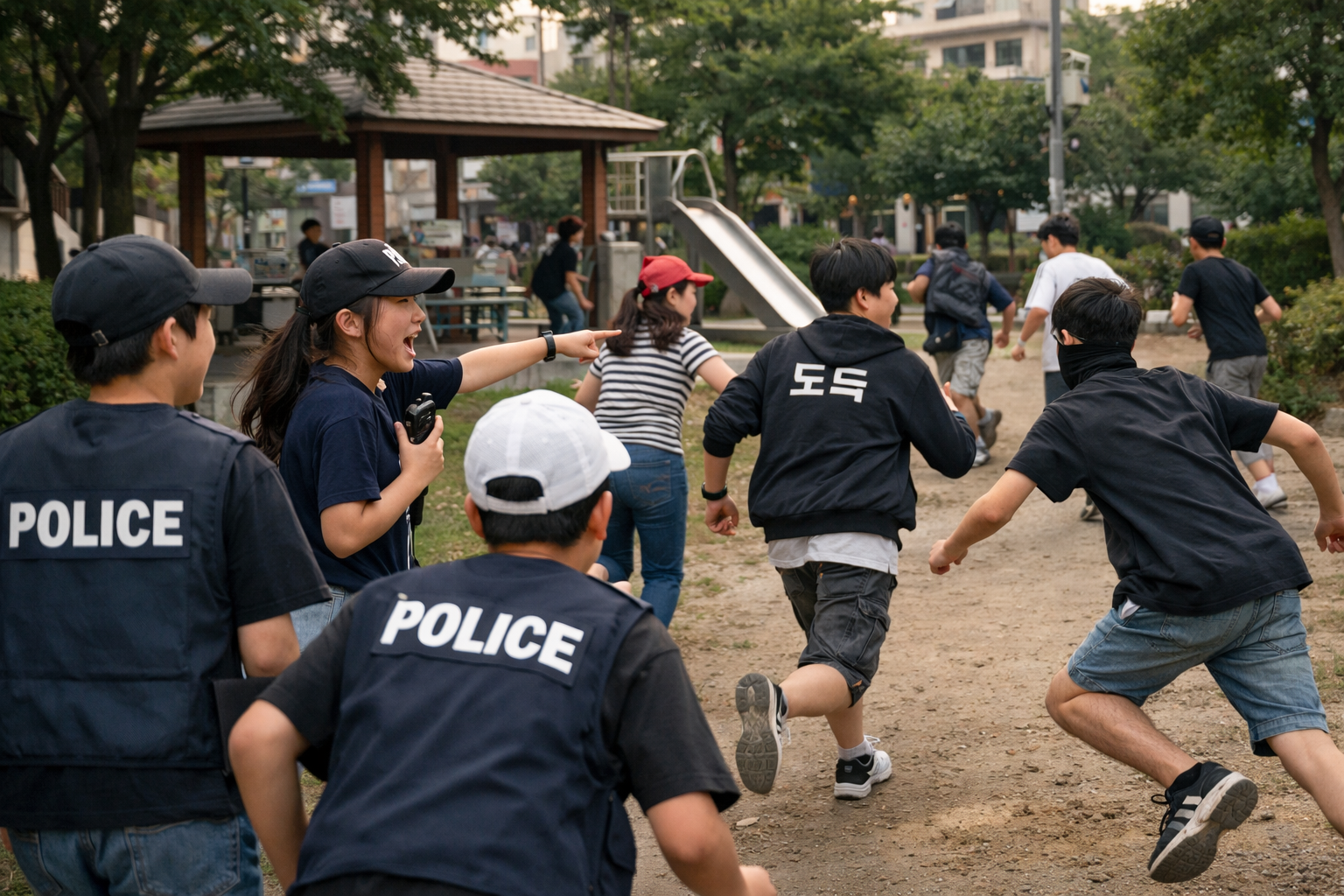
1. What exactly is ‘Gyeong-do’ (경도)?
The name is a portmanteau of Gyeong-chal (Police) and Do-duk (Thief). It is essentially a strategic, team-based version of tag.
- The Teams: A small group of “Police” vs. a larger group of “Thieves.”
- The Mission: Police must chase and tag thieves. Once caught, thieves are sent to a designated “Jail.”
- The Twist (Rescue): A thief remains in jail unless a teammate manages to dodge the police and touch the jail (or the prisoner’s hand) to set them free.
- Victory: The police win if they catch everyone within the time limit; the thieves win if they survive or successfully stage a mass breakout.
The beauty of Gyeong-do lies in its flexibility. Groups often create “House Rules” based on the terrain of their neighborhood, making every game a unique experience.
2. From ‘Karrot’ to Reality: The Digital Spark
South Koreans are masters of using technology to facilitate offline human connection. Karrot (Daangn), Korea’s leading hyper-local community app, has been the primary engine for this trend.
Instead of just buying second-hand furniture, locals are posting: “Looking for 20 people to play Cops and Robbers at the neighborhood park tonight. Serious runners only!” These posts often go viral because they balance a sense of “playful irony” with “genuine passion.” It’s an easy, low-pressure way to meet neighbors without the awkwardness of traditional networking.
3. Why are Korean Adults Obsessed with “Play”?
As a local strategist, I see three core psychological reasons for this “Adult Play” movement:
① An Antidote to “Efficiency Fatigue”
Modern Korean life is hyper-optimized. Every minute is often dedicated to productivity or self-improvement. Gyeong-do offers a purpose-less escape. There is no “career gain” in running until your throat tastes like iron—and that’s exactly why it’s liberating.
② Digital Detox through Physicality
We are constantly overstimulated by short-form content and SNS. Gyeong-do requires immediate physical presence. You can’t look at your phone while a “Police officer” is sprinting toward you. The raw sensation of breathing hard and laughing out loud provides a “real-world” reset that digital entertainment can’t match.
③ Low-Stakes Socializing
In Korea, social gatherings often involve “spec-checking”—noticing someone’s job, age, or background. In Gyeong-do, everyone is just a “Police” or a “Thief.” It levels the playing field, allowing for natural bonding through shared adrenaline and teamwork.
4. The “Lee Young-ji” Effect: Transforming Play into Content
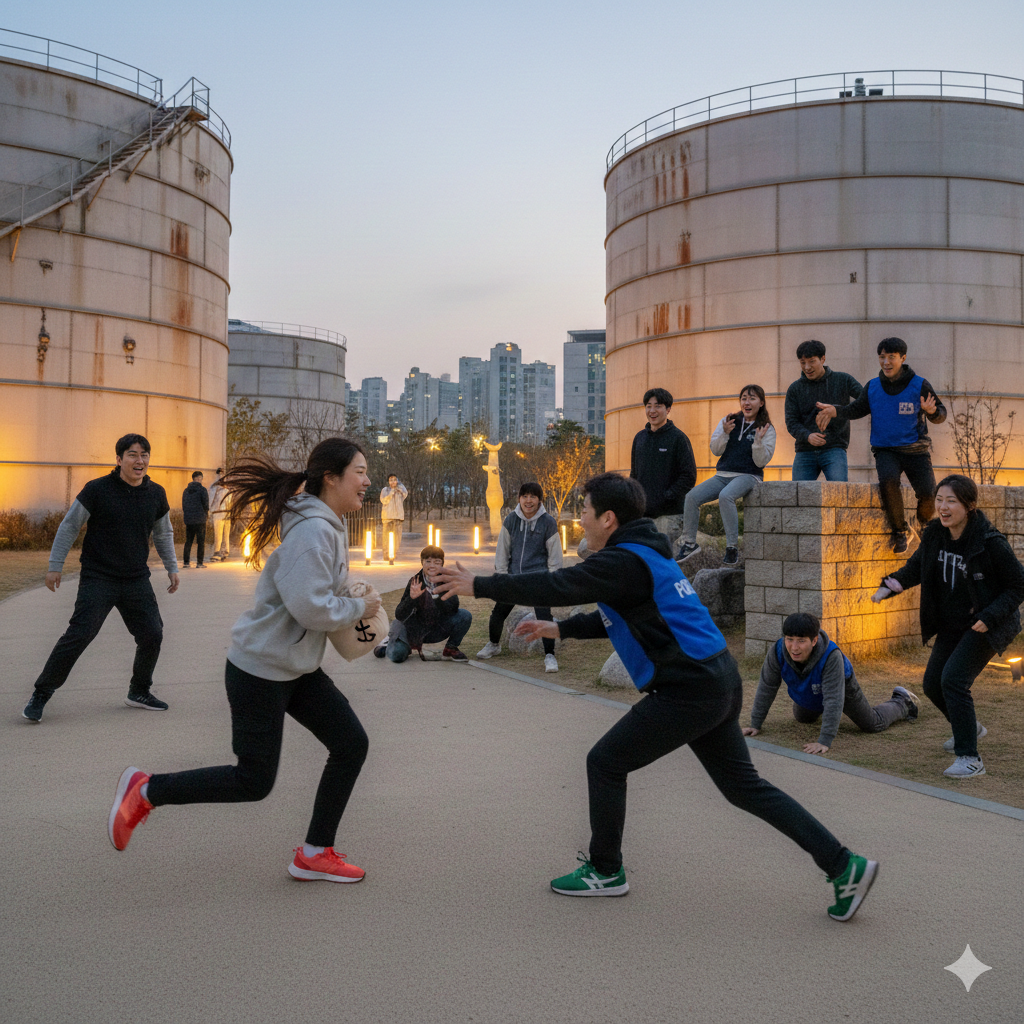
The trend reached its peak when superstar rapper Lee Young-ji posted a simple recruitment story on her Instagram. The response was staggering: over 100,000 people applied to play tag with her.
Collaborating with legendary Producer Na Young-seok (Na PD) on the YouTube channel Channel 15ya, she turned this “neighborhood game” into a massive cultural event at the Oil Tank Culture Park in Seoul.
A Game with a Heart
The event wasn’t just about running. Participants “earned” fake bounty money, which Lee Young-ji then converted into real donations.
- Total Bounty: 258 million KRW (approx. $190,000 USD).
- The Donation: Lee Young-ji rounded the amount up to 300 million KRW, donating 100 million each to the Korea Childhood Leukemia Foundation, Seoul Asan Medical Center, and ChildFund Korea.
This turned a “silly game” into a meaningful social contribution, proving that K-Culture’s power lies in its ability to combine fun with community spirit.
5. Local Expert Tip: How to Join
If you’re visiting Korea and want to experience this, keep an eye on local community boards or social media hashtags like #경도 (Gyeong-do) or #경찰과도둑. You’ll find that Koreans are incredibly welcoming to anyone who is ready to run and have a good laugh.
Conclusion: Gyeong-do is more than just tag. It is a rebellion against the stress of adulthood and a celebration of the simple joy of being “in the moment.”
For more insights into the latest Korean trends and local lifestyle, stay tuned to KCulture.com.
A lifestyle writer covering K-beauty, fashion, and art. Kyoung shares honest insights on K-pop and smart shopping, capturing the vibrant trends of modern Korea.