
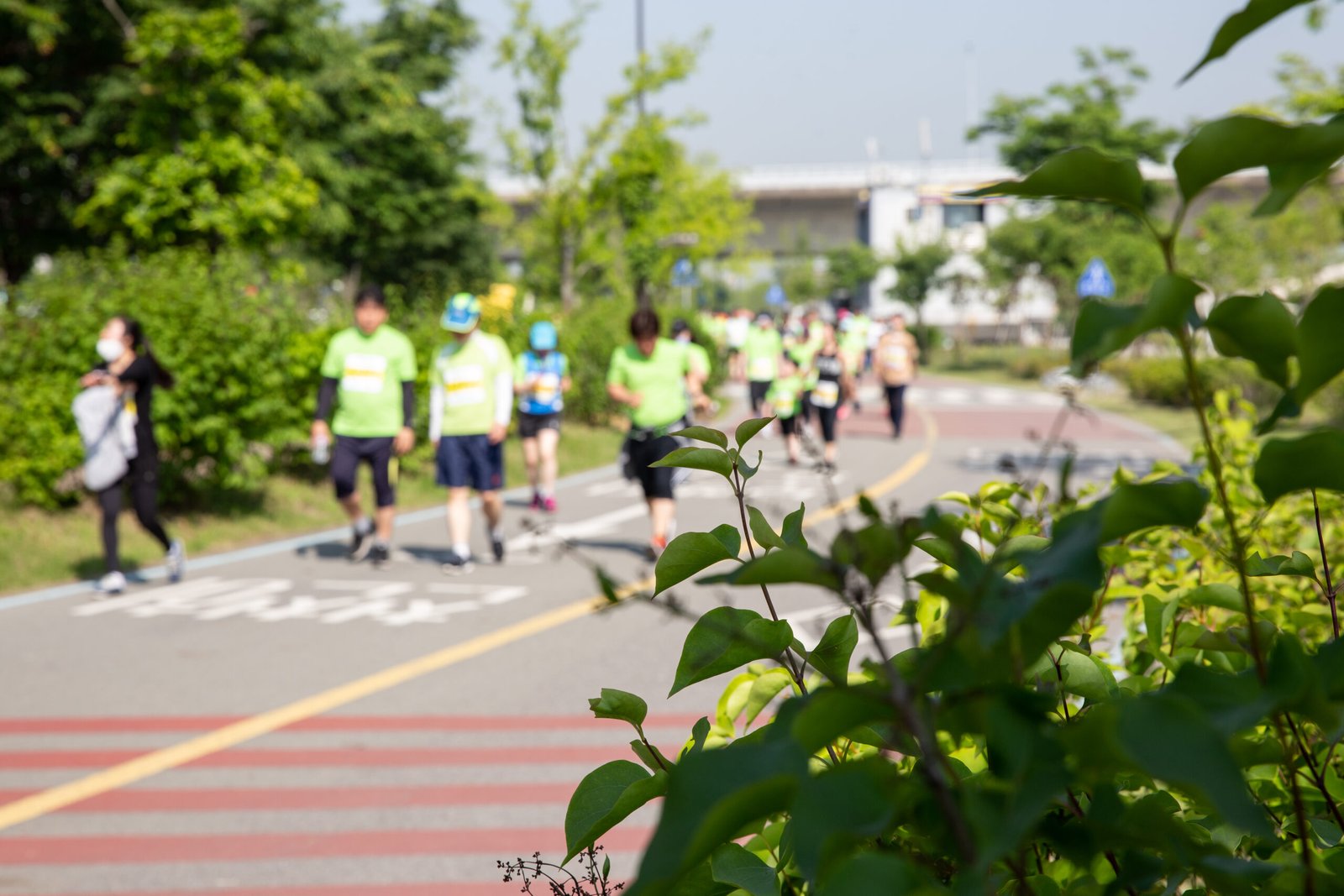
The South Korean running boom is rapidly transforming the country’s parks and city trails, driven by the younger generation’s pursuit of a healthy, highly productive lifestyle known as “Godsaeng.” This explosive trend has elevated casual jogging into a major cultural phenomenon, turning marathon registrations into fierce competitions and reshaping the local sportswear market. Living in Korea, I see this positive, energetic wave firsthand every evening, and today I will guide you through the social background, the vibrant crew culture, and the glowing benefits of this fitness revolution.
- Godsaeng Culture and the MZ Generation
- The Rise of Trendy Running Crews
- High-End Gear and the Gorpcore Trend
- Growing Pains and New Etiquette
- Best Places to Run in Seoul
Godsaeng Culture and the MZ Generation
To understand the current running craze in South Korea, you first need to understand the concept of Godsaeng. A portmanteau of the English word “God” and the Korean word for life, “Saeng,” it represents a lifestyle focused on diligence, self-care, and daily micro-achievements. For the MZ generation (millennials and Gen Z) facing high living costs and intense social pressures, running offers a low-barrier, highly rewarding way to prove their commitment to self-improvement.
Unlike golf or tennis, which require expensive lessons and club memberships, running only requires a good pair of shoes. Furthermore, it perfectly feeds into the local “Instagrammable” culture. Runners proudly share their route maps from apps like Strava, flex their midnight miles, and showcase their healthy routines, inspiring others to join the movement. This enthusiasm is so high that securing a spot in major events like the Seoul International Marathon (서울국제마라톤) or the JTBC Marathon feels exactly like trying to buy tickets for a top-tier K-pop idol concert—often selling out in mere minutes.
The Rise of Trendy Running Crews
Running is no longer a solitary activity or a sport reserved for middle-aged marathon enthusiasts. It has evolved into a highly social, trendy community experience. Young people are gathering through social media platforms and local meetup apps to form “Running Crews.”
| Traditional Marathon Clubs | Modern Running Crews |
|---|---|
| Primarily middle-aged demographics | Driven by 20s and 30s (MZ Generation) |
| Focus on extreme endurance and full marathons | Focus on wellness, socializing, and night views |
| Standard athletic uniforms | Stylish, high-end athletic streetwear |
These crews meet after work to run through the city’s illuminated streets, creating a supportive network. The positive effects are undeniable: participants report lowered stress levels, an expanded social circle, and a newfound appreciation for their city’s outdoor spaces. It is a beautiful sight to see hundreds of young professionals choosing fresh air and cardiovascular health over drinking culture.
High-End Gear and the Gorpcore Trend
While the barrier to entry is low, the passion for the sport has fueled a massive economic boom in the athletic wear sector. Korean runners love to merge performance with style, fully embracing the “Gorpcore” fashion trend—where utilitarian, outdoor performance gear is worn as chic street fashion.
Sports brands are aggressively targeting this demographic. Carbon-plated running shoes from brands like Hoka, On Running, Asics, and Salomon have become coveted fashion items. Limited-edition sneaker draws and vibrant pop-up stores in trendy neighborhoods like Seongsu-dong are regular occurrences. The premium resell market has even expanded beyond just shoes; occasionally, highly sought-after marathon entry tickets are traded at a premium, highlighting just how passionate the community has become.
Growing Pains and New Etiquette
Any rapid cultural shift comes with growing pains. Because the running boom exploded so quickly, popular trails became congested. Recently, there has been a lively social discussion regarding “nuisance” running crews—large groups moving in packs that inadvertently block narrow pedestrian paths or cause noise complaints with loud group chants late at night.
📌 Local Note: If you are planning to run in Seoul, be aware of the new civic guidelines. Keep your group small, run in single file on narrow paths, and always respect the pedestrian right-of-way.
In response, local districts are taking proactive measures to ensure everyone can enjoy public spaces. For example, local governments managing areas like Banpo Hangang Park (반포한강공원) and Seokchon Lake (석촌호수) have introduced gentle regulations, such as restricting groups of five or more from running together or banning side-by-side running. Rather than a negative crackdown, this is widely viewed as a positive step toward maturing the running culture, ensuring harmony between enthusiastic runners and evening strollers.
Best Places to Run in Seoul
If you are visiting and want to experience this vibrant culture yourself, here are a few spots that showcase the best of Korea’s running scene:
- The Han River Trails: The undisputed champion of Seoul running. The paths are well-paved, clearly divided for cyclists and pedestrians, and offer stunning bridge views.
- Namsan Park (남산공원): For those who love a challenging incline, the looping roads around Namsan Mountain provide fresh air and a rewarding view of the N Seoul Tower.
- Seoul Forest (서울숲): A trendy, flatter option perfect for a casual morning 5K, surrounded by lush trees and chic cafes for a post-run coffee.
The South Korean running boom is a testament to a generation choosing health, community, and personal growth. Grab your sneakers, hit the pavement, and experience the dynamic pulse of the city for yourself!
Korean Culture portal KCulture.com
Founder of Kculture.com and MA in Political Science. He shares deep academic and local insights to provide an authentic perspective on Korean history and society.