Introduction & Synopsis
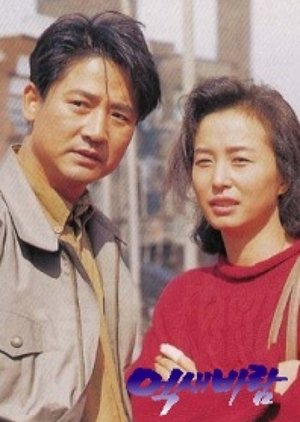
Before the global phenomenon of Hallyu, there were stories that laid its very foundation. Wind in the Grass (억새 바람) is one such landmark drama, a poignant 1992 special production from MBC that took viewers on a journey far from the familiar streets of Seoul to the sprawling landscapes of America. At its heart, the series is a classic melodrama exploring the lives and sorrows of Korean immigrants. It centers on a tangled web of love and ambition, following the crossed paths of characters portrayed by the era’s top stars, Lee Young-ha, Kim Mi-sook, and the then-rising icon Son Ji-chang, as they navigate the promises and perils of the American Dream.
The Korean Dream, American Soil
To understand the impact of Wind in the Grass, one must look back to the Korea of the early 1990s. The nation was experiencing tremendous economic growth, but the “American Dream” still held a powerful allure. Immigration was seen as the ultimate path to success, a narrative woven into the national consciousness. This drama was not merely a love story with an exotic background; it was a reflection of a collective aspiration. For a Korean audience, seeing their struggles, their language, and their people against the backdrop of American cities and vast plains was both aspirational and deeply validating. The series delves into the complex identity of the gyopo (Korean diaspora)—the feeling of being an outsider in a new home while slowly becoming a stranger to the one left behind. It’s a narrative steeped in a uniquely Korean sentiment known as Han (한), a complex feeling of unresolved sorrow, resilience, and longing that is central to the immigrant experience.
A Narrative of Yearning and Scenery
Filmed entirely on location in the United States, Wind in the Grass broke new ground for its time. The storytelling uses the American landscape as a character in itself. The wide-open spaces and endless highways symbolize both the boundless opportunity and the profound loneliness felt by the characters. The “억새” (eoksae), or eulalia grass, in the title is a powerful metaphor—a plant that is resilient and thrives in desolate places, swaying with the wind but remaining firmly rooted, much like the immigrants themselves. The narrative avoids easy answers, focusing instead on the emotional complexities of its love triangle. It explores themes of sacrifice, cultural friction, and the difficult choices one must make when torn between tradition and personal freedom, past and future.
The Pulse of the Time
In 1992, an all-overseas location shoot was a massive undertaking and a mark of a prestige production. Wind in the Grass was an event. While specific viewership ratings are lost to time, it captured the public’s imagination. It offered a cinematic escape, a window into a world that most Koreans had only dreamed of seeing. The combination of its A-list cast and its ambitious scale made it must-watch television, generating significant conversation about the realities of immigrant life versus the romanticized ideal.
Cast Spotlight
The drama’s emotional weight rests on the shoulders of its perfectly chosen leads, who were at the zenith of their careers.
- Lee Young-ha: As the established leading man, Lee Young-ha brought a signature blend of warmth and gravitas to his role. He was the face of the dependable, often melancholic, patriarch or lover in that era, perfectly embodying the first-generation immigrant caught between responsibility and personal desire.
- Kim Mi-sook: An actress renowned for her elegant and deeply expressive performances, Kim Mi-sook was the ideal choice for the female protagonist. She had an unparalleled ability to convey quiet strength and inner turmoil, capturing the resilience and grace of a woman navigating immense personal and cultural challenges.
- Son Ji-chang: A true 90s icon, Son Ji-chang represented the new generation. His youthful charisma and rebellious energy provided a magnetic contrast to the more traditional characters. His presence electrified the central love triangle and ensured the drama resonated strongly with younger viewers, cementing his status as a top heartthrob.
Global Viewing Guide
For fans of classic K-dramas, finding this 1992 gem requires a bit of searching. As a vintage MBC production, here are the most likely places to look:
- Wavve: This Korean streaming platform is the official domestic home for many classic MBC dramas.
- MBC Classic YouTube Channels: MBC operates several YouTube channels like “옛드: MBC 레전드 드라마” where they often upload full episodes of archived shows. Availability of English subtitles may vary.
- Kocowa: This streaming service, a joint venture of the top Korean broadcasters (including MBC), is a primary destination for classic and contemporary dramas with professional subtitles. Check its library for availability.
Final Verdict
Wind in the Grass is more than just a nostalgic melodrama; it is a vital cultural document. It captures a pivotal moment in Korean history when the nation was looking outward, grappling with its identity on a global stage. For viewers interested in the origins of Hallyu and the powerful, emotionally resonant stories that defined a generation, this drama is an essential and moving piece of television history. It’s a beautifully crafted story of love, loss, and the enduring search for a place to call home.

The KCulture Editorial Team is dedicated to providing deep insights and accurate information about the vibrant world of Korean culture.