When discussing Korea’s struggle against Japanese colonial rule, most people naturally think of Korean independence activists. Yet a small but remarkable group of foreigners also played an extraordinary role in defending Korea’s right to self-determination. These foreign supporters of the Korean independence movement were far more than sympathetic observers. They risked their careers, reputations, and sometimes their lives to expose injustice, challenge imperial aggression, and bring Korea’s story to the world.
Figures such as Homer Hulbert, Ernest Bethell, and Frank Schofield represent something larger than a chapter in Korean history. They were early pioneers of international journalism, humanitarian advocacy, and global solidarity. Their stories remind us that the fight for freedom and human dignity often transcends national borders. Today, more than a century later, they remain among the most respected foreign figures in modern Korean history.
- Why Did Foreigners Support Korea’s Independence?
- Homer B. Hulbert: The American Who Loved Korea
- Ernest Bethell: The British Journalist Who Fought With His Pen
- Frank Schofield: The Witness of the March 1st Movement
- Other Foreign Supporters of Korea
- How Korea Remembers These Foreign Independence Activists
- Why Their Legacy Still Matters Today
- Related Reading
Why Did Foreigners Support Korea’s Independence?
At first glance, it may seem unusual that foreigners became involved in Korea’s fight against Japanese colonial rule. Yet many of them arrived in Korea before annexation and witnessed firsthand how rapidly the country’s sovereignty was being eroded.
Some came as educators. Others arrived as missionaries, journalists, doctors, or scholars. Many developed deep personal relationships with Korean communities and became increasingly alarmed by political repression, censorship, and violence.
What united these individuals was not nationality but principle. They believed that a weaker nation should not be deprived of its independence by a stronger imperial power. In many ways, they became early advocates for international human rights long before the concept gained global recognition after World War II.
📌 Historical Note: Most foreign supporters never claimed leadership in Korea’s independence movement. Instead, they used their international connections, publications, photographs, diplomatic networks, and public influence to amplify Korean voices abroad.
Homer B. Hulbert: The American Who Loved Korea
Among all foreign friends of Korea, few are remembered more fondly than Homer Bezaleel Hulbert.
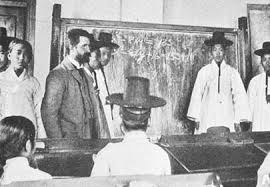
An American educator from Vermont, Hulbert first arrived in Korea in 1886 as an English instructor at Yugyeong Gongwon (육영공원), Korea’s first modern government-run educational institution. What began as a teaching assignment soon became a lifelong commitment to Korea.
Hulbert was fascinated by Hangul and became one of the earliest Western scholars to recognize its scientific design and cultural value. At a time when many foreign observers dismissed Korean culture, he openly praised the Korean language and encouraged its use in education.

Serving Emperor Gojong’s Diplomatic Mission
As Japanese influence expanded, Hulbert became one of Emperor Gojong’s most trusted foreign advisers.
Following the controversial Eulsa Treaty of 1905, which stripped Korea of its diplomatic sovereignty, Hulbert attempted to deliver a personal appeal from Emperor Gojong to U.S. President Theodore Roosevelt. The mission failed because major powers had already accepted Japan’s growing influence in East Asia, but Hulbert’s efforts demonstrated his unwavering commitment to Korea’s cause.
He later helped organize and support the famous Hague Secret Emissary mission of 1907, which sought international recognition of Korea’s plight. Japanese authorities eventually expelled him from Korea for his activities.
A Voice for Korea Abroad
After leaving Korea, Hulbert continued writing and lecturing about Japan’s actions on the Korean Peninsula. His influential work, The Passing of Korea, became one of the most important English-language accounts of Korea’s loss of independence.
Perhaps the most famous reflection of his devotion came through his final wish:
“I would rather be buried in Korea than in Westminster Abbey.”
Following Korea’s liberation, Hulbert returned to the country in 1949 but passed away shortly after arrival. Today he rests at Yanghwajin Foreign Missionary Cemetery (양화진 외국인선교사묘원) in Seoul.
Ernest Bethell: The British Journalist Who Fought With His Pen
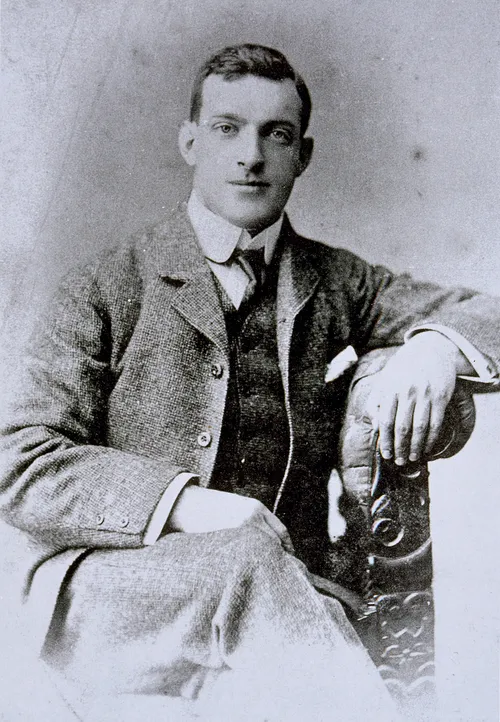
If Hulbert fought through diplomacy, Ernest Thomas Bethell fought through journalism.
Originally sent to Korea as a British war correspondent during the Russo-Japanese War, Bethell became deeply disturbed by what he witnessed. Rather than simply reporting events, he chose to challenge imperial narratives directly.
Founding Korea’s Most Influential Resistance Newspaper
In 1904, Bethell partnered with Korean nationalist Yang Gi-tak to establish the newspaper Daehan Maeil Sinbo (대한매일신보).
The publication became one of the few newspapers capable of openly criticizing Japanese policies because it operated under the protection of British extraterritorial rights.
Through Korean-language and English-language editions, Bethell exposed political coercion, censorship, and violations of Korean sovereignty to readers both inside and outside Korea.
Supporting the National Debt Repayment Movement
Bethell’s newspaper also played a central role in promoting the National Debt Repayment Movement, a grassroots campaign encouraging ordinary Koreans to help free the nation from financial dependence on Japan.
The movement became one of the largest examples of civic participation in pre-colonial Korea and demonstrated the growing strength of modern Korean nationalism.
A Life Cut Short
Japanese authorities repeatedly pressured Bethell through legal actions and diplomatic channels. The stress of these confrontations took a heavy toll on his health.
He died in Seoul in 1909 at only 37 years old. His reported final wish was that his newspaper should continue serving the Korean people even after his death.
Like Hulbert, Bethell is buried at Yanghwajin Foreign Missionary Cemetery, where visitors continue to pay tribute more than a century later.
Frank Schofield: The Witness of the March 1st Movement
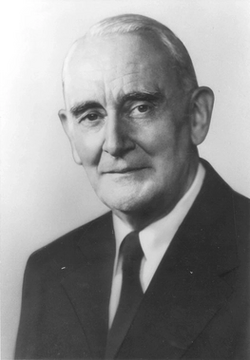
If one foreigner preserved visual evidence of Korea’s independence struggle, it was Frank William Schofield.
Born in England and raised in Canada, Schofield arrived in Korea in 1916 as a professor at Severance Medical College, the predecessor of today’s Yonsei University.
Known to Koreans as Seok Ho-pil (석호필), he would become one of the most respected foreign figures in modern Korean history.
Documenting the March 1st Movement
When the March 1st Movement erupted in 1919, Schofield did something extraordinary: he documented it.
At a time when Japanese authorities were attempting to control information, Schofield photographed demonstrations, collected eyewitness testimony, and communicated reports to foreign audiences.
His records became crucial evidence showing the scale of the movement and the severity of the colonial response.
Exposing the Jeam-ri Massacre
Schofield’s most famous contribution came after the Jeam-ri Massacre (제암리 학살 사건) in Hwaseong (화성).
Japanese forces had gathered villagers inside a church, set the building on fire, and killed civilians in retaliation for independence demonstrations. Schofield traveled to the village despite restrictions, photographed the aftermath, interviewed survivors, and published detailed reports.
His documentation attracted international attention and remains one of the most important historical records of colonial-era violence in Korea.
💡 Local Insight: Because of his courage during 1919, many Koreans affectionately refer to Schofield as the “34th National Representative,” symbolically adding him to the 33 leaders who signed the March 1st Declaration of Independence.
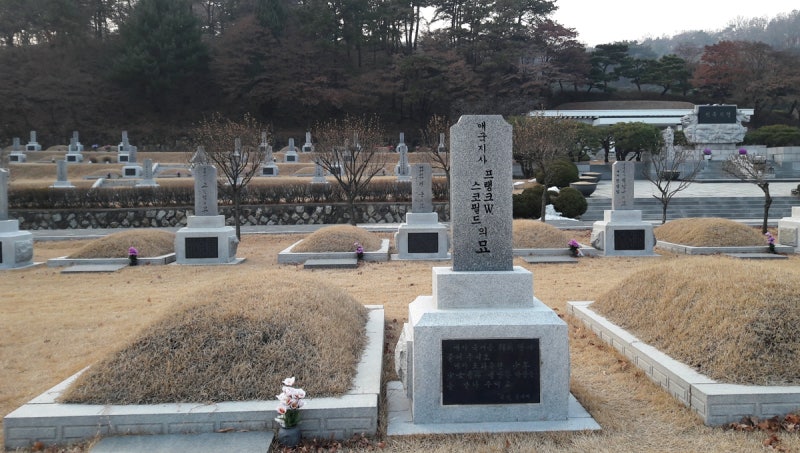
Today, Schofield holds a unique place in Korean history as the only foreigner buried in the Patriots’ Section of Seoul National Cemetery (국립서울현충원).
Visitors can learn more about both the massacre and Schofield’s role at the Jeam-ri Martyrs Memorial Museum (제암리 3·1운동 순국기념관) in Hwaseong, one of the most important historical sites connected to the March 1st Movement.
Other Foreign Supporters of Korea
Although Hulbert, Bethell, and Schofield are the most celebrated examples, they were not alone.
Many missionaries, doctors, educators, and religious figures provided support to Korean communities during difficult periods of colonial rule.
Some documented abuses. Others offered education, medical care, and humanitarian assistance. Several helped Korean activists communicate with international organizations and foreign governments.
The foundations for many of these relationships can be traced to earlier missionary activity in Korea, a topic explored in Early Catholicism in Korea: Unpacking the Sinyu Persecution.
While their contributions varied greatly, together they helped ensure that Korea’s struggle was not entirely isolated from the outside world.
How Korea Remembers These Foreign Independence Activists
Modern South Korea has made significant efforts to honor foreigners who contributed to independence.
| Name | Nationality | Main Contribution | Recognition |
|---|---|---|---|
| Homer B. Hulbert | American | Diplomatic advocacy and international awareness | Order of Merit for National Foundation (Independence Medal) |
| Ernest Bethell | British | Independent journalism and nationalist press | Order of Merit for National Foundation (Presidential Medal) |
| Frank Schofield | Canadian | Documentation of March 1st Movement and Jeam-ri Massacre | Order of Merit for National Foundation (Independence Medal) |
Schools teach their stories. Memorial ceremonies are regularly held at their burial sites. Museums, academic institutions, and civic organizations continue to preserve their writings, photographs, and personal records.
Their descendants are occasionally invited to Korea for commemorative events, reflecting the enduring gratitude many Koreans feel toward these individuals and their families.
Why Their Legacy Still Matters Today
Korea’s independence was ultimately won through the sacrifices of countless Koreans. Yet the stories of Hulbert, Bethell, Schofield, and other foreign supporters remind us of something equally important: the struggle for freedom often inspires solidarity beyond borders.
These men came from different countries, professions, and backgrounds. None were born Korean. Yet each believed that injustice should be challenged wherever it occurred.
Korea’s independence was ultimately achieved through the sacrifices of countless Koreans. Yet the stories of Hulbert, Bethell, Schofield, and other foreign supporters reveal another important truth: the struggle for freedom often inspires solidarity beyond national boundaries.
These individuals came from different countries, professions, and cultural backgrounds. None were born Korean, yet each chose to stand against injustice at a moment when doing so carried significant personal risk. Their contributions helped ensure that Korea’s voice reached the wider world during one of the darkest periods in its history.
Modern South Korea remembers them not merely as sympathetic foreigners, but as genuine friends of the nation whose actions became part of the broader story of Korean independence. Their legacy continues to symbolize the power of ethical journalism, humanitarian courage, international cooperation, and the universal belief that freedom is worth defending wherever it is threatened.
Related Reading
- Eulmi Incident 1895: Empress Myeongseong’s Assassination
- Fall of the Korean Empire: Eulsa Treaty to 1910 Annexation
- The March 1st Movement: The Day Modern Korea Was Born
- Early Catholicism in Korea: Unpacking the Sinyu Persecution
Korean Culture portal KCulture.com
Founder of Kculture.com and MA in Political Science. He shares deep academic and local insights to provide an authentic perspective on Korean history and society.