Introduction & Synopsis
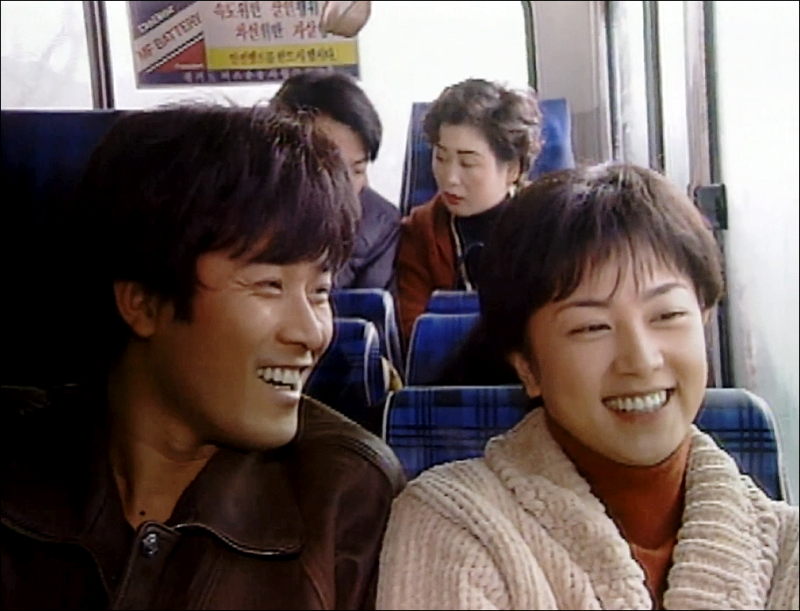
Before the polished chaebol heirs and intricate fantasy worlds of modern K-dramas, there was the raw, untamed rebel who walked the line between despair and devotion. Walking Up to Heaven (걸어서 하늘까지) is the quintessential 1990s Korean melodrama, a gut-wrenching tale of a rugged outsider with a criminal past and the woman whose unwavering love becomes both his salvation and his tragedy. The story follows Jong-ho, a man better known by his street name “Mool-sae” (Water Bird), a hardened pickpocket whose defiant exterior hides a deep well of pain. His life is irrevocably changed when he meets Ji-sook, a woman who sees past his rough edges to the wounded soul within, sparking a tragic and all-consuming romance. Aired in 1993, this MBC production wasn’t just a drama; it was a cultural explosion that defined a generation.
A Portrait of a Nation in Transition
To understand the seismic impact of Walking Up to Heaven, one must look at South Korea in the early 1990s. The nation was hurtling through rapid economic development and newfound democratic freedoms after decades of authoritarian rule. This transition created a society caught between traditional values and a burgeoning, rebellious youth culture. The character of Mool-sae was the perfect avatar for this era’s anxieties and aspirations. He was not a respectable salaryman or a dutiful son; he was an outcast, a symbol of defiance against a rigid social structure. His struggle resonated with a young audience searching for an identity beyond the one prescribed by society, making his story a powerful allegory for a country grappling with its own turbulent coming-of-age.
Narrative Analysis: The Power of Pure, Tragic Love
The drama’s narrative is a masterclass in the Korean concept of sun-ae-bo (순애보), a story of pure, almost sacred love. Ji-sook’s devotion to Mool-sae is absolute and unconditional, a stark contrast to his cynical view of the world. This dynamic fuels the central theme: can love truly redeem a broken soul? The storytelling is unapologetically melodramatic, favoring raw emotion over subtle nuance. It operates on a high-stakes emotional register where every glance is loaded with meaning and every setback feels like a twist of fate. Unlike contemporary dramas that often explore moral ambiguity, Walking Up to Heaven presents a world of stark contrasts—of good versus evil, loyalty versus betrayal, and a desperate love fighting against a cruel destiny. This fatalistic romanticism is what made the series so addictive and heartbreaking for its audience.
The Pulse of the Time: A National “Syndrome”
It is impossible to overstate the phenomenon that Walking Up to Heaven became in 1993. The drama created a nationwide “syndrome,” dominating conversations and setting trends. Mool-sae’s signature look—the leather jacket, brooding gaze, and motorcycle—became the definitive image of rebellious cool. The show’s theme song of the same name, sung by Jang Hyun-chul, became a chart-topping hit, its melancholic melody echoing from cafes and storefronts across the country. The drama’s immense popularity turned its lead actors into megastars and solidified the “rebel with a heart of gold” as a permanent and beloved archetype in the Korean cultural lexicon.
Cast Spotlight
Choi Min-soo as Jong-ho (“Mool-sae”): This was the role that cemented Choi Min-soo as an icon of Korean masculinity. His performance was magnetic and visceral. He perfectly embodied Mool-sae’s aggressive exterior and the profound vulnerability it was meant to protect. With minimal dialogue, Choi conveyed a lifetime of hurt and a desperate yearning for acceptance, making the character not just a “bad boy,” but a tragic hero for the ages.
Kim Hye-sun as Ji-sook: As the drama’s moral center, Kim Hye-sun delivered a deeply moving portrayal of pure-hearted devotion. She portrayed Ji-sook not as a passive victim, but as a woman with immense inner strength, whose love was an active, defiant choice. Her performance captured the essence of the sun-ae-bo heroine, whose sacrifice felt both tragic and noble.
Son Ji-chang as Yeon-soo: A massive teen idol at the time, Son Ji-chang played the wealthy rival who completes the classic love triangle. As the youngest son of a chaebol family and a video artist, his character offered a more conventional and stable path for Ji-sook, highlighting the dangerous allure of Mool-sae. Son Ji-chang brought a youthful energy and pop-culture appeal to the series, further amplifying the drama’s massive popularity.
Global Viewing Guide
For international fans looking to experience this classic cornerstone of K-drama history, the series can often be found on platforms specializing in legacy content. The best places to look are:
- KOCOWA: A primary source for classic dramas from major Korean broadcasters, including MBC.
- Wavve: A Korean streaming service that houses a vast library of classic MBC content.
- MBC Official Channels: Keep an eye on official MBC YouTube channels (like “옛드 : MBC 레전드 드라마”), which sometimes upload classic series for a global audience.
Final Verdict
Walking Up to Heaven is essential viewing for anyone serious about understanding the history of the Hallyu Wave. It is more than just a retro melodrama; it is a cultural time capsule that reveals the roots of the tropes, themes, and emotional intensity that continue to define K-dramas today. If you want to see the original “bad boy” who stole a nation’s heart and witness the raw power of 90s Korean storytelling, this unforgettable classic is a journey worth taking.

The KCulture Editorial Team is dedicated to providing deep insights and accurate information about the vibrant world of Korean culture.