
If you are planning a winter journey to the southern coast of Korea, specifically Suncheon and Yeosu, you are preparing for a trip that touches both the soul and the senses. It is a place where the biting cold of the estuary wind meets the warm embrace of golden sunsets. This comprehensive guide chronicles Day 1 of a 2-day itinerary: witnessing the rare dance of Hooded Cranes, finding spiritual clarity at the cliffside Hyangiram Hermitage, and navigating the dilemma of the perfect sunset.
Written by a local insider for travelers in February 2026, this story combines a personal journey with my older sister with the latest, hard-to-find logistical details to ensure your trip is flawless.
- Arrival: KTX & The Smart Traveler’s Locker Tip
- The Winter Guests: Suncheonman Wetland & Hooded Cranes
- Navigation Guide: Moving Between Garden & Wetland
- A Feast of Flavors: The Jeolla-do Standard
- Yeosu Hyangiram: A Temple Facing the Infinite Sea
- The Sunset Dilemma: Mountain Hike vs. Seaside Cafe
- Where to Sleep: The “Walk-in” Culture of Daedae-dong
Arrival: KTX & The Smart Traveler’s Locker Tip
For a long time, I had dreamed of a winter birdwatching expedition. My target was the majestic Hooded Crane, a rare creature that graces Suncheon only when the winds are coldest. To make this weekend meaningful, I decided to travel with my older sister, who has lived in Suncheon for years and knows the local rhythms better than anyone.
I departed from Gwangmyeong Station at 7:30 AM on the KTX. The urban gray slowly gave way to the soft browns of winter fields. By 9:50 AM, I stepped onto the platform at Suncheon Station (순천역). As I headed toward the exit to meet my sister, I noticed the coin lockers—a small detail, but a game-changer for travelers.
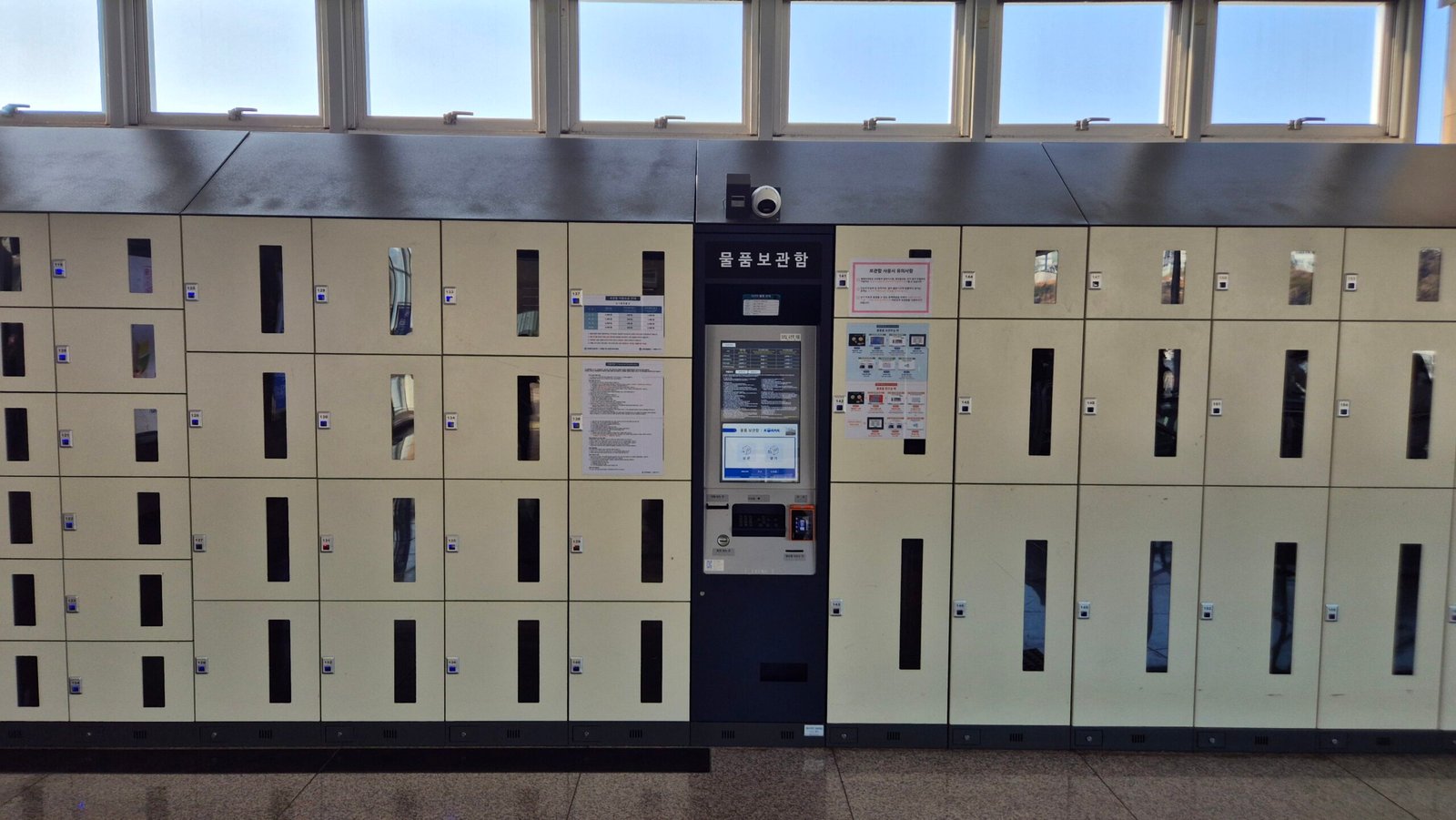
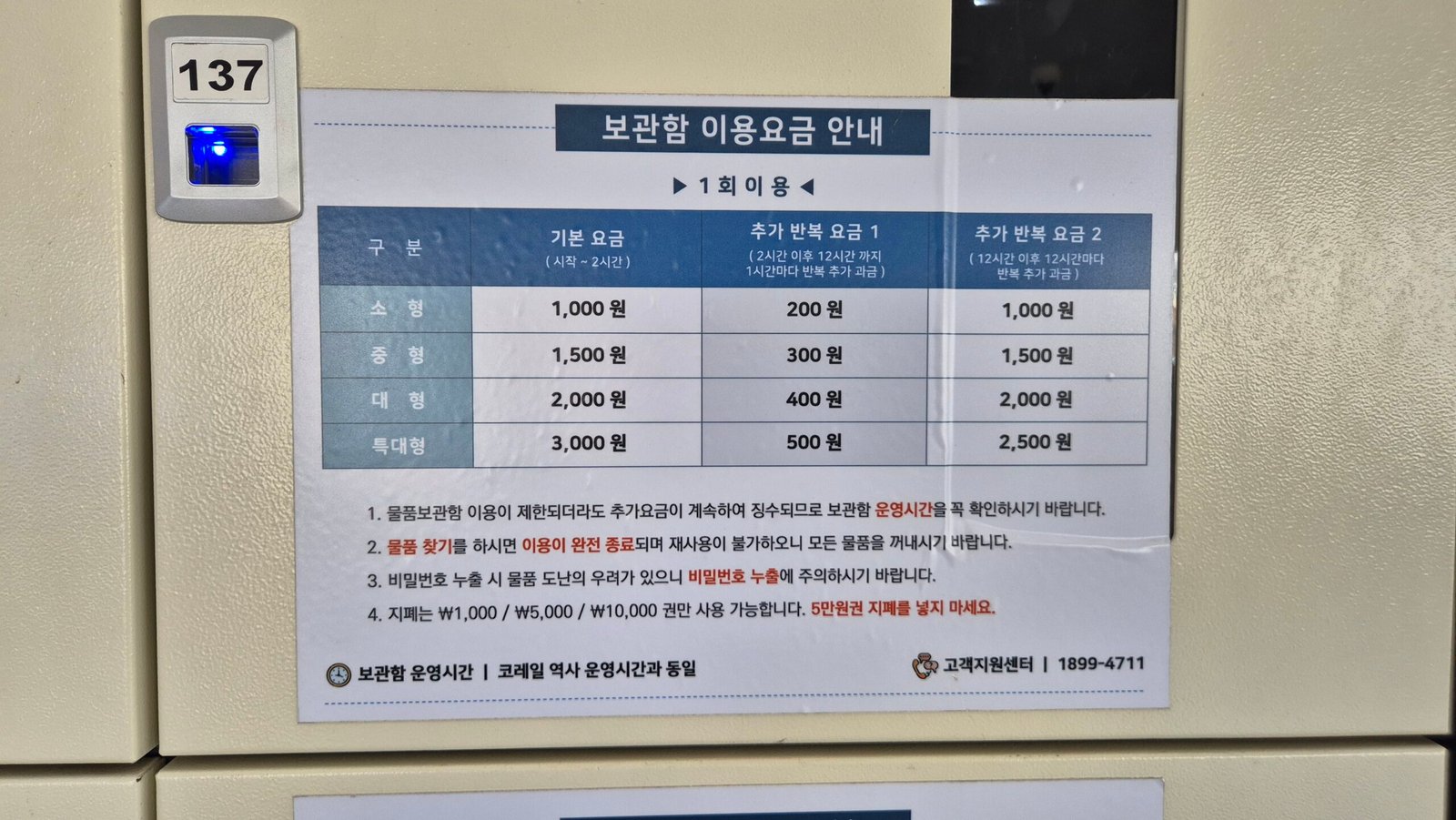
💡 2026 Logistics: Suncheon Station Luggage Storage
If you plan to explore immediately or leave the city via KTX later, do not drag your heavy bags.
- Small Lockers: 1,000 KRW (Base charge for 12 hours).
- Large Lockers: 2,000 KRW (Base charge for 12 hours).
- Overtime Fee: Additional 1,000 KRW (Small) / 2,000 KRW (Large) charged every 12 hours thereafter.
The Winter Guests: Suncheonman Wetland & Hooded Cranes
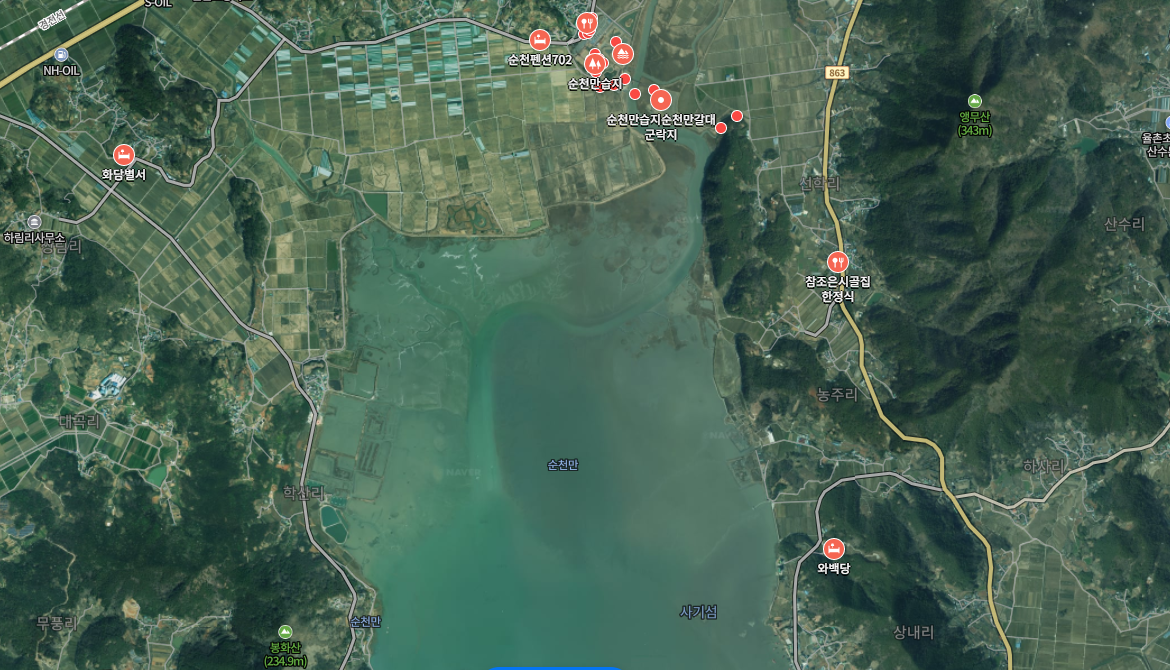
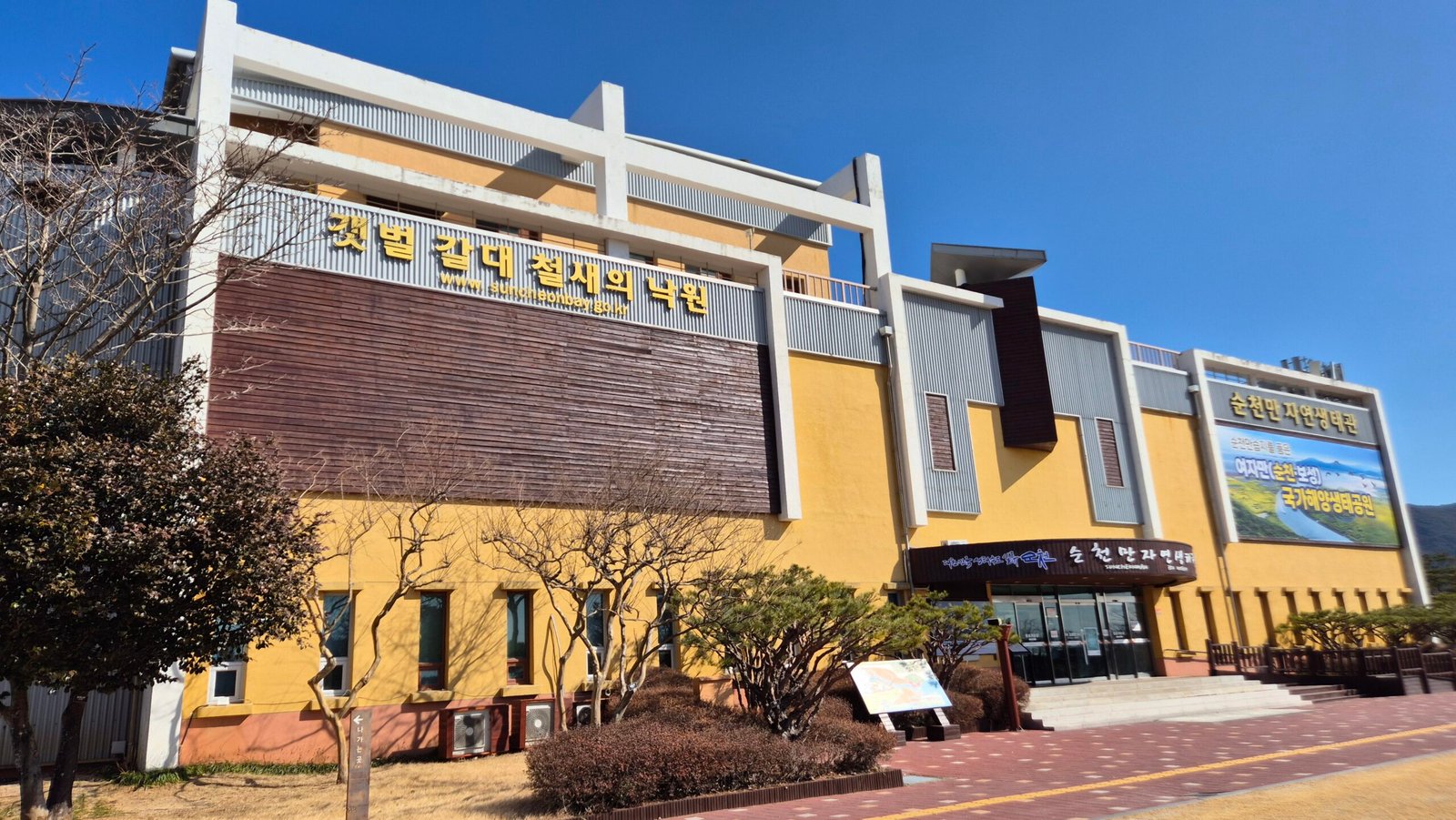
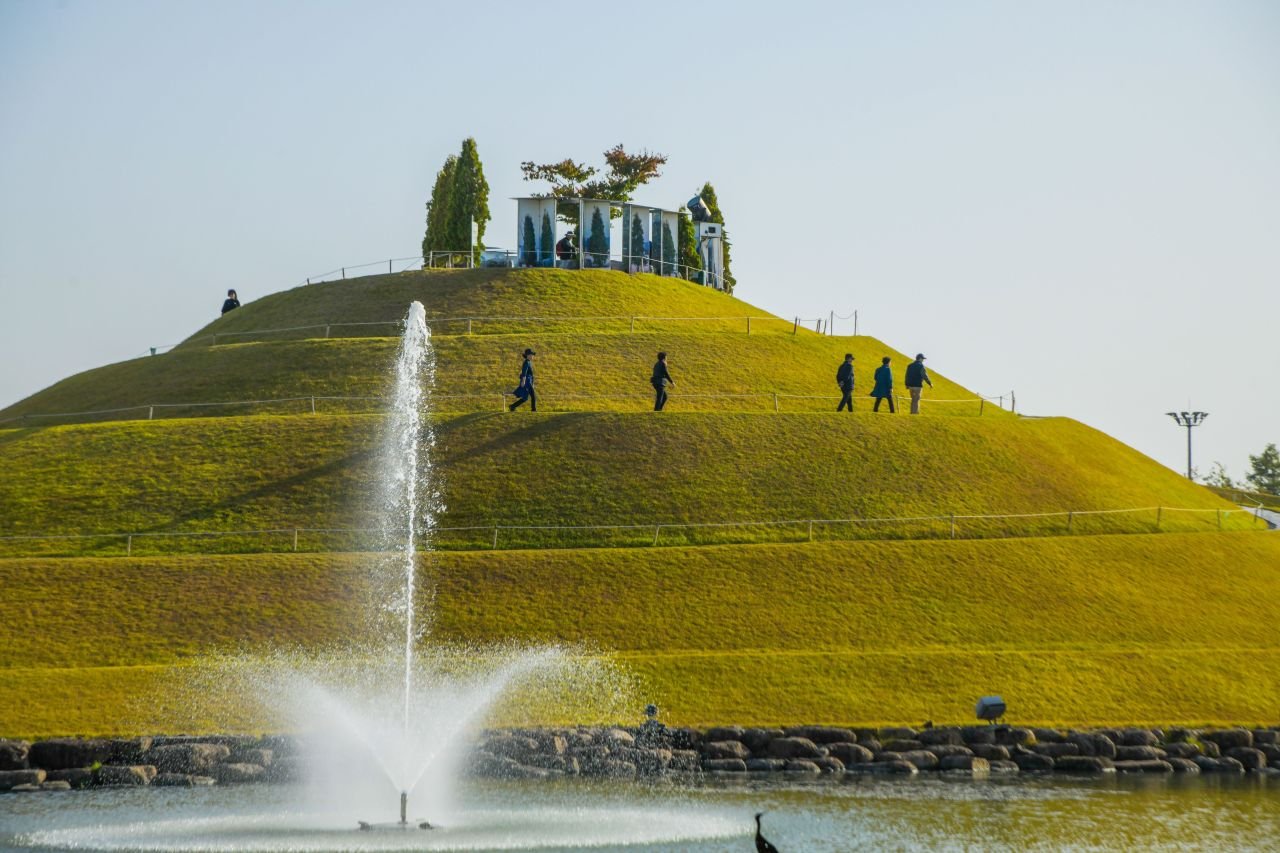
My older sister greeted me with the warmth of family, and we wasted no time. We headed straight for the Suncheonman Wetland (순천만습지).
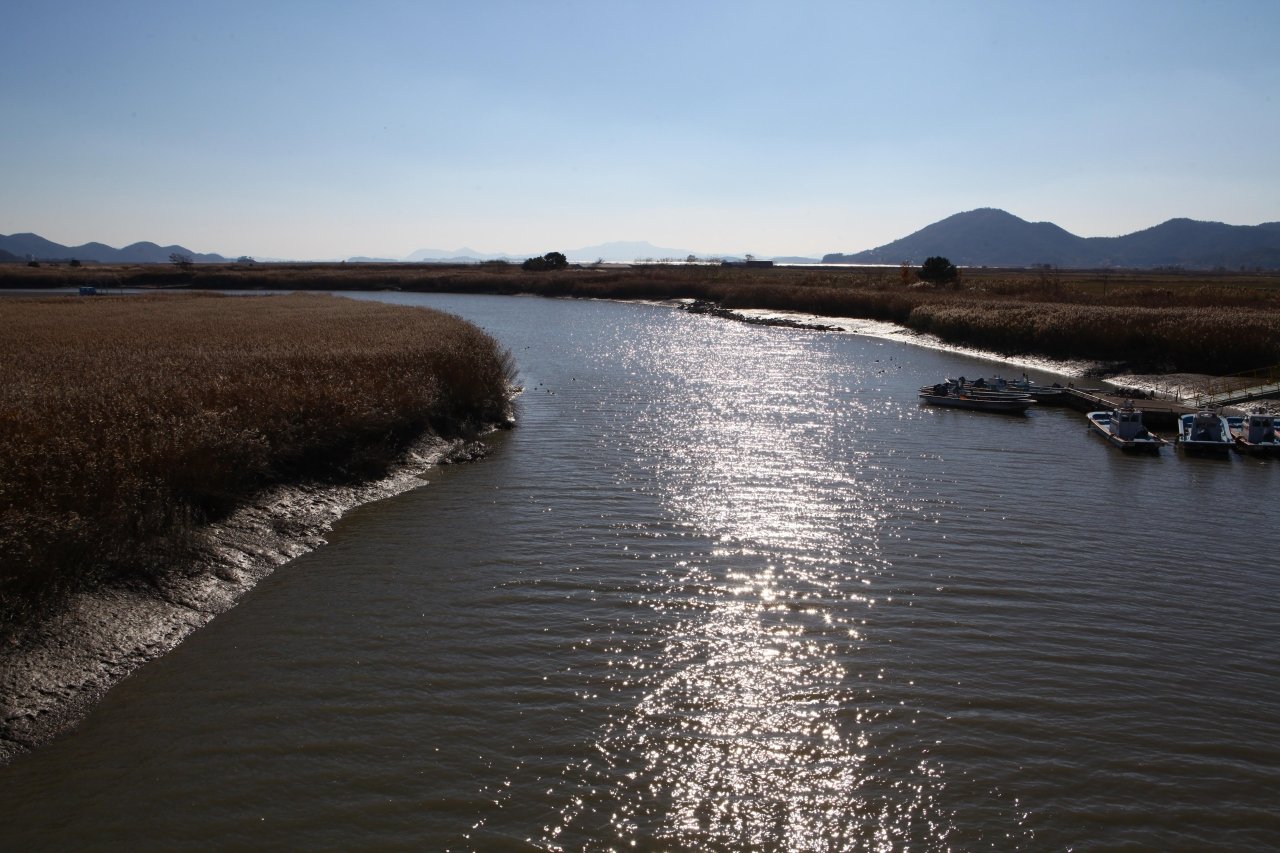
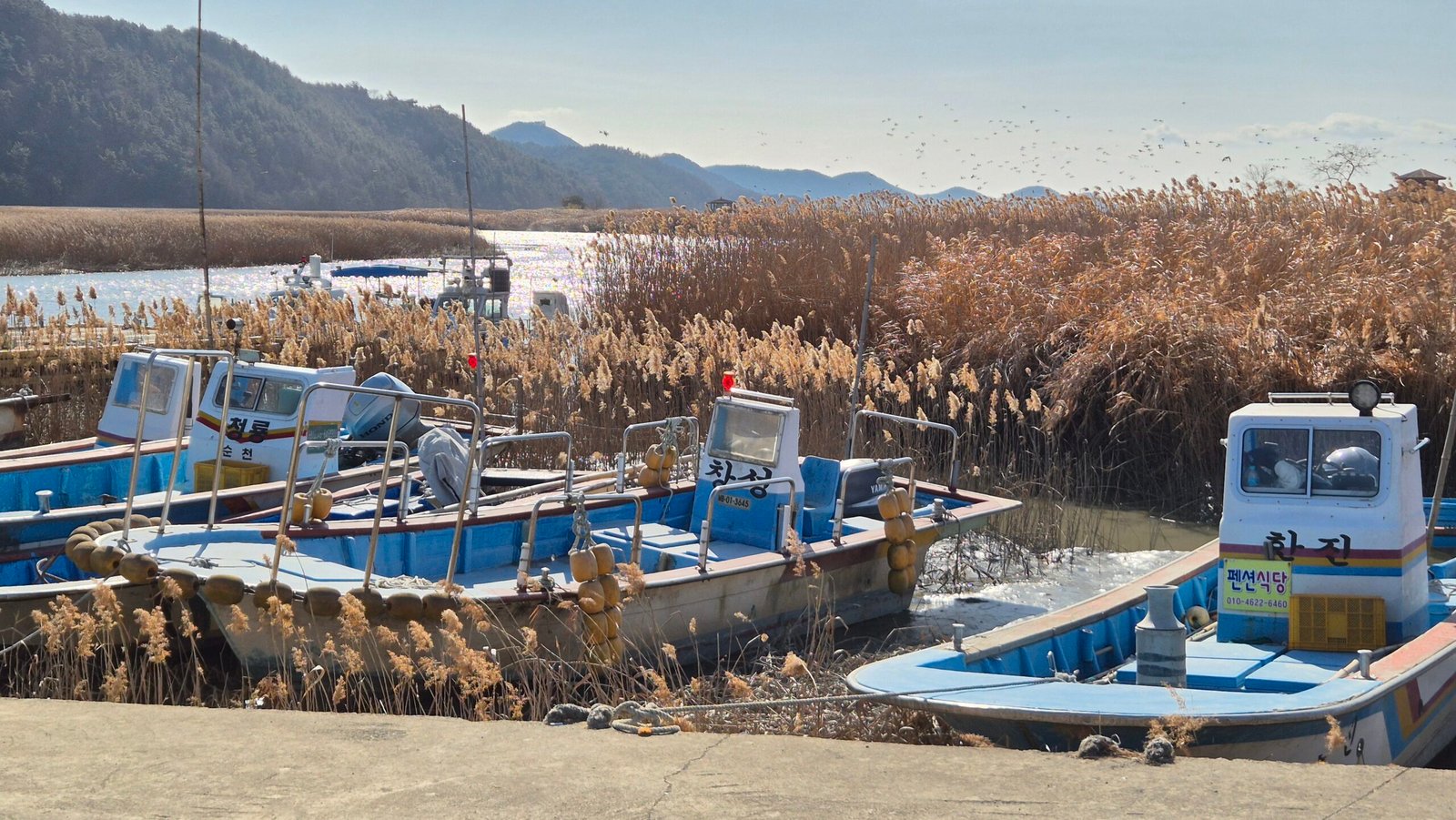
The weather forecast was unforgiving. A cold wave had descended upon the Korean peninsula. Even here in the south, the mercury hovered between -5°C and -7°C. The wind off the mudflats was fierce, but our anticipation acted as a shield against the chill.
Getting There: Station to Wetland (Feb 2026 Update)
| Method | Cost (Est.) | Time | Insider Note |
|---|---|---|---|
| Taxi | 9,500 ~ 11,000 KRW | 15~20 mins | Best for groups (3-4 people). 20% surcharge applies after midnight. |
| City Bus (#66) | 1,600 KRW | 35~40 mins | Board at ‘Suncheon Station’ stop. Runs every 20-30 mins. |
We purchased our admission tickets (10,000 KRW for adults). Remember: This single ticket grants you access to both the Wetland and the Suncheonman National Garden (순천만국가정원) on the same day. Do not lose it!
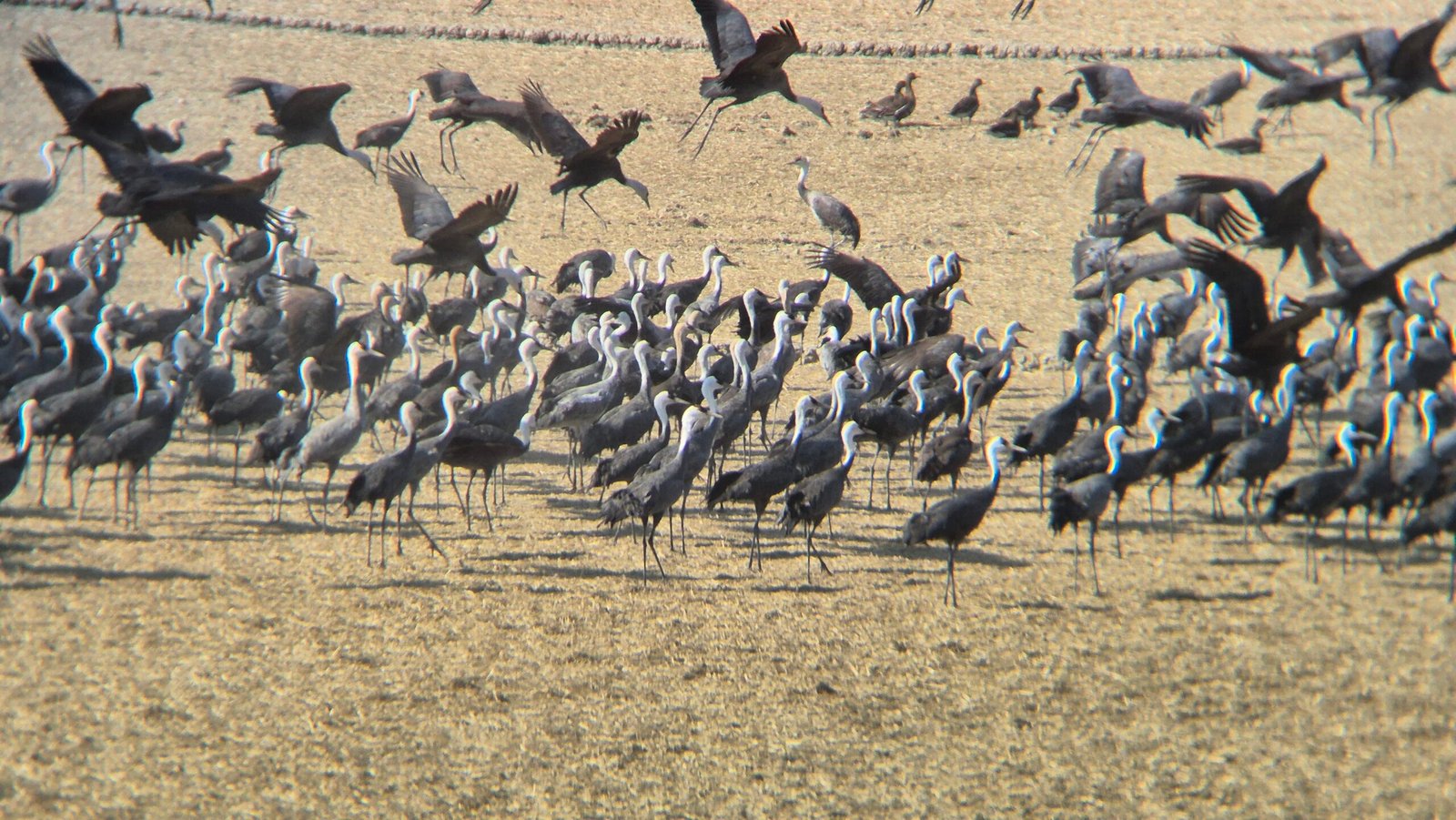
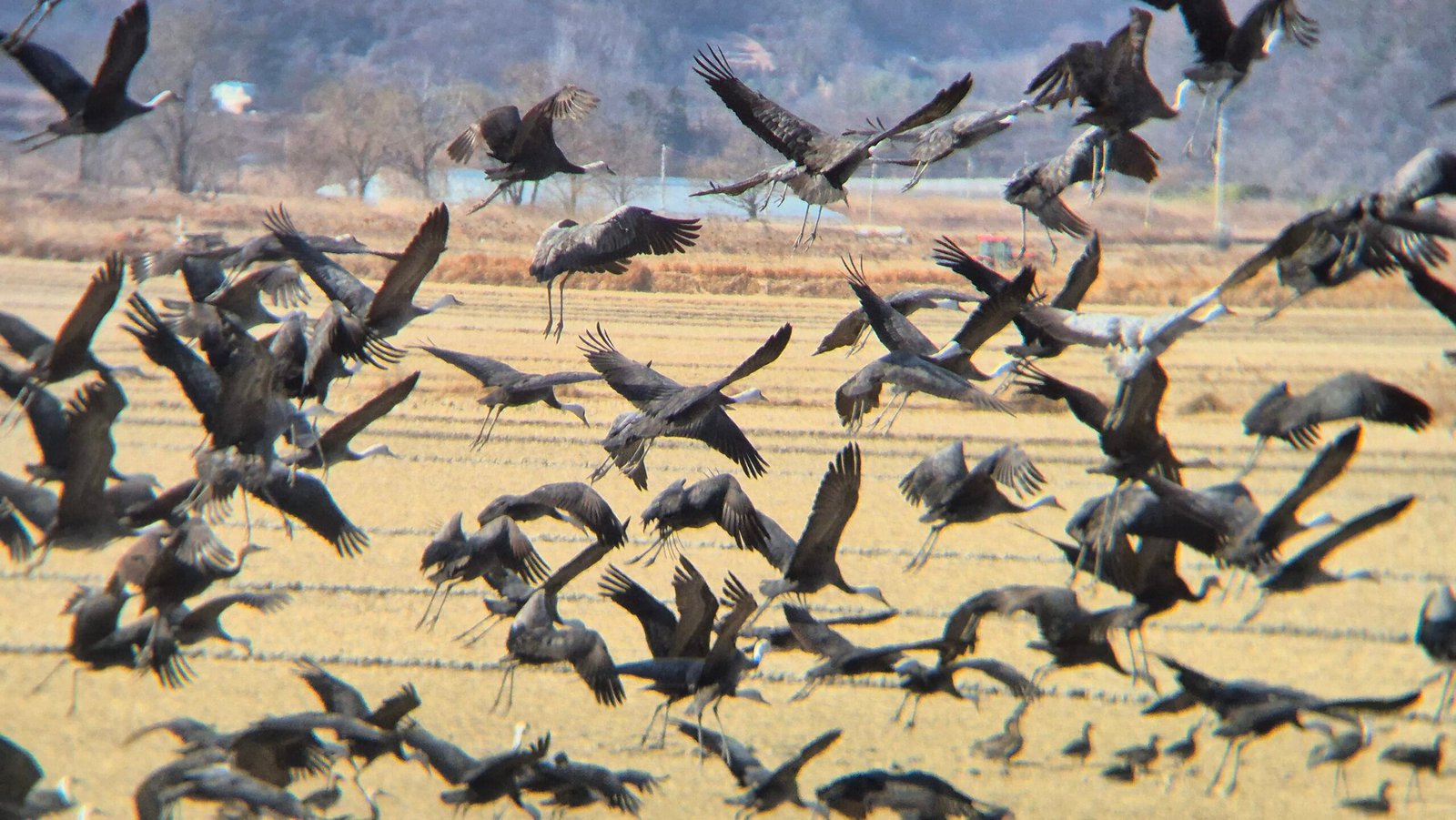
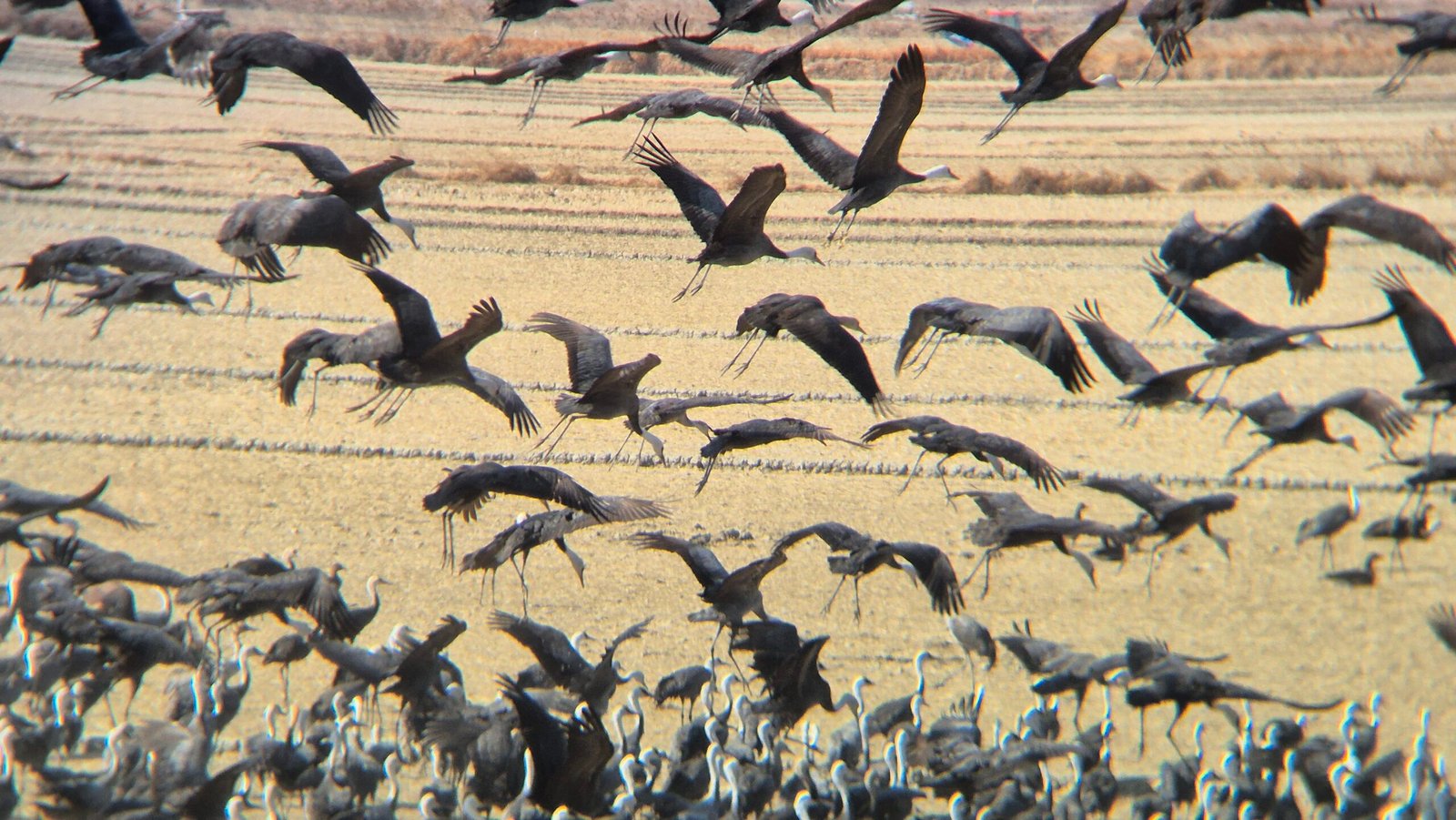
Walking toward the observation deck, the reed fields swayed violently in the wind. But then, we saw them. Thousands of Hooded Cranes (흑두루미) scattered across the rice paddies.
These rice paddies are a sanctuary. The city of Suncheon pays subsidies to local farmers to leave the rice straw and scatter seeds, strictly prohibiting human entry during winter. It is a promise between the city and nature.
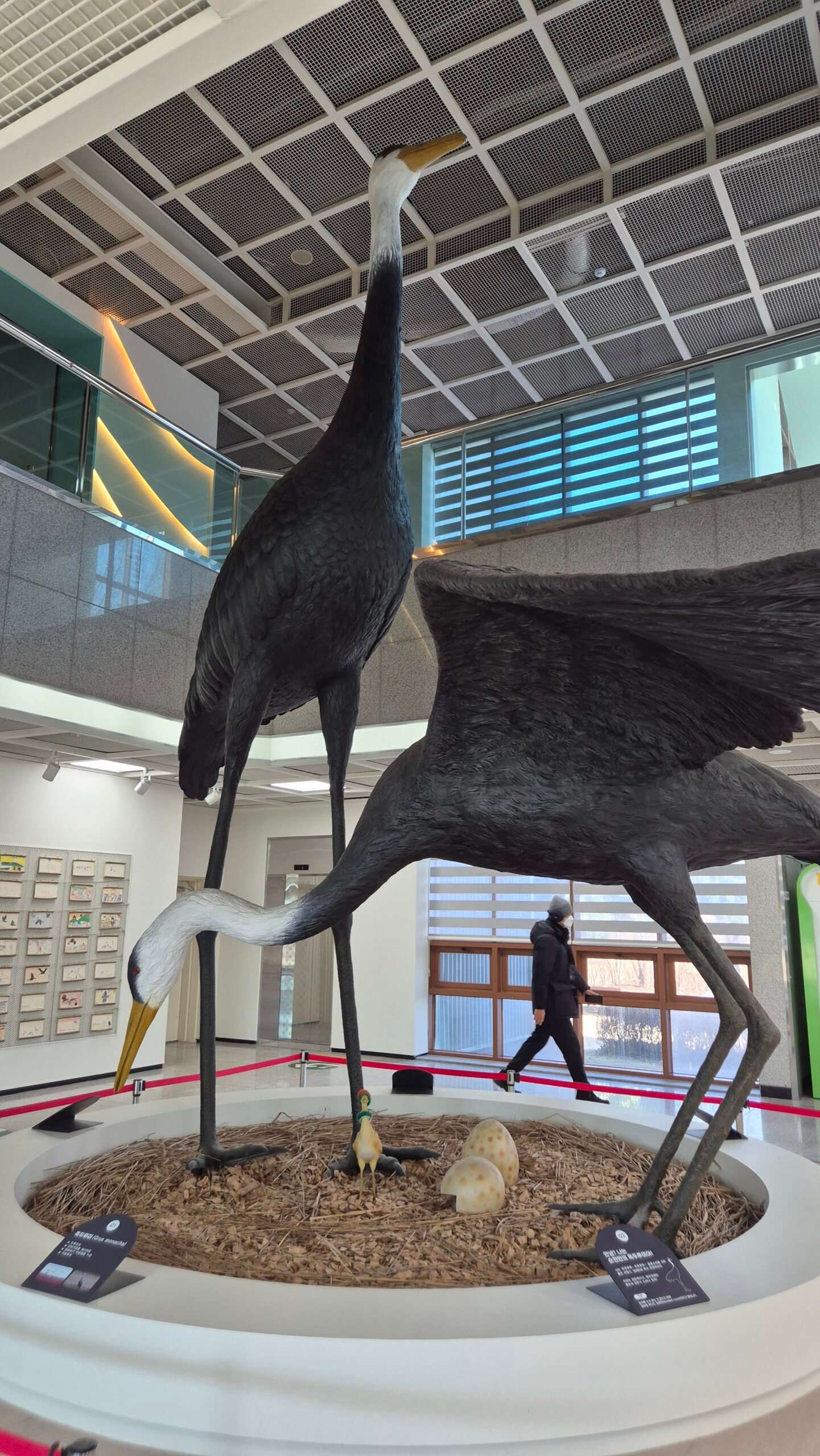
- The Numbers: The global population of Hooded Cranes is only about 17,000 to 20,000. Astonishingly, nearly 10,000 of them—half the world’s population—choose Suncheon for their winter home.
- The Lifecycle: They rest here before returning to Siberia or Northern China to breed, usually raising just two precious chicks.
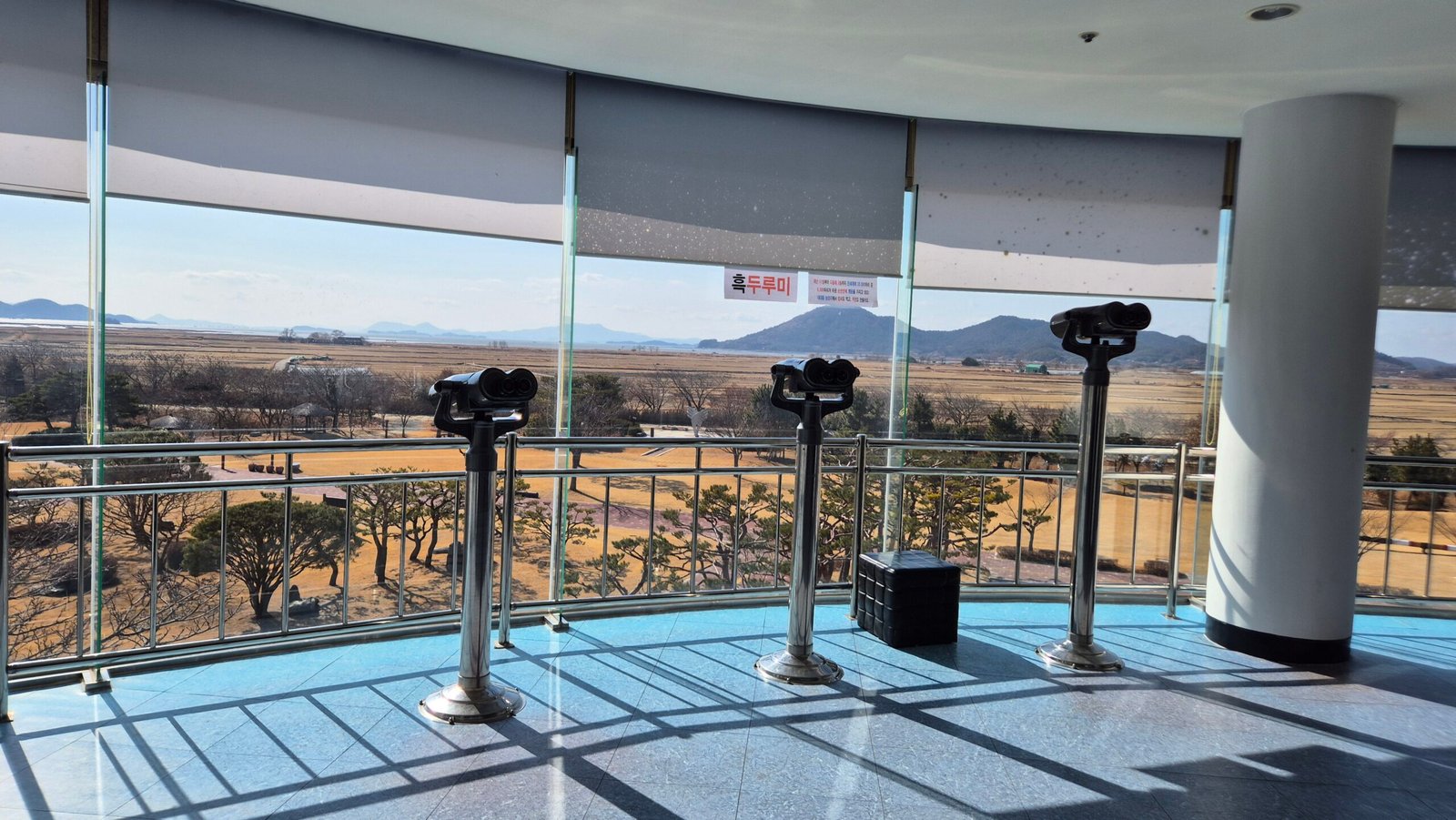
Through our binoculars, we also spotted Mallards and the imposing silhouette of Cinereous Vultures (독수리) from Mongolia. We spent an hour at the outdoor deck, but the cold was becoming unbearable. The open windows of the bird blind offered no protection.
💡 Pro Tip: The Hidden Indoor Observatory
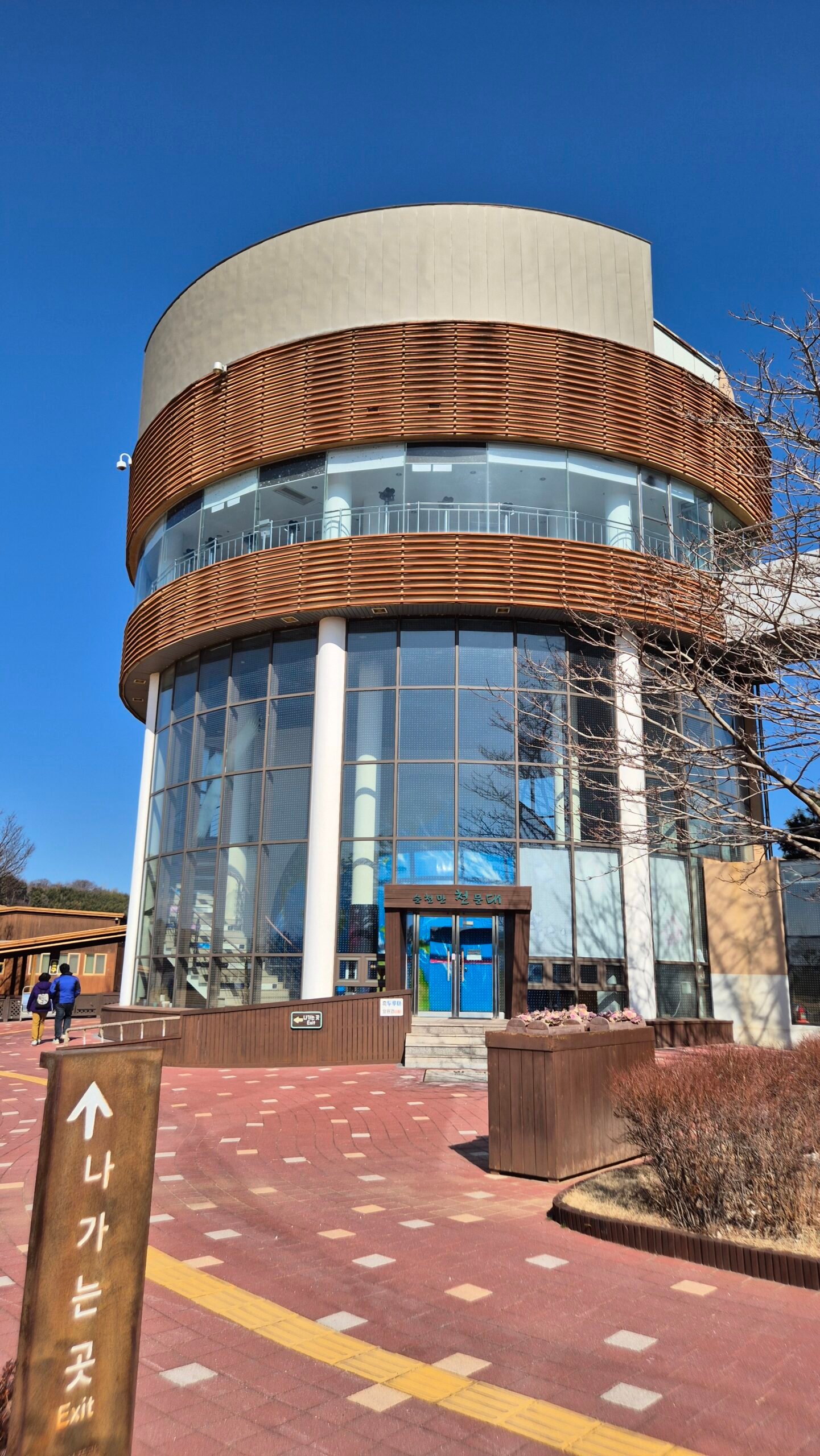
If you are freezing, do not leave yet! Head to the ‘Suncheonman Astronomical Observatory’ (순천만습지천문대) next to the Nature Ecology Hall. On the 2nd floor, there is a warm indoor viewing area equipped with high-quality telescopes (free to use). We spent another comfortable 30 minutes there, observing the birds in vivid detail without the biting wind.
Navigation Guide: Moving Between Garden & Wetland
While our focus today was the wetland, many travelers combine it with the National Garden. Moving between these two massive sites can be confusing. Here is the 2026 traffic guide.
- 1. Taxi (Fastest): Takes 10-15 mins (Approx. 7,500 KRW). Best if you are short on time.
- 2. City Bus (#66): Takes 20-30 mins (1,600 KRW). The budget option.
- 3. SkyCube (The Scenic Route): This is a Personal Rapid Transit (PRT) system.
- Route: Garden Station (in National Garden) ↔ Literature Hall Station (near Wetland).
- Cost: 8,000 KRW (Round Trip) / 6,000 KRW (One Way).
- Important: The SkyCube drops you at the Literature Hall, about 1km from the Wetland entrance. You must transfer to the Reed Train (갈대열차) (included in ticket) or walk along the reed path.
- Warning: In February, operations often end around 5:00 PM – 6:00 PM. Check the time if you plan to see the sunset!
A Feast of Flavors: The Jeolla-do Standard
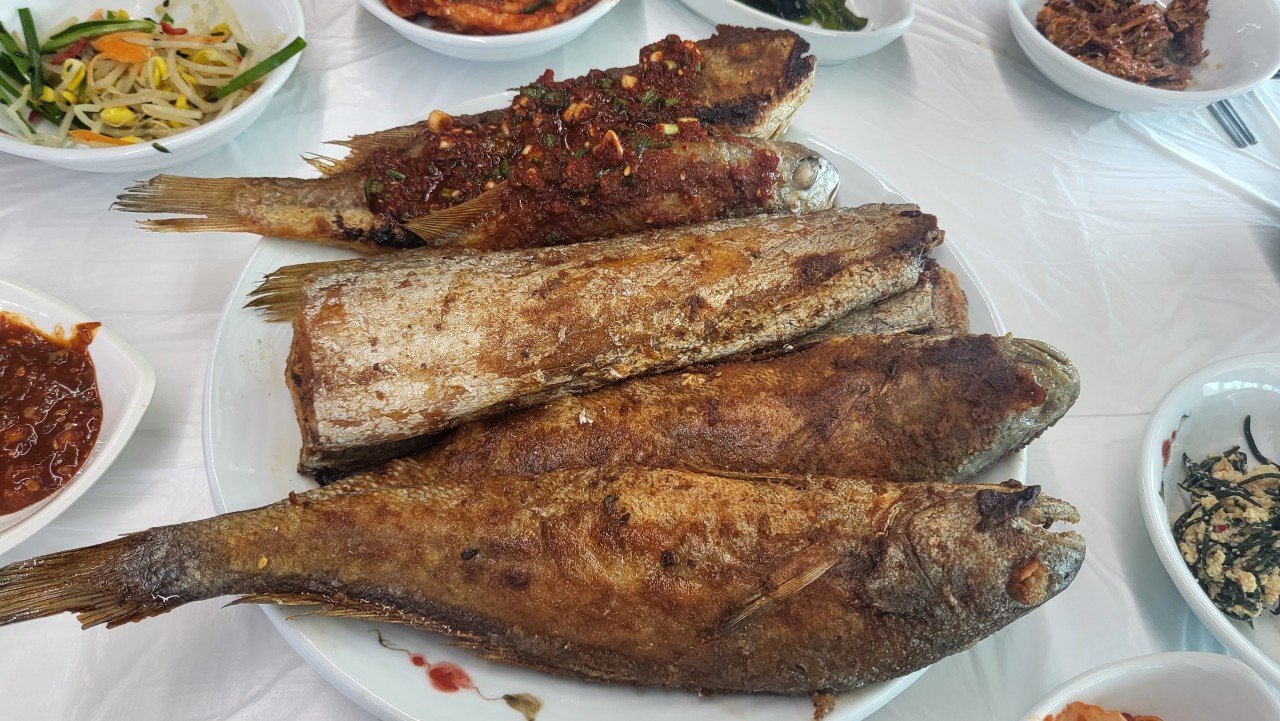
Frozen bodies need warm food. On our way to Yeosu, we stopped for a meal at a restaurant called Wolsun-ne Bapsang (1192 Seobu-ro, Yulchon-myeon, Yeosu-si, Jeonnam) for Galchi-jorim (Braised Cutlassfish) and grilled fish.
There is an unwritten rule in Korea: “In Jeolla-do, you cannot fail.” Even a random street restaurant serves food that would be considered gourmet elsewhere. The spicy, savory broth of the fish stew melted the cold right out of our bones. My older sister nodded in approval—the highest praise from a local.
Yeosu Hyangiram: A Temple Facing the Infinite Sea
Recharged, we decided to drive to Yeosu (여수) to visit Hyangiram (향일암).
Transport Note: Moving from Suncheon Wetland to Hyangiram without a car is tough. A taxi costs a fortune (65,000~80,000 KRW). Public transport involves a bus to Suncheon Station → Train to Yeosu Expo → Bus 111/113 to Hyangiram, taking nearly 3 hours. Therefore, if you plan to visit Hyangiram Hermitage without a car, I recommend starting your itinerary in Yeosu or linking it with other activities in the city. We were lucky to have a car.
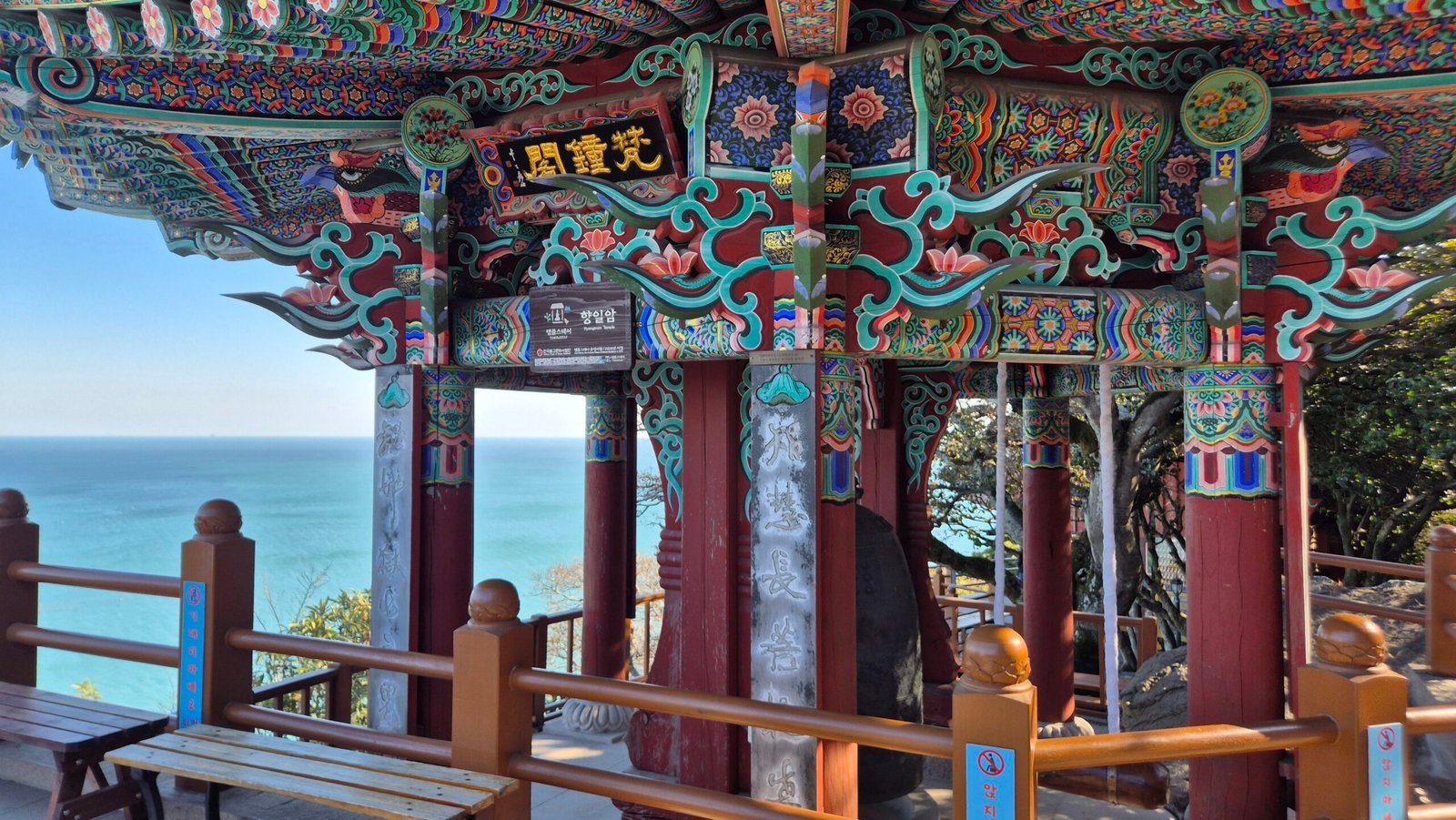
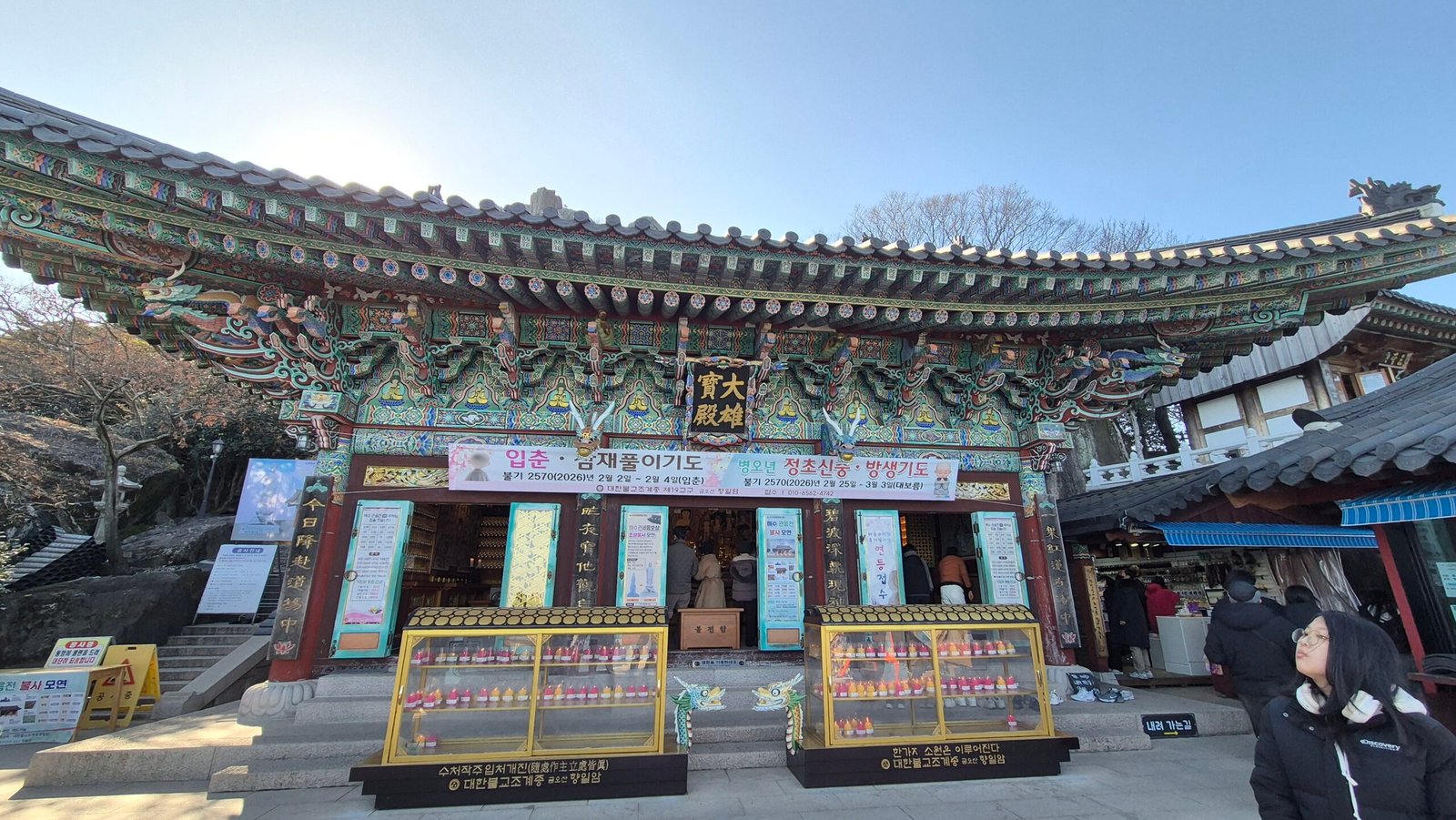
Hyangiram, meaning “Hermitage Facing the Sun,” sits precariously on a cliff on Dolsan Island. Founded by the legendary monk Wonhyo, it is one of the four major prayer sites in Korea. The climb from the parking lot is steep, but the path is vibrant.
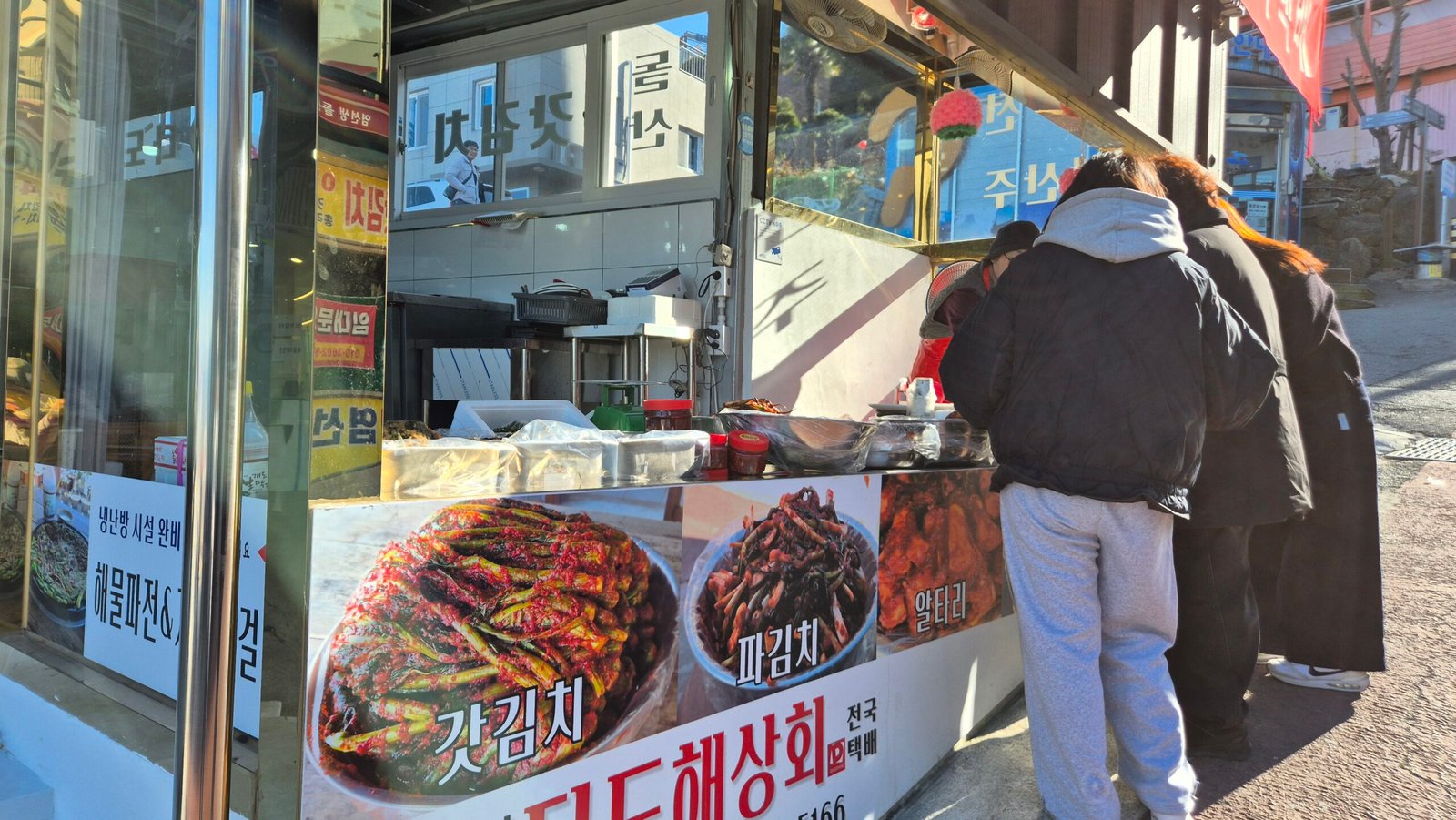
Along the way, the air smelled of fermentation. Vendors were selling Gat-kimchi (Mustard Leaf Kimchi), the famous specialty of Dolsan.
“Look at the Gim (Seaweed),” my older sister pointed out as we passed a stall. “You know, Gim has become so popular globally that prices have skyrocketed. But the quality here? It’s the best.” Trusting her instinct, she bought a large pack to take home.
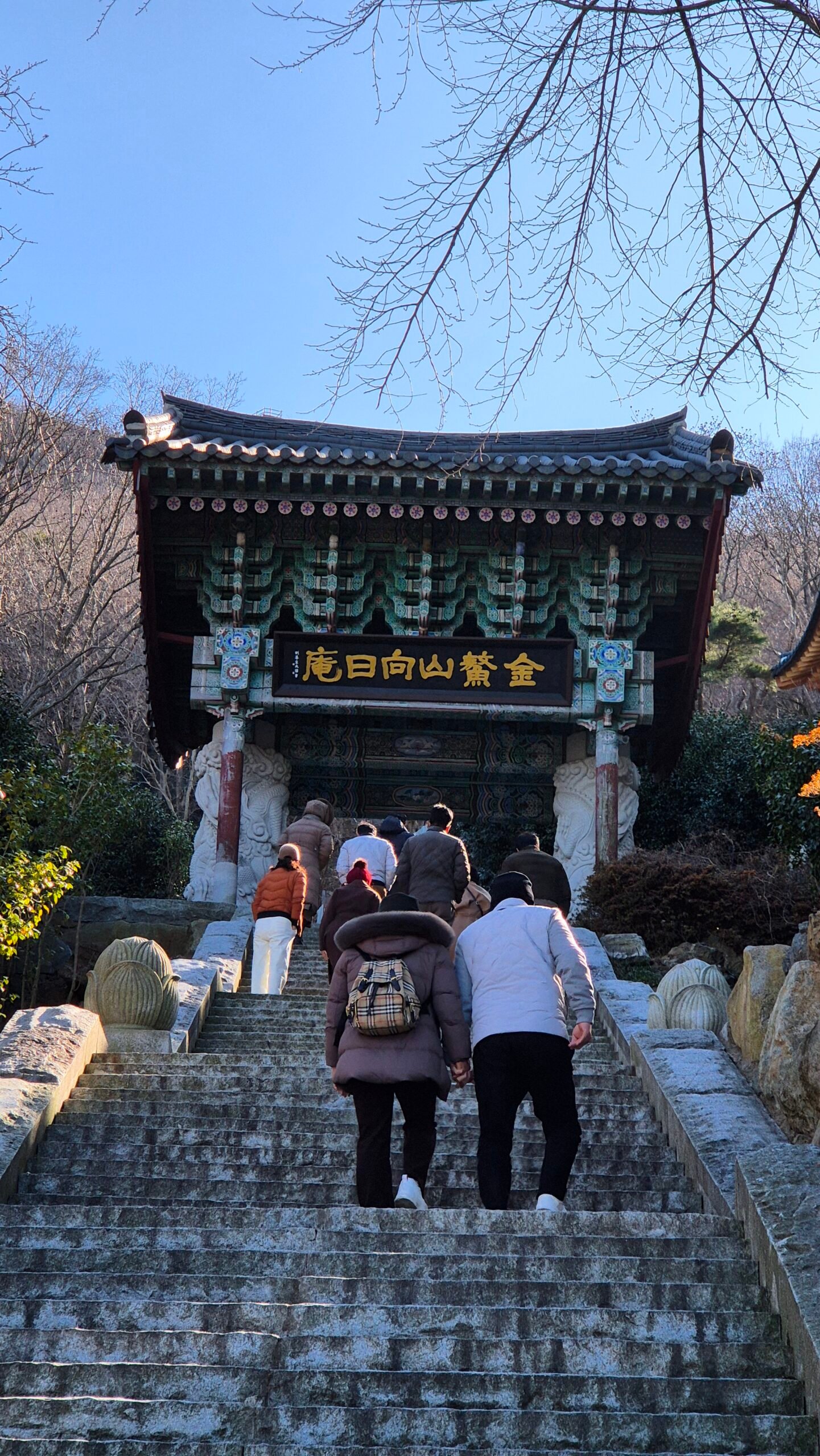
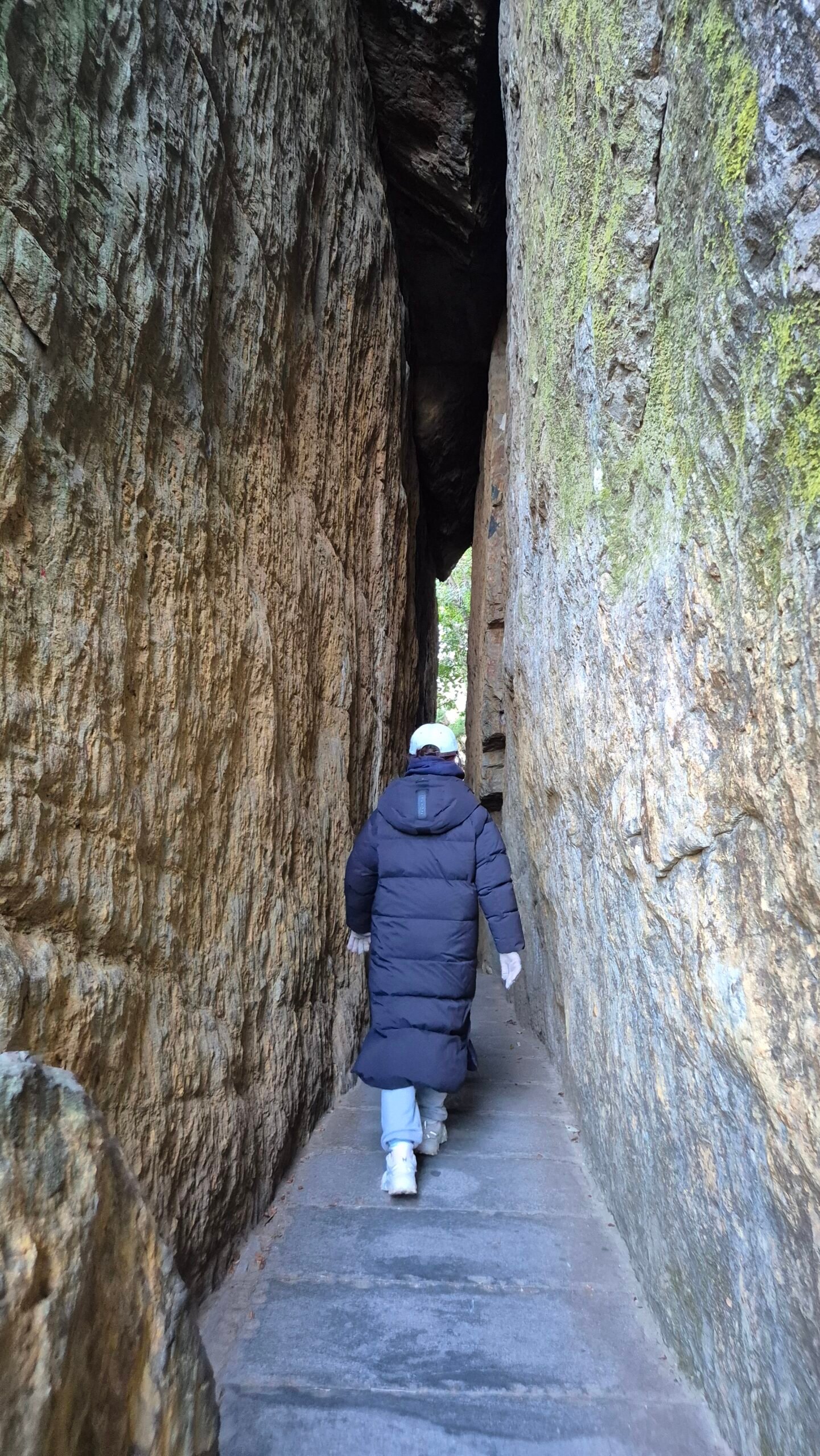
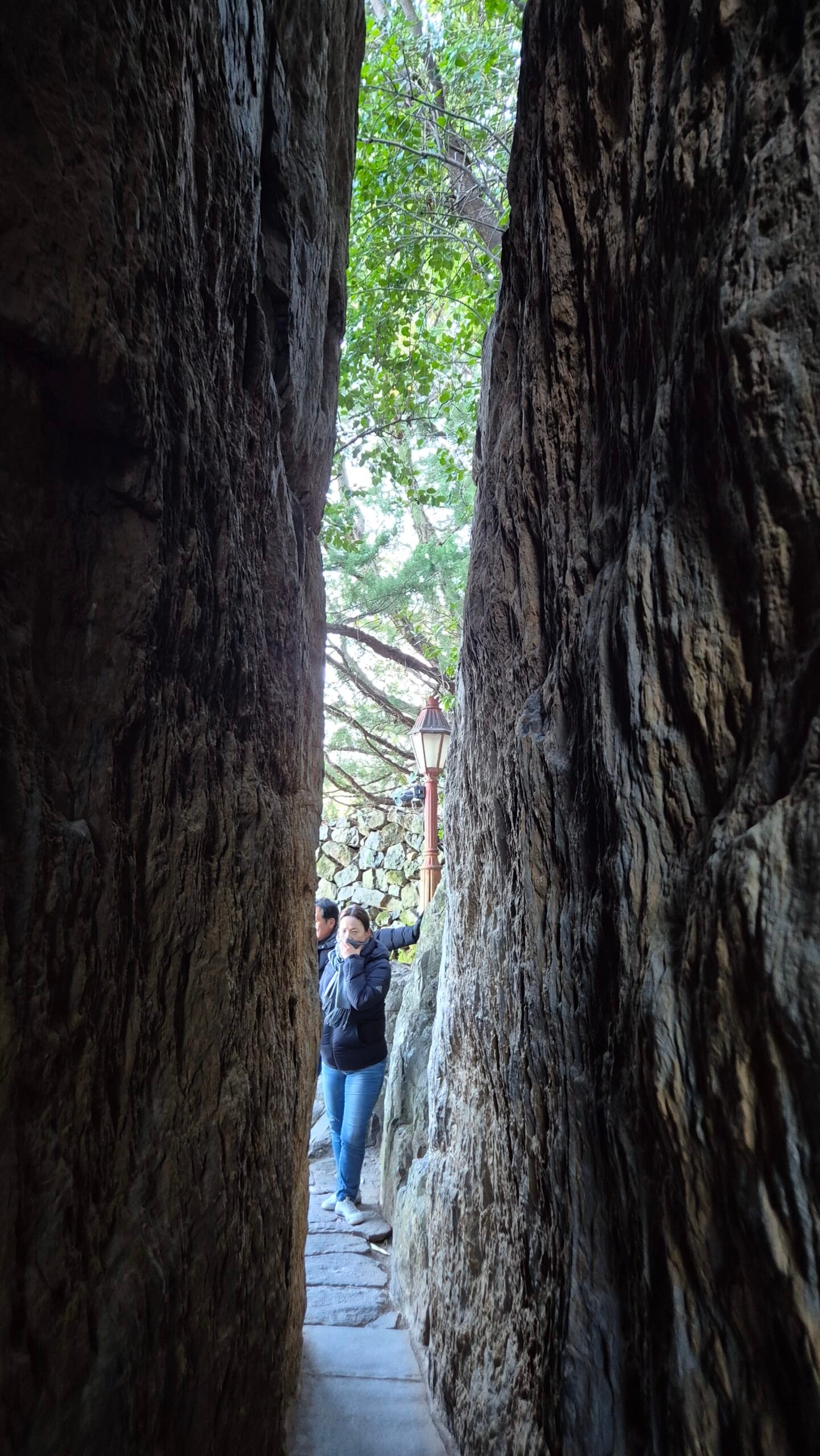
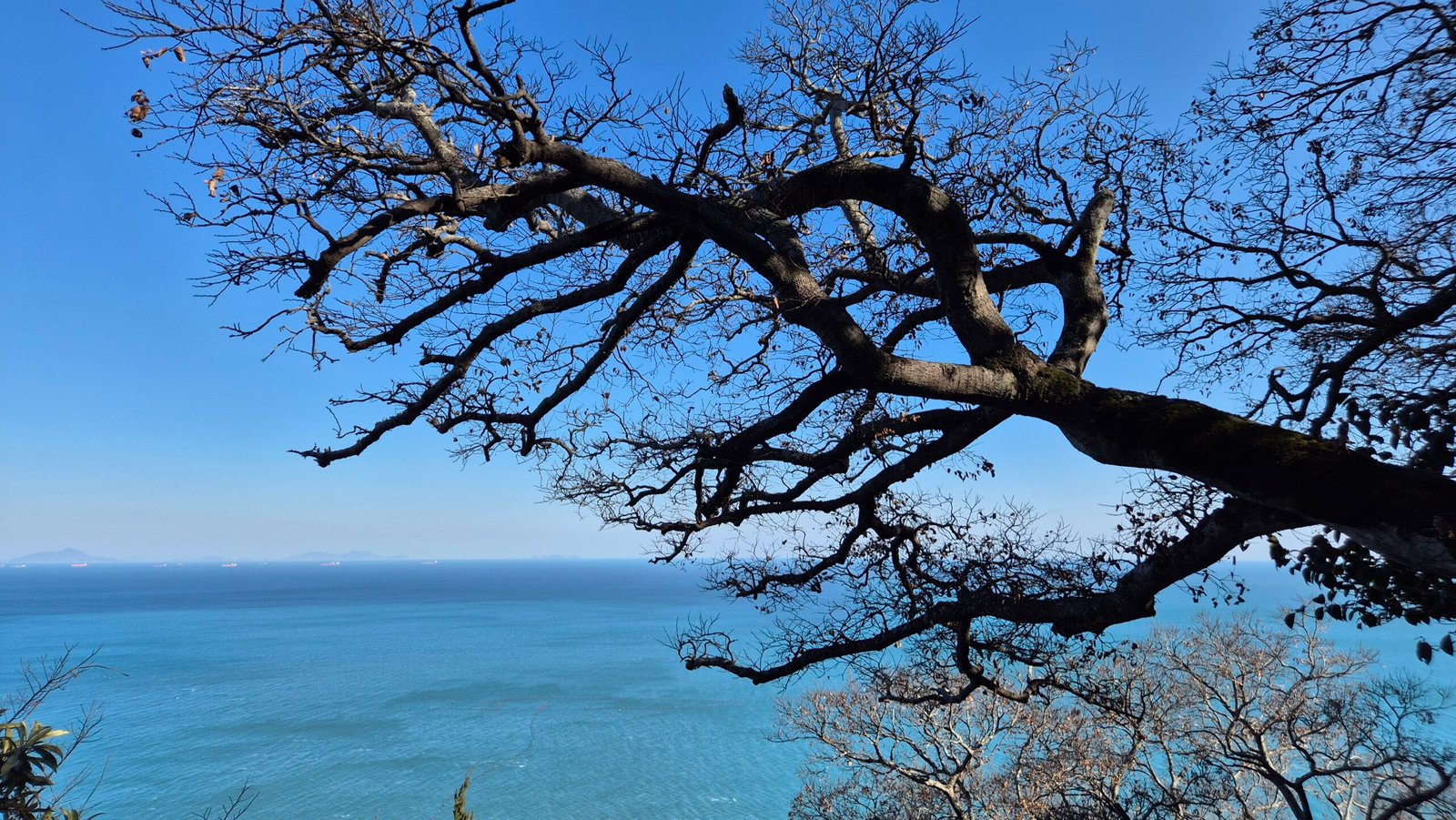
We squeezed through the narrow rock crevices that serve as natural gates. Passing the Iljumun Gate with its dragon-carved pillars, we finally reached the main hall. The view was breathtaking. The South Sea stretched out infinitely, dotted with tiny fishing boats. Standing there, listening to the wind and the temple chimes, I imagined the monks who meditate in this beautiful solitude, enduring the same cold wind we felt today.
The Sunset Dilemma: Mountain Hike vs. Seaside Cafe
We drove back to Suncheon to catch the sunset. This is the highlight of the trip, but you have a critical choice to make depending on your energy level.
Option A: The Active Choice (Yongsan Observatory)
This is for the photographers and hikers who want the iconic view of the S-shaped waterway.
- The Path: From the Wetland entrance, cross Mujingyo Bridge, walk the 1km reed deck, and then hike up the mountain trail (Yongsan) for 20-30 minutes. (Total 40-50 mins one way).
- The View: You see the full circular reed colony and the sun setting directly over the winding water.
- 2026 Timing (February): Sunset is between 18:00 and 18:25. You MUST start walking from the entrance by 4:40 PM.
- Gear: A flashlight is essential for the hike down.
Option B: The Relaxing Choice (Waon Beach)
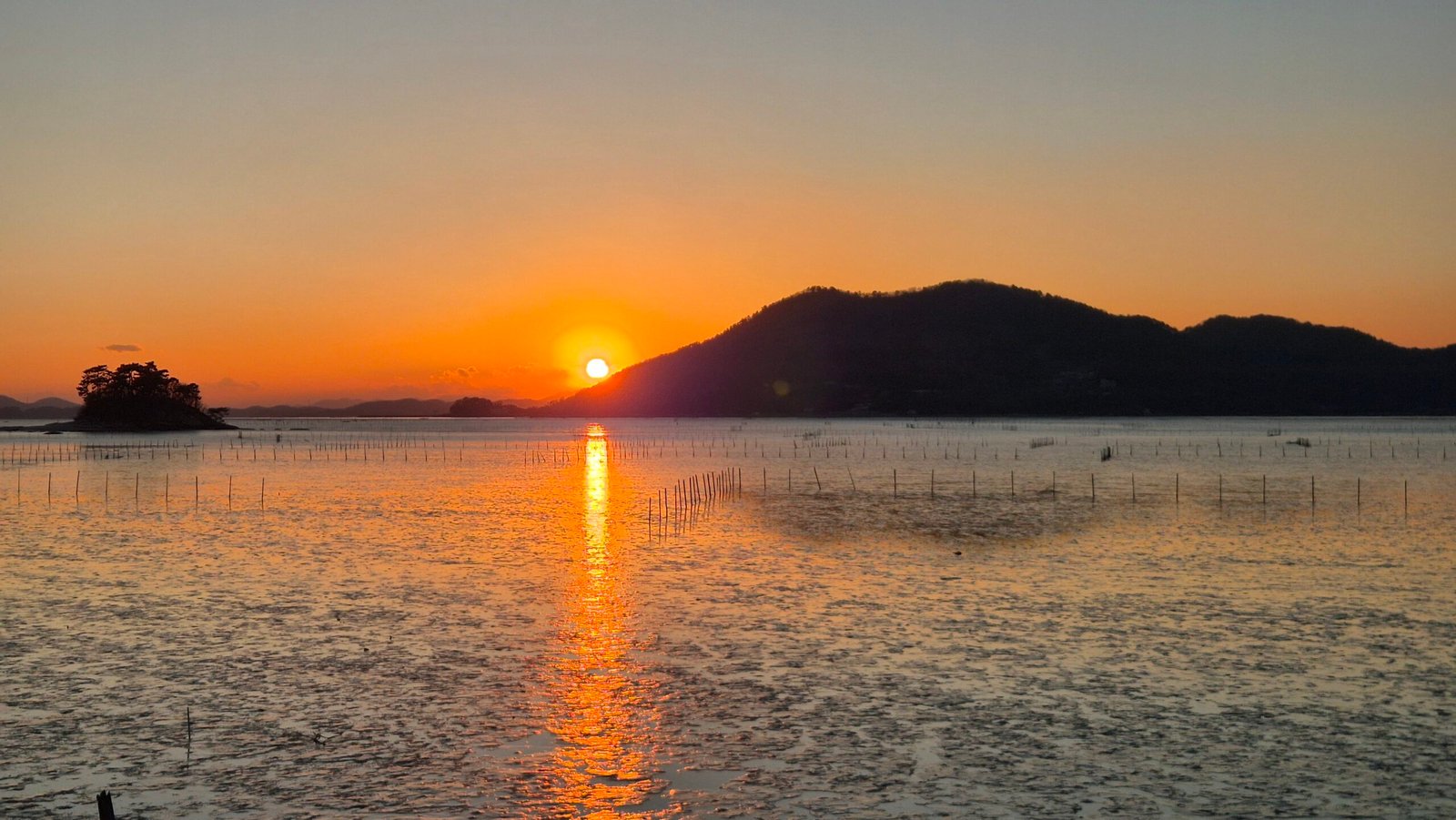
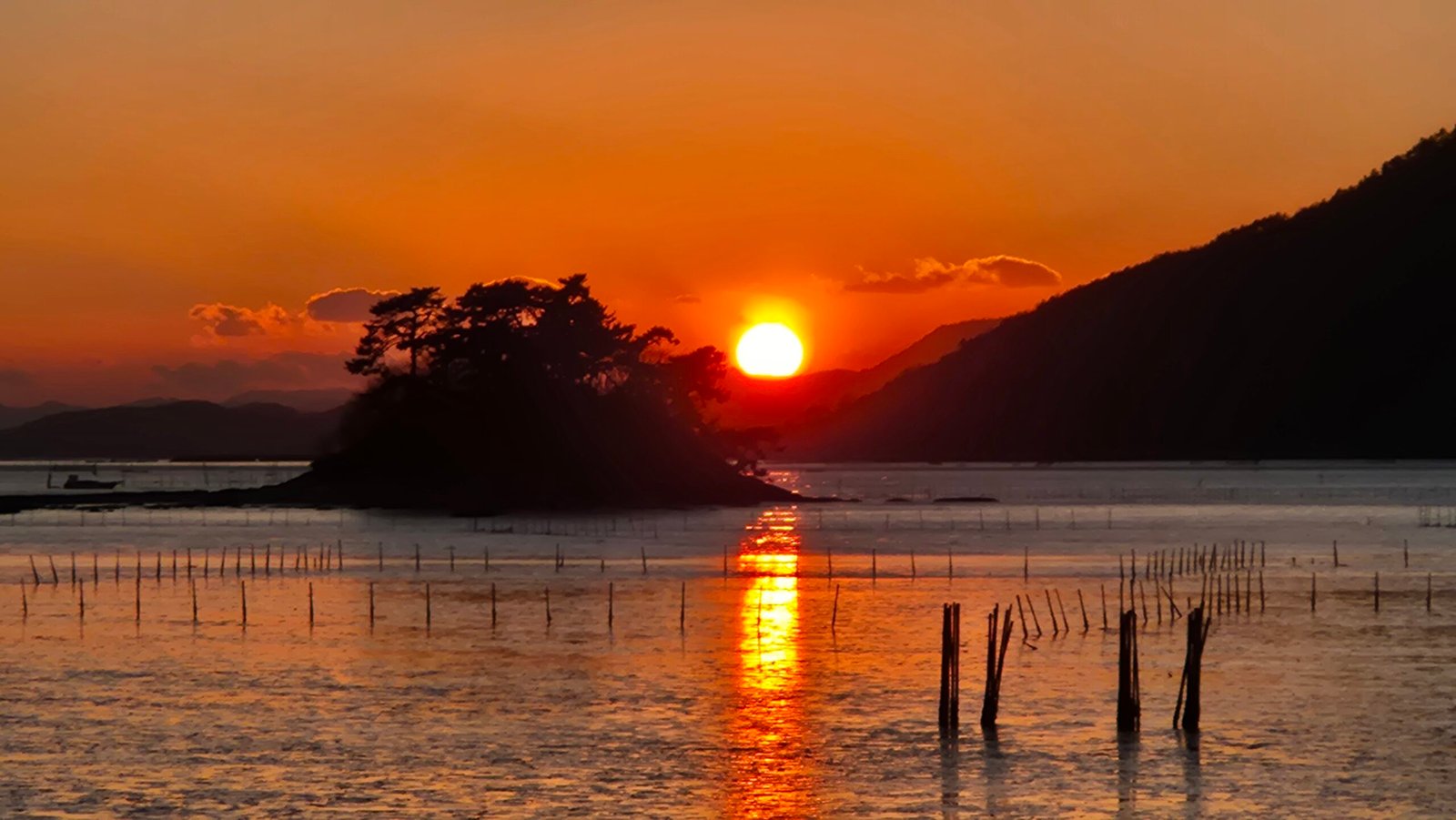
Since we had already climbed Hyangiram and were tired, we chose this option. We drove to the east side of the bay, to Waon Beach (와온해변).
We entered ‘Waon Cafe Olive’ (Address: 92-2 Waon-gil, Haeryong-myeon). It was warm, smelling of roasted coffee beans.
[Insert Photo: The fiery orange sun setting behind a small island, seen through the cafe window]
We sat by the window, sipping hot coffee and catching up on stories we hadn’t shared in a long time. Outside, the sky turned a deep, burning orange. The sun slowly dipped behind a small island (Sol-seom), turning the vast mudflats into a purple mirror. It was a “hot” sunset in a freezing world—a moment of perfect peace.
Where to Sleep: The “Walk-in” Culture of Daedae-dong
If you choose Option A (Yongsan Observatory), you will come down the mountain after dark. By the time you reach the entrance, it will be dinner time. Many travelers worry: “Must I go back to the city center to sleep?”
Absolutely not. The village right in front of the wetland entrance (Daedae-dong) is a hub of hospitality.
- The Vibe: The area is filled with Minbak (Traditional Guesthouses) and Pensions. These are not luxury hotels, but they are warm, clean, and run by friendly locals.
- Booking Strategy: While you can find some on Agoda or Airbnb, many of the best, most authentic spots are not listed online.
- The “Walk-in” (Walk-in Booking): Even in 2026, the old ways work best here. It is perfectly normal to walk into a building with a “Minbak” sign and ask, “Bin-bang isseoyo?” (Do you have an empty room?). Unless it is the peak of the Reed Festival, you will easily find a room.
- Advantage: Staying here means you can rest immediately after the hike and enjoy a calm country morning the next day without commuting.
This concluded our first day. With our hearts full of the crane’s dance and the sunset’s glow, we rested. Tomorrow, our journey continues to the ancient Seonamsa Temple and the living history of Naganeupseong Folk Village.
Korean Culture portal KCulture.com
Founder of Kculture.com and MA in Political Science. He shares deep academic and local insights to provide an authentic perspective on Korean history and society.
![[Day 2] Suncheon : Seonamsa Temple & Naganeupseong Living Village](https://kculture.com/wp-content/uploads/2026/02/seungsungyo-1024x687.jpg)