Introduction & Synopsis
‘The Dancing Gayageum’ is a poignant historical drama (known as sageuk) that chronicles the life of Hwang Jini, the Joseon Dynasty’s most legendary gisaeng. The narrative centers on her relentless pursuit of artistic excellence with the gayageum, a traditional Korean zither, amidst the suffocating social constraints placed upon women of her class. It is a story of her genius, her forbidden loves, and the profound solitude that often accompanies greatness. Aired in the early 90s, this 1990 MBC production offers a raw and emotionally resonant portrait of an icon, focusing less on courtly intrigue and more on the internal struggles of a woman who dared to live for her art.
Beyond the Silk Robes: Understanding the World of a Gisaeng
To a global audience, the term gisaeng is often mistranslated as “courtesan” or “geisha,” but this simplification misses the core of their cultural significance. In the rigid, neo-Confucian hierarchy of the Joseon Dynasty, gisaeng belonged to the lowest social class (cheonmin). However, they occupied a unique paradoxical space. While noblewomen were confined to their homes, illiterate and unseen, gisaeng were state-sanctioned entertainers who were highly educated in literature, music, dance, and poetry. They were the artists and intellectuals of their time, but they were not free.
This drama masterfully explores this dichotomy. Hwang Jini’s life embodies the Korean sentiment of Han (한) — a deep, collective feeling of sorrow, injustice, and unresolved resentment. She possessed a brilliant mind and unparalleled talent but was denied the basic dignity and freedom afforded to even the least accomplished nobleman. Her story is not just a personal tragedy; it is a commentary on a society that cultivated female artistic genius only to simultaneously subjugate it. ‘The Dancing Gayageum’ invites the viewer to understand that her artistry was not just an occupation, but a weapon, a solace, and her only means of self-expression in an unforgiving world.
A Narrative of Passion and Defiance
Themes That Transcend Time
Without revealing key plot points, the drama’s narrative strength lies in its tight focus on Hwang Jini’s internal journey. The central theme is the eternal conflict between art and life. For Hwang Jini, mastering the gayageum is a spiritual quest, but this devotion comes at the cost of personal happiness and conventional relationships. The story compellingly asks whether a life dedicated wholly to one’s craft can ever be truly fulfilling. Furthermore, the drama subtly weaves in a proto-feminist narrative. In an era where a woman’s worth was defined by her husband and sons, Hwang Jini seeks validation through her own talent and intellect, challenging the most powerful men in the kingdom not with force, but with a poem or a perfectly plucked string.
The Pulse of the Time: How Korea Saw Hwang Jini in 1990
When ‘The Dancing Gayageum’ aired, it captivated a nation. Hwang Jini has always been a figure of immense fascination in Korea, and this production was a definitive interpretation for its generation. It arrived before the polished, high-budget sageuk of the Hallyu Wave, offering a grittier, more emotionally grounded portrayal. The drama reinforced the image of Hwang Jini not just as a seductress, but as a suffering, brilliant artist. Go Doo-shim’s powerful performance became a benchmark, solidifying the character’s tragic and defiant spirit in the public consciousness long before more recent adaptations came to the screen.
Cast Spotlight: A National Actress in Her Prime
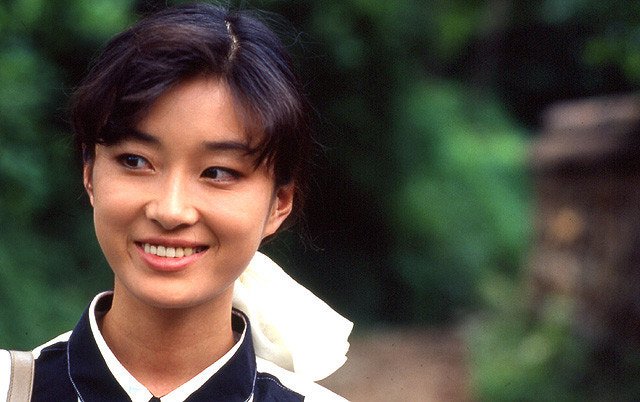
Go Doo-shim as Hwang Jini
Long before she became known to international fans as the quintessential K-drama mother or grandmother, Go Doo-shim was a leading actress of incredible range. Her portrayal of Hwang Jini is a masterclass in subtlety and emotional depth. She captures the fierce pride, the vulnerability, and the deep-seated loneliness of the character. Her performance is the anchor of the series, conveying a lifetime of struggle and artistic passion through her gaze and posture alone.
Oh Yeon-soo
Appearing in a significant role, a young Oh Yeon-soo showcased the charisma and talent that would make her one of the most respected actresses of her generation. This drama served as a crucial stepping stone in her early career, proving she could hold her own in a serious, period production alongside a veteran like Go Doo-shim.
Global Viewing Guide
For fans looking to discover this classic piece of Korean television history, here are the most likely platforms:
- MBC Classic YouTube: As the original production company, MBC often uploads its classic dramas to its official YouTube channel, sometimes with English subtitles.
- Kocowa & Viki: These streaming services, which specialize in Korean content, are excellent sources for licensed classic dramas. Their libraries are frequently updated with vintage titles.
Final Verdict
For viewers seeking the roots of the modern historical K-drama and a powerful, character-driven story, ‘The Dancing Gayageum’ is essential viewing. It is a timeless and moving exploration of art, societal defiance, and the soul of a woman who refused to be silenced. A true classic that reminds us why Hwang Jini’s song continues to echo through Korean history.
Tags
historical drama, K-drama classic, Hwang Jini, Go Doo-shim, Oh Yeon-soo, Joseon Dynasty, gisaeng, 1990s K-drama, sageuk, MBC

The KCulture Editorial Team is dedicated to providing deep insights and accurate information about the vibrant world of Korean culture.