Korean calligraphy, known as Seoye, is the traditional art of writing that evolved from early Chinese Hanja influences into a profoundly unique artistic tradition, culminating in the creation of distinct Hangul (Korean alphabet) calligraphy styles. If you are an art enthusiast captivated by the elegant strokes of Asian typography, understanding how Korea transformed borrowed characters into an independent, reflective art form will deepen your appreciation of its culture. Living in Korea, I am thrilled to guide you through the rhythmic history, philosophy, and modern evolution of Korean calligraphy.
- The Roots of Korean Calligraphy: From Hanja to Unique Mastery
- The Birth of Hangul Calligraphy: A Cultural Revolution
- Cross-Pollination: How Hanja Techniques Shaped Hangul
- Modern Calligraphy: Tradition Meets Contemporary Design
- Experiencing Seoye in Korea: Tools and Philosophy
- Further Reading for Korean Art Enthusiasts
The Roots of Korean Calligraphy: From Hanja to Unique Mastery
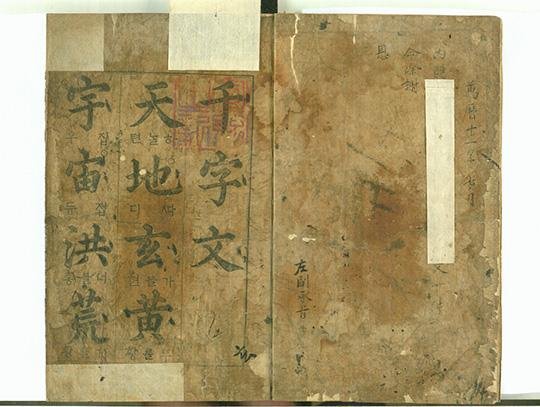
The origins of Korean calligraphy trace back to the Three Kingdoms period when Chinese characters, or Hanja, were first introduced to the Korean peninsula. In its early stages, Korean scholars heavily modeled their writing after renowned Chinese masters like Wang Xizhi. However, rather than remaining a mere imitation of Chinese styles, Korean calligraphy gradually developed its own distinct aesthetic and spirit.
The true independence of Korean calligraphy from Chinese influence was spearheaded by two monumental figures: Han Seok-bong (Han Ho) of the mid-Joseon dynasty and Chusa Kim Jeong-hui of the late Joseon period. Han Seok-bong developed the Seokbong-che, a powerfully disciplined and perfectly proportioned style that became the absolute standard for official state documents and diplomatic correspondence, breaking away from the softer Chinese styles previously favored. Centuries later, Kim Jeong-hui revolutionized the art form entirely with his creation of Chusa-che. A brilliant scholar and epigrapher, Kim Jeong-hui combined the rugged, primitive energy of ancient stone inscriptions with an almost avant-garde, abstract visual rhythm. His bold, asymmetrical brushstrokes transcended mere writing, elevating Korean calligraphy into a profound realm of modern abstract art long before the concept existed in the West.
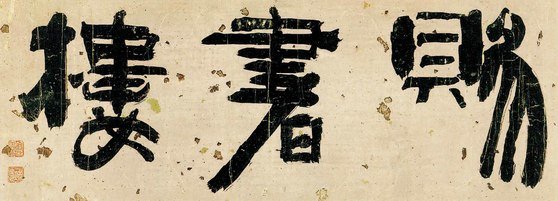
To fully grasp the foundation of Seoye, it is essential to understand the five major Hanja scripts that ancient Korean scholars mastered:
- Jeonseo (Seal Script): The oldest form, featuring uniform thickness and geometric shapes, primarily used for carving official seals.
- Yeseo (Clerical Script): A more practical simplification of the Seal Script, noted for its flared horizontal strokes known as Pachaek.
- Haeseo (Regular Script): The standard, upright script most similar to modern printed Hanja, emphasizing discipline and strict rules.
- Haengseo (Semi-cursive Script): A fluid, faster-paced script that beautifully connects strokes while maintaining readability.
- Choseo (Cursive Script): A highly abbreviated, rapid style where artistic expression and dynamic flow take precedence over legibility.
The Birth of Hangul Calligraphy: A Cultural Revolution
The true turning point for Korean calligraphy occurred in 1443 with the invention of Hunminjeongeum (Hangul) by King Sejong the Great. This scientific alphabet, designed to mimic the shapes of the human vocal organs, paved the way for a completely native typographic art form. To delve deeper into the fascinating journey of the Korean alphabet itself, I recommend reading our comprehensive guide on Hangeul History: From Sejong’s Invention to Colonial Survival.
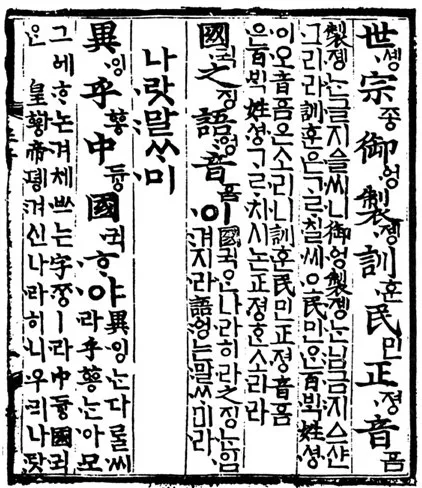
Panbonche (Block Script)
In the early days following the invention of Hangul, the first official script was Panbonche. Created primarily for metal type and woodblock printing, this style featured uniform stroke thickness and rigid, geometric, block-like structures. It perfectly filled a square frame, offering a heavy, upright, and formal presence.
Gungche (The Court Style)
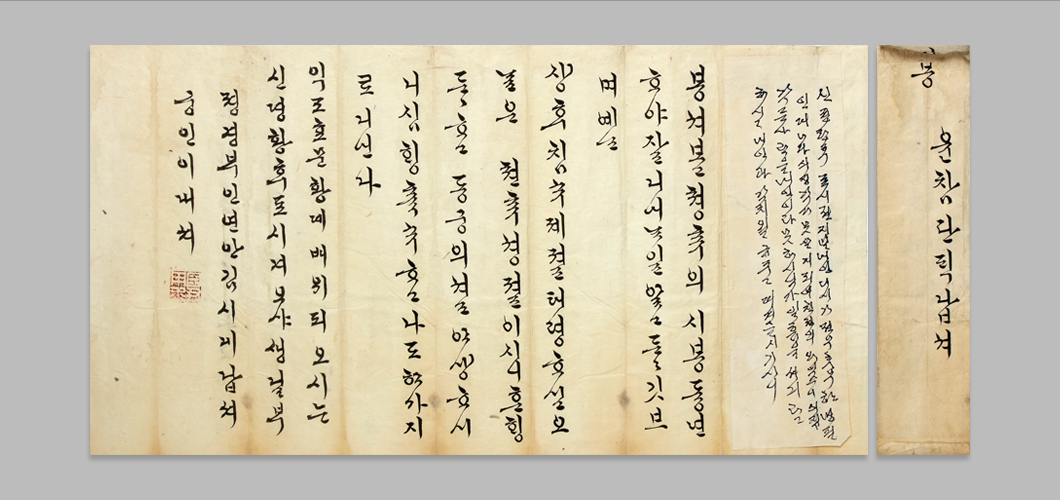
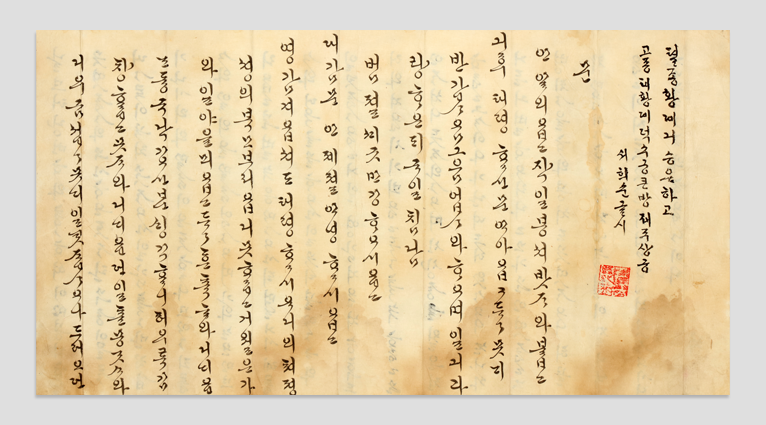
As Hangul became more widely used in the royal court, particularly for edicts, translated novels, and personal letters, a more efficient and elegant script was needed. Thus, Gungche was born, refined primarily by the Sajasanggung (court ladies in charge of transcription) and noblewomen.
Gungche completely abandoned the stiffness of Panbonche. It maximized the soft flexibility of the brush, featuring a slight rightward tilt, asymmetrical balance, and delicate rhythmic movements. It is generally categorized into three sub-styles:
- Jeongja (Standard Court Script): Impeccably neat, formal, and written with absolute precision.
- Heullim (Semi-cursive Court Script): Strokes are gently connected, adding a sense of speed and rhythmic flow.
- Jinheullim (Cursive Court Script): Highly stylized and abstract, with severe abbreviations that turn the writing into dynamic visual art.
Minche (The Folk Style)
During the late Joseon dynasty, Hangul spread to the commoner class. Free from the strict rules and formalities of the royal court, ordinary people developed Minche. This folk script is unpretentious, highly expressive, and deeply personal, reflecting the raw emotions and individual personalities of everyday Koreans.
Cross-Pollination: How Hanja Techniques Shaped Hangul
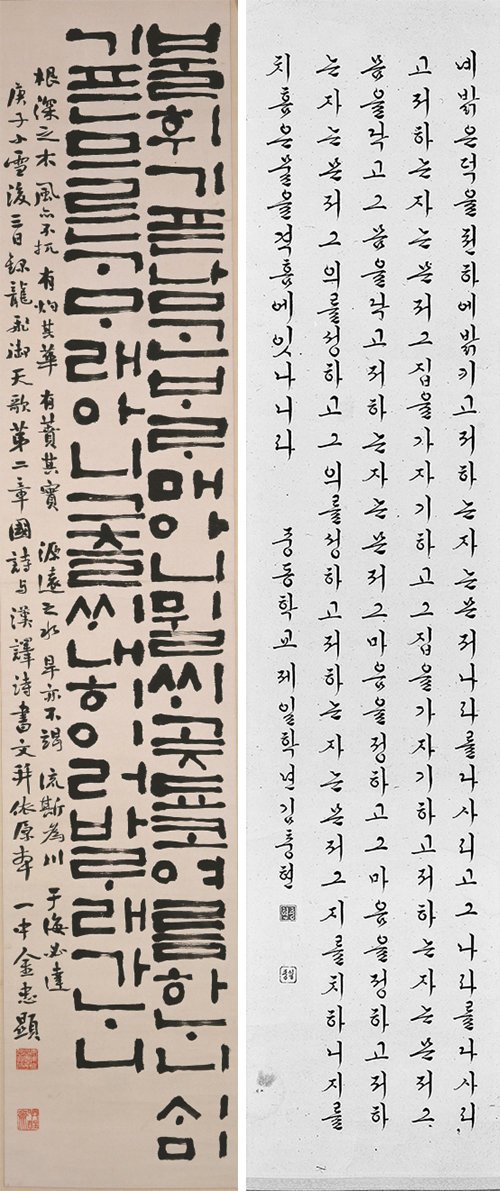
While early Hangul typography (like Panbonche) naturally drew structural inspiration from older printing methods, the rigorous, one-to-one application of Hanja brush techniques (Yongpilbeop) to Hangul is actually a modern artistic triumph rather than a practice of Joseon dynasty male scholars. Since the Joseon literati predominantly used Hanja for official documents and largely viewed Hangul as a script for women or commoners, the systematic elevation of Hangul calligraphy to the same theoretical level as Hanja was championed by 20th-century calligraphy masters.
Pioneers such as Iljung Kim Chung-hyun and Pyeongbo Seo Hee-hwan dedicated their lives to establishing a comprehensive aesthetic framework for Hangul as a fine art. They systematically analyzed the ancient Hanja strokes and successfully adapted them into Hangul, allowing modern calligraphers to write the Korean alphabet using the profound depths of traditional Hanja techniques.
Through the efforts of these modern experts, the classical Hanja styles are now methodically mapped to Hangul calligraphy:
| Hanja Script Influence | Resulting Hangul Script | Visual Characteristics |
|---|---|---|
| Jeonseo & Yeseo (Seal/Clerical) | Panbonche / Goche | Uniform thickness, geometric, upright, and structured. |
| Haeseo (Regular) | Gungche Jeongja | Precise, balanced, cleanly separated strokes. |
| Haengseo (Semi-cursive) | Gungche Heullim | Gentle connections, rhythmic flow, maintaining legibility. |
| Choseo (Cursive) | Gungche Jinheullim | Extreme abbreviation, highly abstract, dynamic brushwork. |
Modern Calligraphy: Tradition Meets Contemporary Design
Today, traditional Korean calligraphy has seamlessly integrated into modern visual arts. Contemporary calligraphers deconstruct and recombine the historical traits of Panbonche, Gungche, and Minche, blending them with Western typography to create “Modern Calligraphy.”
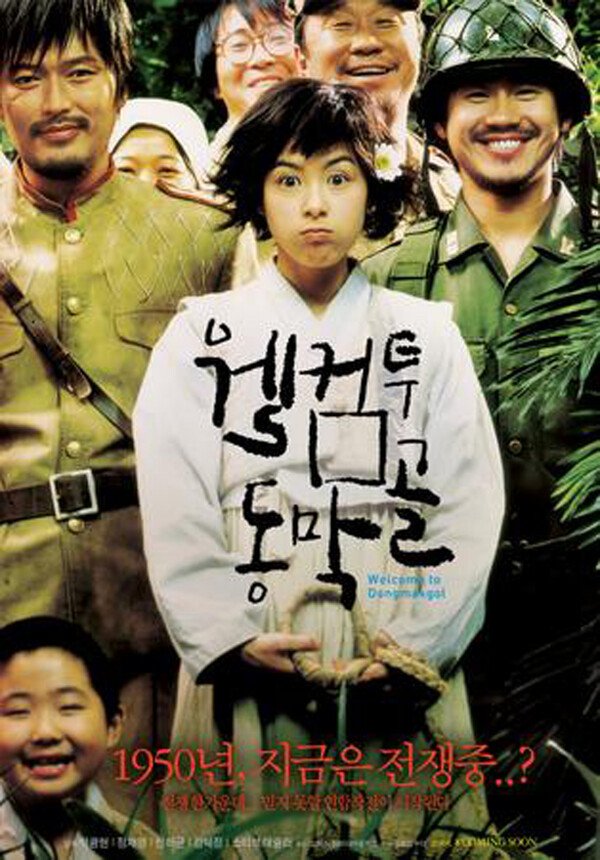
You can see this vibrant art form everywhere in South Korea—from dramatic title logos for blockbuster historical films and K-dramas to minimalist product packaging. The inherent geometric shapes of Hangul (the circles, triangles, and squares) make it exceptionally suited for modern minimalist design, earning global acclaim from the international design community.
Experiencing Seoye in Korea: Tools and Philosophy
If you are planning to visit Korea or simply want to try Seoye at home, you must first acquaint yourself with the Munbangsawoo (The Four Friends of the Study). These are the essential tools of the trade:
- But (Brush): Made from flexible animal hair, designed to capture the slightest nuance of the artist’s hand.
- Meok (Inkstick): A solid block made from soot and animal glue.
- Byeoru (Inkstone): The stone palette where the inkstick is ground with water.
- Hanji (Traditional Korean Paper): Handcrafted from mulberry bark, prized for its durability and how beautifully it allows ink to bleed.
💡 Cultural Note: Seoye is not just about producing a pretty image; it is an act of moving meditation. The philosophy dictates that calligraphy is the “mirror of the mind.” The slow, rhythmic grinding of the inkstick is meant to calm the spirit, and every tremble of the brush tip is believed to reveal the true character and emotion of the writer.
For those looking to see original masterpieces in person, I highly recommend visiting the National Museum of Korea (국립중앙박물관) and the National Hangeul Museum (국립한글박물관) during your stay in Seoul.
Further Reading for Korean Art Enthusiasts
To continue your journey into the rich visual history of Korea, explore these comprehensive guides on our portal:
- The Guide to Traditional Korean Painting History
- Minhwa: The Guide to Korea’s “Pop Art” Tradition
- The Guide to Korean Ceramics: Goryeo Celadon to the Moon Jar
Korean Culture portal KCulture.com
Founder of Kculture.com and MA in Political Science. He shares deep academic and local insights to provide an authentic perspective on Korean history and society.