
Move over K-Pop, K-Drama, and K-Food. There is a new star rising in the streets of Seoul, and it’s surprisingly soft, fluffy, and incredibly warm.
If you visit Gwangjang Market—one of Seoul’s oldest and most iconic traditional markets—today, you’ll notice something different. While the savory aroma of Bindaetteok (mung bean pancakes) still fills the air, the longest queues aren’t just for food anymore. They are for blankets. Specifically, high-quality Korean bedding, or “K-Yibul.”
As a local expert living in the heart of this cultural shift, I’ve watched as international travelers from Taiwan, Singapore, Hong Kong, and beyond swap empty suitcases for vacuum-sealed packages of Korean duvets. Let’s explore why the world is suddenly obsessed with sleeping the “Korean way.”
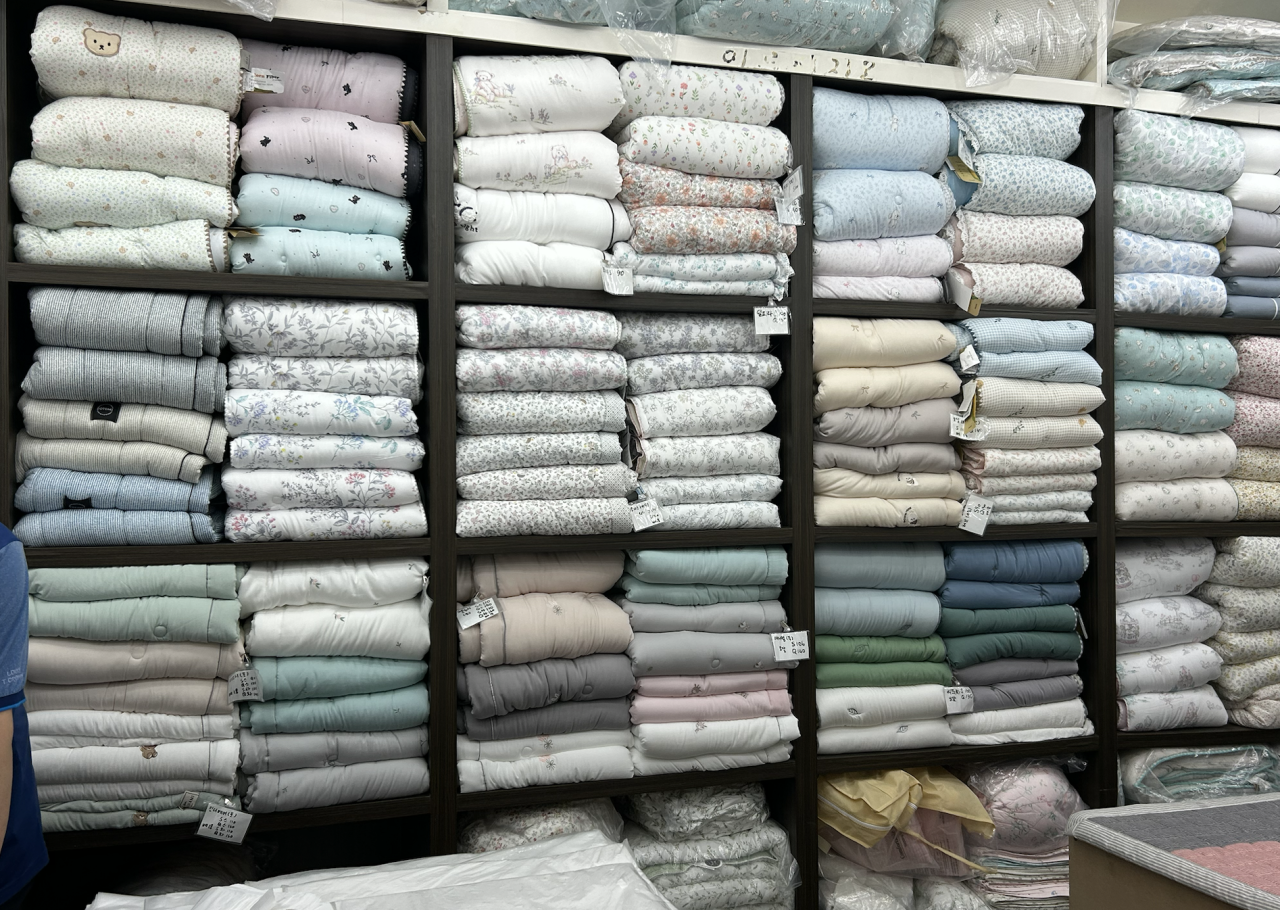
1. The “Microfiber Magic”: Unbeatable Quality and Tech
The primary reason travelers are hauling heavy blankets across borders is the sheer quality of the material. Korea has quietly become a global leader in textile technology, specifically in Microfiber and Modal fabrics.
- Cloud-like Texture: Korean microfiber is woven with threads thinner than a human hair, creating a sensation often described as “sleeping on a cloud.”
- The “Air-Conditioner” Blanket: For those in humid climates like Singapore or Malaysia, Korea’s Duraron and Cooling Fiber blankets (often called “Air-con blankets”) are life-changers. They stay chilly to the touch even in tropical heat.
- Allergy Care: Most K-bedding is designed to be anti-bacterial and dust-mite resistant, making it a top choice for health-conscious consumers.
2. Premium Luxury at “Street Food” Prices
In North America or Europe, a high-end, functional duvet with similar specs can easily cost $300 to $800 at a department store. At Gwangjang Market, you can find the same—if not better—quality for $40 to $60 (approx. 50,000–80,000 KRW).
By cutting out the “middleman” of luxury branding and department store markups, Gwangjang Market offers a direct-to-consumer price that feels like a steal. Many shops now operate with fixed-price systems, so international visitors can shop with confidence, free from the stress of aggressive haggling.
3. The Climate Factor: Why Taiwan is Leading the Trend
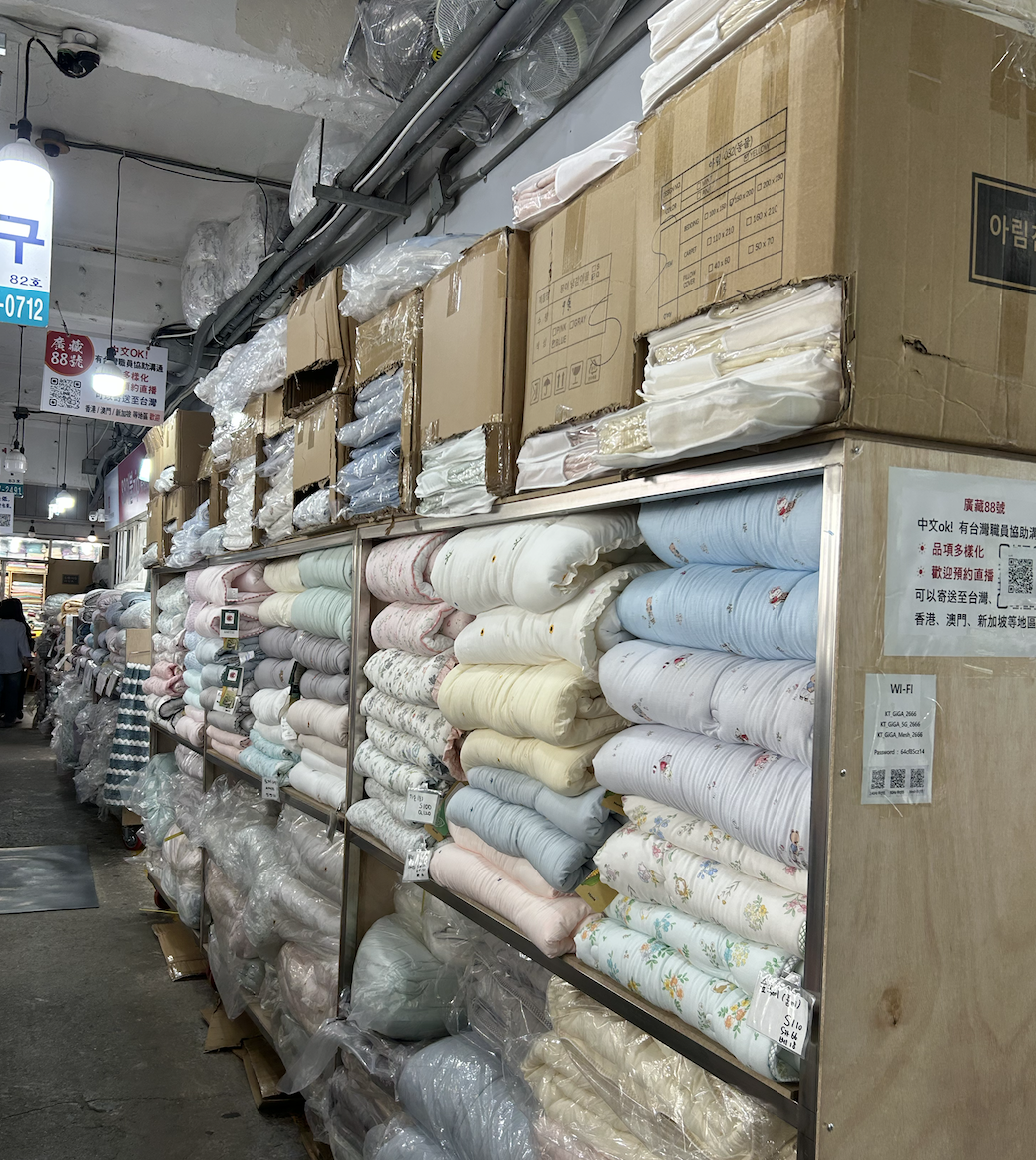
You might wonder why tourists from warmer regions like Taiwan are the biggest buyers. Interestingly, due to recent climate shifts, winter temperatures in Taiwan have felt much colder. Since many homes there lack central heating, a high-performance Korean blanket has become a survival necessity. Local guides report that busloads of Taiwanese tourists arrive daily, specifically seeking out these “winter-savers.”
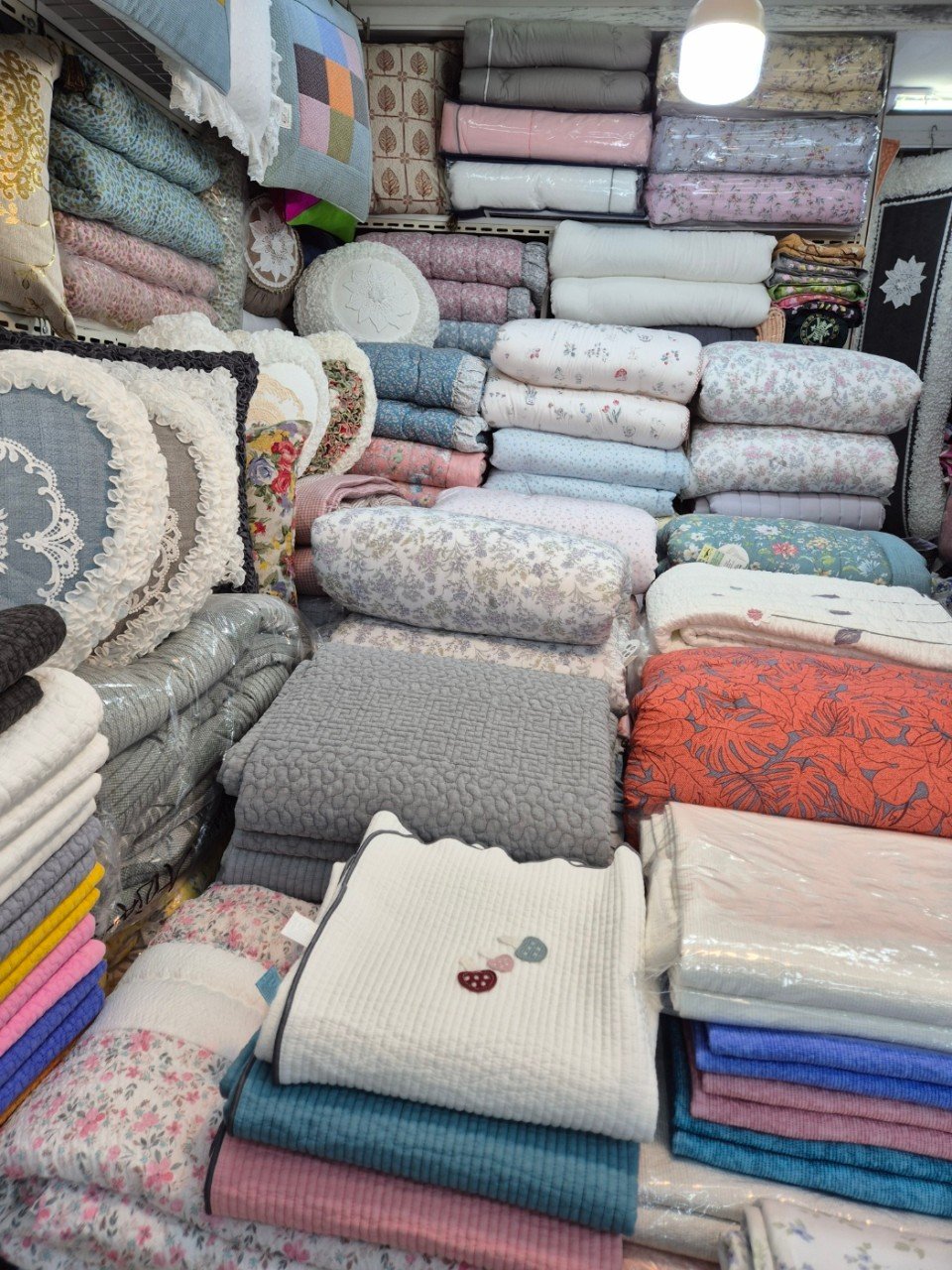
Practical Tips for Your K-Blanket Shopping Spree
If you’re planning a trip to Seoul, here is how to navigate the bedding aisles like a local:
A. The Vacuum-Packing Miracle
Don’t worry about the bulk! Shop owners in Gwangjang Market are masters of vacuum compression. They can shrink a massive king-sized winter duvet into a flat, portable package that fits easily into a standard carrier.
B. Look for “All-in-One” (Charyeop-Yibul)
A unique feature of Korean blankets is the “Charyeop-Yibul”—where the filler (cotton/fiber) and the cover are stitched together. This means no more struggling with duvet covers! You can throw the whole thing in the washing machine, and it retains its shape perfectly.
C. Payment and Language
- Cash is King: While cards are accepted, you can often get a better discount (or a free pillowcase!) if you pay in cash.
- Localized Service: Many shops now have staff fluent in Mandarin and English. Some even accept Taiwan Dollars (TWD) directly or offer international shipping services for about $10–$20.
The Verdict: Is K-Bedding Worth the Hype?
As someone who lives here, I can tell you: once you experience a Korean “Extreme Microfiber” blanket during a Seoul winter, there is no going back. It’s not just a purchase; it’s an investment in your quality of sleep.
The “K-Yibul” trend proves that K-Culture isn’t just about what we watch or listen to—it’s about the tangible quality of the Korean lifestyle. Whether it’s the aesthetic floral embroidery or the cutting-edge cooling tech, Korea has officially mastered the art of the perfect night’s sleep.
A lifestyle writer covering K-beauty, fashion, and art. Kyoung shares honest insights on K-pop and smart shopping, capturing the vibrant trends of modern Korea.