An Introduction to a Korean Classic
If there is one dish that encapsulates the heart of Korean home cooking, it is Kimchi-bokkeumbap, or Kimchi Fried Rice. This humble yet incredibly flavorful dish is a staple in every Korean household, often made to use up leftover rice and deliciously ripe kimchi. It’s the go-to meal for a quick lunch, a satisfying late-night snack, or simply when you crave something deeply comforting and familiar. The taste profile is a masterful balance of tangy, spicy, and savory notes, with a rich umami depth that leaves you wanting more. It is, without a doubt, the taste of home for many Koreans.
Ingredients & Flavor Profile
Key Ingredients
The magic of Kimchi-bokkeumbap lies in its simple yet powerful combination of ingredients. While recipes can vary, the core components remain consistent:
- Cooked Rice: Preferably day-old rice, as its firmer texture holds up better during stir-frying.
- Ripe Kimchi: This is the star of the show. Well-fermented, sour kimchi provides the signature tangy flavor that defines the dish.
- Pork or Ham: Small pieces of pork belly or diced ham add a savory depth and satisfying texture.
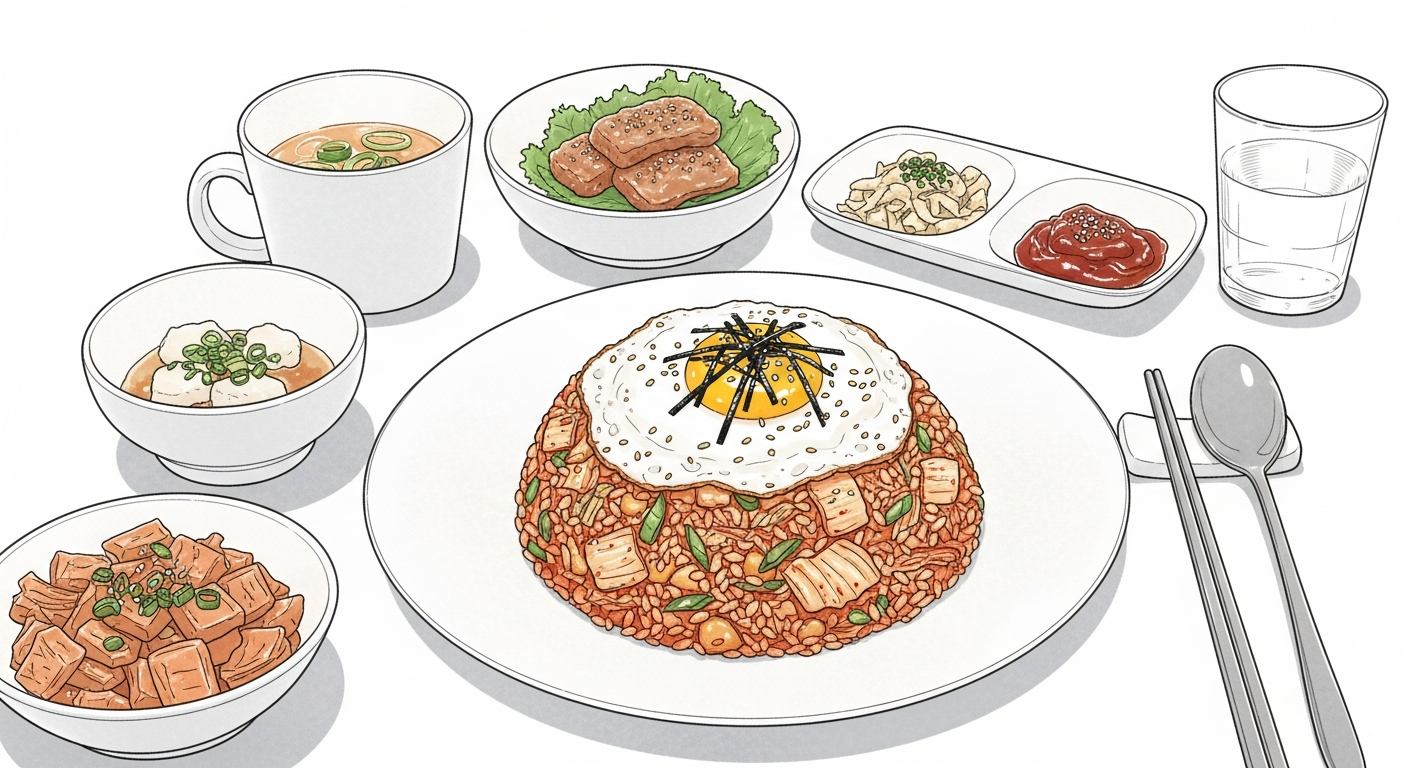
- Egg: A sunny-side-up fried egg is the quintessential topping, its runny yolk creating a rich sauce that coats the rice.
The Secret of Taste
The soul of Kimchi-bokkeumbap comes from its seasoning, which enhances the natural flavors of the main ingredients. The secret lies in a blend of Kimchi juice for that essential sour and spicy base, a dash of Gochugaru (Korean chili powder) to deepen the color and heat, a splash of soy sauce for a salty, umami kick, and a final drizzle of toasted sesame oil to lend a wonderfully nutty aroma and finish.
Dietary Information
Kimchi-bokkeumbap can be adapted for different dietary needs. According to our data, a fully vegan version is possible if vegan kimchi (made without any fermented seafood) is used and the pork or ham is omitted. When ordering at a restaurant, it’s always best to be clear about your dietary restrictions.
Safety Tip: We advise tourists and those with dietary concerns to always ask the restaurant staff if their kimchi contains fish sauce or shrimp paste and to request the dish be prepared without any meat products.
How It’s Cooked
As a classic single-dish meal, the preparation of Kimchi-bokkeumbap is a delightful culinary dance in a single pan. The process typically begins by stir-frying chopped ripe kimchi along with savory pieces of pork or ham. This step is crucial for melding the flavors and caramelizing the kimchi slightly. Next, cooked rice is added to the pan, broken up, and tossed with the other ingredients until every grain is beautifully coated in that iconic fiery red hue. The seasonings, including kimchi juice and a touch of soy sauce, are mixed in to perfect the flavor balance. To finish, a drizzle of nutty sesame oil is stirred through for fragrance, and the dish is plated, often crowned with a glistening, perfectly fried egg.
This is a standard method based on general recipes. Every restaurant has its own secret twist and unique style!
 Kimchi-bokkeumbap(만개의레시피)
Nutritional & Health Benefits
Beyond its incredible taste, Kimchi-bokkeumbap offers some notable health benefits. As a fermented food, kimchi is a fantastic source of probiotics, which are beneficial for gut health and digestion. The dish also provides a balanced mix of macronutrients: carbohydrates from the rice for energy, and a solid dose of protein from the added pork, ham, or egg, which is essential for muscle repair and growth.

The KCulture Editorial Team is dedicated to providing deep insights and accurate information about the vibrant world of Korean culture.