
If you are planning a trip to South Korea and expect to wave your hand or press a call button to summon a waiter, you might be in for a futuristic surprise. By 2026, the Korean restaurant ordering system has become almost entirely automated, requiring diners to order via multilingual table-top tablets, smartphone QR codes, and even receive their meals from AI-powered serving robots. Living in Korea, I have witnessed firsthand how quickly these cutting-edge technologies have integrated into our daily dining routines, and I am here to guide you through this new landscape so you can enjoy your meals with zero stress.
In this guide, we will explore everything you need to know about navigating modern Korean eateries. From using digital menus and splitting the bill directly at your table to interacting with robot chefs, here is your essential survival guide to dining out in the AI era.
- The Evolution of the Korean Restaurant Ordering System
- Meet Your New Waiter: The Rise of Robot Staff
- Seamless Payments and the Dutch Pay Culture
- Pros and Cons: A Foreigner’s Perspective on AI Dining
- What This Means for the AI Era in South Korea
The Evolution of the Korean Restaurant Ordering System
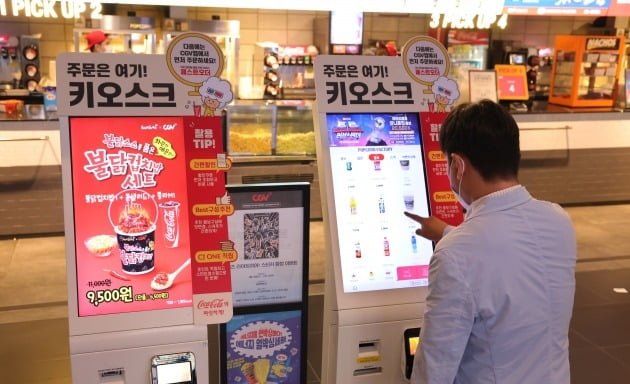
While large kiosks at the entrance remain the standard for fast-food chains and coffee shops, automation in traditional dine-in restaurants has moved directly to where you sit, completely changing the atmosphere of local dining spots.
From Call Buttons to Table-top Tablets
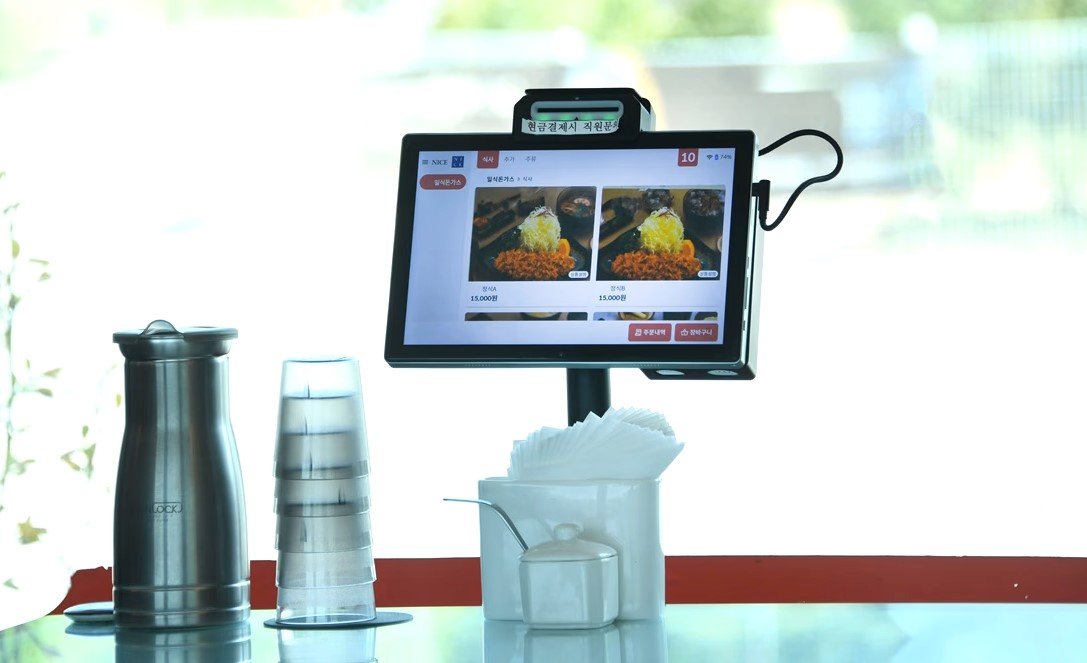
In almost every establishment—whether it is a bustling barbecue joint, a spicy stew restaurant, or a cozy Izakaya—you will find a tablet PC permanently mounted at your table. The traditional bell you used to press to shout “Yogiyo!” (Over here!) is practically extinct. Instead, you simply tap the screen to browse high-resolution photos of the menu, add items to your cart, and send the order straight to the kitchen. Even minor requests, like asking for extra water, wet wipes, or an apron, are just a screen tap away.
For international visitors, the best part is the advanced AI-driven multilingual support. These tablets no longer rely on awkward, direct translations. They offer natural language options in English, Chinese, Japanese, Spanish, Vietnamese, and more. They even provide detailed AI-generated advice on spice levels, potential allergens, and the proper way to eat a specific traditional dish.
Scan and Eat: QR Code Ordering
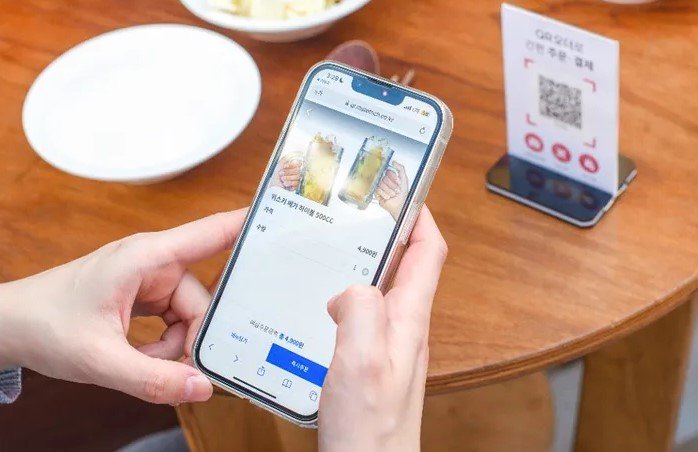
In trendier, youth-centric neighborhoods like Seongsu-dong (성수동) and Hongdae (홍대), even the table tablets are disappearing. In their place are simple QR codes attached to the edge of the table. You just scan the code with your smartphone camera, which opens a dedicated mobile web page where you can place your order and pay instantly. It is fast, hygienic, and requires no app downloads.
💡 Pro Tip: When using QR code ordering, make sure your phone’s browser has its built-in translation feature turned on just in case the restaurant’s mobile site has limited language options. However, most popular spots in Seoul automatically detect your phone’s language setting.
Meet Your New Waiter: The Rise of Robot Staff
Robots in the hospitality industry are no longer just a novelty or a marketing gimmick. In 2026, they are reliable, hardworking members of the restaurant staff.
Autonomous Serving Robots
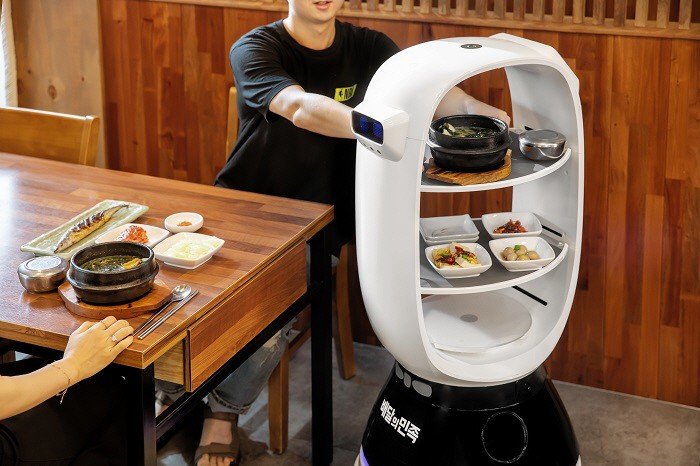
Do not be startled if a sleek machine rolls up to your table carrying your sizzling plate of pork belly. Equipped with advanced LiDAR sensors and 3D cameras, these autonomous serving robots navigate smoothly around chairs, dropped napkins, and wandering children. Once you take your food off their trays, you simply press an “OK” button on their screen, and they return to the kitchen. Some models are even equipped with multilingual voice AI, cheerfully greeting you with “Enjoy your meal!” in your native language. Furthermore, specialized “bussing robots” roam the aisles, allowing staff to quickly clear dirty dishes and turn tables faster.
Cooking Robots and AI Chefs
The automation extends deep into the kitchen. If you visit a Korean fried chicken franchise, you are likely to see an articulated robotic arm standing in front of the deep fryers, shaking the baskets and perfectly timing the cook to ensure maximum crispiness. At highway rest stops and unmanned cafes across the country, robot baristas brew perfectly consistent coffee 24/7. Even the beloved automated Han River ramen machines have evolved into fully robotic kiosks that dispense, boil, and serve your late-night noodles with zero human intervention.
Seamless Payments and the Dutch Pay Culture
In the past, tourists often faced anxiety at Korean kiosks because their foreign credit cards would not work. Fortunately, the payment infrastructure has undergone a massive global upgrade.
The Built-in Dutch Pay Feature
In Korea, splitting the bill is often referred to as “Dutch Pay.” Modern table order tablets come with a built-in split payment function. If you are dining with three friends, you can select the “divide by N” option. The tablet will prompt each person to insert or tap their card one by one, charging everyone their exact share. This feature is incredibly popular among tourists who value practical and transparent spending.
Global Payment Integration
The days of payment failures are largely over. Tablets and kiosks now universally accept global digital wallets like Apple Pay. Moreover, systems are fully integrated with tourist-exclusive prepaid cards like WOWPASS, as well as international services like Alipay+. You can dine with peace of mind knowing your preferred payment method will be accepted at the table.
Pros and Cons: A Foreigner’s Perspective on AI Dining
While the technological leap is impressive, it brings both massive conveniences and a few cultural shifts for travelers.
| The Pros of Automated Dining | The Cons of Automated Dining |
|---|---|
| Zero Language Anxiety: Detailed photos and AI translations mean you never have to struggle to explain your order in broken Korean. | Loss of “Jeong”: The traditional warmth and affection (Jeong) of chatting with a friendly restaurant owner is heavily diminished. |
| Transparent Pricing: Your running total is always visible on the screen, completely eliminating the fear of tourist scams or miscommunications. | Digital Divide: Elderly tourists or those less comfortable with smartphones and touchscreens may find the initial experience overwhelming. |
| Efficiency: Ordering and paying are instantaneous, meaning no more waiting around trying to catch a busy waiter’s eye. | Rigid Customization: While you can remove standard ingredients, highly specific off-menu requests are harder to communicate to a machine. |
What This Means for the AI Era in South Korea
South Korea has always been a testbed for rapid technological adoption, and the restaurant industry in 2026 perfectly encapsulates this spirit. The pervasive use of AI, robotics, and integrated digital payments in everyday dining shows that advanced technology is no longer confined to tech hubs or research labs. It is serving us our daily meals. This environment reflects a broader societal shift toward prioritizing efficiency, data-driven convenience, and global accessibility.
So, the next time you step into a bustling Korean eatery, embrace the screens and the robots. Not only will you get exactly what you ordered, but you will also get a front-row seat to the future of global dining.
Related Articles
Korean Culture portal KCulture.com

Founder of Kculture.com and MA in Political Science. He shares deep academic and local insights to provide an authentic perspective on Korean history and society.