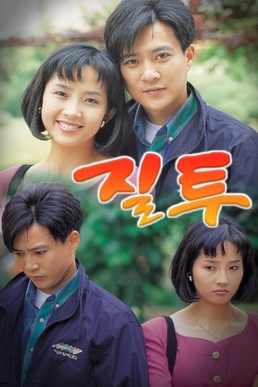
Introduction & Synopsis
Before the slick cinematography and global streaming giants, there was a drama that single-handedly invented a genre. That drama is Jealousy (질투). At its heart, the series is a breezy and charming story about two lifelong best friends, Yoo Ha-kyung (Choi Jin-sil) and Lee Young-ho (Choi Soo-jong), who find their comfortable platonic relationship thrown into chaos when romantic feelings—and a healthy dose of jealousy—begin to surface. As Young-ho starts dating the poised and elegant Han Young-ae (Lee Eung-kyung), Ha-kyung is forced to confront emotions she never knew she had, sparking a relatable and heartfelt journey from friendship to love. Aired in 1992 by production powerhouse MBC, this series is not just another romantic comedy; it is the historical blueprint for the “trendy drama” that would come to define the Korean Wave.
The Dawn of a New Era: Korea in the 90s
To understand the monumental impact of Jealousy, one must understand the South Korea of the early 1990s. The nation was riding a wave of optimism and rapid modernization following the 1988 Seoul Olympics. A new generation, dubbed the “X-Generation” (X세대), was coming of age. They were more individualistic, consumer-oriented, and interested in Western pop culture than their parents’ generation, who had endured war and austerity. Television at the time was dominated by gritty historical epics or heavy-hearted family melodramas centered on sacrifice and filial piety. Jealousy shattered this mold. It was a cultural earthquake, presenting a world that reflected the aspirations of this new youth: stylish urban professionals working in fields like advertising and design, living in modern apartments, and navigating the complexities of friendship and romance on their own terms. It was the first drama to make being young, modern, and in love look incredibly cool.
Narrative Analysis: Crafting the Rom-Com Formula
The storytelling in Jealousy might seem familiar to modern viewers, but that’s because it created the very tropes we now take for granted. The “friends-to-lovers” narrative, the bubbly-but-strong female lead, the charming-yet-oblivious male lead, and the sophisticated romantic rival—this series codified the formula. What made it so compelling was its focus on the small, intimate moments of emotional discovery. The narrative doesn’t rely on grand, tragic twists but on the subtle, universally understood pang of seeing someone you care about with another person. The dialogue was witty, the pacing was brisk, and the overall tone was bright and optimistic, a stark departure from the tear-soaked dramas that preceded it. It celebrated the emotional world of the individual, a revolutionary concept for Korean television at the time.
The Pulse of the Time: A National Phenomenon
It is difficult to overstate the sensation Jealousy caused upon its release. It wasn’t just a hit; it was a cultural reset. The show recorded staggering viewership ratings, reportedly peaking at over 56%, meaning more than half the television-owning population of South Korea was tuned in. The drama’s theme song, “Jealousy” by Yoo Seung-beom, with its iconic saxophone intro, topped the music charts and remains a nostalgic anthem today. The fashion worn by the cast became a national craze; women across the country rushed to copy Choi Jin-sil’s headbands and casual, colorful outfits. The drama’s final episode, featuring a now-legendary 360-degree rotating kiss scene, was a landmark moment in Korean broadcast history, celebrated for its romantic and cinematic flair.
Cast Spotlight: The Icons of a Generation
Choi Jin-sil as Yoo Ha-kyung
As the vivacious and relatable Ha-kyung, the late Choi Jin-sil became an overnight superstar and was crowned the “Nation’s Sweetheart.” She embodied the spirit of the new Korean woman: independent and career-focused, yet deeply warm and lovably flawed. Her performance was a breath of fresh air, mixing comedic timing with genuine vulnerability that made the entire nation root for her.
Choi Soo-jong as Lee Young-ho
Choi Soo-jong delivered a masterful performance as the charming male lead, perfectly capturing the character’s journey from a clueless best friend to a man deeply in love. He established the archetype of the modern K-drama hero—handsome, successful, and a little goofy, but steadfast and sincere in his affections.
Lee Eung-kyung as Han Young-ae
Playing the role of the “other woman” is often a thankless task, but Lee Eung-kyung brought a quiet dignity and grace to Young-ae. She was not a villain but a genuinely charming and elegant rival, making the central love triangle feel authentic and its resolution all the more satisfying.
Global Viewing Guide
For global fans looking to experience this foundational piece of K-drama history, finding subtitled versions can be a rewarding search. Here are the most common platforms where classic MBC dramas appear:
- KOCOWA: As a joint venture of the three major Korean broadcasters (including MBC), this is often the primary official source for classic dramas with professional subtitles.
- MBC Drama (YouTube Channel): The official YouTube channel for MBC sometimes uploads clips or full episodes of its classic hits. Keep an eye on their classic drama playlists.
Final Verdict
Watching Jealousy today is like opening a time capsule. It is more than just a nostalgic trip; it is a masterclass in the fundamentals of romantic comedy and a vital historical document of modern Korean culture in the making. For any fan who wants to understand “why” K-dramas are the way they are, this series is essential viewing. It’s the charming, stylish, and revolutionary origin story of the global phenomenon we love today.

The KCulture Editorial Team is dedicated to providing deep insights and accurate information about the vibrant world of Korean culture.