Shin Young-bok Hangul calligraphy is not merely a style of beautiful handwriting; it is a profound visual representation of human solidarity, egalitarianism, and unyielding resilience that has been elevated into an independent, modern art form. For anyone seeking to understand how traditional Korean arts evolved to reflect contemporary social philosophies, his creation of “Min-che” (The People’s Style) offers the perfect answer, transforming rigid, authoritative brushstrokes into an accessible medium of comfort and connection. Living in Korea, I am constantly reminded of his artistic legacy, which permeates both elite art galleries and the daily lives of the public. Let us explore the remarkable life, the deeply moving artistic world of Shin Young-bok, and how his aesthetic continues to heal and inspire modern society.
- Who Was Shin Young-bok? A Scholar Forged in Hardship
- The Essence of Shin Young-bok Hangul Calligraphy: The “Min-che” Style
- Expert Evaluations: The Democratization of the Brush
- Why Koreans Deeply Value His Art
- Recent Trends in the Art Auction Market
Who Was Shin Young-bok? A Scholar Forged in Hardship
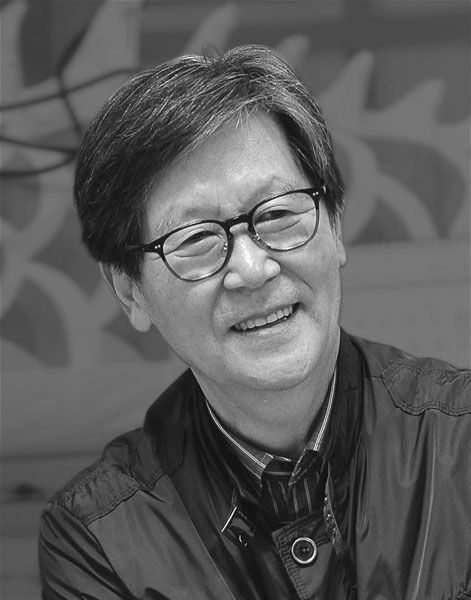
Shin Young-bok (1941–2016) was a prominent South Korean intellectual, economist, and revered professor. However, his life story is deeply marked by his 20-year imprisonment from 1968 to 1988 as a political prisoner under Korea’s former military dictatorship. Rather than letting his spirit break, he used those two decades behind bars for profound reflection on human nature, society, and the importance of communal bonds.
His letters sent from prison were later compiled and published as the bestselling book Reflections from Prison, which quickly became a foundational text for modern Korean liberal thought. Following his release, he joined the faculty at Sungkonghoe University (성공회대학교), where he continued to share his wisdom. Throughout his later life, he utilized calligraphy not as a mere hobby, but as a powerful, silent medium to communicate his life’s philosophy of “togetherness” and hope for a more equal society.
The Essence of Shin Young-bok Hangul Calligraphy: The “Min-che” Style
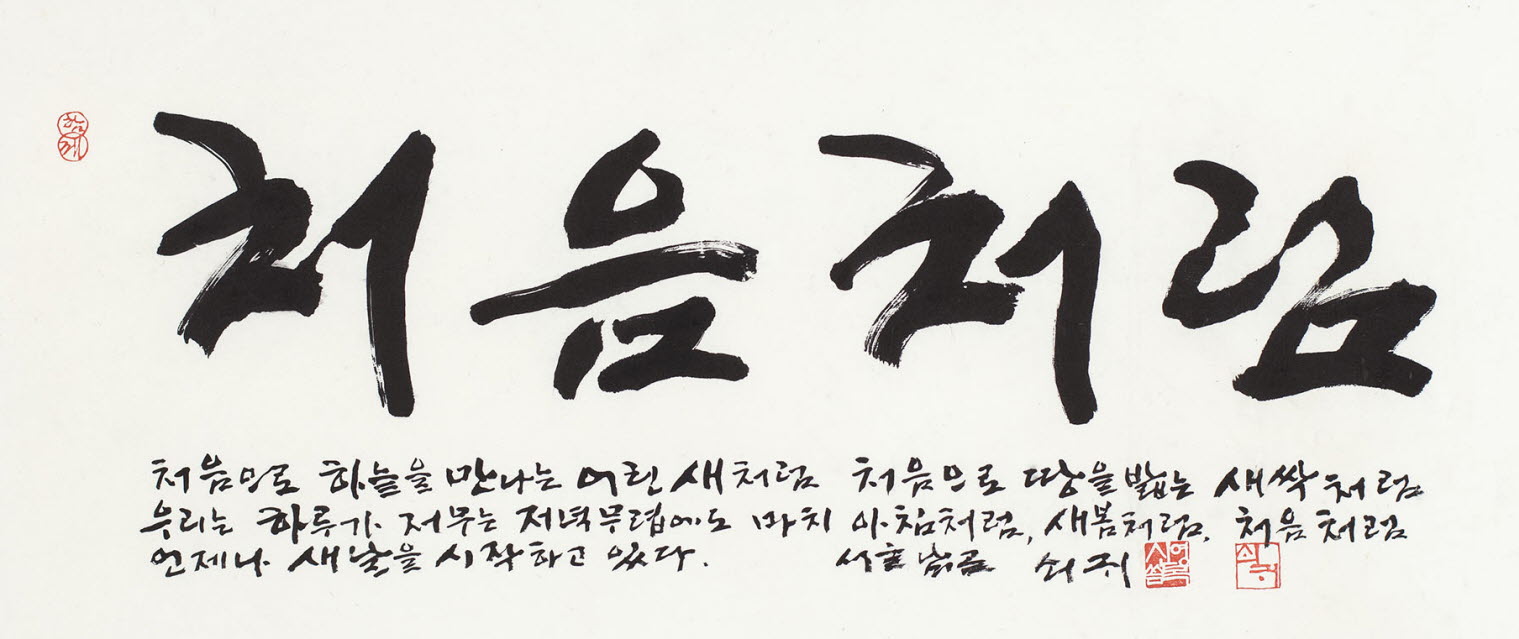
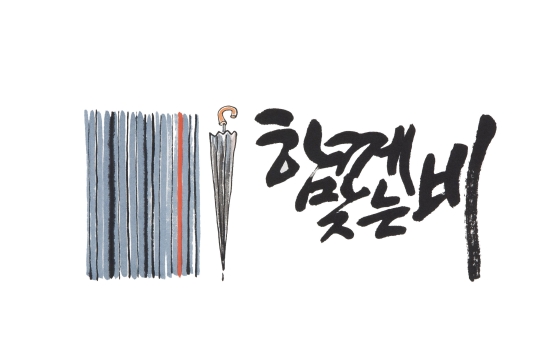
The distinctive aesthetic of Shin Young-bok Hangul calligraphy is officially known as “Min-che” or “The People’s Style.” It intentionally broke away from the traditional, rigid, and highly formalized norms of classical Chinese-style calligraphy that dominated the past. To fully appreciate this transition and the historical context of Korean writing arts, I highly recommend reading Traditional Korean Calligraphy: Hanja to Hangul Evolution, which explores the fascinating journey from ancient Hanja to modern Hangul scripts.
Unlike traditional styles that emphasized the authority and intellectual dominance of the noble scholar, Min-che mimics the humble, everyday handwriting of the common people. The visual characteristics of his work are immediately recognizable:
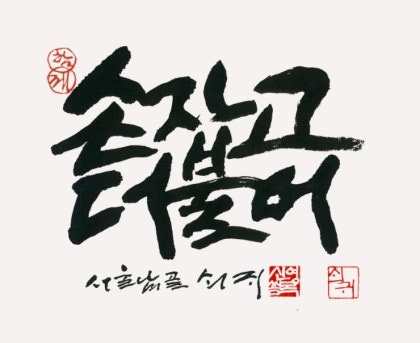
- Rounded and Sturdy Strokes: The brushstrokes are thick, unpretentious, and devoid of sharp, aggressive edges, exuding warmth.
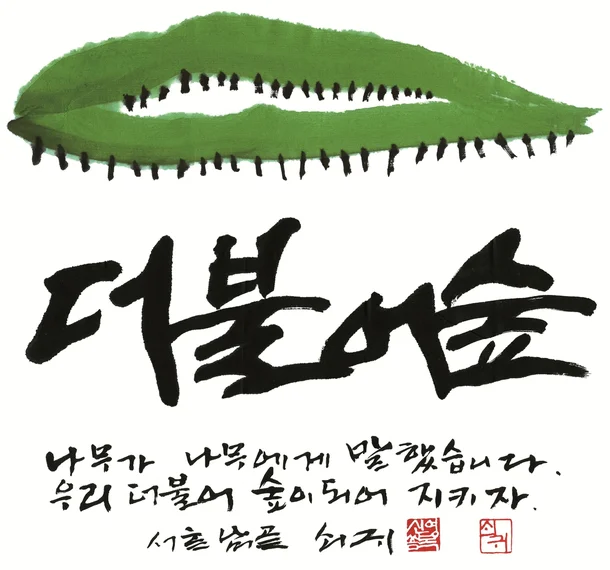
- Interconnected Characters: The letters in his works often lean into each other. This is not a mistake but a deliberate structural choice symbolizing human support, connection, and the idea that no one can survive alone.
- Signature Motifs: His most beloved pieces frequently feature profound yet simple words like “Together”, “First Mind” (like a beginner’s pure intention), and “Forest.”
Expert Evaluations: The Democratization of the Brush
Art critics and cultural historians widely celebrate Shin’s artistic contributions as a true “democratization of the brush.” Traditional calligraphy often sought visual perfection, grandeur, and strict adherence to classical rules. In stark contrast, Shin sought honesty, comfort, and emotional resonance.
Experts frequently highlight that his calligraphy is the ultimate visual manifestation of “Yeondae” (Solidarity). Looking closely at a piece of his art, one can see how the characters thrive by physically leaning on one another, much like individuals in a healthy society. Renowned art critics, including former heads of national cultural institutions, have praised his unique style for establishing a modern Korean aesthetic that perfectly resonates with the soul, struggles, and hopes of the common citizen.
Why Koreans Deeply Value His Art
Today, Shin Young-bok’s handwriting is arguably the most recognizable contemporary calligraphy in South Korea. Its widespread appeal goes far beyond the boundaries of traditional art appreciation.
| Aspect | Description |
|---|---|
| Authenticity & Moral Weight | His life story lends immense moral weight to his art. When people view his works, they do not just see ink on paper; they see 20 years of resilience and an unbreakable human spirit. |
| Commercial Presence | His calligraphy famously graces the label of the popular Korean soju brand “Chum Churum” (Like the First Time). This bold commercial integration made his high-minded art a familiar part of daily life for millions of citizens. |
| Healing Power | In a fast-paced, highly competitive modern society, his soft, rounded letters offer a profound sense of “wiro” (comfort) and deep humanity to exhausted minds. |
| Political Symbolism | For many, his brushstrokes represent the enduring spirit of democracy, egalitarianism, and communal living in Korea. |
💡 Local Note: If you visit various civic centers, university campuses, or even traditional tea houses across Seoul, you will frequently spot wooden plaques or framed artworks bearing his distinct, comforting font. It has become a visual shorthand for warmth and community in Korea.
Recent Trends in the Art Auction Market
Since the artist’s passing in 2016, the demand for his original works has surged significantly in the art world. During his lifetime, Shin was known for his immense generosity, frequently giving his works away for free to civic activists, students, and non-profit organizations. Consequently, authenticated original pieces are now highly coveted by collectors due to their scarcity.
His works frequently appear at major domestic auction houses, such as Seoul Auction (서울옥션). Small calligraphic pieces that were once humble gifts now fetch thousands to tens of thousands of dollars. Beyond private art collectors, public institutions and national museums are increasingly seeking to acquire his works, recognizing them not just as beautiful art, but as vital artifacts preserving the intellectual and emotional history of modern Korea.
Korean Culture portal KCulture.com

Founder of Kculture.com and MA in Political Science. He shares deep academic and local insights to provide an authentic perspective on Korean history and society.