A Fiery Bowl of Comfort: Introducing Jjamppong
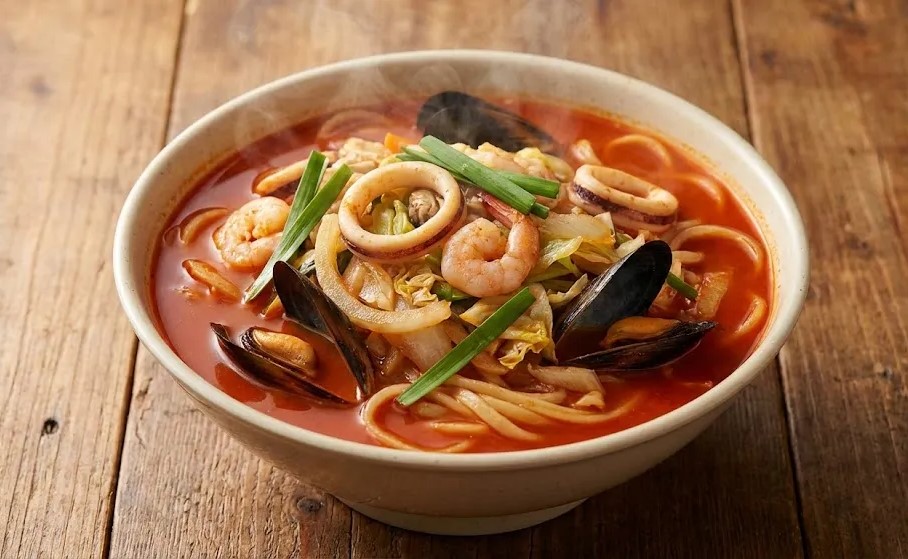
Welcome to the vibrant and sizzling world of Jjamppong, one of Korea’s most beloved Korean-Chinese dishes. This hearty noodle soup is a symphony of spicy, savory, and fresh flavors, all served up in a brilliant red broth that promises a delightful kick. While it can be enjoyed any time, Koreans often crave a steaming bowl of Jjamppong on a cold or rainy day, as its invigorating heat is believed to warm you up from the inside out. It’s a culinary icon, often ordered for delivery alongside its savory, non-spicy counterpart, Jajangmyeon, for a perfect balance of flavors.
Ingredients & Flavor Profile
Key Ingredients
At the heart of every bowl of Jjamppong is a delicious combination of textures and tastes. The foundation consists of:
- Wheat Noodles: Chewy and satisfying noodles that soak up the flavorful broth.
- Assorted Seafood: A generous medley that often includes squid, mussels, clams, and shrimp, providing a fresh taste of the ocean.
- Pork: Thinly sliced pork adds a rich, savory depth to the soup base.
- Vegetables: A mix of vegetables like onions, cabbage, carrots, and mushrooms adds sweetness and a pleasant crunch.
The Secret of Taste
The soul of Jjamppong lies in its powerful seasoning. The iconic fiery red color and spicy punch come from a base of gochugaru (Korean chili powder) and fragrant chili oil. This heat is perfectly balanced with the deep, savory umami flavor of oyster sauce, which ties all the ingredients together into a complex and incredibly addictive broth.
Dietary Information (Vegetarian/Allergy)
A standard bowl of Jjamppong is not vegetarian, as it contains both pork and various types of seafood. However, vegetarian versions can sometimes be found or requested.
A vegetarian Jjamppong is possible if the restaurant is willing to prepare it without any meat or seafood and uses a vegetable-based broth instead of the standard pork or seafood stock.
Safety Tip: We strongly advise vegetarian and vegan travelers to ask restaurant staff for a “chaesik jjamppong” (vegetarian jjamppong) and confirm that no meat, seafood, or animal-based broth is used in its preparation.
How It’s Cooked
The magic of Jjamppong begins in a hot wok. The chef starts by creating an aromatic and spicy base, stir-frying chili powder and chili oil until the fragrance fills the air. Next, tender slices of pork and crisp vegetables are tossed into the wok, absorbing the spicy flavor. A generous amount of fresh seafood is added, followed by a rich broth that is brought to a bubbling, fiery boil. This vibrant red soup is then ladled over a bed of freshly boiled, chewy wheat noodles, ensuring every strand is coated in the delicious, spicy broth just before it’s rushed to your table.
This is a standard method based on general recipes. Every restaurant has its own secret twist and unique style!
Nutritional & Health Benefits
Jjamppong is more than just a delicious meal; it also offers several health benefits thanks to its wholesome ingredients.
- High in Protein: The combination of pork and a variety of seafood makes this dish an excellent source of protein, which is essential for muscle repair and energy.
- Metabolism Boost: The chili powder and chili oil contain capsaicin, a compound known for its potential to boost metabolism and provide a dose of antioxidants.
- Rich in Vitamins & Minerals: The assortment of fresh vegetables provides essential dietary fiber, vitamins, and minerals that contribute to a balanced diet.

The KCulture Editorial Team is dedicated to providing deep insights and accurate information about the vibrant world of Korean culture.