Introduction: The Korean Drama That Captivated a Nation
Long before Korean dramas became a global streaming phenomenon, a television series captivated South Korea with a story of forbidden love, family loyalty, and revenge. Its final episode recorded an extraordinary 65.8% television rating, making it one of the most successful dramas in Korean broadcasting history.
That drama was First Love (첫사랑), a 66-episode KBS2 weekend series that aired from September 7, 1996, to April 20, 1997.
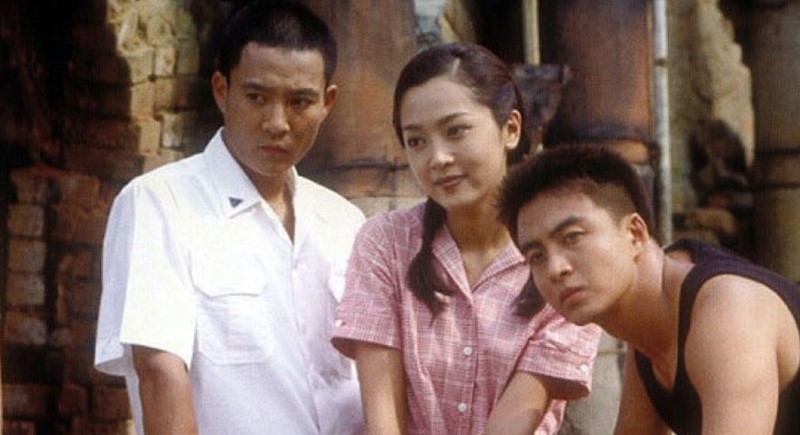
Starring Choi Soo-jong, Lee Seung-yeon, and Bae Yong-joon, the drama follows two brothers from a poor family whose lives become entangled with a wealthy household. Their experiences of love, sacrifice, injustice, and revenge unfold against the social and economic changes of South Korea in the 1970s and 1980s.
For international K-drama fans, First Love also offers something particularly interesting: a chance to see Bae Yong-joon several years before Winter Sonata transformed him into one of the defining stars of the early Korean Wave.
Synopsis: Two Brothers, One First Love, and a Family’s Struggle
The story centers on the Sung family, particularly two brothers: Sung Chan-hyuk (Choi Soo-jong) and his younger brother Sung Chan-woo (Bae Yong-joon).
Their father is a struggling artist who paints signs for a movie theater owned by the wealthy Lee Jae-ha. Despite the family’s financial difficulties, the brothers grow up surrounded by strong family bonds and hopes for a better future.
Chan-hyuk is gentle, artistic, and talented at painting. His younger brother, Chan-woo, is intelligent, ambitious, and deeply devoted to his family.
Both brothers develop feelings for Lee Hyo-kyung (Lee Seung-yeon), the theater owner’s daughter. Chan-woo is attracted to her during childhood, but when he realizes that his older brother and Hyo-kyung love each other, he steps aside.
Unfortunately, their romance faces a formidable obstacle: Hyo-kyung’s father, who considers Chan-hyuk an unsuitable partner because of his family’s poverty and social position.
His interference eventually leads to tragedy. After becoming the target of intimidation and violence, Chan-hyuk suffers a serious accident that leaves him physically disabled and changes the course of his life.
For Chan-woo, witnessing his brother’s suffering becomes a turning point. Once a promising student with a bright future, he grows determined to gain the influence and resources needed to confront those responsible for his family’s misfortunes.
His pursuit of revenge gradually draws him into a morally complicated world of money, powerful businessmen, and dangerous alliances.
Meanwhile, Chan-woo develops a relationship with Kang Seok-hee (Choi Ji-woo), adding another emotional dimension to a story already shaped by love, loyalty, and sacrifice.
What begins as a tale of youthful romance develops into a sweeping family melodrama about the consequences of injustice and the lengths people will go to protect those they love.
A Portrait of Korea During Rapid Economic Change
Although First Love aired in the mid-1990s, much of its story takes place during the preceding decades, when South Korea was undergoing profound economic and social transformation.
During the 1970s and 1980s, industrialization and urbanization rapidly changed Korean society. Millions of people moved from rural communities to expanding cities in search of employment and educational opportunities.
The country’s economy grew dramatically, but the benefits of that growth were not distributed equally. Wealth, family connections, educational opportunities, and social status could have enormous consequences for an individual’s future.
These inequalities lie at the heart of First Love.
The relationship between Chan-hyuk and Hyo-kyung is not simply opposed because of personal differences. It threatens the social boundaries that Hyo-kyung’s wealthy father believes should separate his family from people of modest means.
Chan-woo’s determination to acquire power and wealth reflects another side of the same society. He comes to believe that talent, kindness, and hard work alone cannot protect his family from people who possess greater economic and social influence.
The drama also reflects the importance of family responsibilities in Korean society. Personal ambitions are repeatedly subordinated to obligations toward parents and siblings, while love and loyalty can become sources of both strength and suffering.
These themes help explain why the series resonated so powerfully with Korean viewers in the 1990s. Many could recognize the economic hardships, social hierarchies, and family sacrifices that had shaped their own lives or those of their parents.
Love, Sacrifice, and Revenge: Why the Story Works
At the center of First Love is a compelling contrast between two brothers who respond to injustice in very different ways.
Chan-hyuk represents idealism and emotional sincerity. His artistic talent and devotion to Hyo-kyung suggest a belief that love and personal integrity can overcome social divisions. Yet his experiences reveal how vulnerable such ideals can be when confronted by entrenched power.
Chan-woo, by contrast, increasingly views the world through the practical realities of money and influence. His transformation from a talented young student into a man pursuing revenge is one of the drama’s most important narrative developments.
His motivation is understandable: he wants justice for his brother and hopes to protect his family. But as his methods become increasingly ruthless, the story raises a difficult question: how much of oneself can be sacrificed in the pursuit of justice?
Hyo-kyung is equally central to the conflict. Her love for Chan-hyuk places her in opposition to her father’s expectations, forcing her to confront the limits of personal freedom within a powerful family.
The drama’s emotional appeal comes not only from the romance but also from the tension between affection and obligation. Characters often make painful choices for the sake of people they love, even when those decisions threaten their own happiness.
This combination of family loyalty, social inequality, romantic longing, and revenge became one of the defining strengths of classic Korean melodrama.
The 65.8% Finale: A Television Phenomenon
When First Love premiered in September 1996, Korean television was dominated by major terrestrial broadcasters, and popular weekend dramas were important shared experiences for households across the country.
Even in that highly competitive environment, the success of First Love was extraordinary.
The drama maintained exceptional audience ratings throughout its run, consistently ranking among the most-watched programs on Korean television.
Its 66th and final episode, broadcast on April 20, 1997, achieved a remarkable 65.8% rating, according to contemporary reports. At the time, this was celebrated as a record-breaking achievement, and the series remains among the highest-rated dramas in Korean television history.
The number is especially impressive considering that it represents a share of households in the television audience survey used at the time, rather than a count of individual viewers. Historical ratings should also be interpreted with care because television measurement methods and coverage have changed over the decades.
For contemporary Korean audiences, however, the popularity of First Love was unmistakable. Its characters, emotional conflicts, and memorable scenes became subjects of conversation in homes, schools, and workplaces.
The series belonged to an era when an enormously popular drama could create a common national viewing experience, something increasingly difficult to reproduce in today’s fragmented streaming environment.
Cast Spotlight: Familiar Faces Before the Global K-Drama Boom
- Choi Soo-jong as Sung Chan-hyuk: Already a well-established television actor, Choi Soo-jong portrayed the sensitive and talented older brother whose romance and suffering drive much of the story. His performance further strengthened his reputation as one of Korea’s leading television stars.
- Bae Yong-joon as Sung Chan-woo: Bae had already attracted attention through earlier dramas, including A Sunny Place of the Young (1995). However, First Love gave him another major role and showcased his ability to portray a complex character torn between ambition, loyalty, and revenge. Several years later, Winter Sonata (2002) would make him an international phenomenon, particularly in Japan, where he became affectionately known as “Yonsama.”
- Lee Seung-yeon as Lee Hyo-kyung: One of the prominent actresses of the 1990s, Lee portrayed the wealthy young woman whose love for Chan-hyuk brings her into conflict with her powerful father. Her character embodies the tension between individual happiness and family expectations.
- Choi Ji-woo as Kang Seok-hee: Long before becoming an internationally recognized star through Winter Sonata and Stairway to Heaven, Choi Ji-woo appeared in First Love as Seok-hee, a young woman whose relationship with Chan-woo forms an important part of the story.
- Park Sang-won as Kang Seok-jin: Park played Seok-hee’s older brother, who has his own connection to Hyo-kyung. His character adds another layer to the complicated relationships between the drama’s families.
- Song Chae-hwan as Sung Chan-ok: Playing the brothers’ older sister, Song helped bring warmth and emotional depth to the portrayal of the struggling Sung family.
- Son Hyun-joo as Joo Jung-nam: Appearing as Chan-ok’s husband, an aspiring singer, Son contributed memorable moments to the family storyline. He would later become one of South Korea’s most respected character actors.
For viewers familiar with contemporary Korean television and cinema, revisiting this cast is part of the pleasure of watching First Love. The series brings together performers whose subsequent careers would span several generations of Korean entertainment.
Global Viewing Guide: Where to Watch First Love
Finding older Korean dramas with English subtitles can be more difficult than streaming contemporary K-dramas, and First Love is no exception.
KBS Official Archive: KBS maintains an official episode archive for the series. Depending on location and viewing rights, the archive may offer previews or direct viewers to a licensed streaming service.
Wavve: In South Korea, First Love is listed on Wavve, a Korean streaming platform that provides access to many older television programs. Availability may vary by region and subscription status.
International Availability: An official, complete English-subtitled release could not be confirmed. International viewers should check current licensed streaming catalogs and official broadcaster channels, as older drama availability can change over time.
Those who are able to watch the series will find a very different viewing experience from most modern K-dramas: 66 episodes, a deliberately unfolding story, and an emphasis on family relationships and character development.
Final Verdict: A Classic Worth Remembering
First Love is more than a nostalgic romance. It is a landmark Korean family melodrama that combines intimate emotional struggles with the larger social tensions of an era marked by rapid economic change.
Its appeal lies in the complex relationship between two brothers, the sacrifices made in the name of love, and the troubling question of whether revenge can ever truly repair the damage caused by injustice.
For longtime Korean viewers, the series remains a powerful reminder of a time when weekend television dramas brought entire families together. For international audiences, it offers a fascinating introduction to the storytelling traditions that helped shape modern Korean drama.
And for fans who first discovered Bae Yong-joon and Choi Ji-woo through Winter Sonata, First Love provides an opportunity to see both performers at an earlier stage of their careers, before the Korean Wave carried their fame far beyond South Korea.
Nearly three decades after its original broadcast, First Love remains one of the defining television dramas of its generation.

The KCulture Editorial Team is dedicated to providing deep insights and accurate information about the vibrant world of Korean culture.