Haedong Yonggungsa Temple (해동용궁사) is arguably South Korea’s most stunning coastal Buddhist sanctuary, offering a rare combination of spiritual serenity and panoramic ocean views in Busan. If you are wondering whether this cliffside temple is worth the trip from the city center, the answer is an absolute yes; it is widely known as the “Korean Dragon Palace Temple” where at least one sincere wish will come true. Living in Korea, I will walk you through everything from how to get there from Busan Station (부산역) to the best photo spots, nearby attractions to pair with your visit, and other magnificent ocean temples you should add to your itinerary.
- A Glimpse into the History of Haedong Yonggungsa
- Must-See Spots and Photo Opportunities
- How to Get to Haedong Yonggungsa Temple from Busan Station
- Essential Visitor Information and Precautions
- Nearby Attractions to Pair with Your Visit
- Other Breathtaking Oceanside Temples in Korea
- Deepen Your Understanding of Korean Temples
A Glimpse into the History of Haedong Yonggungsa
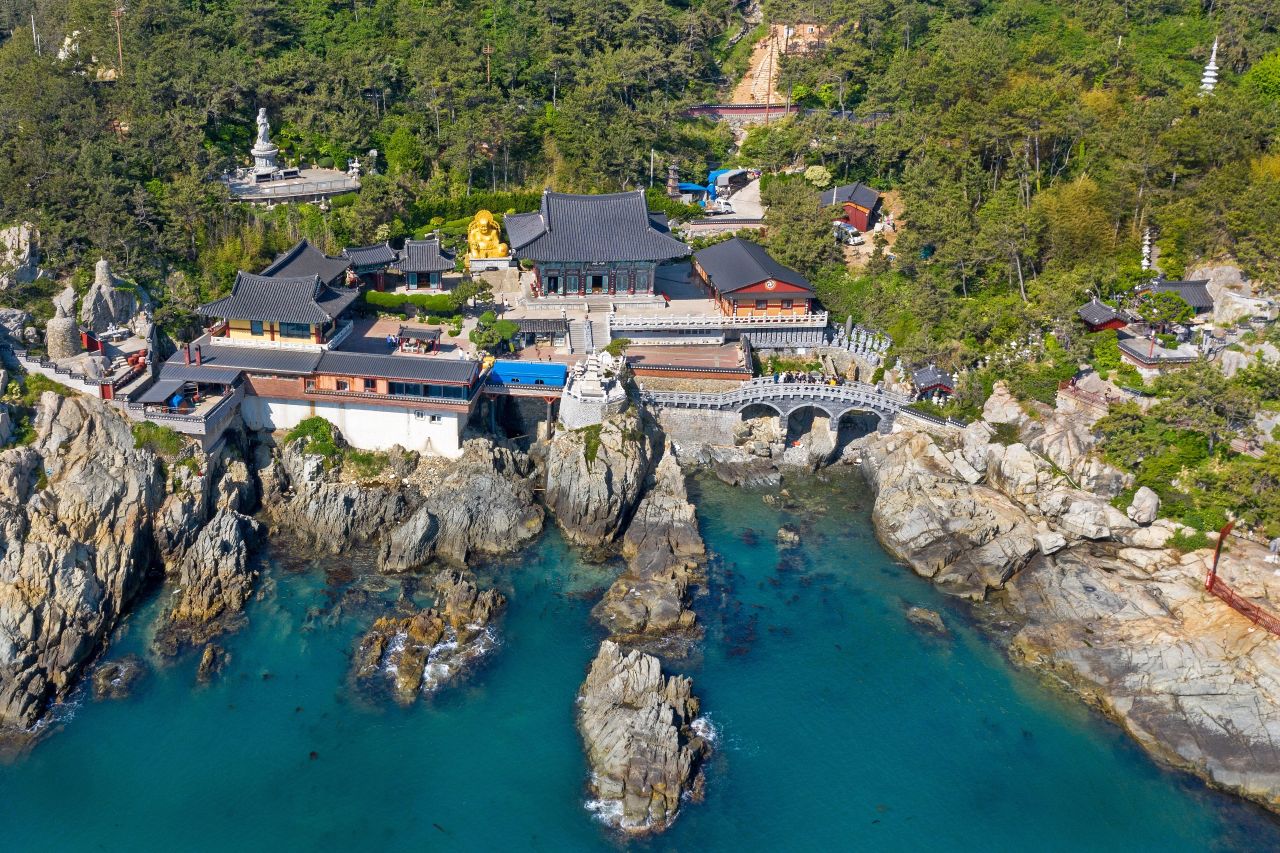
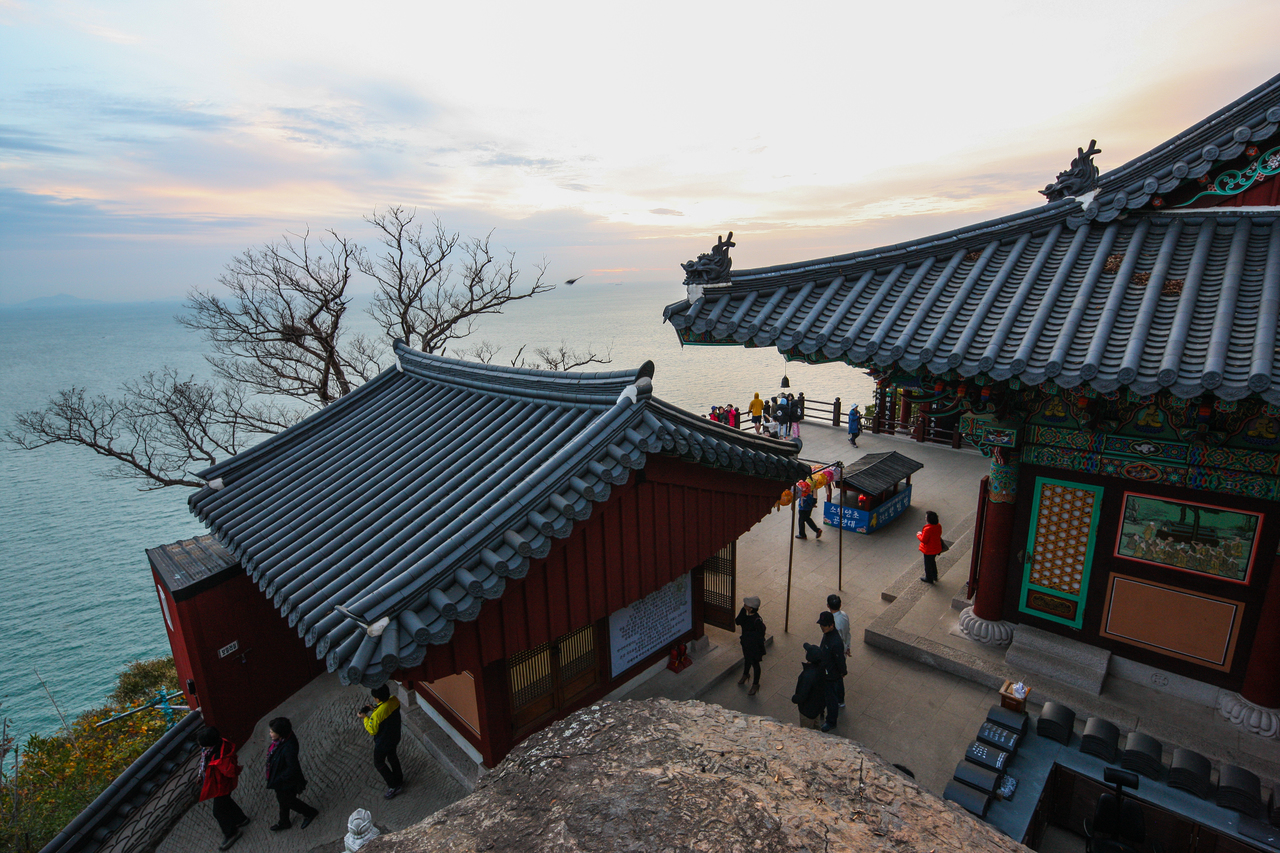
While most Korean temples are tucked away in the deep, serene mountains, Haedong Yonggungsa stands as a magnificent exception. Perched directly on the rugged coastline of north-eastern Busan, it creates a breathtaking harmony between traditional Buddhist architecture and the infinite blue of the East Sea (동해).
The temple was founded in 1376 by the great Buddhist teacher Naong during the Goryeo Dynasty, originally known as Bomun Temple. Like many vital historical sites across the peninsula, it suffered destruction during the Japanese invasions (1592–1598). It was painstakingly rebuilt in the 1930s and officially renamed Haedong Yonggungsa in 1974. The new name reflects a profound vision experienced by the monk Jung-am, who witnessed the Avalokitesvara Bodhisattva (the Goddess of Mercy) ascending on a dragon from the sea.
Must-See Spots and Photo Opportunities
There is much more to this site than just ocean views. Here are the main highlights you should not miss as you explore the grounds:
- The 12 Zodiac Figures & 108 Stairs: Before entering the main temple complex, you will pass twelve intricately carved stone statues representing the Oriental Zodiac. Finding and snapping a photo with your animal sign is a cherished tradition. Following this, you will descend 108 stairs, which symbolize the 108 agonies of earthly life in Buddhism.
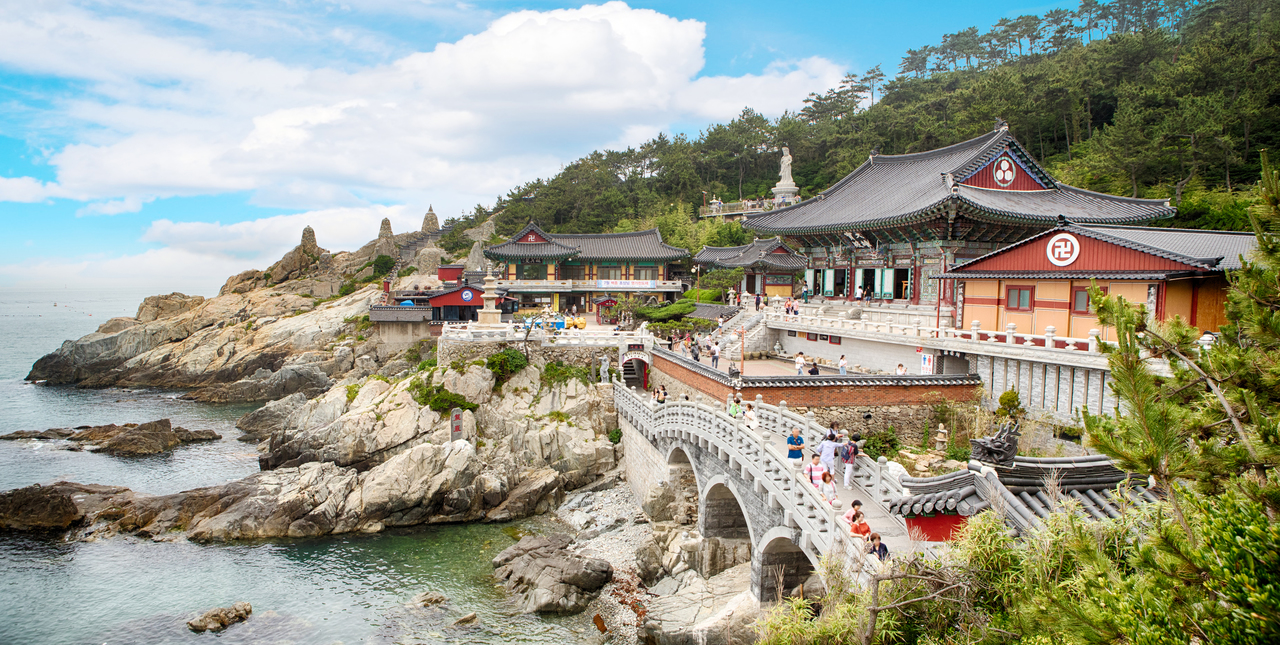
- The Sunrise Platform: Halfway down the stairwell, a path veers off to a rocky outcrop. This is the absolute best vantage point to capture the iconic, wide-angle shot of the temple buildings clinging to the cliffs against the ocean backdrop.
- Yongmun-gyo (용문교): Also known as the Dragon Gate Bridge. As you cross this beautiful stone bridge, look down to see visitors tossing coins into stone buckets held by statues—a fun practice for good luck!
- Daeungjeon Main Hall (대웅전): The vibrant, colorful centerpiece of the temple. If you visit around May, you will see the courtyard spectacularly canopy-covered with thousands of glowing lotus lanterns in celebration of Buddha’s Birthday.
- The Great Golden Buddha: Also known as the Haesu Gwaneum Daebul, this massive, shimmering statue of the Seawater Great Goddess of Mercy gazes peacefully out over the ocean, offering protection and blessings.
How to Get to Haedong Yonggungsa Temple from Busan Station
Traveling to the temple from the main transit hub is relatively straightforward. As of 2026, the most efficient public transport route is a combination of the Metro and the Donghae Line.
- From Busan Station, take Metro Line 1 (Orange) heading towards Nopo.
- Transfer at Busan National Univ. of Education Station (교대역) to the Donghae Line (Light Blue).
- Ride the Donghae Line and get off at OSIRIA Station (오시리아역).
- From Exit 1 of OSIRIA Station, you can catch Bus No. 181 or 1001, or take a quick 5 to 7-minute taxi ride to the temple entrance.
💡 Pro Tip from a Local: If the weather is nice, taking a taxi from OSIRIA Station is highly recommended. The local buses can get incredibly crowded with visitors heading not just to the temple, but to the nearby Lotte World Busan.
Essential Visitor Information and Precautions
To ensure a smooth and respectful visit, keep the following practical details in mind:
| Category | Local Advice |
|---|---|
| Best Time to Visit | Arrive early by 8:00 AM to beat the heavy tourist crowds and the harsh midday sun. Alternatively, aim for the “Blue Hour” just before sunset for magical lighting. |
| Weather & Clothing | The ocean breeze can be chilly even on warm days. Bring a light windbreaker or cardigan. Because the terrain is rocky and the 108 stairs are steep, avoid flip-flops or high heels—comfortable walking shoes are a must. |
| Admission | Entry is completely free, though small donations in the designated boxes are warmly welcomed. |
| Etiquette | Despite its popularity as a tourist destination, this remains an active place of worship. Keep your voice low near the prayer halls and absolutely avoid taking photos of individuals directly in front of you while they are bowing or praying. |
Nearby Attractions to Pair with Your Visit
Since Haedong Yonggungsa is located within the vibrant OSIRIA Tourist Complex, you can easily make a full-day itinerary by adding these nearby attractions to your schedule:
- Lotte World Adventure Busan (롯데월드 어드벤처 부산): Just a few minutes away, this outdoor theme park is perfect for families and thrill-seekers looking to add some excitement to their day.
- Skyline Luge Busan (스카이라인 루지 부산): Located right next to Lotte World, enjoy a fun, gravity-fueled downhill cart ride with incredibly scenic views of the coastline.
- Songjeong Beach (송정해수욕장): A short bus or taxi ride south, this beach is a famous local surfing hub with a relaxed, youthful vibe and plenty of oceanfront cafes.
- Dongbusan Lotte Premium Outlets (롯데프리미엄아울렛 동부산점): Ideal for those who want to squeeze in some shopping or grab a diverse, satisfying meal after exploring the temple grounds.
Other Breathtaking Oceanside Temples in Korea
If the coastal serenity of Haedong Yonggungsa has captured your heart, South Korea boasts a few other magnificent temples where the mountains meet the sea. As a local enthusiast of Korean Buddhist architecture, I highly recommend adding these to your future travel bucket list:
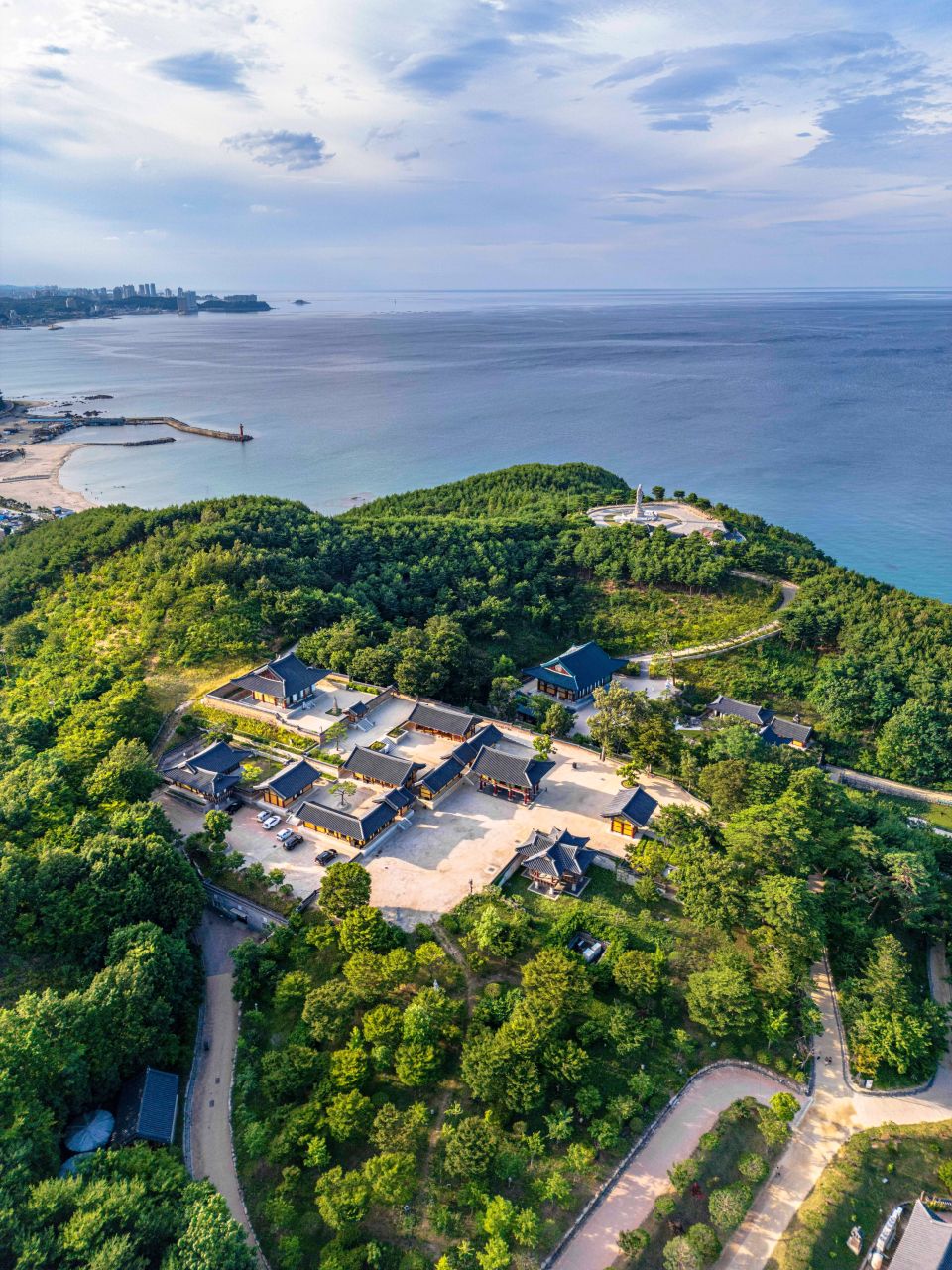
- Naksansa Temple (낙산사): Located in Yangyang (양양) on the east coast, this temple offers sprawling cliffside walking paths, a towering Goddess of Mercy statue overlooking the sea, and a deeply moving history of resilience after forest fires.
- Hyangiram Hermitage (향일암): Situated on the southern coast in Yeosu (여수), the name translates to “Hermitage Facing the Sun.” Reaching the top requires passing through narrow stone crevices, but the endless, glittering ocean views at the summit make it a legendary spot for New Year’s sunrise viewings.
Deepen Your Understanding of Korean Temples
To make your temple visits even more meaningful, I highly recommend reading up on the rich cultural context behind what you are seeing. Here are some excellent resources from our KCulture library:
- Discover the broader historical impact of Buddhism in Korea: The Silent Soul of Korea: Buddhism, Society, and History
- Learn why the temples get so incredibly colorful every May: Why Korea Celebrates Buddha’s Birthday: A Local’s Guide
- Understand the spiritual architecture before you arrive: Decoding the Path: A Traveler’s Guide to Korean Temple Layouts
Korean Culture portal KCulture.com

Founder of Kculture.com and MA in Political Science. He shares deep academic and local insights to provide an authentic perspective on Korean history and society.