If you truly want to understand the soul of modern South Korea, you have to look beyond the glittering skyscrapers and K-pop stages. A visit to the War Memorial of Korea in Seoul and the UN Memorial Cemetery in Busan offers a profound journey into the sacrifice and resilience that built this nation. This guide explores these sacred sites of remembrance, the ongoing gratitude Korea holds for international veterans, and practical tips for your visit in 2026.
- The Heart of Remembrance: The War Memorial of Korea
- Walking Through History: The Visitor Experience
- The Sacred Grounds: UN Memorial Cemetery in Busan
- Korea’s Eternal Gratitude: Supporting Our Veterans
- Honoring the Legacy Beyond the Main Memorials
The Heart of Remembrance: The War Memorial of Korea
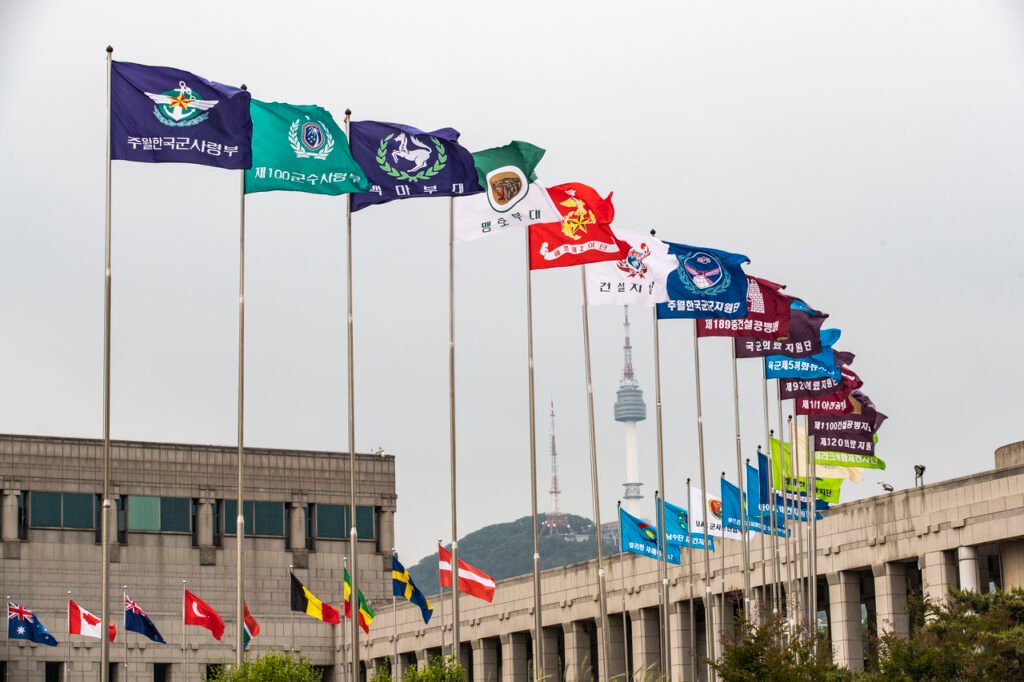
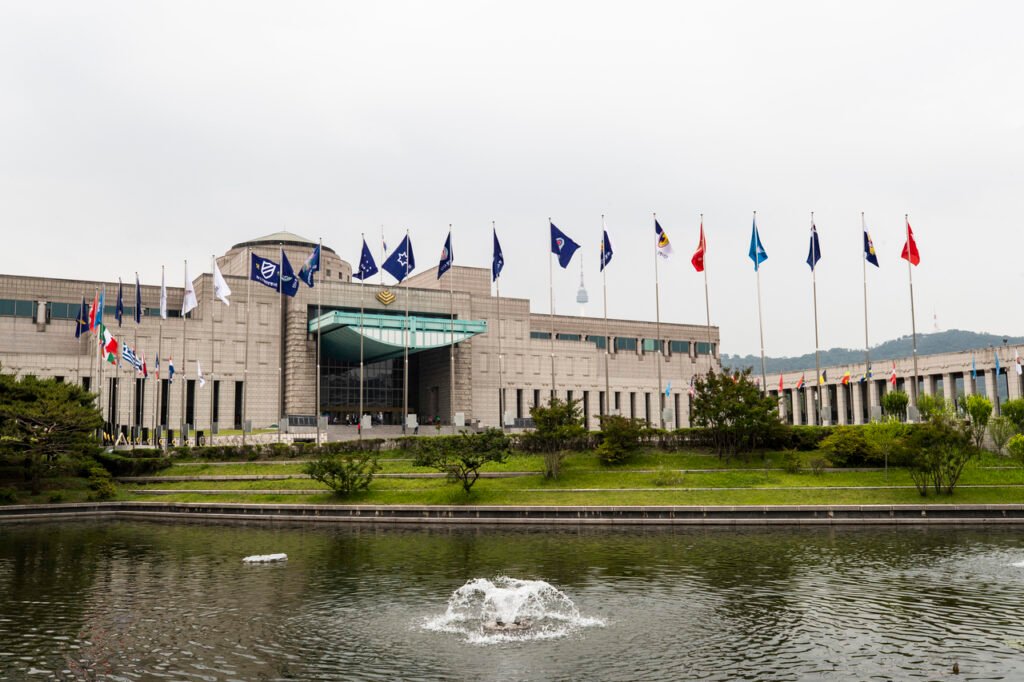
Living in Korea, I often find that visitors are surprised by how deeply the Korean War (known locally as “6.25”) still resonates in our daily lives. The War Memorial of Korea, located in Yongsan, Seoul, is not just a military museum; it is a living testament to the country’s survival. It is an immense space—one of the largest of its kind in the world—and it serves as a place where we honor those who protected the freedom we enjoy today.
The memorial is divided into several sections, both indoors and outdoors, covering everything from ancient battles to the modern era. However, the focus remains firmly on the 1950–1953 conflict. It’s a place where history feels tangible, and for me, it’s impossible to walk through these halls without feeling a deep sense of “Han”—that uniquely Korean mix of sorrow, longing, and resilience.
Walking Through History: The Visitor Experience
When you visit, I recommend starting your journey outside to get a sense of the scale before heading into the somber interior. Here is a natural flow for your visit, following the steps of a local insider.
The Outdoor Exhibition and the Statue of Brothers
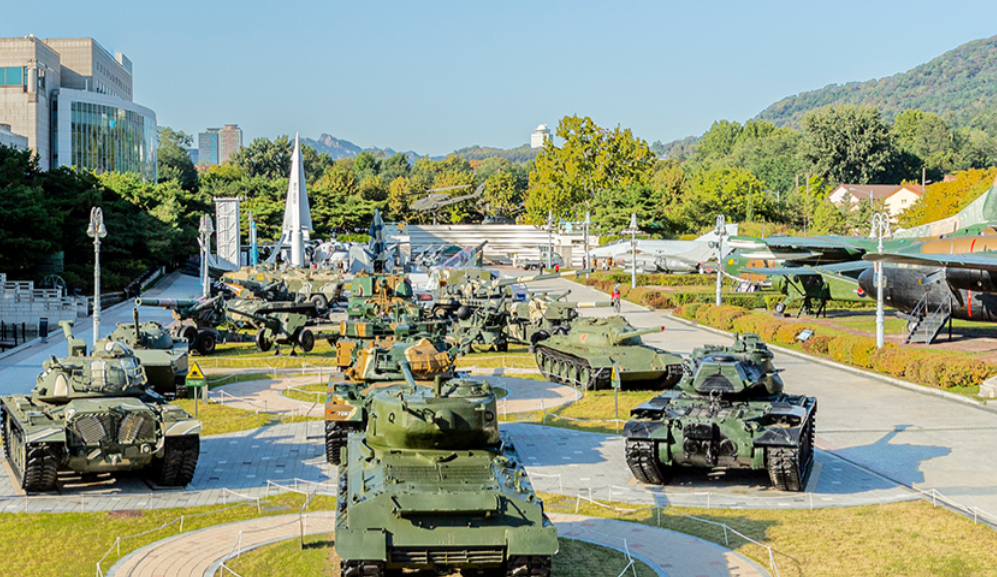
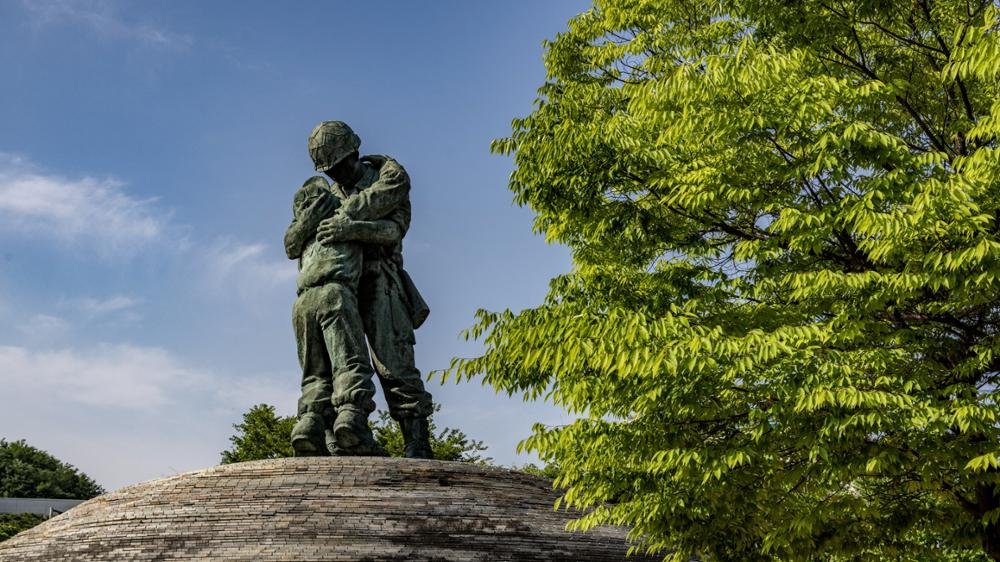
As you approach the main building, you’ll be greeted by a massive collection of military hardware. You can walk right up to B-52 bombers, fighter jets, and tanks used during the war. It’s a striking sight against the backdrop of Seoul’s modern skyline. However, the most moving part of the outdoor area is the Statue of Brothers. It depicts an older brother (a South Korean officer) and a younger brother (a North Korean soldier) meeting on the battlefield. It perfectly captures the heart-wrenching reality of a divided family and a divided nation.
The Korean War Room: The Main Event
Once inside, head straight for the Korean War Rooms. The exhibits are incredibly immersive. You’ll find walk-through dioramas that recreate the cold winters of the Chosin Reservoir and the desperate battles of the Pusan Perimeter. The artifacts—from blood-stained diaries to tattered uniforms—tell a personal story that dry history books often miss. It explains exactly how the war began, the role of the 22 UN nations, and the eventual armistice that still defines the peninsula today.
The Memorial Hall (Hoguk Chumo Hall)
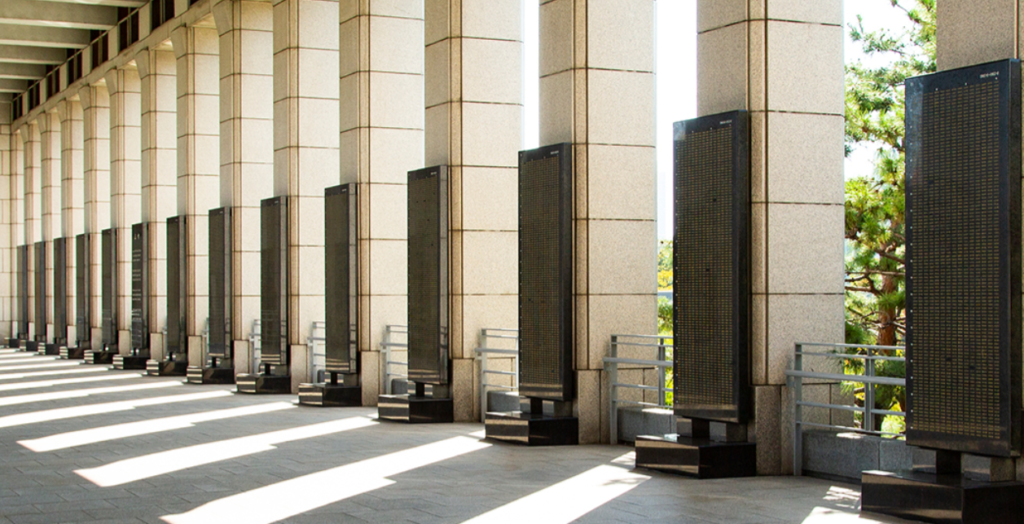
Before you leave, you must walk through the Memorial Hall. It is a quiet, circular space where light filters down from the ceiling onto plaques inscribed with the names of the fallen. There are no loud displays here—just a profound, heavy silence. It is here that you realize the cost of peace. Thousands of names of South Korean and UN soldiers are etched into the stone, a reminder that “Freedom is not free.”
📌 A Note on the DMZ and JSA in 2026
While the War Memorial provides the history, many travelers want to see the border itself. Please be aware that as of 2026, tours to the Joint Security Area (JSA/Panmunjom) are currently suspended. However, other parts of the DMZ, such as the 3rd Invasion Tunnel and Dora Observatory, remain open. For the most up-to-date booking information and fees, I highly recommend checking this guide: How to Visit the Korean DMZ in 2026.
The Sacred Grounds: UN Memorial Cemetery in Busan
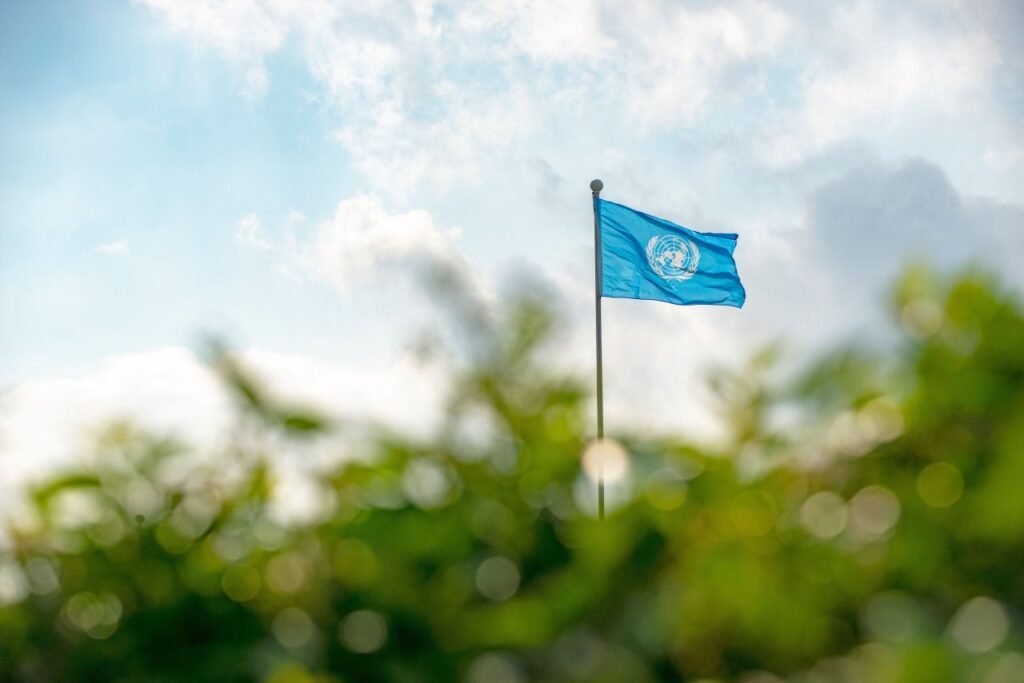
If your travels take you to the southern port city of Busan, the UN Memorial Cemetery (UNMCK) is an essential stop. While the Seoul memorial is about education and history, the Busan cemetery is about final rest. It is the only United Nations cemetery in the world, a truly sacred plot of land that is recognized as a UNESCO World Heritage site.
A Place of International Unity
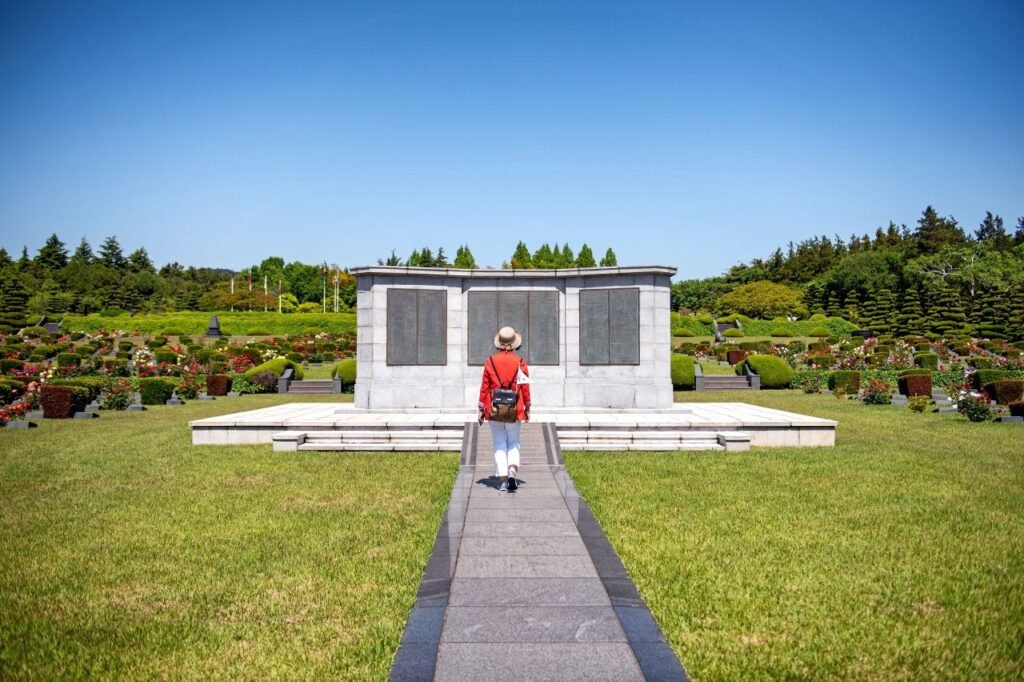
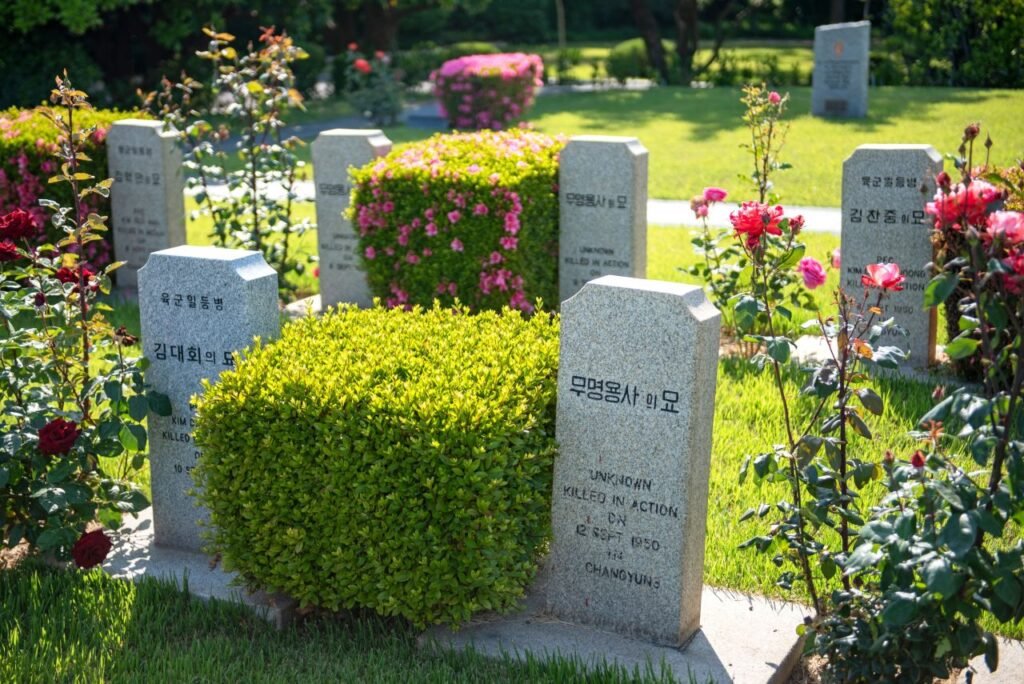
Located in the Nam-gu district, the cemetery is a masterpiece of landscape architecture, maintained with a level of care that shows just how much Korea values these fallen heroes. Over 2,300 soldiers from 11 countries, including the UK, Canada, Australia, and Turkey, are buried here. Each nation has its own section, marked by their national flags. Walking through the neat rows of headstones, you see the ages of the soldiers—many were just in their late teens or early twenties.
The Visitor Flow in Busan
When you enter, you will likely start at the Memorabilia Hall, where you can see a short film about the cemetery’s history. From there, follow the path through the Wall of Remembrance, which lists over 40,000 UN soldiers who were killed or went missing during the war. The atmosphere is one of immense dignity and peace. It’s a place where the world came together to defend a small peninsula, and that spirit of unity is still palpable today.
Korea’s Eternal Gratitude: Supporting Our Veterans
One thing I want to share as someone living in Korea is that our gratitude isn’t just a sentiment—it’s a national policy. The Korean government, through the Ministry of Patriots and Veterans Affairs, works tirelessly to ensure that the sacrifice of UN veterans is never forgotten, even seven decades later.
| Program | Description |
|---|---|
| Revisit Korea Program | The government invites UN veterans and their families back to Korea, covering travel and accommodation costs. |
| Burial Support | For UN veterans who wish to be buried in Busan with their comrades, the government provides financial and ceremonial support. |
| Scholarships | Educational benefits are provided to the descendants of UN veterans to study at top Korean universities. |
It is incredibly moving to see elderly veterans return to Korea today. They left a country that was completely destroyed, and they return to see a world-class economy and a thriving democracy. The government also sends masks, medical supplies, and “thank you” packages to veterans in the 22 participating nations, a practice that gained global attention during the recent pandemic.
Honoring the Legacy Beyond the Main Memorials
While the Seoul and Busan sites are the most prominent, there are other locations where you can pay your respects. In Incheon, the Incheon Landing Operation Memorial Hall commemorates the strategic genius of General MacArthur’s landing, which turned the tide of the war. Throughout the country, you will find smaller monuments dedicated to specific divisions or battles.
What I find most beautiful is that these aren’t just relics of the past. On national holidays like Memorial Day (June 6th) or the anniversary of the war’s start (June 25th), you will see young Koreans visiting these sites. We are taught from a young age that our freedom was a gift from people who lived thousands of miles away, people who didn’t even know where Korea was but came to help anyway. We haven’t forgotten, and we never will.
When you visit the War Memorial of Korea or the UN Cemetery, you aren’t just seeing a tourist attraction. You are witnessing the very foundation of the “real” Korea. It’s a heavy experience, yes, but it’s also one that will leave you with a profound sense of hope and a deeper connection to the Korean people.
Korean Culture portal KCulture.com
Join the mailing service and add to your favorites.

Founder of Kculture.com and MA in Political Science. He shares deep academic and local insights to provide an authentic perspective on Korean history and society.