Are you preparing for a trip to South Korea? If so, here is a list of apps you must install to navigate the country like a pro. Apps like Naver Map for navigation, K.ride for taxis, and Papago for AI translation will allow you to live like a local throughout your journey. In this guide, I summarize the best local apps for life in Korea across various fields—navigation, transportation, and translation—providing the very “manual” I use myself while living in Korea to ensure your trip is seamless and stress-free.
The must-have apps for South Korea travel in 2026 focus on overcoming the limitations of global platforms while providing real-time data that only local services can offer. From finding hidden cafes in narrow alleys to calling a premium taxi without a local phone number, these tools are your digital keys to the country. In the following sections, I will break down each category so you can choose the options that best fit your travel style.

- Navigation and Maps: Why Naver is Non-Negotiable
- Taxi Hailing Services: Finding Your Perfect Ride
- Language and Translation: Communicating with AI
- Dining and Lifestyle: Reservations and Waiting
- Payment and Currency: Going Cashless
- Luggage and Logistics: Hands-Free Travel
Navigation and Maps: Why Naver is Non-Negotiable
If there is one thing you should know before landing, it’s that Google Maps is notoriously unreliable for walking directions in Korea due to national security regulations. To find your way, you need a local mapping service that provides high-resolution data and real-time transit updates.
Naver Map: The Standard for Every Traveler
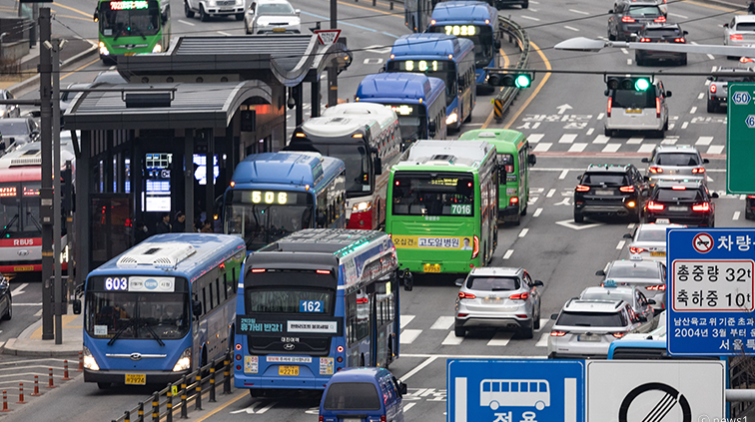
Naver Map is the most comprehensive tool for navigating Korea. It provides the most accurate business hours, reviews, and even photos of menus for almost every establishment in the country. Its English support is excellent, and its “Street View” is incredibly detailed. If you’re planning to use a lot of buses or subways, you might also want to read our detailed guide on How to Use Public Transport in Korea.
KakaoMap: The Commuter’s Favorite
While Naver is great for discovery, KakaoMap is often preferred by locals for its slightly more intuitive 3D maps and real-time bus seat availability. If you are focused on the capital city, it is an excellent companion for Mastering the Seoul Subway, as it clearly points out the quickest exits for transfers.
Taxi Hailing Services: Finding Your Perfect Ride
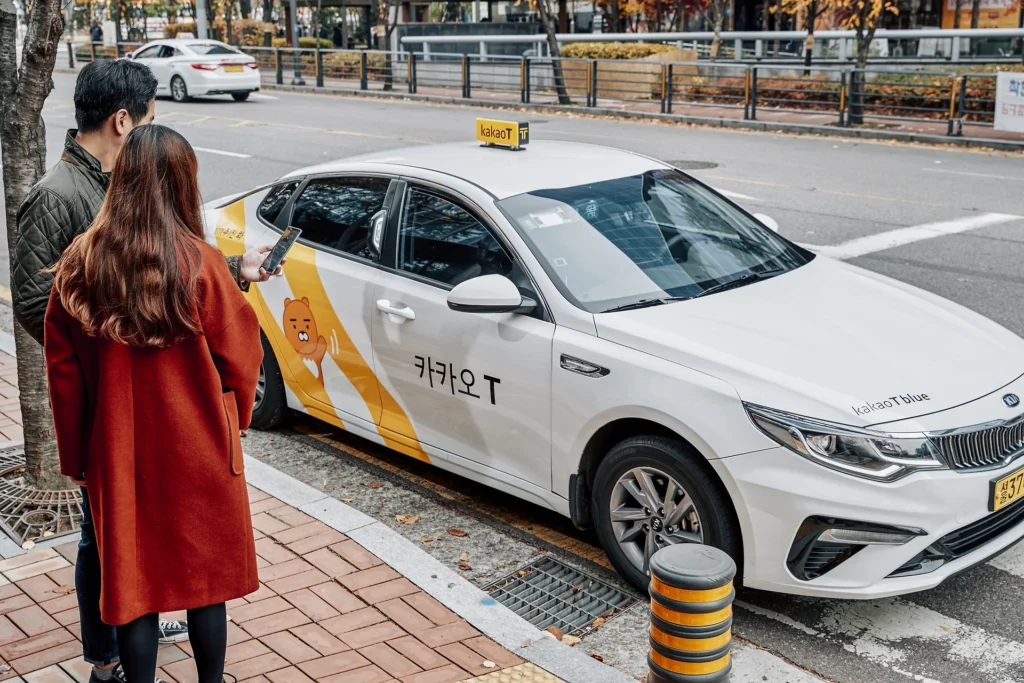
In 2026, taxis in Korea are mostly booked through apps. Depending on your priority—whether it’s payment ease, vehicle size, or a familiar interface—you have several great options. Below is a comparison of the top services to help you choose the right one for your situation.
South Korea Taxi App Comparison (2026)
| App Name | Best For | Payment Methods | Key Features |
|---|---|---|---|
| K.ride | Tourists / First-timers | International Credit Cards | No Korean number needed; Auto-translation chat |
| Kakao T | Daily Use / Locals | KakaoPay / In-car Cash | Largest driver network; Nationwide coverage |
| TADA | Families / Premium | App-registered Cards | Spacious vans; Professional “No-refusal” service |
| Uber (UT) | Global Users | Uber-registered Cards | Familiar UI; Works with existing global account |
While the table highlights the basics, here are a few more details to keep in mind. K.ride is essentially the global version of Kakao T, specifically optimized for international travelers to bypass the “local number” requirement. Kakao T remains the heavyweight champion with the fastest pickup times nationwide, while TADA is the go-to for those who value clean, large vans and a premium experience. For more on using these effectively, check our guide on Seoul Transport and Kakao T.
Language and Translation: Communicating with AI
While English is common in tourist areas, local markets and traditional restaurants often require a bit of help. In 2026, AI translation has become a vital bridge for travelers, offering multiple ways to break the language barrier.
Papago: The Best Accuracy for Korean
Developed by Naver, Papago is far superior to other translation apps when it comes to the Korean language. It understands honorifics and local context perfectly. The “Image” mode allows you to point your camera at a menu and see an English overlay instantly, making it one of the most critical must-have apps for South Korea travel in 2026.
Google Translate: The Reliable Global Backup
For those who prefer a familiar interface, Google Translate remains a highly capable option. It is particularly useful for real-time conversation mode and long-form text. While it may occasionally miss some of the ultra-polite nuances that Papago captures, it is an excellent secondary tool to have on your phone, especially if you are already used to its features from other travels.
💡 Local Note: If you are struggling to speak, use the “Voice” feature in either app. Most Korean locals are very patient and are now quite accustomed to travelers using their phones to communicate!

Dining and Lifestyle: Reservations and Waiting
Korea’s “hot places” are famous for long lines. Technology has now moved those lines to your smartphone, allowing you to wait remotely while you continue your sightseeing.
Catch Table Global
Catch Table Global is essential for foodies. It allows you to join waiting lists for trendy cafes or book reservations at top-tier restaurants without a local phone number. It is the best way to ensure you don’t waste hours standing on a sidewalk in Myeongdong or Seongsu-dong.
TableCheck
TableCheck is another reliable global platform used by many major hotels and premium restaurants in Korea. It serves as a great alternative to Catch Table, particularly for high-end dining where you want to secure your table well in advance using an international-friendly interface.
Payment and Currency: Going Cashless
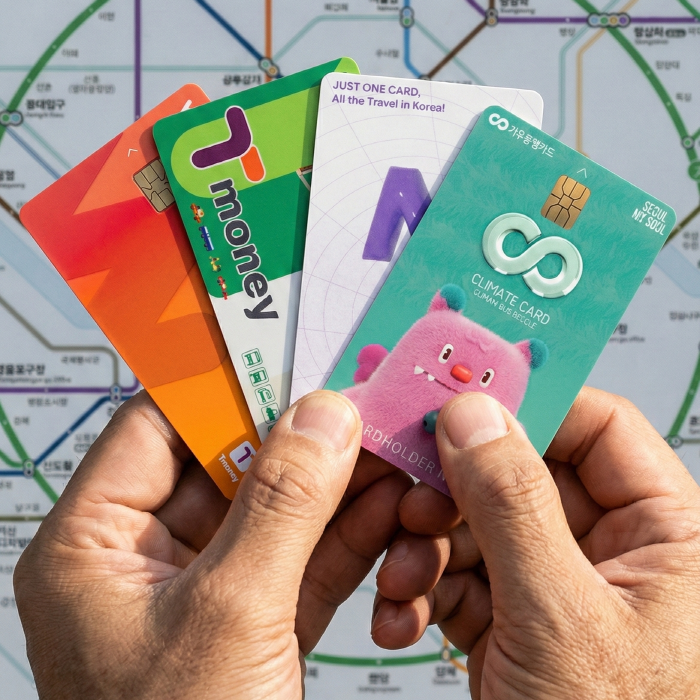
Korea is rapidly moving toward a completely cashless society. While some cash is good for street food, a local prepaid card is much more convenient. For a comparison of your options, read our guide on WOWPASS vs NAMANE.
WOWPASS: Your Local Debit Card
WOWPASS allows you to exchange your home currency into a local balance at kiosks found in major stations. It works as a debit card and a T-money card for all public transport. The companion app lets you track your spending and see your balance instantly.
Luggage and Logistics: Hands-Free Travel
Why drag heavy bags through the subway? Several apps can help you move your luggage directly from the airport to your hotel.
Goodlugg & Tripeasy
These services offer same-day luggage delivery. You can drop your bags at the airport and head straight to a palace or a museum. If you prefer to use station lockers, don’t miss our guide on Where to Store Luggage in Korea.
Before you start downloading, make sure your entry documents are in order. Check our K-ETA & Visa Rules and the detailed K-ETA Guide to ensure a smooth start to your journey. Enjoy your trip to Korea!
Korean Culture portal KCulture.com

The KCulture Editorial Team is dedicated to providing deep insights and accurate information about the vibrant world of Korean culture.
🇰🇷 Essential Seoul Travel Kit
- ✈️ Flights: Find Cheap Flights to Seoul
- 🏨 Stay: Top Rated Hotels in Seoul
- 🎟️ Tours: Best Activities & K-Pop Tours