Why do historical controversies trigger such strong reactions in South Korea? The short answer is that, for many Koreans, history is not simply a record of the past—it is closely tied to national identity, cultural continuity, and collective memory. Recent backlash against historical dramas such as Perfect Crown (21세기 대군부인), Joseon Exorcist, and Snowdrop reflects a much deeper concern about how history is represented and remembered.
To many international observers, the intensity of these reactions may seem surprising. However, when viewed against the backdrop of colonial rule, historical disputes with neighboring countries, and ongoing debates about cultural heritage, Korean sensitivity to historical distortion becomes far easier to understand.
- Recent Historical Distortion Controversies in Korean Media
- Why History Matters So Much in Korea
- History as a Form of Cultural Defense
- Understanding China’s Northeast Project
- Was Korea a Vassal State of China?
- Why Korean and Chinese Historical Narratives Differ
- Japan and Historical Revisionism
- The Continuity of Korean Identity
- What Foreign Visitors Should Understand
Recent Historical Distortion Controversies in Korean Media
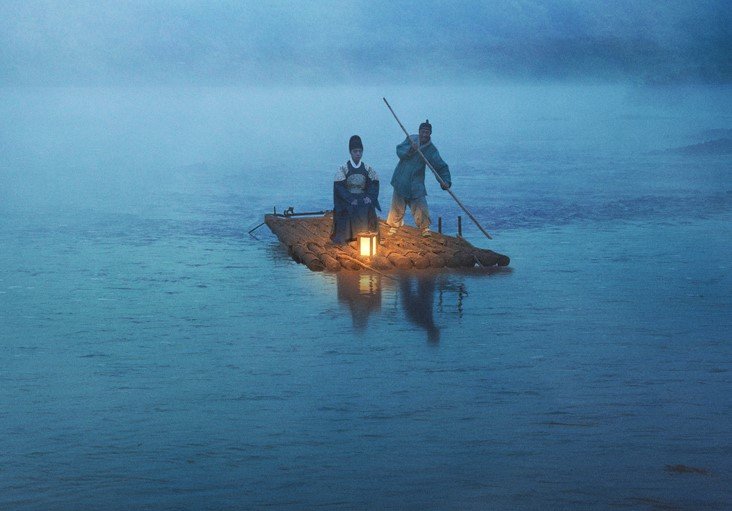
In recent years, several Korean television dramas have faced intense public criticism for perceived historical distortions.
| Drama | Year | Main Controversy | Outcome |
|---|---|---|---|
| Perfect Crown (21st Century Grand Prince’s Wife) | 2025–2026 | Critics argued that royal symbols and ceremonial depictions blurred distinctions between an independent Korean monarchy and tributary-style imagery. Particular debate emerged around sovereignty symbolism and royal expressions such as “Cheonse” (천세, ten thousand years of life, traditionally reserved for a king in a tributary relationship) versus “Manse” (만세, ten thousand times ten thousand years, reserved for an independent emperor). | Major online criticism, editing of controversial scenes, and renewed public discussion about historical representation |
| Joseon Exorcist | 2021 | Use of Chinese-style props and controversial portrayals of royal figures | Cancelled after only two episodes |
| Mr. Queen | 2020–2021 | Mocking references to the Annals of the Joseon Dynasty and distorted depictions of historical figures | Official apology and regulatory criticism |
| Snowdrop | 2021 | Alleged distortion of South Korea’s democratization movement | Major public controversy and petitions |
The controversy surrounding Perfect Crown (21st Century Grand Prince’s Wife) is particularly useful for understanding the Korean perspective. While the debate was far less severe than the backlash against Joseon Exorcist, it demonstrated that even symbolic representations of monarchy, diplomacy, or sovereignty can quickly become public issues when audiences believe that historical symbols, institutions, or figures are being misrepresented.
What is striking is not simply that viewers disliked certain creative choices. Rather, many Koreans viewed these portrayals as touching upon sensitive historical experiences that remain relevant today.
Why History Matters So Much in Korea
For many countries, history is primarily an academic subject. In Korea, history often functions as a foundation of national identity.
Korea’s modern experience includes Japanese colonial rule (1910–1945), national division after World War II, the Korean War, and ongoing geopolitical tensions. As a result, historical narratives are often connected to questions of legitimacy, sovereignty, and cultural survival.
Unlike some modern nation-states formed through large-scale immigration or political federation, Korean national identity is frequently understood through a narrative of long historical continuity. Consequently, debates over historical interpretation are often perceived as debates over identity itself.
📌 Cultural Insight: In South Korea, historical anniversaries, museums, documentaries, and educational programs attract significant public attention. History is widely viewed as a living part of contemporary society rather than a distant subject.
History as a Form of Cultural Defense
Korean cultural critic Jeong Deok-hyun has argued that public reactions to historical distortions often function as a form of “cultural defense mechanism.”
According to this interpretation, controversies surrounding dramas are not merely about factual inaccuracies. Instead, they reflect broader anxieties regarding cultural appropriation, historical claims, and the preservation of Korean identity in a competitive geopolitical environment.
This perspective helps explain why Korean audiences sometimes react more strongly to historical inaccuracies than audiences in other countries. Many viewers see themselves not only as consumers of entertainment but also as guardians of historical memory.
Understanding China’s Northeast Project
One of the most significant factors shaping Korean historical sensitivity is China’s Northeast Project, officially known as the Northeast Borderland History and Current Situation Research Project.
Conducted between 2002 and 2007, the project sought to reinterpret the histories of states that once existed within the territory of present-day China. Particular controversy emerged over the classification of Goguryeo and Balhae, two kingdoms that Koreans generally regard as integral parts of Korean history.
From the Korean perspective, the issue extends beyond academic debate.
Many Korean historians argue that Goguryeo maintained an independent political identity, fought major wars against Chinese dynasties such as Sui and Tang, and exercised sovereign authority. Likewise, Balhae openly identified itself as a successor to Goguryeo after its establishment.
As a result, attempts to classify these states solely as local administrations within Chinese history are widely rejected in South Korea.
💡 Local Note: Among ordinary Koreans, the Northeast Project is often viewed not as a neutral historical study but as a challenge to the historical foundations of Korean identity. This perception explains much of the emotional reaction surrounding related debates.
Was Korea a Vassal State of China?
Another reason historical debates often become sensitive in Korea is the widespread misunderstanding of East Asia’s traditional diplomatic order.
In some Western discussions—and occasionally in Chinese nationalist narratives—Joseon is described as a “vassal state” of China. Most Korean historians regard this characterization as inaccurate because it applies a European colonial framework to a very different historical system.
| Concept | Historical Reality in East Asia |
|---|---|
| Tributary System | A diplomatic and trade network that promoted stability, official commerce, and mutual recognition among neighboring states. |
| Internal Sovereignty | Korean kingdoms controlled their own taxation, laws, military affairs, administration, and succession. |
| Diplomatic Relations | Relations were conducted through official envoys crossing international borders, functioning more like state-to-state diplomacy than a master-servant relationship. |
Importantly, the tributary system was not unique to Joseon. Throughout Korean history, different Korean kingdoms maintained diplomatic relations with various neighboring dynasties.
- Goryeo (고려) exchanged tributary missions with the Khitan Liao Dynasty and later interacted diplomatically with the Jurchen Jin Dynasty.
- Joseon (조선) maintained tributary relations with both the Ming Dynasty and later the Qing Dynasty.
- At different times, several East Asian states simultaneously participated in similar diplomatic frameworks while remaining politically independent.
None of these relationships meant that Chinese emperors governed Korea. The kings of Goryeo and Joseon appointed their own officials, enacted their own laws, collected taxes, maintained armies, and conducted domestic affairs without interference from Beijing.
For this reason, many Korean scholars argue that describing Joseon or Goryeo as Chinese “vassals” oversimplifies a far more complex regional diplomatic system.
Why Korean and Chinese Historical Narratives Differ
Understanding Korean concerns also requires understanding the fundamentally different historical development of Korea and China.
Modern China is a multiethnic state encompassing numerous historical traditions. Throughout history, several dynasties ruling what is now considered China originated from peoples outside the traditional Han Chinese core.
- The Liao Dynasty was founded by the Khitan people.
- The Jin Dynasty was founded by the Jurchens.
- The Yuan Dynasty was established by the Mongols under Kublai Khan.
- The Qing Dynasty was founded by the Manchus after conquering the Ming Dynasty.
As many historians have noted, the political entity known today as China emerged through the accumulation and integration of numerous historical states, peoples, and territories over centuries.
Korea followed a different trajectory.
Although political states evolved over time—from the Three Kingdoms of Goguryeo (고구려), Baekje (백제), and Silla (신라), to Unified Silla (통일신라), Goryeo (고려), and later Joseon (조선)—the Korean Peninsula maintained a remarkable degree of cultural and demographic continuity.
While modern concepts of ethnicity did not exist in the same form during antiquity, Korean historians generally emphasize the substantial cultural, linguistic, and historical connections among the Three Kingdoms. Their ruling traditions are often linked to Buyeo (부여), an ancient kingdom that is widely regarded in Korea as part of the broader historical legacy that followed Gojoseon (고조선).
As a result, many Koreans view the Three Kingdoms not as separate civilizations disconnected from one another, but as constituent parts of a long historical continuum that eventually led to Unified Silla, Goryeo, Joseon, and modern Korea.
This distinction is important because many Koreans view ancient kingdoms such as Goguryeo and Balhae not as separate foreign entities but as part of an evolving historical continuum leading to modern Korea.
This difference in historical development also explains why debates surrounding Goguryeo and Balhae often become emotionally charged in Korea. Modern China defines itself as a multiethnic state that incorporates the historical legacies of numerous peoples and dynasties that ruled territories now within its borders.
Koreans, however, generally view Goguryeo, Balhae, Goryeo, Joseon, and modern Korea as part of a largely continuous historical narrative centered on the Korean Peninsula and its people. Because of this, attempts to reinterpret ancient Korean kingdoms primarily as regional components of Chinese history are often perceived as challenges to Korea’s historical continuity rather than ordinary academic disagreements.
Japan and Historical Revisionism
Another major factor is the legacy of Japanese colonial rule.
During the colonial period, Japanese scholars promoted historical interpretations that justified imperial control over Korea. Some argued that Korea lacked the capacity for independent development or that its history was fundamentally dependent upon external powers.
Although these theories have long been rejected by mainstream scholarship, memories of colonial-era narratives remain influential.
Contemporary disputes further reinforce public sensitivity. Controversies surrounding history textbooks, wartime forced labor, comfort women, and territorial claims over Dokdo (독도) continue to generate friction between South Korea and Japan.
For many Koreans, these disputes are not abstract historical disagreements but unresolved issues connected to lived family memory and national experience.
The Continuity of Korean Identity
One frequently overlooked aspect of Korean historical consciousness is the idea of continuity.
Following the collapse of Balhae in the 10th century, many members of the ruling elite and a substantial number of refugees migrated to Goryeo. Historical records indicate that they were integrated into Goryeo society rather than treated as a separate foreign population.
For Korean historians, this migration symbolizes a continuing historical connection among Goguryeo, Balhae, Goryeo, Joseon, and modern Korea.
Whether one fully agrees with every aspect of this interpretation or not, it remains a powerful component of Korean collective memory.
What Foreign Visitors Should Understand
To outsiders, Korean reactions to historical controversies can sometimes appear unusually intense. However, these reactions become more understandable when viewed through Korea’s unique historical experience.
For many Koreans, history represents far more than academic knowledge. It embodies cultural survival, national identity, collective memory, and the continuity of a civilization that has existed on the Korean Peninsula for more than a millennium.
Recent controversies surrounding historical dramas are therefore not simply arguments about entertainment. They reflect a deeper question: who has the authority to define the past, and how that past shapes the future.
Understanding this perspective offers valuable insight into modern Korean society and helps explain why historical representation remains one of the most emotionally significant public issues in South Korea today.
Korean Culture portal KCulture.com

Founder of Kculture.com and MA in Political Science. He shares deep academic and local insights to provide an authentic perspective on Korean history and society.