If you have recently explored the thrilling world of K-Pop Demon Hunters, you might have been captivated by the intense scenes where the protagonists wield a mystical, glowing blade to fight off evil spirits. While the show takes creative liberties with its action-packed supernatural battles, many viewers are surprised to discover that Korea actually has a real-world legendary weapon dedicated to warding off evil: the Sain Geom (사인검), or “Four Tigers Sword.”
The Sain Geom was not primarily a battlefield weapon. Instead, it was a rare royal ceremonial sword created under extraordinarily specific astrological conditions and believed to possess powerful protective energy. Combining royal authority, astronomy, Daoist symbolism, and Korean spiritual traditions, it remains one of the most fascinating artifacts of the Joseon Dynasty.
In this guide, we’ll explore what the Sain Geom is, why it was made, the historical stories surrounding it, and where visitors can see authentic examples in Korea today.
- What Is the Sain Geom?
- How the Four Tigers Sword Was Created
- Symbolism and Hidden Meanings in the Blade
- Historical Stories and Legends
- Sain Geom and Korean Spiritual Culture
- Where to See Sain Geom in Korea
- Why the Sain Geom Still Matters Today
- Related Korean Traditional Culture
What Is the Sain Geom?
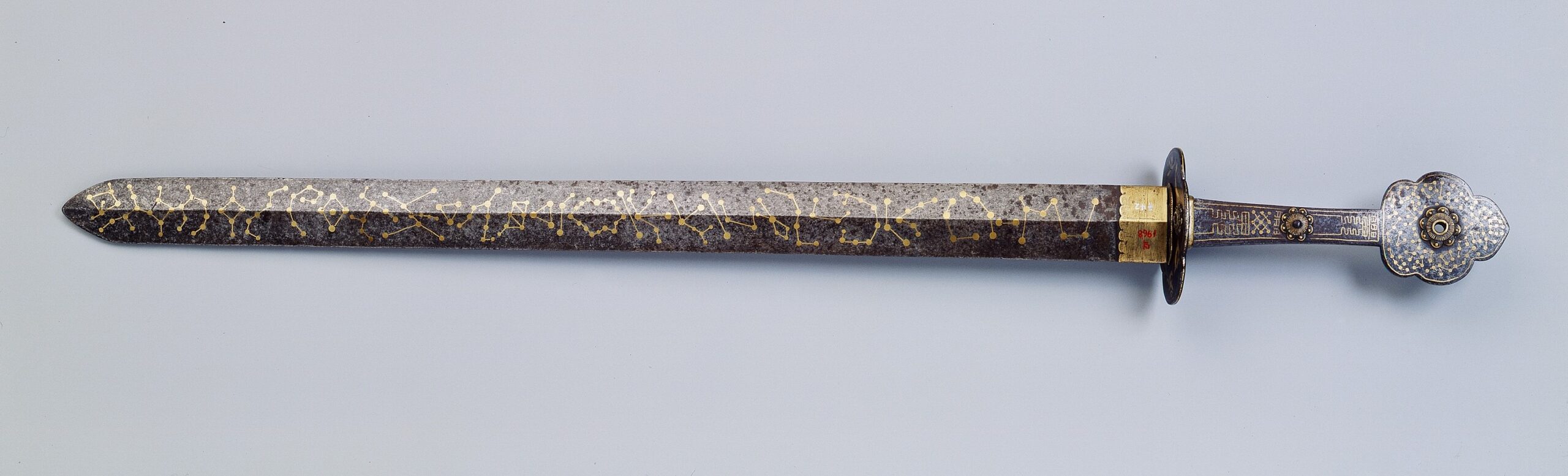
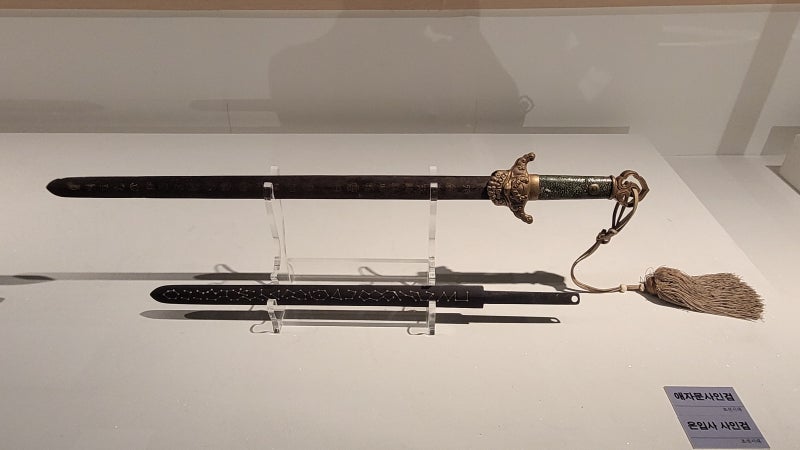
The name Sain Geom (四寅劍) literally means “Four Tigers Sword.” The word in (寅) refers to the Tiger in the East Asian zodiac cycle, while geom means sword.
Unlike ordinary military weapons, the Sain Geom was a royal ritual sword created to protect the kingdom, repel evil influences, and safeguard the royal family. While the king kept these within the palace as a spiritual shield, he would also occasionally bestow a Sain Geom upon highly meritorious royal relatives or top-ranking military generals. In this context, it served as the ultimate symbol of the king’s trust and the Confucian ideal of unwavering loyalty and righteousness. It was universally regarded as a powerful byeoksa object—a tool for driving away harmful spirits, disasters, disease, and misfortune.
What makes the Sain Geom particularly remarkable is that it appears to be uniquely Korean. Although China and Japan have traditions involving ritual swords, the specific concept of the Four Tigers Sword developed within the Joseon court and reflects a distinctive blend of Korean royal culture, Daoist cosmology, and indigenous spiritual beliefs.
📌 Cultural Note: Some Korean scholars describe the Sain Geom as “the most powerful three-dimensional talisman made of iron” because every aspect of its creation was intended to maximize protective spiritual energy.
How the Four Tigers Sword Was Created
The greatest mystery of the Sain Geom lies in its creation date.
According to traditional East Asian cosmology, the Tiger represents one of the strongest expressions of Yang (positive cosmic energy). To concentrate this power, the sword could only be forged when four Tiger-related time markers aligned simultaneously:
| Condition | Meaning |
|---|---|
| Tiger Year (寅年) | Occurs once every 12 years |
| Tiger Month (寅月) | The first lunar month |
| Tiger Day (寅日) | A day designated by the traditional sexagenary cycle |
| Tiger Hour (寅時) | Approximately 3:00 a.m. to 5:00 a.m. |
Only when all four conditions coincided could a true Sain Geom be produced. This rare moment occurs only once every twelve years, making authentic examples extremely uncommon.
Records suggest that such swords were already being produced during the early Joseon period, beginning around the reign of King Taejo, founder of the dynasty. They continued to appear throughout Joseon history whenever the court sought additional spiritual protection during uncertain times.
Who Made the Sword?
Sain Geom swords were commissioned directly by the royal court. The kingdom’s most skilled blacksmiths and metal artisans were selected for the task.
Because the critical forging stage had to occur during the brief Tiger Hour before dawn, extensive preparation was required beforehand. After the blade was completed, master craftsmen decorated it using intricate gold and silver inlay techniques.
Symbolism and Hidden Meanings in the Blade
A Sain Geom is much more than a sword. It is essentially a collection of protective symbols forged into steel.
The Constellations of Heaven
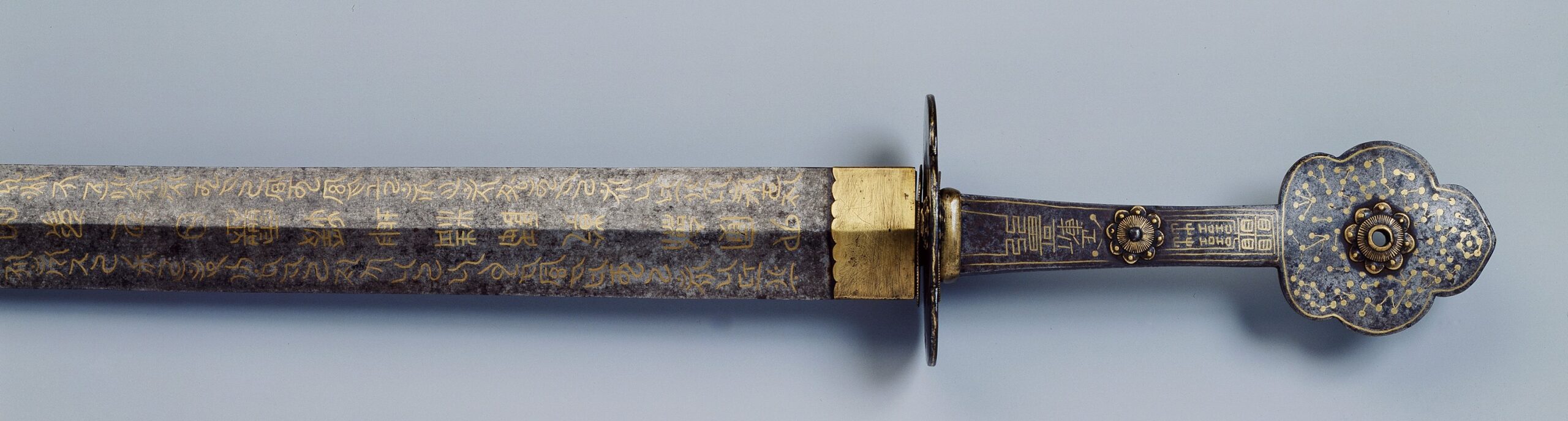
One side of the blade often features the Twenty-Eight Mansions of East Asian astronomy together with the Big Dipper. These celestial symbols represented the power of heaven and the cosmic order that protected the kingdom.
Daoist Incantations
The opposite side commonly contains inscriptions written in ancient seal script. These texts invoke heavenly forces to suppress evil, restore balance, and defend the righteous. A famous example of the incantation carved into the blade translates to:
“Heaven sends down essence, Earth aids with spirit. The sun and moon take their shapes, the mountains and rivers form their bodies, and the lightning strikes. Moving the profound order of the universe to drive out the evil of the mountains and rivers, we cut down darkness with the profound truth to make the world righteous.”
The result is a weapon that symbolically unites heaven, earth, stars, and royal authority into a single sacred object.
A Sword of Pure Yang Energy
The central concept behind the Sain Geom was Sunyang, or Pure Yang. Since evil spirits, disease, and misfortune were associated with Yin energy, the sword’s concentrated Yang power was believed capable of cutting through negative influences and restoring harmony.
Historical Stories and Legends
King Yeonsangun’s Obsession
One of the most intriguing stories comes from the reign of King Yeonsangun, one of Joseon’s most infamous rulers.
In 1506, historical records indicate that he ordered the production of more than 200 Tiger Swords. Historians often interpret this as evidence of his growing paranoia. Surrounded by political enemies and fearing threats to his rule, the king increasingly relied on supernatural protection.
Ironically, that same year he was overthrown in a coup.
The Lesser-Known Samin Geom
Not every crisis allowed officials to wait twelve years for a true Sain Geom.
During outbreaks of disease, famine, or social unrest, the court occasionally commissioned a Samin Geom (Three Tigers Sword). These swords matched only three Tiger conditions rather than four, allowing them to be produced more frequently while still retaining symbolic protective power.
💡 Did You Know? Because authentic Sain Geom swords could only be created once every twelve years, surviving examples are considerably rarer than many other royal weapons from the Joseon Dynasty.
Sain Geom and Korean Spiritual Culture
The Sain Geom provides a fascinating window into how premodern Koreans understood the universe.
Joseon is often remembered as a Confucian state, but royal culture also incorporated elements of astronomy, Daoism, folk beliefs, and indigenous spiritual traditions. The Four Tigers Sword reflects this cultural blending.
Rather than viewing politics, religion, and astronomy as separate fields, Joseon elites believed that cosmic harmony directly influenced the stability of the state. A sword forged at the perfect celestial moment was therefore seen as a legitimate instrument for protecting both king and country.
Visitors interested in related traditions may also enjoy learning about Jeongganbo, Korea’s unique music notation system, or exploring Muninhwa scholar paintings, which reveal other ways Joseon intellectuals connected art, philosophy, and cosmology.
Where to See Sain Geom in Korea
Because Sain Geom swords are designated cultural treasures and many are sensitive artifacts, visitors should be aware that exhibition status may change. Some examples appear only during special exhibitions.
National Palace Museum of Korea (국립고궁박물관)
Located near Gyeongbokgung Palace (경복궁) in Seoul, this museum holds one of the most significant collections of royal Tiger Swords. Visitors can often learn about them through exhibitions focused on royal rituals, astronomy, and court culture.
Korea Army Museum (육군박물관)
Situated inside the Korea Military Academy in Seoul, the museum houses examples connected to military officials and royal rewards. Access conditions and exhibition schedules can vary, so checking in advance is recommended.
National Museum of Korea (국립중앙박물관)
The museum occasionally displays exceptional examples of gold-and-silver-inlaid Tiger Swords within galleries dedicated to metal craftsmanship or military history. However, they are not guaranteed to be on permanent display at all times.
📌 Local Tip: Before planning a trip specifically to view a Sain Geom, check current exhibition schedules on the museum’s official website. Some of the most important examples rotate in and out of public display for conservation reasons.
Why the Sain Geom Still Matters Today
The popularity of K-Pop Demon Hunters has introduced global audiences to many elements of Korean folklore and traditional symbolism. The Sain Geom stands out because it is not simply a fictional fantasy weapon—it is rooted in real Korean history.
Its story reveals how Joseon kings understood power, how artisans transformed spiritual beliefs into physical objects, and how astronomy influenced daily life centuries before modern science.
Whether viewed as a ceremonial masterpiece, a royal talisman, or a symbol of Korea’s rich cultural imagination, the Four Tigers Sword remains one of the most extraordinary treasures of Korean heritage.
Related Korean Traditional Culture
If the Sain Geom sparked your interest in traditional Korean culture, these guides offer additional context:
- Traditional Korean Fans: History, Art, and Cultural Meaning
- Understanding Muninhwa and Korea’s Scholar Artists
- Jeongganbo Explained: How Korean Traditional Music Is Written
- Korean Traditional Dance: Court Dance, Folk Dance & Where to Watch
- Why Korea Celebrates Buddha’s Birthday: A Local’s Guide
- Decoding Korean Genealogy: Jokbo, Jongjung, and Chonsu
Korean Culture portal KCulture.com

Founder of Kculture.com and MA in Political Science. He shares deep academic and local insights to provide an authentic perspective on Korean history and society.