Jokbo (genealogy books) and Jongjung (clan organizations) are the foundational pillars of the traditional Korean kinship system, serving as meticulous historical archives and structured communities that record bloodlines, govern ancestral rites, and manage clan estates. Living in Korea, I often meet expats and visitors who watch K-dramas or observe local family dynamics and wonder why ancestral roots, surnames, and family obligations carry such profound weight in this society. This deep-seated reverence for lineage isn’t just a relic of the past; it is a living tradition that continues to shape identity, community bonds, and even legal rights today. In this comprehensive guide, we will explore the historical origins of Korean family trees, the mathematical precision of family ties, and how ancient clan traditions are adapting to a modern, egalitarian society.
- Understanding Jokbo: The Ultimate Family Archive
- Jongjung and Munjung: The Clan as a Community
- The Mathematics of Blood: Understanding Chonsu
- Modern Evolution: When Tradition Meets Equality
- FAQ
Understanding Jokbo: The Ultimate Family Archive
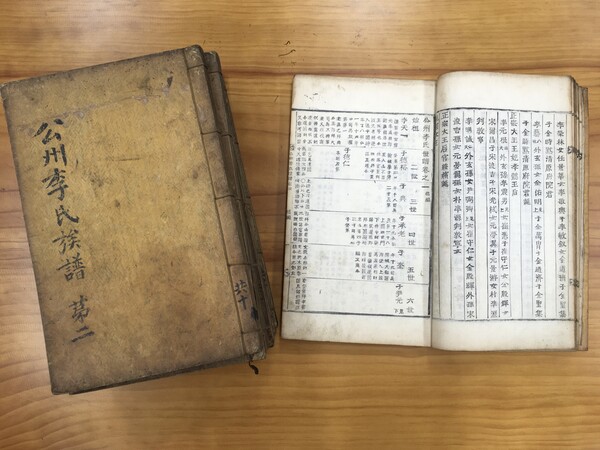
To understand the Korean concept of family, one must first look at the Jokbo. A Jokbo is a highly systematized genealogy book that records the lineage of a specific clan. It serves as both a proof of noble bloodlines and an incredibly vast demographic archive detailing centuries of births, deaths, official titles, and marriages.
From Egalitarian Roots to Patriarchal Focus
While rudimentary royal pedigrees existed during the Goryeo Dynasty (918–1392), the Jokbo as we know it took shape in the early Joseon Dynasty. The oldest surviving systematic genealogy is the Andong Gwon-ssi Seonghwa-bo, published in 1476. Interestingly, early Jokbo records were quite egalitarian. They listed children by birth order regardless of gender and meticulously recorded the descendants of daughters.
However, from the 17th century onward, as Neo-Confucianism entrenched itself in Korean society, the Jokbo underwent a significant transformation. It became strictly patrilineal, prioritizing the eldest son and significantly reducing the records of female descendants and maternal lines.
The Democratization of Surnames
Originally, possessing a Jokbo was the exclusive privilege of the Yangban (the aristocratic class). But the rigid class system began to crumble after the Japanese and Manchu invasions in the late 16th and early 17th centuries. Wealthy commoners, seeking to evade heavy military taxes and elevate their social status, began purchasing or forging ties to fallen aristocratic families. By the time the Gabo Reform of 1894 officially abolished the class system, virtually every Korean citizen had acquired a surname and a familial origin, making the Jokbo a universal cultural artifact rather than an aristocratic luxury.
💡 Pro Tip: If you ask a Korean about their surname, they will often mention their Bongwan (clan origin). For example, there are many “Kims,” but a “Gimhae Kim” and a “Gyeongju Kim” belong to entirely different genealogical lineages.
Jongjung and Munjung: The Clan as a Community
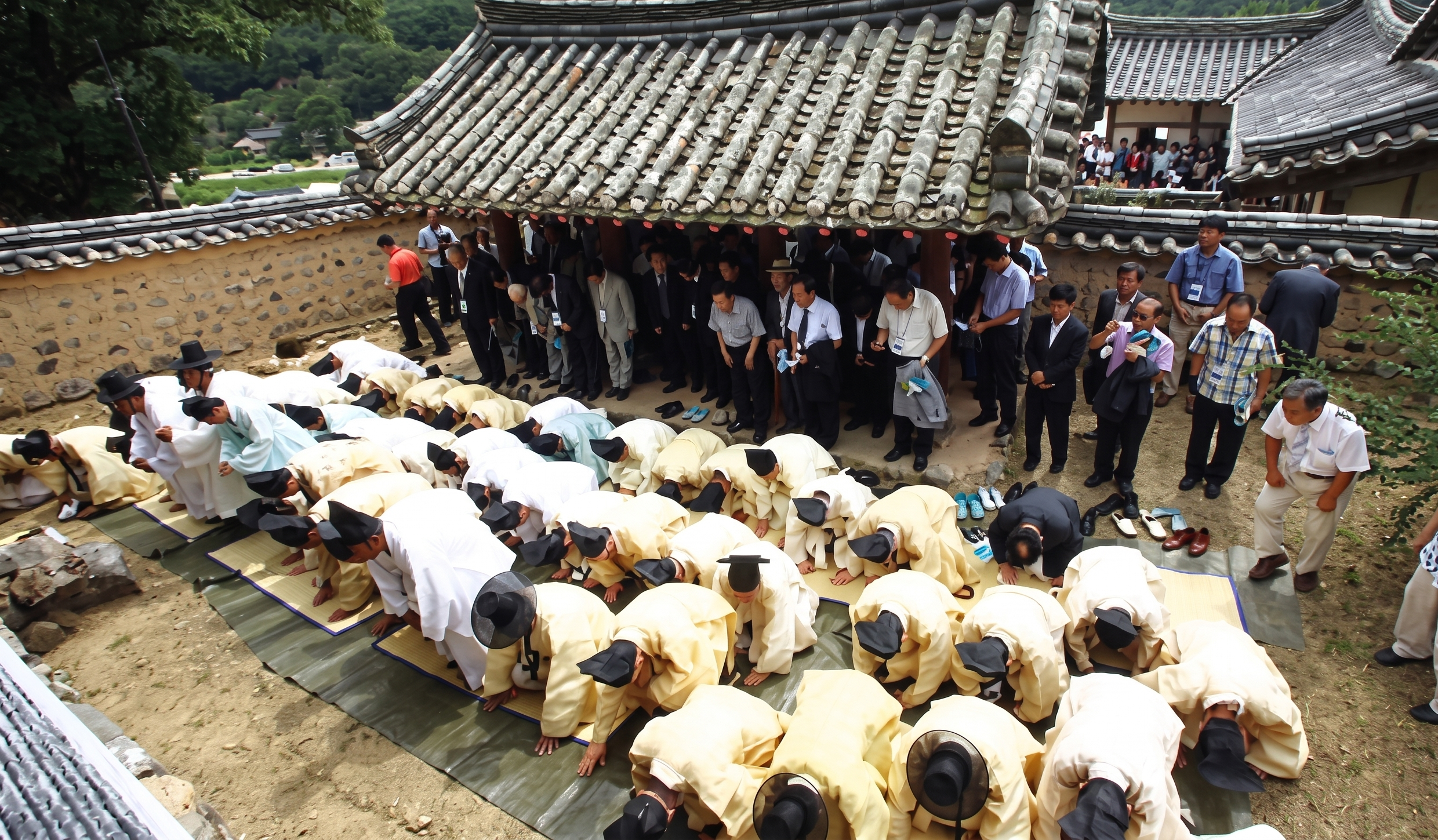
While the Jokbo is the physical record, the Jongjung (or Munjung) is the living organization of those descendants. Originating organically around the 16th and 17th centuries, these clan organizations were deeply influenced by Zhu Xi’s Family Rituals, a Neo-Confucian text that standardized ancestor worship.
A Jongjung is formed naturally by adult descendants sharing a common ancestor. It does not require government registration to exist; it is recognized by customary law the moment descendants gather, hold ancestral rites, and establish basic bylaws. The primary purposes of a Jongjung include:
- Ancestor Worship: Organizing and funding periodic memorial services for the founding ancestors.
- Tomb Maintenance: Managing the clan’s ancestral burial grounds and mountains.
- Promoting Clan Solidarity: Providing scholarships to younger generations, offering mutual aid, and managing collective clan properties (often valuable real estate).
The Mathematics of Blood: Understanding Chonsu
Beyond the grand clan organizations, day-to-day family relations in Korea are governed by a unique system of measuring kinship called Chonsu. Translated literally as “number of joints” or “degree of kinship,” Chonsu calculates the distance between relatives.
The system works through simple addition based on two fundamental rules:
- The relationship between spouses is 0 Chonsu (they are considered one entity).
- The relationship between a parent and a child is 1 Chonsu.
- The relationship between siblings is 2 Chonsu (1 Chonsu up to the parent + 1 Chonsu down to the sibling).
This mathematical approach clearly defines how you address your relatives and your obligations to them. For example, your uncle (father’s brother) is 3 Chonsu away, while your first cousin is 4 Chonsu away. Even today, the concept of Chonsu dictates mourning periods, wedding invitations, and deep-seated feelings of mutual responsibility within Korean society.
Modern Evolution: When Tradition Meets Equality
In contemporary Korea, the intense focus on Jokbo and Jongjung has undoubtedly diminished due to rapid urbanization, the rise of nuclear families, and modern individualism. Yet, these institutions still carry profound socio-cultural and legal weight.
The Historic 2005 Supreme Court Ruling
Perhaps the most significant turning point for modern clan culture was a landmark legal battle regarding clan membership. Traditionally, Jongjung membership was strictly limited to adult men. Women were considered “outsiders” once they married into another family. This became a massive issue when clan-owned lands were sold for urban development, yielding tens of millions of dollars in compensation that was distributed exclusively to male clan members.
In 2005, following years of legal struggle by female descendants, the Korean Supreme Court overturned decades of customary precedent. The court ruled that upon reaching adulthood, all descendants—regardless of gender—automatically become members of the Jongjung with equal rights. This ruling was a monumental victory for gender equality, illustrating the painful but necessary evolution from a patriarchal tradition to modern constitutional values.
The Meaning of Clan Today
Today, the Jongjung represents a fascinating intersection of ancient duty and modern capitalism. While younger generations may not memorize their Jokbo or attend every ancestral rite, clan organizations remain highly relevant, often functioning as corporate entities that manage lucrative real estate portfolios and distribute scholarships.
| Aspect | Traditional Perspective | Modern Reality |
|---|---|---|
| Membership | Strictly adult males; women excluded after marriage. | All adult descendants, regardless of gender (post-2005). |
| Primary Focus | Ancestor worship, preserving noble bloodlines. | Identity, scholarship funds, and managing collective property. |
| Relevance | Crucial for social survival and marriage prospects. | Diminished daily impact, but significant in legal/property disputes. |
Ultimately, Jokbo and Jongjung offer Koreans a profound sense of rootedness. Even in a hyper-modern metropolis, knowing your lineage provides a psychological anchor—a reminder that you are part of a continuous narrative that stretches back centuries.
FAQ
Do modern Koreans still update their Jokbo?
Yes, but the medium has changed. While traditional printed books are still commissioned, many clans now maintain digital Jokbo databases online, making it easier for younger generations to search their lineage and update family events like births and marriages.
Can a foreigner be recorded in a Korean Jokbo?
Yes. As international marriages have become common in Korea, foreign spouses are now regularly recorded in modern family genealogies, reflecting the changing, multicultural reality of contemporary Korean families.
📌 Local Note: If you are invited to a Korean funeral or wedding, the intricate web of relatives you see bustling around to manage the event is a living display of the Chonsu system in action. The closer the Chonsu, the heavier the responsibility to help host the event!
Korean Culture portal KCulture.com

Founder of Kculture.com and MA in Political Science. He shares deep academic and local insights to provide an authentic perspective on Korean history and society.