
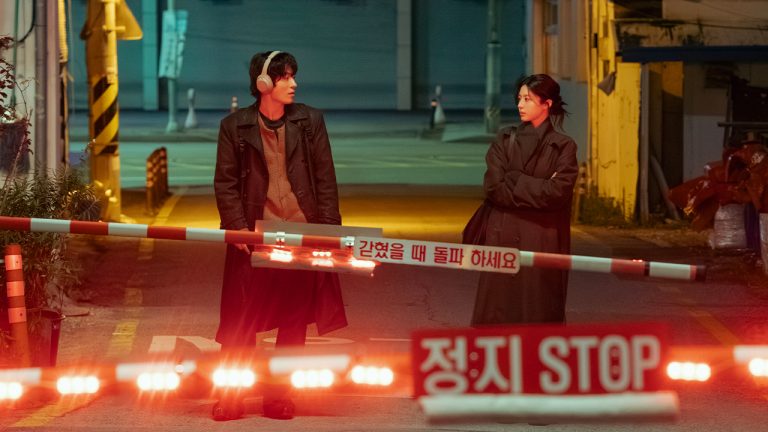
Living in Korea, I watch a lot of television series, but few pierce the human soul quite like JTBC’s latest weekend broadcast. If you are wondering what the hype is about, We Are All Trying Here (the official Netflix title for the Korean drama literally translated as Everyone is fighting their own worthlessness) is a brilliant dark comedy and human drama that explores the deep-seated insecurities of a failed film director and his highly successful, yet equally broken, college friends. We all face moments where we feel we are simply not enough, and this series captures that universal anxiety perfectly. In this We Are All Trying Here Netflix review, we will unpack the intricate plot, the stellar performances, and decode the uniquely Korean cultural nuances that might have left international viewers completely baffled.
- The Plot: What is “We Are All Trying Here” About?
- The Complex Characters Fighting Inner Battles
- Decoding Korean Cultural Nuances in the Drama
- Final Verdict: A Universal Struggle
The Plot: What is “We Are All Trying Here” About?
Written by Park Hae-young, the genius behind critically acclaimed series like My Mister and My Liberation Notes, and directed by Cha Young-hoon of When the Camellia Blooms, this masterpiece is currently dominating the top 10 charts on Netflix Korea. The story is set against the backdrop of the Korean film industry, traditionally rooted in Chungmuro (충무로).
The narrative centers on an eight-member college film club. Over the past twenty years, seven of them have achieved massive success in the industry. The glaring exception is Hwang Dong-man, a wannabe director who has failed to make his debut for two decades. Consumed by jealousy and a crushing sense of his own uselessness, Dong-man masks his pain with loud, pretentious bravado. However, the drama does not merely pity his pathetic reality. Instead, it peels back the glamorous facades of his successful friends, revealing that they, too, are fiercely battling their own inner voids. It is a spectacular clash of flawed humans who despise each other yet cannot seem to look away, ultimately stumbling toward comfort and peace.
The Complex Characters Fighting Inner Battles
The conflict in this drama is driven by an incredible ensemble cast. The superficial tension between the unemployed Dong-man and his successful peers quickly gives way to a deeper psychological mirror, where the “elite” group projects their own hidden anxieties onto their struggling friend.
| Character | Actor | Role & Internal Conflict |
|---|---|---|
| Hwang Dong-man | Gu Kyo-hwan | A director-in-training for 20 years. He uses endless, exhausting monologues as a shield to hide his deep sense of inferiority and protect his fragile ego from the success of his peers. |
| Byun Eun-ah | Go Youn-jung | A planning producer known as the “Axe” for her brutally honest script reviews. Beneath her cold, factual takedowns of colleagues lies immense fear and anger. |
| Park Kyung-se | Oh Jung-se | A successful director and member of the original club. Stressed by a recent box-office flop, he fiercely despises Dong-man’s pathetic nature, yet constantly engages with him due to his own complex insecurities. |
| Ko Hye-jin | Kang Mal-geum | The CEO of a film production company and Kyung-se’s wife. She serves as the emotional anchor of the group, possessing the inner strength to tolerate Dong-man’s lengthy grievances. |
Decoding Korean Cultural Nuances in the Drama
While the theme of battling personal worthlessness is universal, the social mechanics driving the characters’ behaviors are deeply rooted in Korean society. Many international viewers have expressed confusion over certain character choices. Here are two vital cultural contexts to help you fully appreciate the show.
1. The Suffocating Weight of “Chemyon” (Social Face)
A common question from foreign viewers is: “Why doesn’t Dong-man just give up his impossible dream, get a normal job, and stop torturing himself?” The answer lies in the intense Korean cultural concept of “Chemyon” (saving face) and social prestige.
In modern Korean society, one’s human value is often directly equated with their professional title and financial success. For Dong-man, giving up the title of “film director in the making” means admitting total defeat in a society that is highly unforgiving of average lives. His twenty years of forced bravado and irritating rants are not just arrogance; they are a desperate survival mechanism. Without the illusion that he is an artistic intellectual waiting for his big break, he would be reduced to an absolute nobody in the eyes of his peers.
2. The Weaponization of Honorifics and Banmal
Writer Park Hae-young is famous for her razor-sharp dialogue, much of which relies on the intricate hierarchy of the Korean language. The shift between polite, formal language (Jondaetmal) and informal speech (Banmal) is used as a psychological weapon in this drama.
📌 Local Note: English subtitles often fail to capture the sudden shifts in power dynamics. When characters are arguing, you will notice someone suddenly switching to hyper-polite language. In the West, this might seem like they are calming down. In Korea, using strict honorifics to a close friend of 20 years is a deeply cutting insult—it builds an icy wall, completely rejecting their intimacy and establishing a cold, condescending dominance.
The “8-member club” was originally bound by the strict, loyal hierarchy of college seniors and juniors. Twenty years later, that traditional hierarchy has been entirely corrupted by capitalist success. The successful juniors subtly mock the failed senior (Dong-man) using perfectly polite grammar wrapped in lethal sarcasm, creating scenes of intense, suffocating tension that native speakers instantly recognize.
Final Verdict: A Universal Struggle
Ultimately, this We Are All Trying Here Netflix review boils down to this: it is an uncomfortable, beautiful, and deeply resonant masterpiece. It takes the toxic, hyper-competitive elements of Korean society—from ruthless workplace politics to the twisted metrics of success—and uses them to tell a story about fragile human egos. Even if you do not catch every linguistic nuance, the raw emotion of fighting one’s own perceived worthlessness will undoubtedly leave a lasting mark on your heart.
Korean Culture portal KCulture.com

Founder of Kculture.com and MA in Political Science. He shares deep academic and local insights to provide an authentic perspective on Korean history and society.

![[Bomnamul] How to Safely Eat Toxic Korean Spring Greens (Gosari)](https://kculture.com/wp-content/uploads/2026/03/gosari-1024x684.jpg)
