Traditional Korean fans are far more than simple tools for creating a breeze; they are profound symbols of scholarship, artistic expression, social etiquette, and royal seasonal traditions. Living in Korea, we still see these elegant bamboo and mulberry paper creations—specifically the folding Hapjukseon (합죽선) and the flat Banggu-buchae (방구부채)—thriving alongside portable electric fans during hot summer months. For anyone exploring Korean heritage, understanding the history of these fans offers a fascinating glimpse into the lives of Joseon scholars and the global spread of East Asian craftsmanship.
This guide explores the unique types of Korean fans, how the Goryeo dynasty perfected the bamboo folding fan, the cultural differences between Korean and European fan usage, and the timeless art of fan painting.
- Types of Traditional Korean Fans: Hapjukseon vs. Banggu-buchae
- The Goryeo Origins of the Bamboo Folding Fan
- Cultural Differences: How Korea and Europe Viewed the Fan
- The Art of Seonmyeonhwa and the Dano Custom
- Why Traditional Fans Survive in Modern Korea
- Explore More Korean Heritage
Types of Traditional Korean Fans: Hapjukseon vs. Banggu-buchae
Korean fans generally fall into two major categories: the highly portable folding fan and the everyday fixed round fan.
Hapjukseon: The Classic Korean Folding Fan
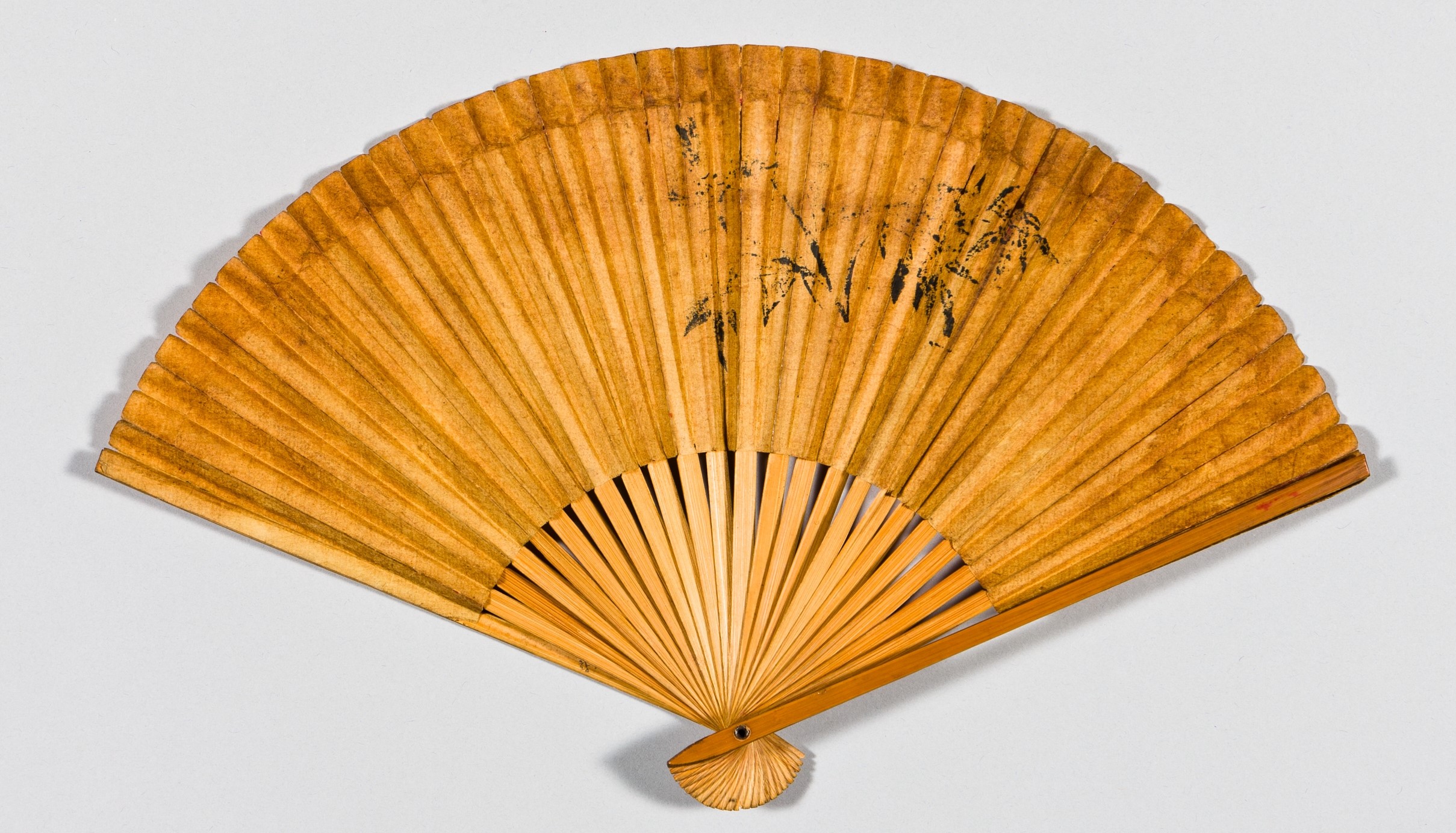
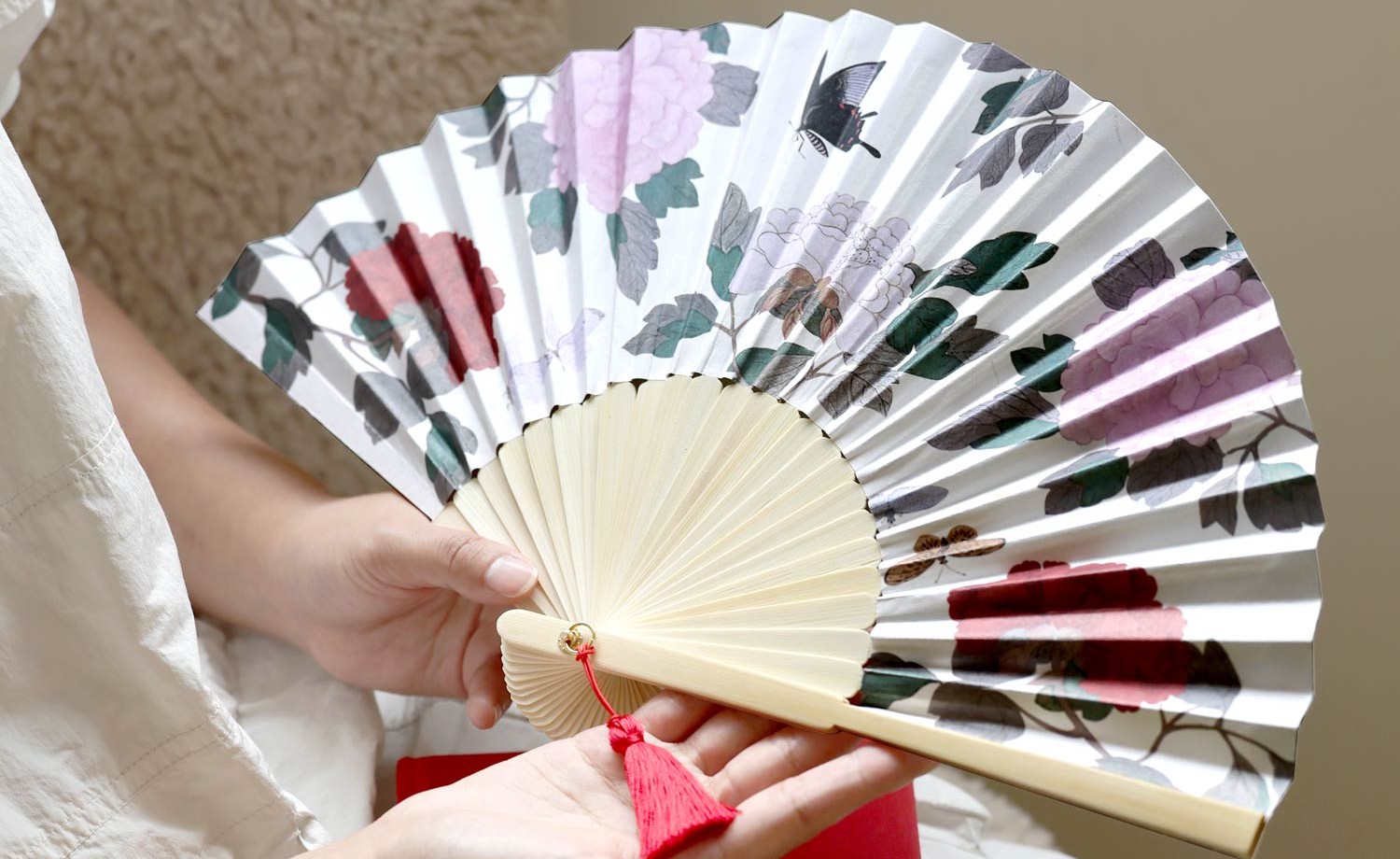
The Hapjukseon is the absolute pinnacle of Korean fan craftsmanship. Its name literally means “joined bamboo fan.” Artisans meticulously split the tough outer skin of bamboo into extremely thin strips and glue them back-to-back to create incredibly durable ribs. High-quality Hanji (한지), traditional Korean paper, is then attached to this frame.
When folded, the fan becomes compact enough to fit inside a sleeve or pocket, measuring barely the width of two fingers. When opened, it expands dramatically to produce a surprisingly strong airflow. Historically, this was the essential accessory for scholars and officials during the Joseon dynasty, and it remains a vital prop for performers in traditional arts like Pansori.
Banggu-buchae: The Fixed Round Fan
The Banggu-buchae, also known as Danseon or Wonseon, refers to fixed fans that do not fold. “Banggu” is a pure Korean word meaning round. These fans are typically round or oval, featuring paper or silk stretched over a fixed bamboo frame and mounted on a handle. The most iconic example seen today is the Taegeukseon (태극선), adorned with the vibrant three-color swirling taegeuk motif.
Unlike the scholarly and aristocratic image of the folding fan, these were widely used by ordinary households. They provided relief from summer heat, helped fan cooking fires in the kitchen, and even assisted with agricultural work like blowing away chaff during harvests.
| Feature | Hapjukseon (Folding Fan) | Banggu-buchae (Fixed Round Fan) |
|---|---|---|
| Portability | Excellent; folds compactly | Limited; fixed shape with wide surface |
| Primary Users | Scholars, officials, male nobility, performers | General public, women, household use |
| Decoration | Calligraphy, landscape paintings, poetry | Simple folk motifs, solid colors, Taegeuk symbol |
| Modern Use | Premium cultural gifts, traditional art | Street promotions, sunshades, festival souvenirs |
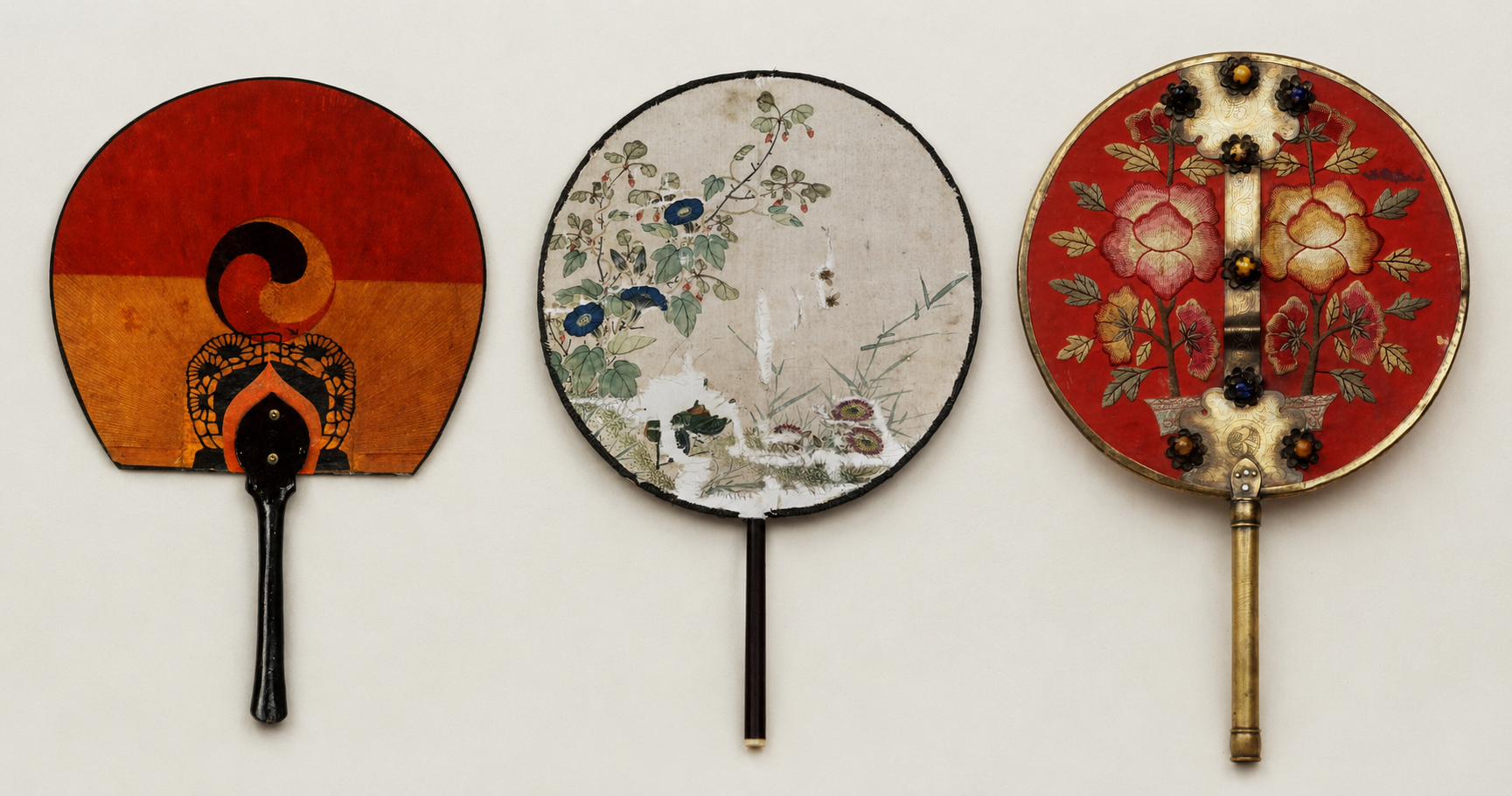
The Goryeo Origins of the Bamboo Folding Fan
The lightweight folding fan made from bamboo ribs and paper—the direct ancestor of the modern folding fans used worldwide today—was pioneered and perfected during Korea’s Goryeo (고려) Dynasty. While rudimentary folding mechanisms using tied wooden slats had appeared earlier in neighboring regions, it was Goryeo artisans who ingeniously combined thinly sliced bamboo with durable mulberry paper to create a highly practical, expansive, and elegant fan.
📌 Local Note: In medieval China, which had long favored flat round fans, these imported Korean folding fans were highly prized luxury goods and were explicitly referred to as “Goryeo Fans” (高麗扇).
The famous Song Dynasty scholar Su Shi (Su Dongpo) wrote admiringly about these Goryeo fans brought by envoys. He noted their remarkable construction, praising how paper of such exquisite craftsmanship was used to create a fan that could expand to over a foot wide yet fold down to a mere two fingers’ width. Over time, China adopted this technology, manufacturing their own folding fans during the Ming Dynasty.
By the 16th century, Portuguese traders and Jesuit missionaries introduced these East Asian folding fans to Europe. By the 17th and 18th centuries, European craftsmen had replaced the paper and bamboo with lace, ivory, silk, and gemstones, transforming the folding fan into an explosive fashion trend among aristocratic women in France and England.
Cultural Differences: How Korea and Europe Viewed the Fan
One of the most striking cultural differences is who used folding fans and what they symbolized in Eastern and Western societies.
Europe: A Feminine Fashion Accessory
In Europe, the folding fan became strictly associated with upper-class women. Alongside large dresses and formal corsets, fans were useful for cooling, but their primary function was visual display and flirtation. Aristocratic society even developed a “Fan Language,” where specific gestures—such as resting a fan on the right cheek to mean “Yes”—supposedly conveyed romantic messages within the confines of strict courtly etiquette.
Korea: A Symbol of Scholarship and Character
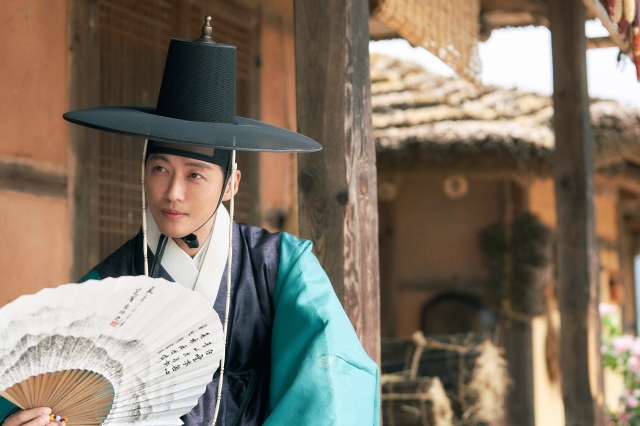
In Korea, particularly during the Joseon Dynasty, the folding fan was strongly connected to the Seonbi (선비), the male scholars and officials. The fan functioned almost like an extension of one’s character, representing Pungryu (풍류)—an elegant, virtuous, and culturally refined lifestyle.
💡 Pro Tip: Think of the Korean scholar’s Hapjukseon as occupying a role similar to a gentleman’s walking stick in 19th-century Europe. It was not merely useful, but an essential symbol of identity, education, and dignity.
Scholars carried fans year-round, even in the freezing winter. A fan could help maintain composure during a debate, conceal facial expressions when laughing, or simply complete a formal, dignified appearance. While women in Korea certainly used fans, they primarily relied on the fixed round fans for practical indoor cooling and outdoor sun protection.
The Art of Seonmyeonhwa and the Dano Custom
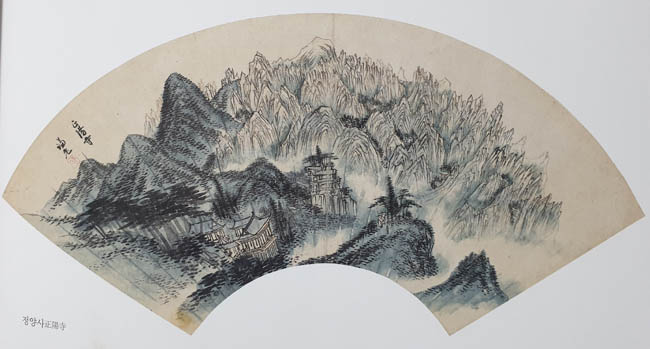
One of the most distinctive features of Korean fan culture is the development of Seonmyeonhwa (선면화), or fan painting. This artistic flourishing was deeply tied to a royal seasonal custom known as Dano Saseon (단오사선).
Every year around Dano (단오)—the traditional festival on the 5th day of the 5th lunar month marking the beginning of summer—regional offices crafted beautiful fans and presented them to the King. The King would then distribute these fans to his officials, who in turn gifted them to relatives, friends, and teachers. This practice of wishing someone comfort during the summer birthed the famous Korean proverb: “Summer favors are fans, winter favors are calendars.”
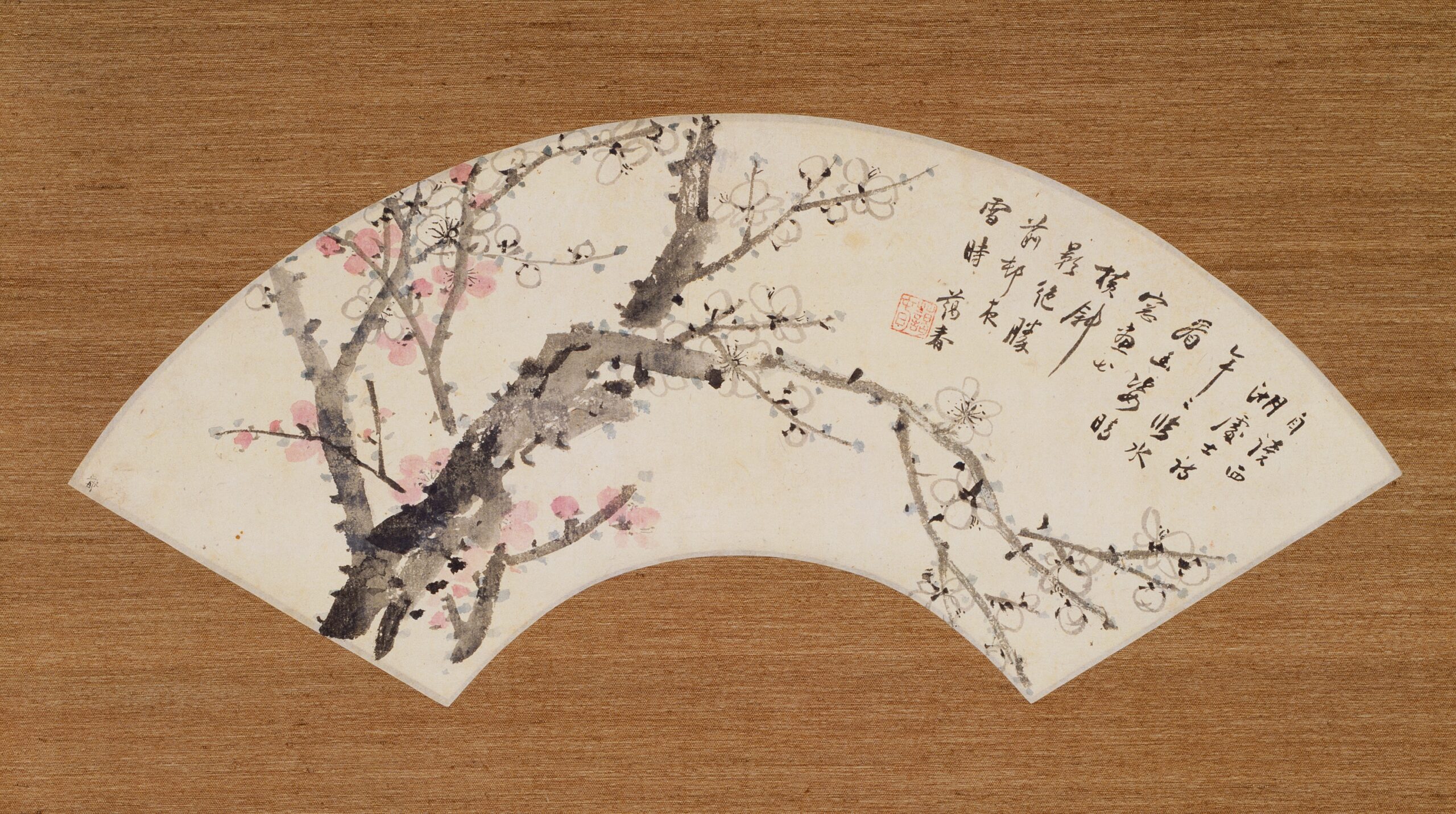
When an official received a blank folding fan, they often asked renowned painters or literati friends to grace the surface with art. The surface of a folding fan is notoriously difficult to paint because of its curved, expanding format and the uneven ridges of the bamboo ribs. Despite this, artists created breathtaking works.
- Popular Subjects: Artists frequently painted the Sagunja (사군자)—the Four Gracious Plants (plum blossom, orchid, chrysanthemum, and bamboo) representing scholarly integrity.
- Landscapes and Life: Cooling mountain landscapes (Sansuhwa) and scenes of everyday life were also highly favored. Many of Korea’s greatest painters, including Kim Hong-do and Shin Yun-bok, left behind incredible masterpieces on folding fans.
Why Traditional Fans Survive in Modern Korea
Today, portable electric fans dominate Korean summers, yet traditional fans remain surprisingly relevant and visible.
- The Ultimate Sunshade: While an electric fan provides a continuous breeze, it offers no protection against direct sunlight. A fully opened folding fan or a wide round fan serves as an instant, effective sunshade during temple visits or outdoor festivals.
- Practical Advantages: Traditional fans require no batteries, operate completely silently, and are incredibly lightweight. The use of natural bamboo and Hanji also makes them highly eco-friendly.
- Cultural Goods and Promotions: Plastic-ribbed round fans remain one of the most cost-effective promotional items in Korea, often handed out on streets printed with K-pop idols or advertising. Meanwhile, authentic Hapjukseon are highly prized as premium, deeply meaningful cultural gifts for international visitors.
Technology has certainly changed how we stay cool, but the natural wind that passes through the bamboo ribs and mulberry paper of a traditional Korean fan carries centuries of craftsmanship, artistic expression, and scholarly dignity that an electric motor simply cannot replicate.
Explore More Korean Heritage
The history of Korean fans intersects with many broader traditions, including painting, music, and scholar culture. Explore more deeply through these guides:
- Understanding Muninhwa and Korea’s Scholar Artists
- Discover Pungsokhwa : Masterpieces of Korean Genre Painting (Kim Hong-do & Shin Yun-bok)
- Minhwa: The Guide to Korea’s “Pop Art” Tradition
- The Beauty of Soban: Soban meaning, Varieties and Modern Uses
- The Nation of Hats: The Art and Philosophy of the Korean Gat
- Korean Traditional Dance: Court Dance, Folk Dance & Where to Watch
- Jeongganbo Explained: How Korean Traditional Music Is Written
Korean Culture portal KCulture.com

Founder of Kculture.com and MA in Political Science. He shares deep academic and local insights to provide an authentic perspective on Korean history and society.