The Hook: A 90s Fairytale in a Department Store
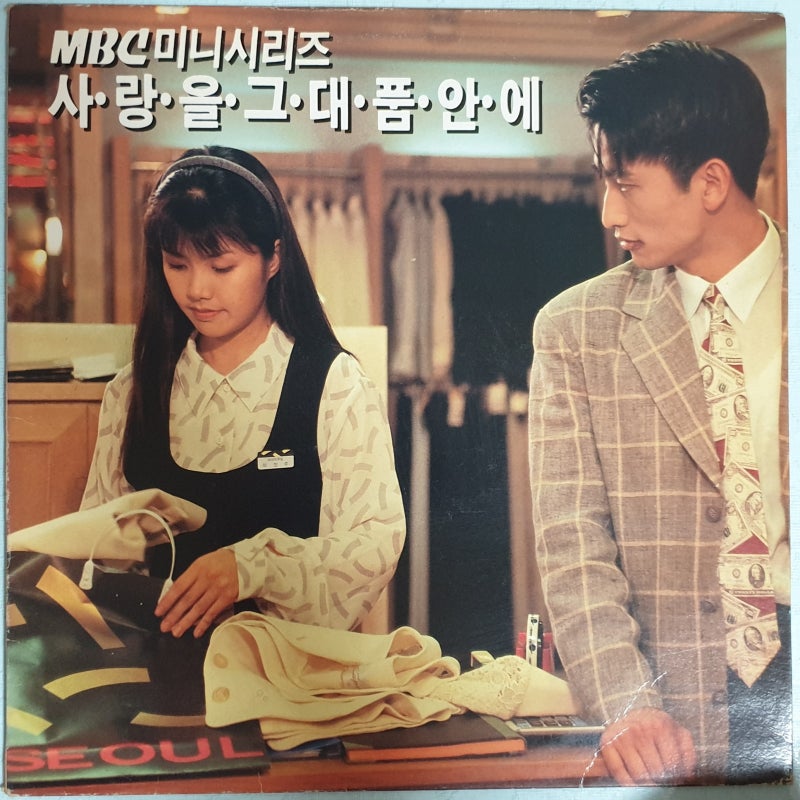
Imagine a rebellious chaebol heir, clad in leather, roaring up to a luxury department store on his motorcycle. Inside, a bright, hardworking, and principled young woman is trying to build her career. This is the quintessential setup of Love in Your Bosom (사랑을 그대 품안에), the 1994 MBC drama that captured the heart of a nation and defined a generation of Korean romance. The story centers on Kang Poong-ho (Cha In-pyo), the misunderstood bad-boy heir to a major department store, and Lee Jin-joo (Shin Ae-ra), a tenacious employee who catches his eye. Their love story unfolds against the backdrop of corporate intrigue and a classic love triangle, creating a narrative that was both a modern fairytale and a cultural touchstone.
Cultural Insight: Korea in the Mid-90s and the “X-Generation”
To understand the explosive impact of Love in Your Bosom, one must understand South Korea in 1994. The country was riding the high of its rapid economic development. The department store setting wasn’t just a location; it was a powerful symbol of the nation’s newfound prosperity, consumerism, and aspirations for a glamorous, modern lifestyle. This era also gave rise to the “X-Generation” (X세대), a new youth demographic breaking free from the conservative, Confucian-influenced values of their parents. They were individualistic, expressive, and heavily influenced by Western pop culture.
Kang Poong-ho was the perfect embodiment of this new generation. His motorcycle, saxophone, and defiant attitude were a direct challenge to the traditional, stoic Korean male archetype. He wasn’t just a rich heir; he was a romantic rebel, a figure who represented a new, exciting, and emotionally available form of masculinity that audiences were craving. The drama tapped directly into the zeitgeist of a society in transition, offering a vision of love and life that was modern, cool, and intoxicatingly new.
Narrative Analysis: Cementing the K-Drama Formula
While the “rich man, poor woman” trope is now a K-drama staple, Love in Your Bosom was instrumental in perfecting and popularizing it for a modern audience. The narrative skillfully blends the aspirational fantasy of a Cinderella story with the grounded reality of workplace struggles. The story is driven by compelling character dynamics rather than complex plot twists. The central conflict is emotional: can the fiercely independent Jin-joo tame the wild Poong-ho? Can their pure love survive the pressures of family expectations and corporate schemes, especially with the presence of Poong-ho’s sophisticated and wealthy admirer, Go Eun-chae (Lee Seung-yeon)? The storytelling relies on powerful visual motifs—the saxophone solo on a dimly lit stage, the wind-swept motorcycle rides—to convey passion and longing, creating iconic scenes that remain etched in Korean pop culture memory.
The Pulse of the Time: The “Cha In-pyo Syndrome”
It is impossible to discuss this drama without mentioning the “Cha In-pyo Syndrome,” a nationwide phenomenon that swept Korea. Cha In-pyo, a relative newcomer at the time, was catapulted to superstardom overnight. His portrayal of Kang Poong-ho created a cultural frenzy. Two gestures, in particular, became legendary: his soulful saxophone playing and, most famously, his smooth, dismissive finger-wagging motion. This simple gesture became the epitome of 90s cool, endlessly imitated in variety shows, commercials, and by fans across the country. The drama’s popularity was immense, dominating viewership and conversations, solidifying its place as one of the most influential series of the decade.
Cast Spotlight: An Iconic Trio
- Cha In-pyo as Kang Poong-ho: Cha In-pyo didn’t just play the role; he created an archetype. He masterfully balanced Poong-ho’s rebellious exterior with a deep-seated vulnerability and unwavering devotion, making him the ultimate 90s romantic hero. His raw charisma was the engine of the drama’s success.
- Shin Ae-ra as Lee Jin-joo: As the moral center of the story, Shin Ae-ra delivered a pitch-perfect performance. She portrayed Jin-joo with a blend of warmth, resilience, and quiet dignity, making her a relatable and admirable heroine that audiences could wholeheartedly support.
- Lee Seung-yeon as Go Eun-chae: Lee Seung-yeon played the role of the “second lead” with class and sophistication. Her character was not a one-dimensional villain but a confident, modern woman who presented a genuine challenge, elevating the central love triangle.
The electric on-screen chemistry between Cha In-pyo and Shin Ae-ra was so palpable that it famously blossomed into a real-life romance and marriage, further cementing the drama’s legendary status in the hearts of the public.
Global Viewing Guide
For fans looking to dive into this classic piece of K-drama history, finding subtitled versions can be a treasure hunt. Here are the most likely places to look:
- Official Broadcaster YouTube Channel: MBC maintains several YouTube channels, such as “MBC Drama Classic,” where they often upload full episodes of their archived shows. This is typically the most reliable source.
- Korean Streaming Services: For viewers in Korea or with access to Korean platforms, the drama is available on services like Wavve.
Final Verdict
Love in Your Bosom is more than just a 90s romance; it’s a cultural time capsule. It’s an essential watch for anyone interested in the origins of the Hallyu wave and the evolution of the modern K-drama hero. It’s a masterclass in trope-defining storytelling and a vibrant snapshot of a nation on the cusp of cultural change. If you want to understand why the chaebol love story became so iconic, your education starts here.

The KCulture Editorial Team is dedicated to providing deep insights and accurate information about the vibrant world of Korean culture.