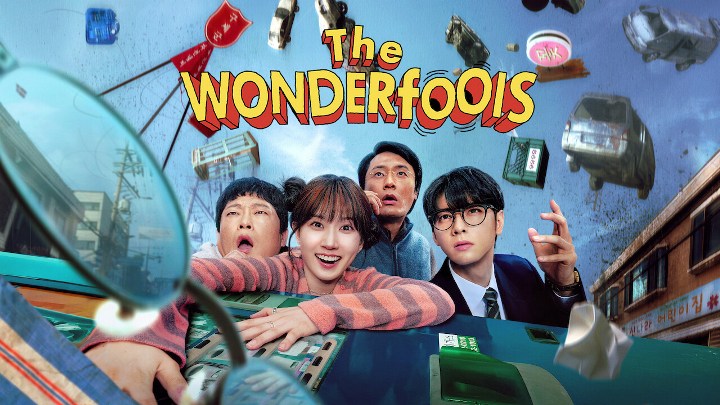
The WONDERfools is Netflix’s quirky Korean superhero drama that mixes Y2K nostalgia, dark comedy, mystery, and small-town chaos into an eight-episode binge. Set in the fictional city of Haeseong in 1999, the series follows a group of ordinary misfits who accidentally gain bizarre superpowers and find themselves standing between their town and a dangerous cult-driven conspiracy. While it carries familiar superhero ingredients, its strongest appeal comes from its distinctly Korean sense of humor and its deeply flawed, relatable characters.
For viewers wondering whether The WONDERfools is another glossy superhero spectacle, the answer is no. This is a story about imperfect people, awkward powers, and everyday frustrations. That unusual approach has sparked both enthusiasm and confusion among international audiences, making it one of Netflix’s more interesting Korean releases of the year.
- What Is The WONDERfools About?
- Cast and Creative Team
- The Story Without Major Spoilers
- What Makes The WONDERfools Different?
- Cultural Elements International Viewers May Miss
- Controversies and Online Discussions
- Strengths and Weaknesses
- Final Verdict
- Related Reading
What Is The WONDERfools About?
The WONDERfools takes place in the fictional city of Haeseong during the final months of 1999. At the time, fears surrounding the Y2K computer bug, end-of-the-world rumors, and apocalyptic cults were common across many countries, including South Korea.
Against that backdrop, several ordinary residents suddenly acquire strange and unreliable superpowers after a bizarre accident involving industrial waste. Instead of becoming polished heroes, they remain deeply flawed people struggling with money, relationships, personal insecurities, and local gossip.
The result feels less like Marvel and more like a neighborhood comedy where people just happen to have powers.
📌 Local Note: Korean viewers often describe the characters as “동네 사람들” (ordinary neighborhood people). That distinction matters because the show intentionally avoids the larger-than-life hero archetype common in many Western superhero franchises.
Cast and Creative Team
Park Eun-bin as Eun Chae-ni
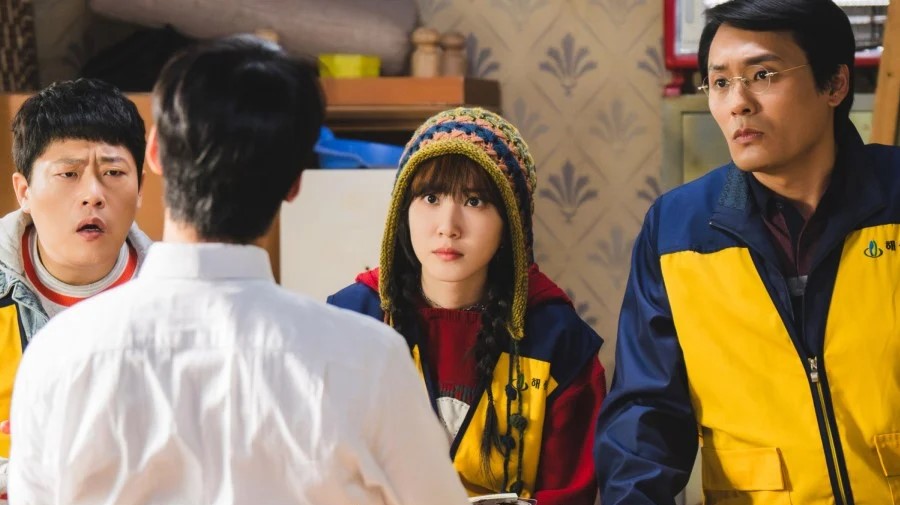
Park Eun-bin reunites with director Yoo In-sik after their hugely successful collaboration on Extraordinary Attorney Woo. Chae-ni suffers from a chronic heart condition and has lived her entire life believing that her time may be limited. After gaining the ability to teleport whenever her heart rate spikes, she becomes the emotional center of the story.
Cha Eun-woo as Lee Woon-jeong
Cha Eun-woo plays the mysterious civil servant Lee Woon-jeong. Unlike the more openly comedic characters, Woon-jeong carries much of the show’s mystery narrative and gradually becomes one of its most important figures. His power is telekinesis, though his true role extends far beyond that simple description.
Choi Dae-hoon as Son Gyeong-hun
One of the show’s biggest scene-stealers, Gyeong-hun is a chronic complainer who constantly files petty civic complaints. His power is perhaps the strangest: whenever he lies, his body secretes an incredibly strong adhesive substance that causes him to stick to nearby objects.
Lim Sung-jae as Kang Robin
Robin is Chae-ni’s longtime friend and one of the most relatable characters in the series. Normally timid and hesitant, he develops tremendous physical strength whenever he becomes emotionally overwhelmed or angry.
Son Hyun-joo as Ha Won-do
Veteran actor Son Hyun-joo plays the primary antagonist. Ha Won-do is a cult leader with ties to illegal human experimentation and a dangerous obsession with immortality.
The Creative Team
| Role | Name | Known For |
|---|---|---|
| Director | Yoo In-sik | Extraordinary Attorney Woo, Dr. Romantic, Vagabond |
| Writer | Heo Da-jung | Extreme Job adaptation work |
| Creator | Kang Eun-kyung | Dr. Romantic, Gyeongseong Creature |
The combination is unusual. Yoo In-sik’s polished storytelling meets Kang Eun-kyung’s large-scale drama experience and Heo Da-jung’s comedic sensibilities, creating a series that constantly shifts between thriller, comedy, mystery, and superhero adventure.
The Story Without Major Spoilers
At the beginning of the series, Chae-ni dreams of traveling the world before her illness catches up with her. Together with her friends Robin and Gyeong-hun, she becomes involved in a reckless scheme designed to solve some immediate financial problems.
Things go catastrophically wrong.
A chain of accidents involving a landfill site, mysterious chemicals, and long-buried secrets transforms their lives forever. Suddenly blessed—or cursed—with strange abilities, the trio finds themselves caught in a battle involving immortality, cult manipulation, hidden experiments, and an approaching disaster that threatens the entire city.
What follows is less about becoming superheroes and more about learning how to survive while carrying powers they barely understand.
What Makes The WONDERfools Different?
Flawed Superpowers
Many superhero stories present powers as aspirational. The WONDERfools does the opposite.
- Teleportation triggers during moments of physical stress.
- Super strength appears during emotional outbursts.
- Lying literally creates embarrassing physical consequences.
- Even telekinesis comes with narrative limitations.
The powers often create new problems rather than solving existing ones. Much of the comedy comes from watching the characters fail.
Y2K Nostalgia Done Right
The late-1990s setting is one of the show’s strongest features. Pagers, outdated technology, old-school fashion, and fears surrounding the millennium transition create a believable atmosphere without becoming overly nostalgic.
For Korean viewers who remember the era, the setting feels authentic. For younger international viewers, it offers a glimpse into a period that shaped modern Korea’s rapid transformation.
For younger international viewers, the Y2K setting may simply look retro. In South Korea, however, the final years of the twentieth century were marked by widespread anxiety surrounding the millennium bug, economic uncertainty following the Asian Financial Crisis, and a surprising number of end-of-the-world predictions. The series uses that atmosphere not just as decoration but as an essential part of its story.
Cultural Elements International Viewers May Miss
The Importance of the Cult Storyline
International viewers occasionally wonder why cults appear so frequently in Korean dramas. The reason is simple: cult-related scandals have repeatedly become major social issues in South Korea. Because of that history, cult leaders in Korean fiction are often portrayed as symbols of manipulation, corruption, and abuse of power rather than merely eccentric villains.
Some international viewers have been surprised by how seriously the drama treats cult organizations.
In Korea, however, the subject carries significant social weight. Several real-world religious organizations and cult-related scandals have influenced public discussions for decades. Because of that history, Korean audiences often view cult leaders less as fictional villains and more as reflections of genuine social concerns.
Why the Heroes Feel So Ordinary
Western audiences sometimes expect superpowered protagonists to become increasingly heroic. Korean storytelling often embraces characters who remain imperfect until the very end.
The WONDERfools leans heavily into that tradition. The characters argue, make selfish decisions, panic under pressure, and occasionally create their own problems. That messiness is intentional.
The Humor Style
Some jokes depend on Korean speech patterns, local civic culture, and neighborhood relationships. Gyeong-hun’s obsession with filing complaints, for example, feels immediately recognizable to many Korean viewers but can seem oddly specific to overseas audiences.
💡 Cultural Context: The series often treats local government offices, neighborhood disputes, and civic complaints as sources of comedy because these are common aspects of daily life that many Korean viewers instantly recognize.
📌 Local Note: Many Korean viewers will instantly recognize the personalities in The WONDERfools. The chronic complainer, the timid lifelong friend, and the stubborn dreamer who constantly gets into trouble are all familiar neighborhood archetypes. The show’s humor often comes from how ordinary these characters feel despite their extraordinary abilities.
Controversies and Online Discussions
The biggest conversation surrounding The WONDERfools before release was not about the story itself but about actor Cha Eun-woo.
Leading up to the drama’s premiere, discussions surrounding his tax-related controversy became a major topic in Korean entertainment media and international K-drama communities. Because Cha has a substantial global fanbase, many viewers were already aware of the situation before watching the series.
The production team ultimately chose not to significantly alter the finished drama. That decision generated debate among viewers, with some arguing that the work should be evaluated independently and others questioning whether public controversies inevitably affect audience perception.
Interestingly, much of the discussion after release shifted back toward the ensemble cast. Choi Dae-hoon and Lim Sung-jae, in particular, received praise from viewers who felt their comedic chemistry became one of the strongest aspects of the show.
Strengths and Weaknesses
What Works
- Fast-paced eight-episode structure.
- Excellent comedic chemistry among the main cast.
- Creative and unconventional superpowers.
- Strong Y2K atmosphere.
- A refreshing alternative to traditional superhero stories.
What Doesn’t Always Work
- Some romantic developments feel rushed.
- Certain visual effects look inconsistent.
- Tonal shifts between comedy and thriller may not work for everyone.
- Some viewers may expect a more serious superhero narrative than the show intends to deliver.
Among Korean audiences, the romance tends to generate the most divided reactions. The comedy and ensemble dynamics generally receive much stronger praise.
Final Verdict
The WONDERfools is not trying to be Korea’s answer to Marvel, nor does it want to be. Instead, it embraces the idea that ordinary people—with all their flaws, insecurities, and bad decisions—can still matter when things go wrong.
Its biggest strengths are its eccentric characters, energetic pacing, and willingness to look ridiculous when necessary. The blend of Y2K nostalgia, cult mystery, and offbeat superhero comedy will not appeal to everyone, but viewers willing to accept its unusual tone may find one of Netflix’s more distinctive Korean releases.
For audiences looking for polished superhero spectacle, this may not be the right choice. For those interested in a very Korean take on the genre—one filled with flawed heroes, strange powers, and small-town charm—The WONDERfools is worth a watch.
Perhaps the most distinctive thing about The WONDERfools is that it never tries to transform its characters into larger-than-life legends. They remain flawed, stubborn, and occasionally ridiculous until the very end. That decision may not satisfy viewers looking for a traditional superhero spectacle, but it gives the drama a personality that feels uniquely Korean.
Related Reading
- Why My Royal Nemesis is Netflix’s Best Time-Slip K-Drama
- We Are All Trying Here Netflix Review: Deep Cultural Meaning
- Perfect Crown K-Drama Review: IU & Byeon Woo-seok Shine
- Welcome to Dongmakgol: A Korean War Film Like No Other
- Eyes of Dawn: The K-Drama Masterpiece Before Hallyu
Korean Culture portal KCulture.com

Founder of Kculture.com and MA in Political Science. He shares deep academic and local insights to provide an authentic perspective on Korean history and society.