An Introduction to Korea’s Favorite Chewy Delight
Step into any bustling Korean neighborhood in the evening, and you’ll likely be greeted by the irresistible aroma of sizzling barbecue. While many are familiar with Samgyeopsal or Galbi, there’s another beloved dish that holds a special place in the hearts of locals: Makchang-gui. This grilled dish is a staple of Korean “anju” culture—food perfectly paired with alcoholic drinks like soju. It’s the centerpiece of lively gatherings with friends and colleagues, where the sound of sizzling grills and cheerful conversation fills the air. The taste profile is uniquely savory and rich, defined not by a heavy marinade but by a special dipping sauce and the satisfying texture of the main ingredient.
Ingredients & Flavor Profile
Key Ingredients
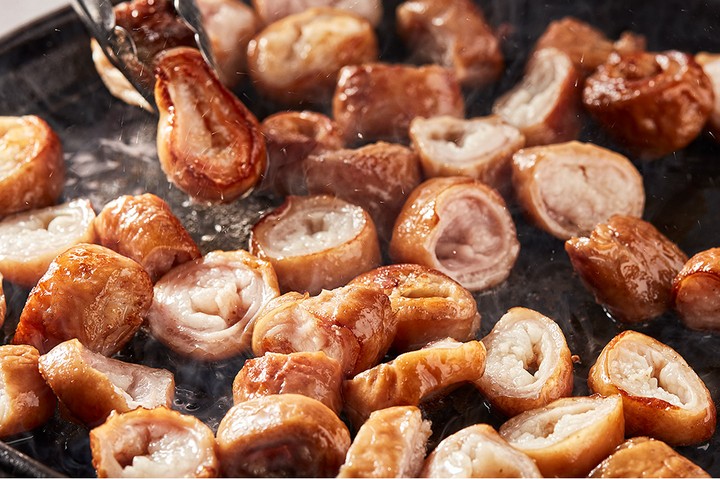
The star of Makchang-gui is, of course, the makchang. This refers to the final part of a cow’s or pig’s digestive system (abomasum or rectum). Before you hesitate, know that this cut is prized for its incredibly satisfying, chewy texture. It is meticulously prepared and cleaned to ensure a pleasant and rich flavor without any gaminess. When grilled to perfection, it becomes wonderfully crispy on the outside while retaining its signature springy chewiness on the inside.
The Secret of Taste
The magic of Makchang-gui’s flavor comes alive with its accompanying sauces. The most iconic pairing is Makjang, a thick, savory dipping sauce. This is not your standard doenjang (fermented soybean paste); it’s a specialty concoction often blended with ground peanuts, garlic, and chili, creating a complex profile that is nutty, savory, and slightly spicy. For those who prefer a simpler taste, a small dish of salt and sesame oil is also provided. This allows the natural, rich flavor of the grilled makchang to shine through, offering a clean and purely savory experience.
Dietary Information
As this dish is made from beef or pork offal, Makchang-gui is not vegetarian. It is a meat-centric dish through and through, and there are no vegetarian alternatives for it. We advise our vegetarian and vegan readers to explore other fantastic plant-based options in Korean cuisine.
How It’s Cooked and Served
Makchang-gui is a classic example of “gogi-gui,” or Korean tabletop grilling, where the dining experience is as important as the food itself. The process begins long before the food reaches your table, with the makchang being thoroughly cleaned and often parboiled to remove any impurities and ensure a perfect texture. At your table, pieces of makchang are placed on a hot grill, often over charcoal, where they sizzle and shrink, turning a beautiful golden-brown. As they cook, you’ll see them curl into rounds, crisping up on the edges. The server, or you yourself, will use scissors to cut them into bite-sized pieces. Once they are crispy and fully cooked, you pick one up with your chopsticks, dip it generously into the makjang sauce, and enjoy the delightful contrast of textures and flavors.
This is a standard method based on general recipes. Every restaurant has its own secret twist and unique style!
Nutritional & Health Benefits
Beyond its incredible taste and texture, Makchang-gui offers some surprising health benefits. As a protein-rich food, it’s excellent for muscle maintenance and repair. Furthermore, this specific cut is known to be a fantastic source of natural collagen, which is essential for maintaining healthy skin, hair, and joints. So, while you’re enjoying a delicious meal, you’re also giving your body a boost of these valuable nutrients.

The KCulture Editorial Team is dedicated to providing deep insights and accurate information about the vibrant world of Korean culture.