The Scandal Review: Desire, Power, and the Rules of Joseon
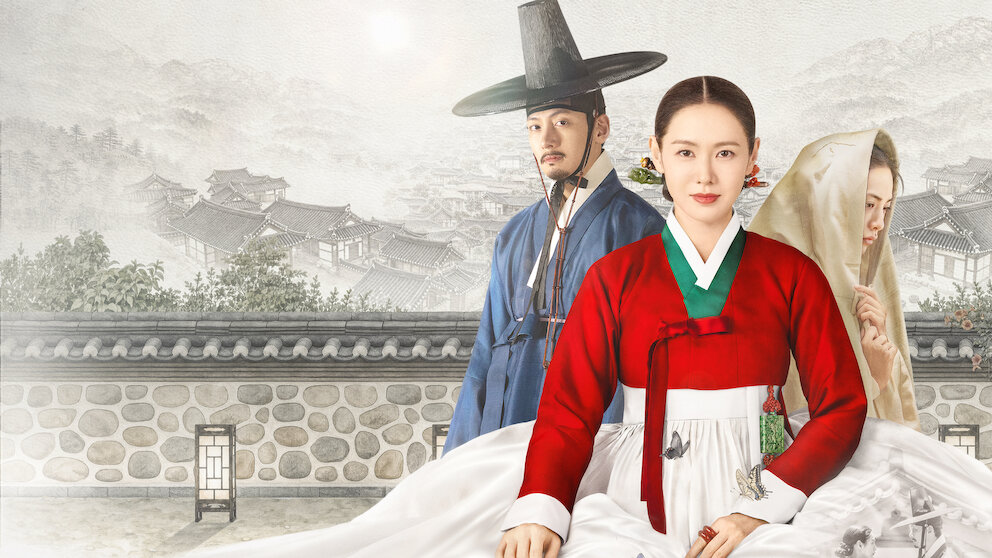
Netflix’s The Scandal is an eight-episode period drama that turns seduction into a contest over power, reputation, and emotional control. Starring Son Ye-jin, Ji Chang-wook, and Nana, it revisits the story behind the 2003 film Untold Scandal through a longer, more expansive portrait of late-eighteenth-century Joseon society. This spoiler-free The Scandal review explores its dangerous wager, star appeal, adaptation choices, and the social rules that make an apparently private romance everybody’s business.
A woman sends a letter. A man accepts a challenge. Another woman has no idea that her heart has become somebody else’s prize. That is a deliciously unsettling starting point: before romance can offer any comfort, the audience must wonder how much of it is a performance.
- The Scandal Review: A Dangerous Game of Attention
- Son Ye-jin, Ji Chang-wook, and Nana Lead the Game
- How The Scandal Differs from Untold Scandal
- Why Desire Is So Dangerous in Joseon Korea
- Letters, Hanbok, and the Pleasure of Waiting
- The Questions and Controversies Behind the Romance
- Who Should Watch The Scandal?
- More Korean Drama Reviews to Explore
The Scandal Review: A Dangerous Game of Attention
The trouble begins inside a respectable household. Lady Cho’s husband is bringing in a young concubine, So-ok, to produce an heir. Lady Cho responds by writing to her cousin Cho Won, a notorious seducer, with a proposition: seduce the newcomer. Cho Won, however, has his eye on a more difficult conquest, the virtuous Hui-yeon. Their competing desires become an intimate and dangerous wager.
The attraction of this setup is the imbalance of information. Lady Cho and Cho Won know there is a game; Hui-yeon does not. Every apparent kindness therefore carries a second possibility. Is the attention sincere? Is vulnerability being shared or manufactured? Can somebody who treats affection as a technique recognize it when it becomes real?
Those questions give the story its emotional hook. The wager promises the pleasure of clever scheming, then makes that pleasure uncomfortable by placing another person’s dignity at stake. Beauty and charm are useful weapons precisely because they make manipulation easier to welcome.
Readers drawn to family interests and private ambition shaping dangerous choices may also enjoy Made in Korea Season 2 Review: Family, Power, Revenge.
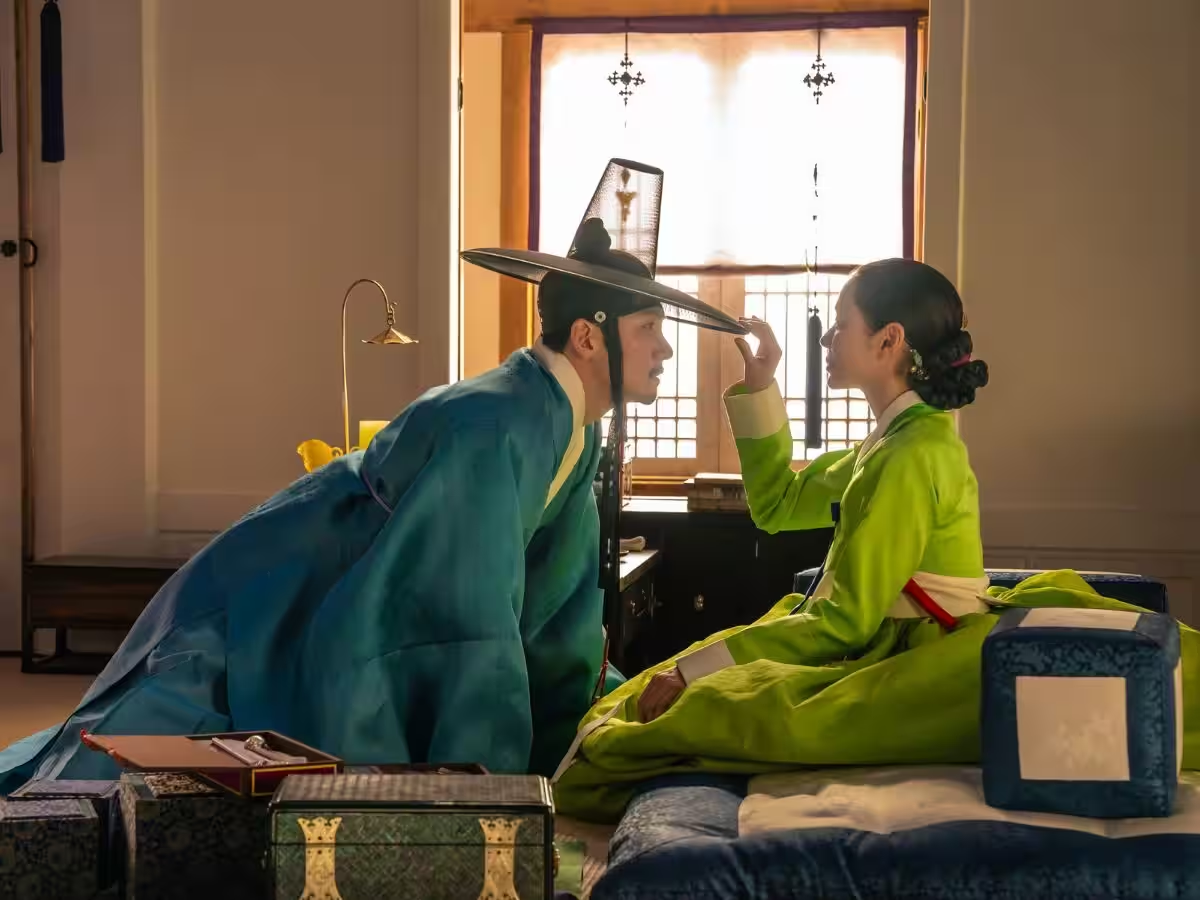
Son Ye-jin, Ji Chang-wook, and Nana Lead the Game
Son Ye-jin as Lady Cho
Lady Cho is the role that makes the casting immediately intriguing. Viewers familiar with Son Ye-jin from Crash Landing on You or Something in the Rain bring an attachment to an actor who now plays a woman capable of turning other people’s feelings into instruments.
Her intelligence has few acceptable public outlets. Inside her household, however, reading motives and arranging encounters can become a form of authority. That makes her frustration understandable while leaving her cruelty open to judgment. A woman can be constrained by society and still exercise damaging power over someone more vulnerable.
Son has described the character as difficult to fully understand, and her approach emphasizes that complexity. Lady Cho becomes interesting when resentment, longing, calculation, and self-deception remain entangled. Reducing her to either a triumphant rebel or a jealous villain would lose the troubling appeal of the role.
Ji Chang-wook as Cho Won
Cho Won offers the immediate allure of a man who seems to know exactly how to attract attention. Ji Chang-wook’s romantic screen presence gives that premise an easy point of entry. The sharper question is what such confidence conceals.
His longstanding attachment to Lady Cho complicates the image of an effortless conqueror. The man pursuing other people may also be seeking approval from someone he cannot emotionally escape. Ji has explained that he focused on the situations and relationships rather than deliberately performing a stereotypical womanizer. That choice fits a character whose reputation for mastery invites scrutiny.
Nana as Ahn Hui-yeon
Hui-yeon brings a different emotional weight. Although commonly introduced as a young widow, she lost her intended husband before their wedding. Her life is nevertheless shaped by expectations of fidelity and mourning. The idea that she should preserve a relationship she barely had makes her predicament especially painful.
Nana, familiar internationally from Mask Girl, takes on her first period-drama role. Hui-yeon gives the wager its human stakes: another person’s clever entertainment can become a disruption of her faith, identity, and future. Her capacity to want something for herself is as important as the attention she receives.
The supporting cast widens the picture. Shin Youn-ha plays So-ok, the young woman entering the household as a concubine; Chani, also known as Kang Chan-hee, plays the young nobleman Kwon In-ho; and Han Seon-hwa plays So-ok’s merchant mother, Bun-hui. Their presence brings youth, livelihood, and social advancement into a game that the central pair can afford to treat as pleasure.
For a broader look at the craft behind Korean screen acting, read The Stage Behind Korea’s Best Drama Performances.
How The Scandal Differs from Untold Scandal
The story’s literary ancestor is Pierre Choderlos de Laclos’s 1782 novel Les Liaisons dangereuses, usually known in English as Dangerous Liaisons. Its aristocrats conduct seduction and revenge through a web of letters, treating intimacy as something to orchestrate.
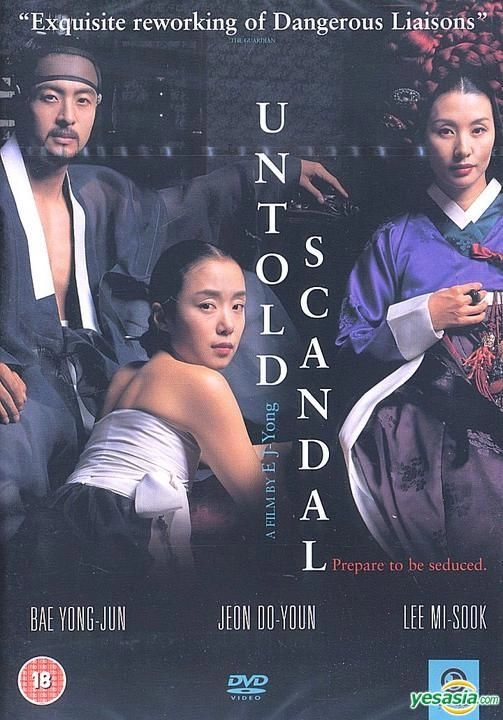
Director E J-yong, also known as Lee Jae-yong, relocated that world to Joseon Korea in Untold Scandal in 2003. Lee Mi-sook played Lady Cho, Bae Yong-joon played Cho Won, and Jeon Do-yeon played Lady Suk, the virtuous woman targeted by the wager. The film’s meticulously constructed costumes and interiors made its social hierarchy visible as well as beautiful.
The film’s Korean subtitle carries a small provocation of its own. The phrase namnyeo sangyeol jisa refers to lyrics celebrating love between men and women, a label Joseon scholars used disparagingly for certain songs inherited from Goryeo. Invoking that phrase gives the film a playful connection to an older argument over desire and respectability.
Netflix initially announced its series as based on that film. Director Jung Ji-woo subsequently emphasized returning to the novel and developing the characters anew. Both descriptions matter: the series inherits the Korean adaptation’s setting and familiar names while pursuing its own relationships and emphasis.
| Point of comparison | Untold Scandal, 2003 | The Scandal, 2026 |
|---|---|---|
| Format | A feature film of approximately 124 minutes | An eight-episode limited series |
| The virtuous woman | Lady Suk, a widow who has remained chaste for nine years and received official recognition | Hui-yeon, whose intended husband died before their wedding |
| Expanded relationships | The central seduction wager within a concentrated feature | More space for Lady Cho and Cho Won’s past, Lady Cho and Hui-yeon’s relationship, and women across different social positions |
Bun-hui also develops a role already present in the film, whose credits include So-ok’s mother. The series gives that maternal ambition a name and more room to unfold.
The extra time creates both an opportunity and a burden. It can give desire a history and allow secondary characters to have motives of their own. It also means that a premise built for a concentrated film must sustain attention over several hours. The fairest comparison asks what the expansion adds to the emotional stakes.
Viewing tip: You can begin with the series without watching the film. If you know either Untold Scandal or another Dangerous Liaisons adaptation, leave room for this version to change the relationships and direction.
Why Desire Is So Dangerous in Joseon Korea
Jung places the story in the late eighteenth century, during King Jeongjo’s reign, which lasted from 1776 to 1800. Its world centers on elite households in Hanyang (한양), the capital corresponding to present-day Seoul, particularly Bukchon (북촌). Commerce and urban life were changing, while family reputation and social rank continued to shape private choices. The central characters and wager are fictional; the historical setting gives their predicament context.
The households belong to the world of the yangban, the scholar-official elite. Marriage could secure lineage, social standing, and family continuity. Under those conditions, a secret relationship threatens much more than a couple’s happiness.
So-ok’s position makes jealousy more complicated
A concubine occupied a lower position in the household than the principal wife, with different protections and obligations. Her children also faced distinctions in status. The promise of entering a wealthy family therefore carried insecurity alongside opportunity.
That context changes the emotional reading of Lady Cho’s proposal. Her humiliation and So-ok’s vulnerability can exist together. The household structure places the women in conflict while giving the husband considerable freedom to rearrange their lives.
Men were also expected to exercise restraint, but women’s sexual reputations carried harsher consequences. That imbalance gives Cho Won’s freedom an uncomfortable edge: a conquest can enhance his reputation while endangering someone else’s future.
Hui-yeon’s reputation belongs to more than herself
For elite women, fidelity after a husband’s death could become a matter of family honor. Chaste widows could receive public recognition, including commemorative gates. Restrictions affecting the descendants of remarried women further connected a woman’s personal choices to her family’s prospects.
This helps explain why pursuing Hui-yeon is treated as such an audacious challenge. Cho Won is approaching a woman whose reputation has meaning beyond her own household. A new attachment can feel like a return to life while exposing her to judgment from people who believe they have a claim on her future.
These pressures varied by class and circumstance. Women’s lives across Joseon were diverse, and the culture of honoring extreme fidelity should not be mistaken for a universal law ordering widows to die.
Lady Cho’s talent makes her confinement sharper
Women could receive education at home and participate in written culture. Literacy and intelligence did not provide the same access to public office available to men. Lady Cho’s problem is therefore especially bitter: she has abilities that her respectable role gives her limited space to use.
The contrast with Bun-hui’s practical ambitions also matters. Women separated by wealth and status may face shared restrictions, yet the choices available to them carry very different costs.
Letters, Hanbok, and the Pleasure of Waiting
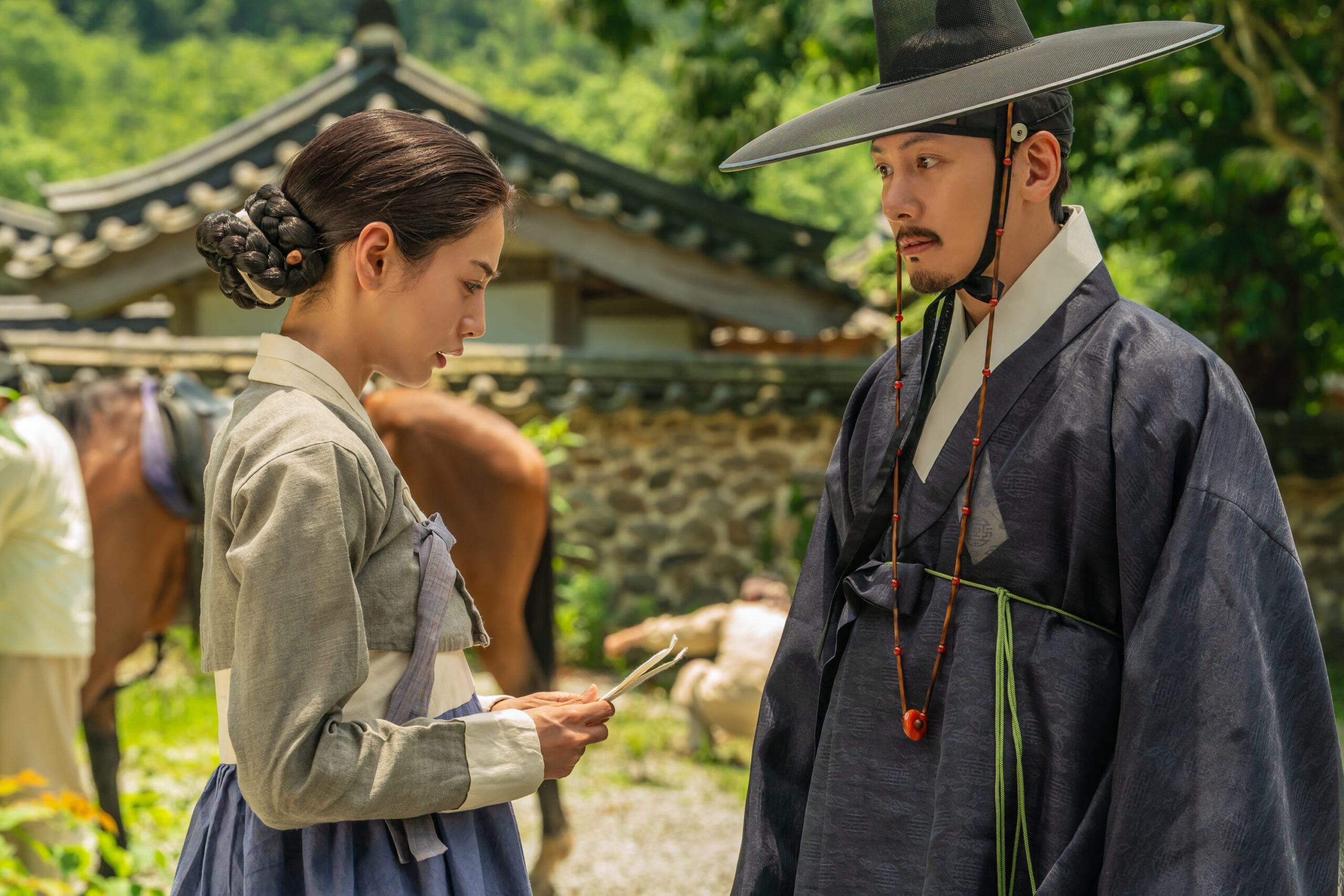
The series builds its appeal around Korean visual and storytelling traditions. Hanbok, enclosed courtyards, and richly arranged interiors offer obvious pleasures, but they also invite attention to the rules governing who may enter, observe, or approach whom.
Look closely at Lady Cho’s greens. Son Ye-jin has explained that the pale tones grow darker as the character’s desires intensify. Costume designer Kim Young-jin also contrasts Cho Won’s flowing fabrics with Hui-yeon’s restrained hemp and cotton. These choices invite the eye to sense freedom, confinement, and changing emotional intensity before the characters put them into words.
Letters are especially well suited to this world. A carefully composed message can express longing while concealing calculation. The series uses voiceover to bring correspondence into the drama, echoing the novel’s form and drawing attention to the distance between what people write and what they mean.
Pansori and folk-painting imagery add another layer. Pansori is a traditional storytelling performance in which a singer and drummer combine song, spoken passages, and expressive gesture. Its presence connects these private intrigues to a Korean tradition of narrating human behavior before an audience.
Cultural note: A gisaeng was an entertainer trained in arts such as music and dance within a restrictive status system. Sexual vulnerability was part of that history, but the word encompasses more than “prostitute.” A concubine’s position, meanwhile, concerned her place within a household.
All of this makes waiting central to the viewing experience. A delayed message or an uncertain intention can generate anticipation. Yet beautiful images cannot create dramatic movement by themselves. The important distinction is whether a pause deepens uncertainty or merely postpones information.
That is also where responses divide. Some viewers welcome the atmosphere and psychological attention; others find the expansion slow or repetitive. Both reactions deserve room. The series asks viewers to enjoy the friction of feelings that cannot be easily spoken, and that rhythm will be more rewarding for some audiences than others.
The Questions and Controversies Behind the Romance
Are Lady Cho and Cho Won really cousins?
Yes, and this relationship also existed in the 2003 film. It is an additional taboo within the story. Joseon’s close-kin marriage prohibitions and lineage rules make it misleading to explain the attraction as an ordinary, socially accepted match.
Korean kinship vocabulary can also confuse English viewers. Terms for a cousin or a cousin’s spouse may be translated using broader family labels such as “sister” or “brother-in-law.” Follow the established family relationship as well as the subtitle’s shorthand.
Does the adult content belong to the story?
The series includes sexual content and nudity. Its premise makes intimacy inseparable from manipulation, so the useful critical question is what a scene reveals about trust, vulnerability, or control. A character’s desire can be real even when the circumstances surrounding it are deceptive. Attractive actors do not remove that ethical tension.
Why is there Catholicism in a Joseon drama?
Catholic communities developed in Korea in the late eighteenth century, so the religious element fits the broad period. Disputes over ancestral rites made belief a matter of family duty and social order. For Hui-yeon, faith adds another dimension to the competing expectations shaping her life.
What explains the mixed reception?
Pacing is a substantial point of disagreement. Pierce Conran’s review in the South China Morning Post awarded the series four out of five stars, while some viewer discussions praise the visuals but find the storytelling stretched. These responses suggest that its deliberate rhythm is central to both its attraction and its limitations. Each reflects a particular critical or viewing perspective.
Some criticism has also concerned Nana’s appearance and suitability for a period role. Jung has defended casting her for the emotional force he wanted in Hui-yeon. The more useful discussion concerns whether the character’s grief, desire, and agency are convincing, with costume choices assessed separately from judgments about an actor’s face.
Who Should Watch The Scandal?
The Scandal will appeal most to viewers attracted to morally complicated romance, elegant period settings, and characters whose words conceal competing intentions. Its strongest hook is the uneasy combination of glamour and exploitation: the people drawing your attention may also be doing things that make you recoil.
Expect a deliberate rhythm and room for discomfort. The premise becomes especially compelling when you keep the women’s unequal positions in view. Lady Cho wants room to exercise power; Hui-yeon wants a life beyond the identity imposed on her; So-ok enters a household where opportunity comes with dependence. Their desires give the wager consequences that clever seduction alone could never supply.
Where to watch
The series premiered globally on Netflix on September 18, 2026, and all eight episodes are listed on its official viewing page. English subtitles and English audio are listed on the English-language page; check your local account for availability, language options, and age ratings. Its sexual content and themes of coercion make it viewing for mature audiences.
More Korean Drama Reviews to Explore
For more Korean screen stories and cultural discussions, explore these KCulture articles:
- Moving Season 2: Kang Full Universe and New Cast Revealed
- Our Sticky Love Netflix Review: Rom-Com Meets Crime Thriller
- Review: ‘Why Agent Kim Reactivated’ is Netflix’s Best Action Hit
- A Shop for Killers Season 2: Babylon Goes Global
- ‘Teach You a Lesson’ Netflix Review: The Debate Over Student Rights
- The WONDERfools Netflix Review: Korea’s Most Unusual Heroes
Korean Culture portal KCulture.com

The KCulture Editorial Team is dedicated to providing deep insights and accurate information about the vibrant world of Korean culture.