Agent Kim Reactivated Netflix Review: More Than Just Another “Taken” Clone
Agent Kim Reactivated is a 10-episode action-comedy K-drama on Netflix that brilliantly subverts the traditional “Taken” trope by transforming exhausted, middle-aged Korean corporate managers into lethal covert operatives. It is currently dominating global streaming charts because it perfectly balances high-octane, cut-free martial arts with the hilarious, grounded reality of fathers struggling to connect with their teenage daughters. For international fans looking to fully appreciate the series, this comprehensive review breaks down the spoiler-free plot, cast details, webtoon IP background, and the deep cultural references that make this show a unique masterpiece.
While the premise may initially remind viewers of Hollywood action thrillers, the series quickly establishes its own identity through its portrayal of uniquely Korean workplace culture, fatherhood, and the surprisingly emotional lives of ordinary salarymen. Exploring these hidden layers will make your binge-watching experience infinitely more rewarding.
- Plot Synopsis: The Ultimate “Dad Universe” (Spoiler-Free)
- Meet the Cast and Production Team
- The Webtoon IP and Netflix Co-Release Strategy
- Why Everyone Is Talking About Agent Kim Reactivated
- Cultural Context: Essential Korean References
- Controversies Behind the Success
- Explore More K-Drama Reviews
Plot Synopsis: The Ultimate “Dad Universe” (Spoiler-Free)
The story follows Kim Do-hyun, a seemingly exhausted, hunched-over accounting manager at a local savings bank. Beneath his wrinkled business suit and submissive corporate demeanor, however, lies a terrifying secret. Long before becoming an ordinary salaryman, Kim was an elite North Korean special operative known simply as Agent 66. Having abandoned his lethal past, his only remaining goal is to become a better father to his distant teenage daughter, Min-ji.
Everything changes when his daughter suddenly disappears, kidnapped by a mysterious criminal syndicate. Forced to unseal his deadly combat skills, Kim reunites with his “dad friends”—who are also former secret agents hiding behind mundane civilian jobs. Together, these middle-aged fathers wage an all-out war against a massive crime organization and a corrupt national intelligence conspiracy to bring their children home.
Meet the Cast and Production Team
The stellar cast manages to shift rapidly between laugh-out-loud comedy and intensely serious action, creating an unforgettable dynamic.
| Actor | Character | Role & Description |
|---|---|---|
| So Ji-sub | Kim Do-hyun / Agent 66 | A legendary former special operative living as a tired corporate manager. He delivers heavy, charismatic hand-to-hand combat. |
| Choi Dae-hoon | Sung Han-soo | A three-time Taekwondo world champion turned neighborhood gym master, providing sharp intellect and precision kicks. |
| Yoon Kyung-ho | Park Jin-chul | A physically imposing former Marine. He operates heavy weaponry and serves as the primary source of the show’s explosive action and comic relief. |
| Joo Sang-wook | Joo Kang-chan | The main villain. A former gang enforcer turned sociopathic construction company CEO. |
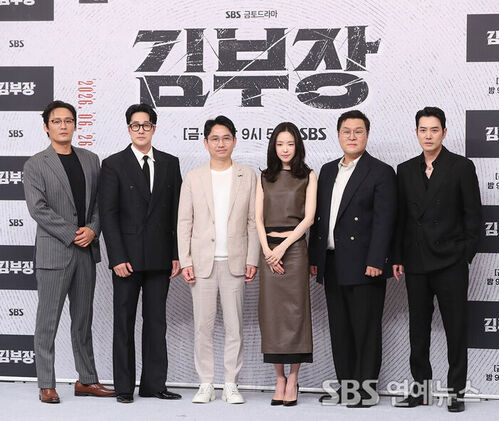
The series is directed by Lee Seung-young and Lee So-eun, with a screenplay by Nam Dae-joong, who is known for seamlessly combining B-movie comedy with emotionally grounded storytelling. The standout production element, however, is the choreography by Action Director Lee Geon-moon. He introduced a groundbreaking dual-camera technique to Korean TV, relying on long, continuous takes and environmental combat rather than the rapid editing typically used to hide a lack of martial arts training.
The Webtoon IP and Netflix Co-Release Strategy
Agent Kim Reactivated is based on one of Korea’s most successful action webtoons, Manager Kim, published by Naver Webtoon (네이버웹툰). More importantly, it is a core pillar of the PTJ Universe created by The Grim Entertainment.
This shared universe includes internationally recognized titles like Lookism and Viral Hit. Readers familiar with interconnected comic universes immediately understand why Korean fans were so excited about this adaptation. The drama was jointly produced by Studio S (a subsidiary of the SBS broadcasting network) and Fantagio.
To support the blockbuster-level budget required for the intricate action sequences, the production companies secured a simultaneous release deal with Netflix. Streaming the show in over 190 countries immediately after its Korean television broadcast allowed the studio to tap into the massive global fanbase of the PTJ Universe, ensuring a faster return on investment and giving international viewers instant access.
Why Everyone Is Talking About Agent Kim Reactivated
The Subversive “Dad Universe”
Hollywood has produced many stories about retired assassins returning to save their loved ones. What makes this series uniquely Korean is that the protagonists are not cool, glamorous antiheroes. Instead, they are completely exhausted middle-aged fathers. Instead of asking, “Can an aging hero still fight?” the drama asks, “What happens when the world’s deadliest men have to worry about school grades, paying mortgages, and awkward conversations with their teenage daughters?”
A Perfect Balance of Comedy and Brutality
The series shifts rapidly between laugh-out-loud moments of awkward parenting and extremely brutal hand-to-hand combat. This contrast—often referred to as “Gap Moe”—reinforces the idea that these men desperately want normal lives but simply cannot escape their extraordinary pasts.
Fast-Paced 10-Episode Format
Unlike classic 16-episode K-dramas, the show adopts a lean, 10-episode structure. It eliminates slow subplots, keeping the narrative moving at breakneck speed, which makes it perfect for global binge-watchers.
Cultural Context: Essential Korean References
Understanding a few key cultural concepts will elevate your appreciation of the drama’s underlying humor and emotional depth.
💡 Pro Tip: The Symbolism of “Bu-jang” (Manager)
International viewers may see “Manager Kim” as just a job title. However, in Korean corporate culture, a “Bu-jang” (부장) represents the quintessential middle-aged man. They are stereotyped as exhausted individuals in battered suits, crushed by corporate hierarchy, working overtime, and constantly stressed about their children’s education. Seeing Korea’s most pitied and tired demographic transform into unstoppable fighters is the central joke of the series.
📌 Local Note: The “Daughter Fool” (Ttal-babo)
Koreans frequently use the term “Ttal-babo” (딸바보), which translates to “Daughter Fool.” It describes fathers who become completely helpless and unconditionally loving whenever their daughters are involved. The sight of terrifying gangsters and stoic agents melting under the cold stare of a teenage girl is a deeply romanticized and humorous trope in Korean media.
- Marine Veterans & Taekwondo Masters: Character Park Jin-chul is part of the Marine Corps Veterans Association (해병대 전우회). In Korea, older men in red caps and military uniforms volunteering to direct traffic are a familiar neighborhood sight. Similarly, a neighborhood Taekwondo master driving a yellow minivan is a friendly community figure. Turning these everyday local uncles into covert operatives is incredibly funny to domestic viewers.
- The North Korean Defector Reality: Kim’s past as a North Korean operative reflects Korea’s unique geopolitical situation. However, the drama subverts traditional spy tropes by emphasizing that family matters more than political ideology or national loyalty.
Controversies Behind the Success
As the drama skyrocketed past the 20% viewership mark in South Korea, it sparked several cultural debates.
First, the show has faced criticism for its graphic violence. Despite a 15+ viewing rating on domestic television, the series features brutal gang warfare, private torture, and merciless vigilante justice that approaches theatrical film levels.
Furthermore, the narrative heavily relies on the trope of incompetent public authorities. Police and national intelligence agencies are frequently depicted as corrupt or useless, forcing the “dad agents” to rely on illegal, violent vigilante justice. While some view this as an entertaining fantasy, critics argue it risks glorifying private revenge over the rule of law.
Lastly, the massive success of the series drew renewed attention to the original webtoon creator, Park Tae-jun. Past controversies regarding the author’s internet remarks resurfaced in online forums, though it did not slow down the drama’s explosive popularity.
Explore More K-Drama Reviews
If you enjoyed exploring the cultural layers of Agent Kim Reactivated, dive into our other deep reviews of Korea’s biggest hits:
- A Shop for Killers Season 2: Babylon Goes Global
- ‘Teach You a Lesson’ Netflix Review: The Debate Over Student Rights
- The WONDERfools Netflix Review: Korea’s Most Unusual Heroes
- Why My Royal Nemesis is Netflix’s Best Time-Slip K-Drama
- We Are All Trying Here Netflix Review: Deep Cultural Meaning
- Perfect Crown K-Drama Review: IU & Byeon Woo-seok Shine
- 10 Million Viewer Club Korean Movies: Box Office Legends
Korean Culture portal KCulture.com

Founder of Kculture.com and MA in Political Science. He shares deep academic and local insights to provide an authentic perspective on Korean history and society.