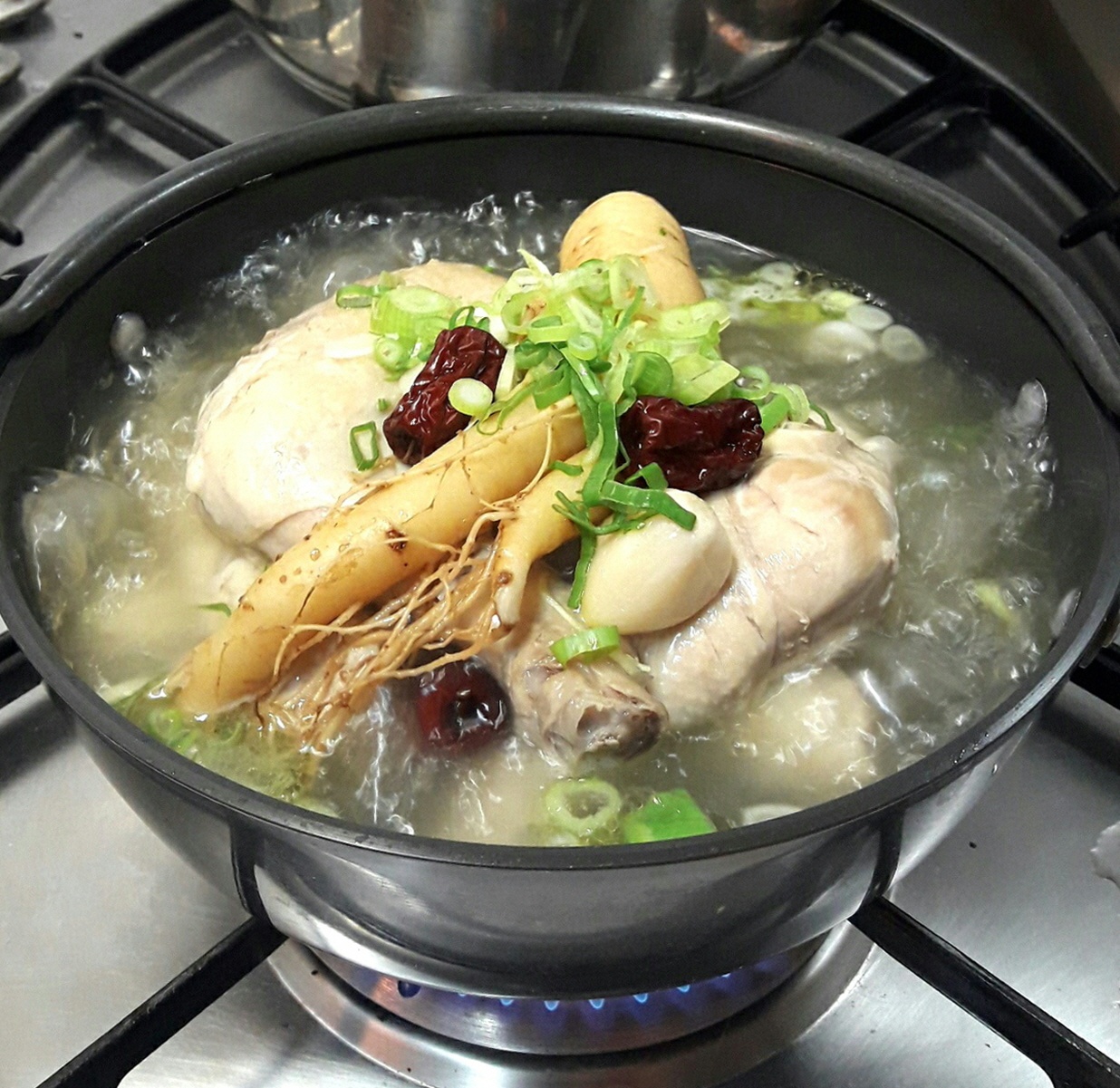
Introduction: The Comfort of a Slowly Simmered Chicken
Korean comfort food is not always fiery or heavily seasoned. Sometimes, it is a whole chicken gently simmered with garlic, served with warm broth and a little salt on the side. This is dakbaeksuk (닭백숙), a familiar dish associated with family meals and nourishing food.
Baeksuk (백숙) refers broadly to a method of boiling meat or fish in water without strong seasoning. In everyday conversation, the word often means chicken prepared this way. For clarity, dak means chicken: duck cooked in a similar style is called oribaeksuk (오리백숙).
Dakbaeksuk is enjoyed throughout the year, but it is especially associated with summer and boyangsik (보양식), foods traditionally eaten to nourish the body. It is a popular choice around Sambok (삼복): Chobok, Jungbok, and Malbok, three traditional dates associated with the height of summer heat. These are calendar observances, rather than necessarily the year’s three hottest days. Eating hot chicken soup in summer is often explained through iyeolchiyeol (이열치열), the traditional idea of “fighting heat with heat.”
Ingredients & Flavor Profile
- Main Ingredient: A whole chicken, often larger than the small bird typically used for samgyetang.
- Common Aromatics: Garlic and, depending on the recipe, green onion, ginger, or onion.
- Optional Additions: Jujubes, chestnuts, ginseng, astragalus root, or other ingredients used in Korean herbal cooking.
- Rice: Some versions include glutinous rice; others serve rice porridge made with the chicken broth afterward. Nurungji baeksuk incorporates scorched rice for a toasted flavor.
A Mild Flavor with Room for Variation
Basic dakbaeksuk emphasizes the savory flavor of chicken and the mellow aroma of cooked garlic. It is usually non-spicy, with relatively restrained seasoning. Salt is commonly provided separately so diners can season the meat or broth to taste; black pepper may also accompany it. However, it is too restrictive to say that salt is the only seasoning ever used.
Simplicity is one style of baeksuk, rather than a rule that excludes other ingredients. Herbal versions can be noticeably aromatic, while rice-enriched versions have a fuller texture. The broth’s appearance and richness vary with the ingredients and cooking method.
Dietary Information
Vegetarian Status: Not Vegetarian. Traditional dakbaeksuk contains chicken, and its broth is also animal-based. Removing the visible meat does not make the soup suitable for vegetarian or vegan diets.
Ingredients Vary: Recipes range from a simple chicken-and-garlic preparation to versions containing several herbal ingredients. Diners with specific dietary restrictions should ask about the particular dish being served.
How It’s Cooked and Eaten
A prepared whole chicken is placed in a pot with water, garlic, and any additional aromatics. It is brought to a boil, then simmered until thoroughly cooked and tender. Cooking time depends on the bird’s size and type, as well as whether a conventional pot or pressure cooker is used.
The finished chicken may be brought to the table whole for sharing, with the broth served alongside it or kept in the same pot. Diners separate the meat from the bones and dip it lightly in salt or salt and pepper. Tenderness varies: some versions are very soft, while those made with Korean native chickens, known as tojongdak (토종닭), are valued for a firmer, pleasantly chewy texture.
Rice porridge, or juk (죽), is a common part of the meal. It may be prepared from the remaining broth after the chicken has been eaten. Other versions cook rice with the chicken from the beginning, so the sequence is not identical everywhere.
Ingredients, serving styles, and cooking methods differ between households and restaurants.
Dakbaeksuk vs. Samgyetang: What’s the Difference?
Both dishes involve simmering a whole chicken, and they share many ingredients. Their usual differences concern the role of ginseng, the size of the chicken, and how the meal is served.
Dakbaeksuk: Often a Shared Meal
Dakbaeksuk commonly uses a larger chicken shared by several diners. Ginseng is optional, and a basic version can be made with chicken, water, and garlic. The meat often takes center stage first, followed by broth or rice porridge.
Samgyetang: Ginseng Chicken Soup
Samgyetang (삼계탕) is characteristically made with ginseng and a small, young chicken, usually served as one whole bird per person. The chicken is commonly stuffed with glutinous rice, garlic, and jujubes, with ginseng included in the preparation. It usually arrives as a complete soup meal in an individual bowl or earthenware pot. Ginseng contributes a distinctive earthy aroma.
The Distinction Is Not Absolute
It would be misleading to define baeksuk as chicken without ginseng or rice: both can appear in baeksuk recipes. Likewise, chicken size and serving portions are customary differences rather than universal rules. Samgyetang has a more specific identity as ginseng chicken soup, while dakbaeksuk allows a broader range of plainly simmered and herbal chicken preparations.
Nutrition and Its Reputation as Boyangsik
Dakbaeksuk’s reputation as a nourishing meal combines the nutritional contribution of chicken with the cultural comfort of a warm, substantial dish.
- Protein: Chicken supplies protein needed for normal tissue maintenance and repair. Eating the meat provides much more of the meal’s protein than drinking the broth alone.
- Fluids and Energy: The broth contributes fluids, while accompanying rice or porridge adds carbohydrates and energy.
- Fat and Salt: A whole chicken with its skin is not uniformly lean. The meal’s fat content depends on the portions eaten and how much fat remains in the broth; its sodium content depends on seasoning and accompaniments.
Describing dakbaeksuk as a traditional restorative food reflects its place in Korean food culture. Claims that it specifically boosts immunity, treats illness, or reliably reverses exhaustion go beyond what can be established for the dish. Garlic and herbal ingredients contribute flavor, but their presence alone does not demonstrate those medical effects.

The KCulture Editorial Team is dedicated to providing deep insights and accurate information about the vibrant world of Korean culture.