Ganjang Gejang in Korea: Raw Crab, Rice and Tradition
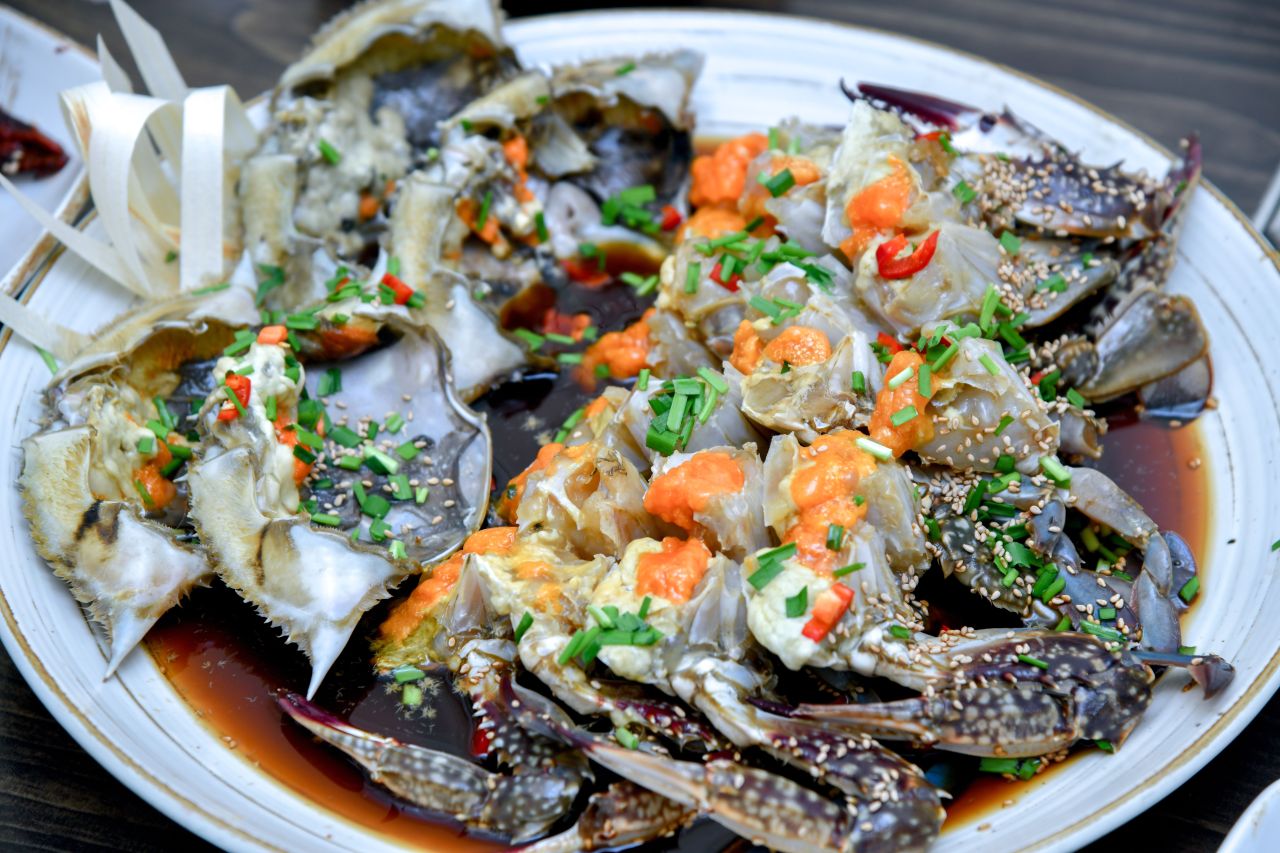
For many travelers, discovering Korea begins at the dining table: sizzling barbecue, bubbling stews, chewy rice cakes, and small side dishes that invite a curious first bite. Among the more distinctive food experiences is trying ganjang gejang in Korea: raw crab cured in a seasoned soy sauce marinade and served cold with rice.
At first, the uncooked flesh and orange roe may seem unfamiliar. Then comes a mouthful of sweet, silky crab with plain rice, followed by the pleasure of mixing a spoonful inside the shell. It becomes easier to understand why this dish has earned a place on food lovers’ travel itineraries—and why Koreans affectionately call it a “rice thief.”
Behind that memorable meal is a story of seasonal crab fishing, household preservation, and changing tastes. From its origins to the differences between soy-marinated and freshly seasoned crab, here is how ganjang gejang is made and enjoyed, with five restaurants to try in Seoul and beyond.
- Why Korea Loves Flower Crab
- How Ganjang Gejang Developed
- Ganjang Gejang vs. Spicy Crab: What Changes?
- How Ganjang Gejang Is Made
- How to Eat Ganjang Gejang
- Where to Try Ganjang Gejang in Korea: Five Restaurants
- Raw Crab Safety and Practical Tips
- Beyond Gejang: Korean Crab Dishes and Winter Markets
- More Korean Food to Explore
Why Korea Loves Flower Crab
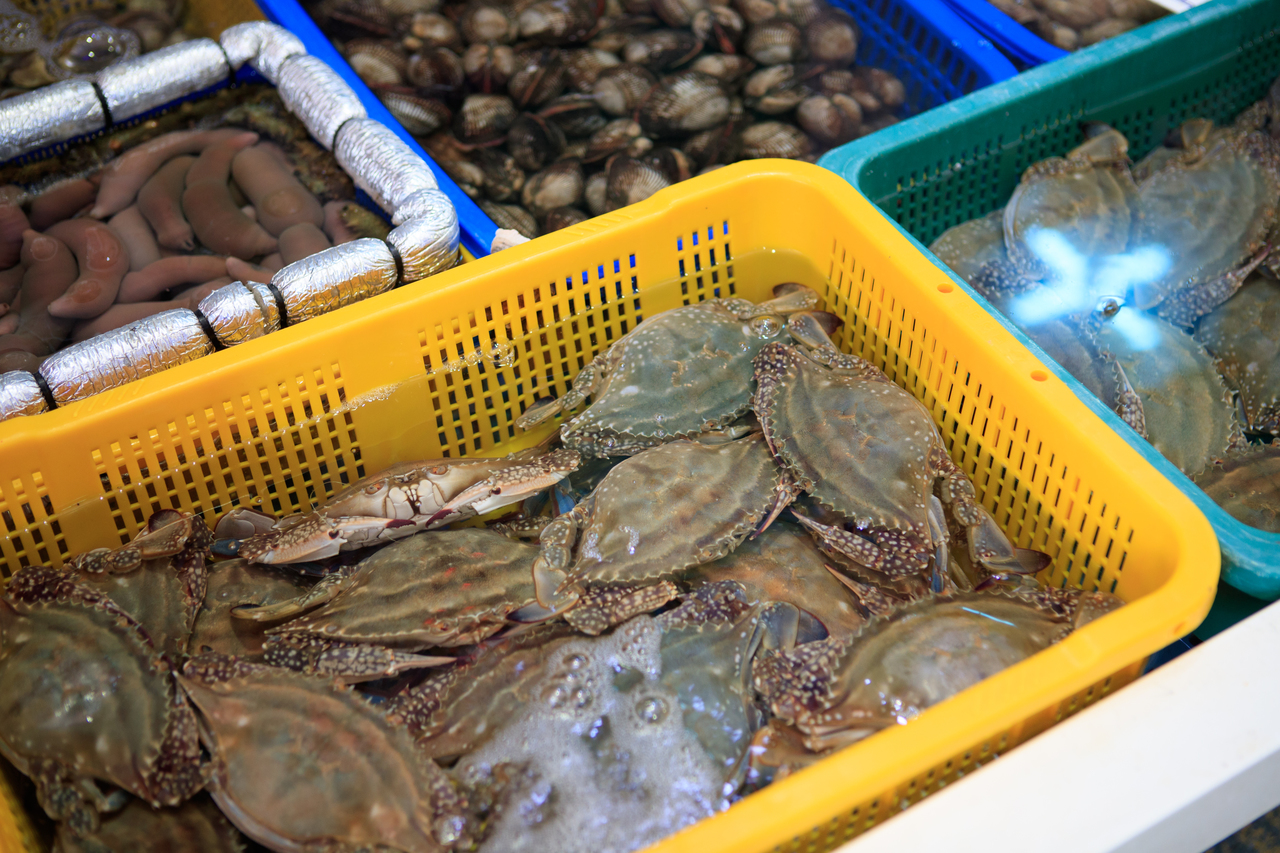
In Korean home cooking, the familiar crab is kkotge, commonly translated as flower crab or swimming crab. Its broad body and paddle-shaped rear legs look quite different from the long-legged snow crabs displayed in winter seafood markets. The west coast is a major source, and spring and autumn catches shape the way people shop and cook.
Spring is especially associated with female crabs carrying rich internal roe. Autumn is prized for male crabs with well-filled bodies. These are seasonal preferences rather than guarantees about every individual crab, but they explain why a restaurant might emphasize spring-caught females even during an autumn visit.
Carefully frozen seasonal crab also helps specialists serve gejang throughout the year. A year-round menu does not mean every crab was caught that morning, and freezing alone is not evidence of poor quality.
The appeal goes beyond quantity of meat. Flower crab supplies sweetness, broth-making shells, and rich contents inside the top shell. A single ingredient can become a bubbling family stew, a steamed centerpiece, or a small portion of gejang powerful enough to carry an entire bowl of rice.
How Ganjang Gejang Developed
Before ganjang gejang became a destination meal, it answered a practical household question: how could a seasonal, highly perishable ingredient be kept for later?
Joseon-era household manuals, including Sallim gyeongje and Gyuhap chongseo, record crab-preserving techniques. These were not all identical to the glossy soy-marinated flower crab served today. Historical preparations used combinations of salt, soy sauce, alcohol, vinegar, and even brewing lees. Regional traditions also used different kinds of crab, including freshwater crabs.
Some recorded methods involved draining the liquid, boiling it, cooling it, and pouring it over the crab again. The repeated attention to the preserving liquid shows that gejang was a managed process, rather than simply raw crab with sauce added at the table.
It belongs to the wider Korean tradition of making seafood last, explored in What Is Jeotgal? Korea’s Ancient Fermented Seafood. Modern refrigeration, however, has changed the balance: many restaurant versions use a milder marinade and a much shorter curing period than older storage foods.
That shift helps explain gejang’s modern appeal. Preservation gave way to a greater emphasis on the crab’s delicate texture and sweetness. Its nickname, bap doduk, means “rice thief”: the savory crab makes the rice disappear almost without notice.
Ganjang Gejang vs. Spicy Crab: What Changes?
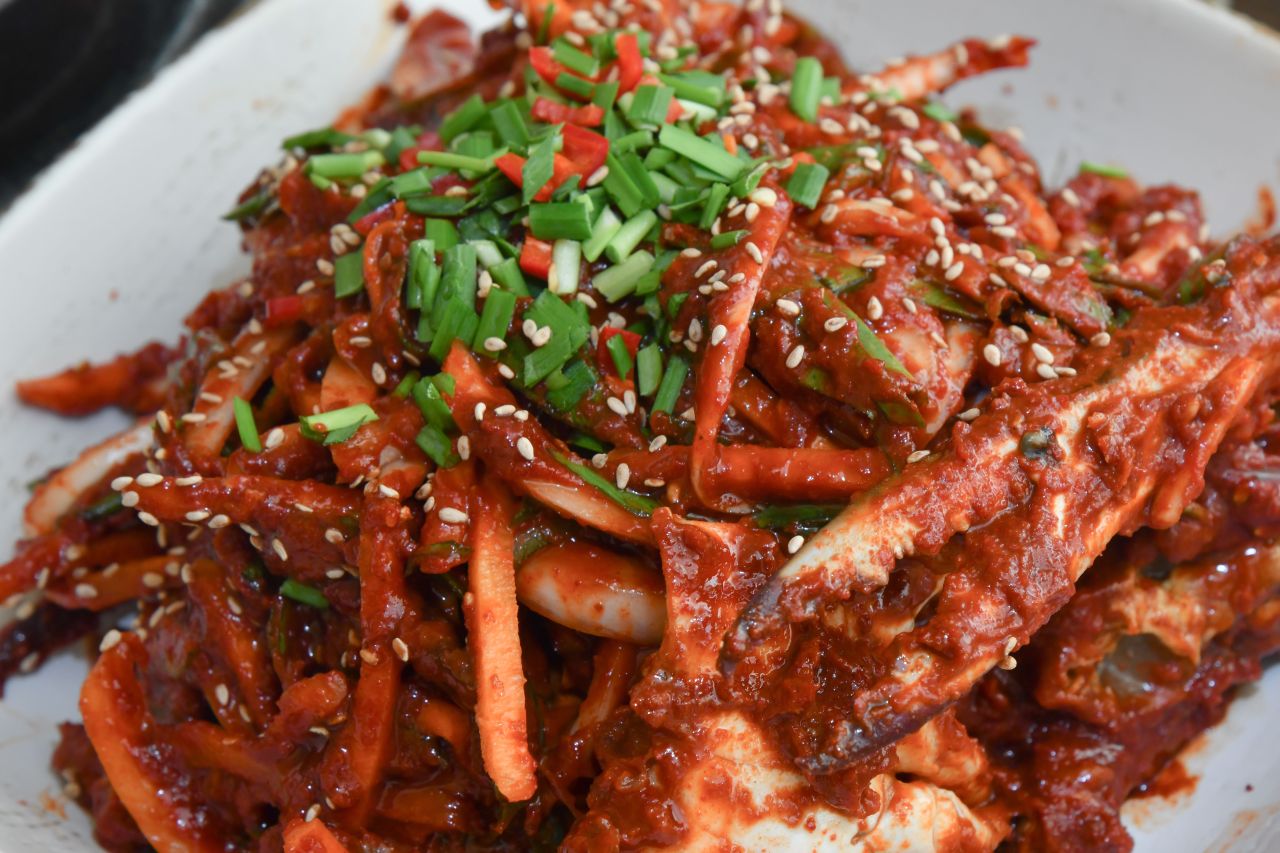
The difference involves both seasoning and time. Ganjang gejang rests in a soy-based liquid so that the seasoning penetrates the crab. A freshly dressed crab side dish emphasizes the immediate combination of raw flesh, chili, garlic, and other aromatics.
| Preparation | Typical method | Eating experience |
|---|---|---|
| Ganjang gejang | Raw crab immersed in seasoned soy marinade and cured under refrigeration. | Silky flesh, briny sweetness, and a sauce suited to small amounts of rice. |
| Yangnyeom gejang | Cut raw crab coated in a thick chili-based seasoning; resting time varies. | More immediate chili heat, sweetness, garlic, and a coating that clings to the pieces. |
| Fresh crab muchim | Raw crab pieces or extracted flesh mixed with seasoning close to serving. | Freshly mixed flavors; presentation and seasoning differ by region and restaurant. |
These names overlap in everyday use. A freshly mixed spicy crab can be called yangnyeom gejang or kkotge muchim, and some spicy versions also rest before serving. It would be misleading to say that every red preparation is instant, or that every soy version undergoes lengthy fermentation.
For visitors, the most useful distinction is simpler: both ganjang gejang and ordinary yangnyeom gejang contain uncooked crab. Neither dark soy sauce nor bright chili seasoning means the flesh has been cooked.
How Ganjang Gejang Is Made
Recipes vary, but the basic sequence is recognizable:
- Select and clean the crab. Freshness and temperature control matter from the beginning. The shells are scrubbed, and inedible parts are removed during preparation.
- Prepare the marinade. Soy sauce is combined with water or stock and aromatics such as onion, garlic, ginger, and chili. Some kitchens add kelp, fruit, or a sweetener.
- Boil and cool the liquid. In a common method, the marinade is simmered separately, strained, and cooled completely before it touches the raw crab.
- Cure under refrigeration. The crab rests in the cold marinade, often for roughly one to three days depending on the recipe and the crab’s size.
- Portion and serve cold. Restaurants open or cut the crab so diners can reach the flesh and the contents of the shell.
Some methods include draining and reboiling the marinade before cooling and returning it. Others use a shorter process. There is no single universal recipe, and additional time does not automatically produce better gejang.
Kitchen note: Boiling the marinade separately does not cook or sterilize the crab. This is an explanation of the preparation, rather than a validated home-preservation recipe.
How to Eat Ganjang Gejang
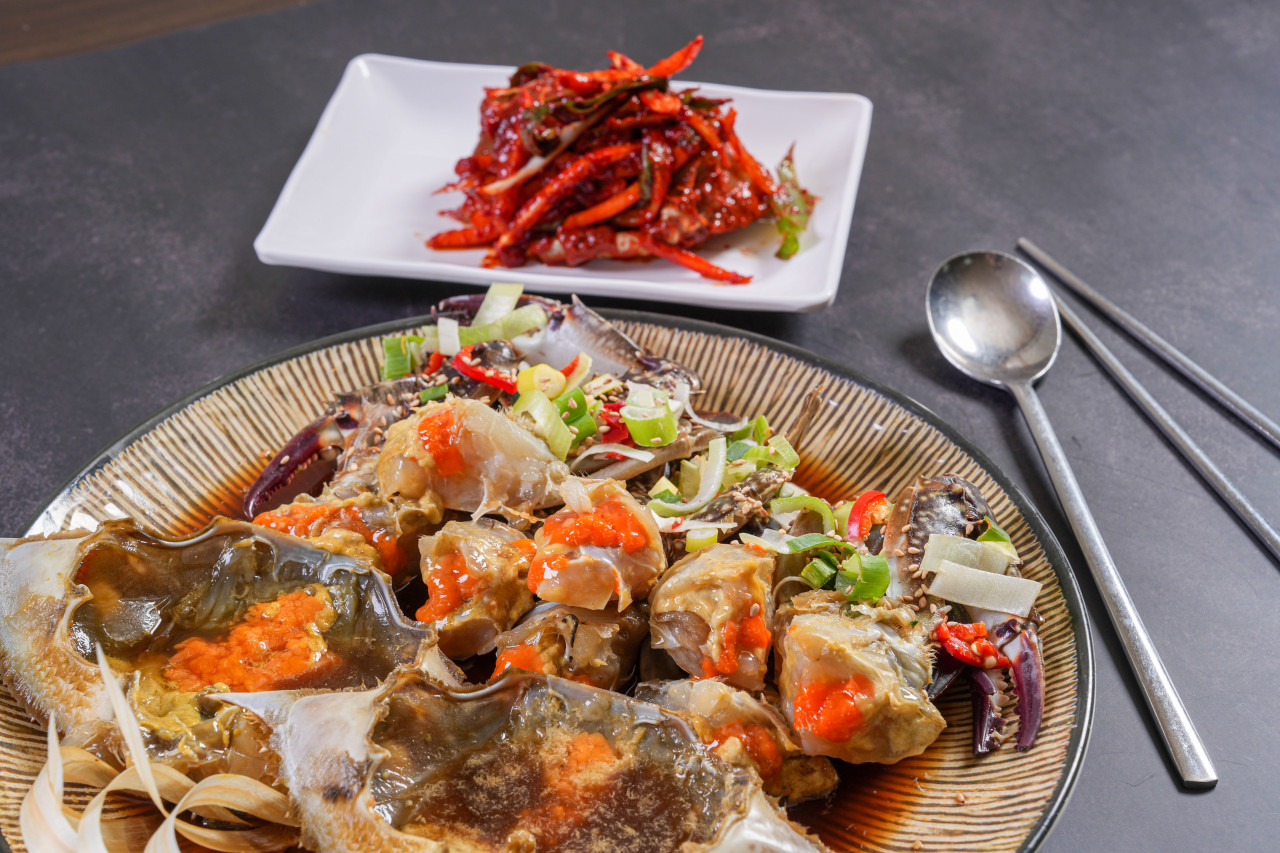
Start with a little crab and plain rice. The flesh is softer and more slippery than steamed crab, while the marinade can taste intensely salty on its own. Rice brings the two into balance.
- Use the cut body sections. Gently press or draw the flesh from the openings. Ask for scissors or help if a piece is difficult to manage.
- Keep the shell out of the bite. Do not crunch through hard claws with your teeth, and watch for small fragments around cut edges.
- Save some rice for the top shell. Mix a spoonful with the roe, rich inner contents, and a little marinade. Add more rice before adding more sauce.
- Try seaweed if it is served. A small parcel of rice, crab, and seaweed gives a different balance of texture and flavor.
The orange material in a female crab is roe; other yellowish or brownish contents include digestive tissues, often called tomalley or crab “mustard” in English. Diners commonly enjoy these rich parts, although the feathery gills and hard shell are discarded.
You do not have to finish the shell mixture to appreciate the dish. A few mouthfuls of sweet flesh with rice can be a perfectly satisfying introduction.
Where to Try Ganjang Gejang in Korea: Five Restaurants
These five restaurants offer different ways into the dish: a long-established Seoul name, a focused specialist, a modern dining room, and two regional destinations. Locations and published information were checked in October 2026; confirm prices, opening days, and booking arrangements before traveling.
1. Pro Soy Crab: The Sinsa Original
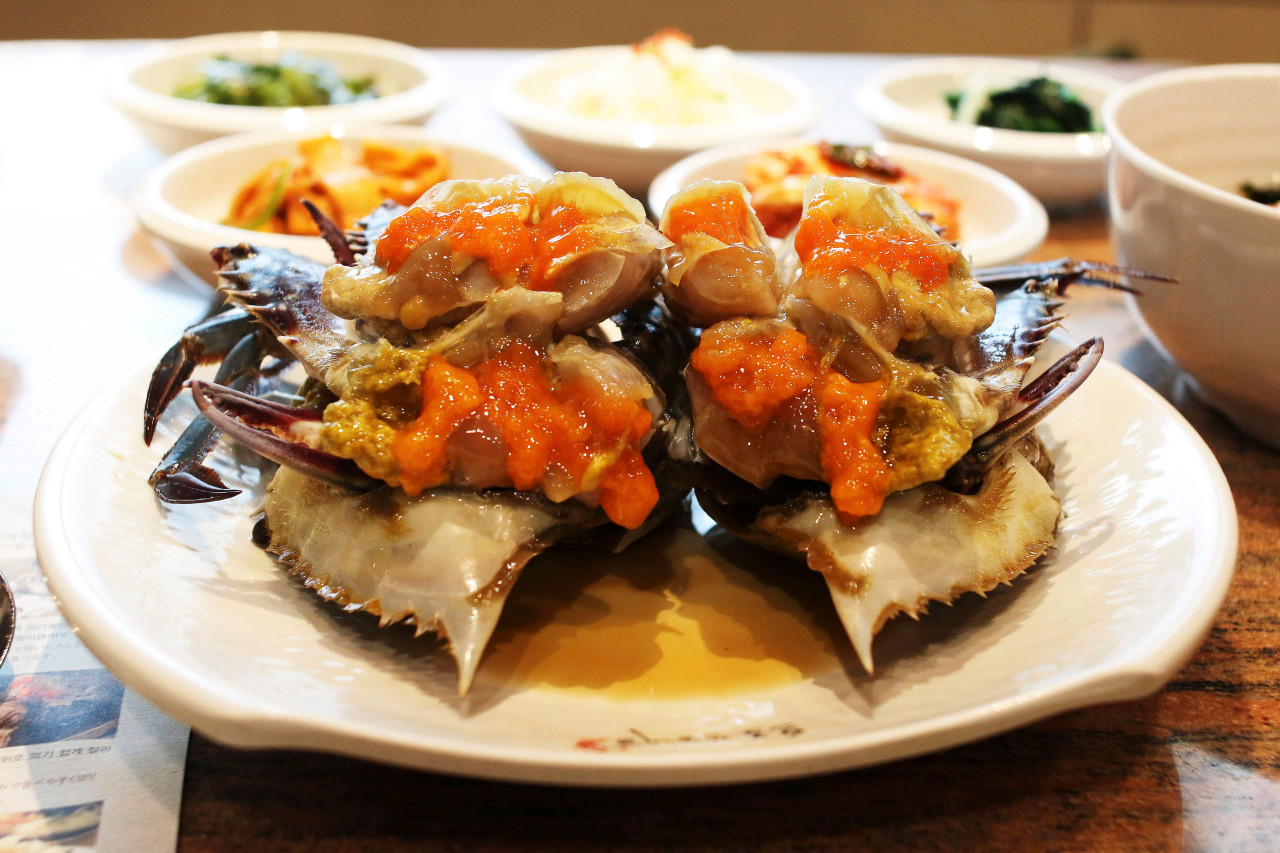
Pro Soy Crab (프로간장게장) has been associated with Seoul’s gejang dining scene since 1980. Its Sinsa main restaurant is a natural choice for travelers who want a long-established name, a broader seafood menu, and the atmosphere of a restaurant that has welcomed generations of visitors.
Head to the main restaurant near Sinsa Station (신사역) in Seocho-gu. Check whether the crab order is a shared platter or an individual meal, and confirm how many crabs and bowls of rice it includes before ordering.
Other locations: The brand also has a Samseong location in Seoul and a Paradise City location in Incheon. Check the specific outlet rather than assuming every branch has the same menu. The Seoul tourism listing provides main-restaurant information. Telephone: +82-2-543-4126.
2. Jinmi Sikdang: A Focused Mapo Specialist
Jinmi Sikdang (진미식당) builds its reputation around a single ganjang gejang set meal. Its appeal is that concentration: the crab, rice, and accompanying dishes form the meal, without a long menu competing for attention.
The Michelin Guide describes its use of west-coast swimming crab and recommends reserving ahead, since the daily preparation can sell out. This makes it a good choice for visitors who can plan around one particular lunch or dinner.
Location: 186-6 Mapo-daero, Mapo-gu, Seoul. Telephone: +82-2-3211-4468. Contact the restaurant for reservations and the current set price; consult its Michelin listing for the location.
3. Gebangsikdang: A Modern Introduction in Gangnam
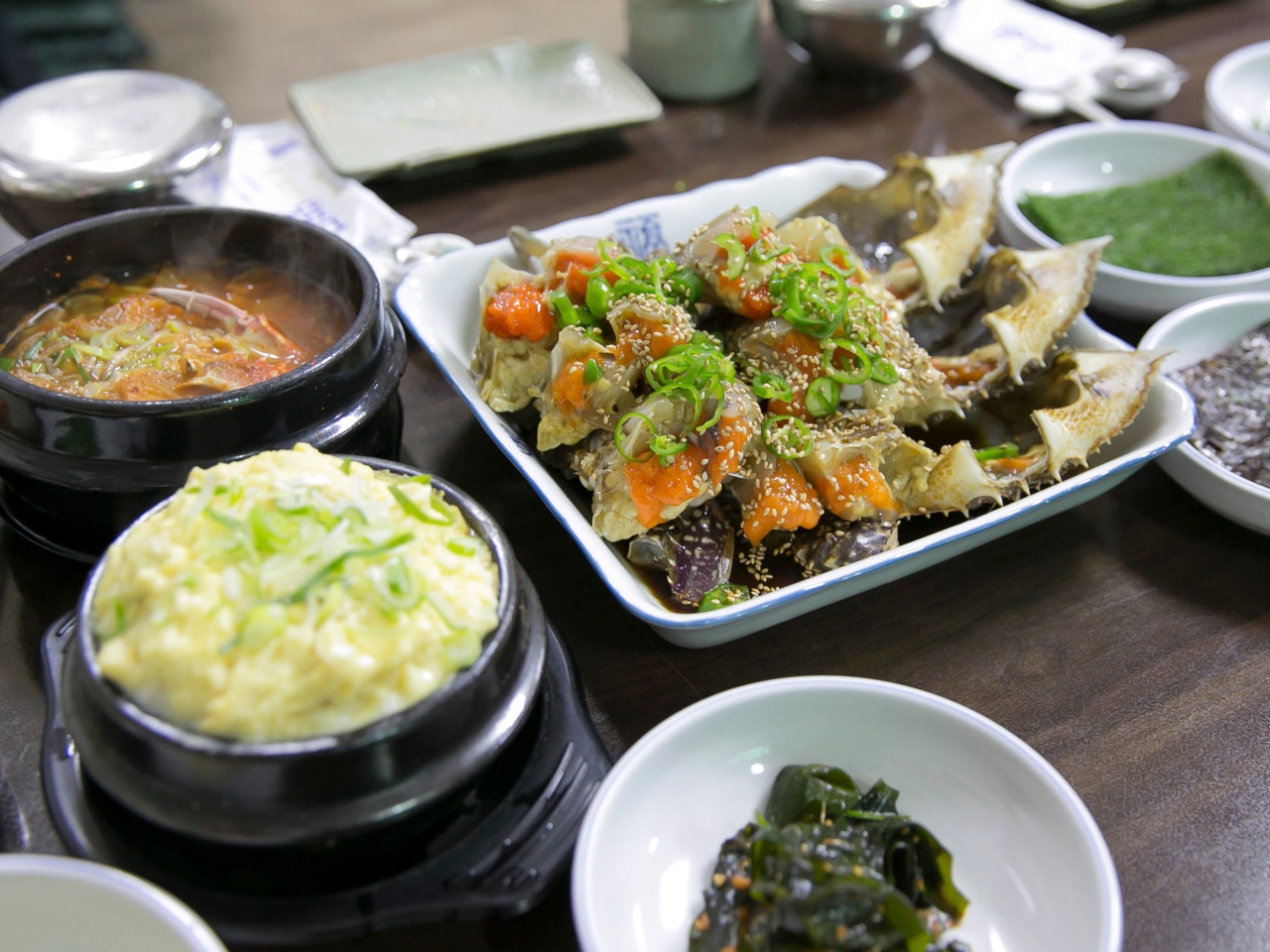
Gebangsikdang (게방식당) offers a more contemporary setting near Gangnam-gu Office Station (강남구청역). Its polished interior and individual meal options make it an appealing introduction for travelers who find a traditional seafood restaurant a little daunting.
Alongside shell-on gejang, its selection includes easier-to-eat dishes featuring extracted crab flesh and roe over rice. Those options reduce the work of handling shells, although they still require the same attention to raw seafood.
Main location: 17 Seolleung-ro 131-gil, Gangnam-gu, Seoul. Telephone: +82-10-8479-1107. The brand also lists locations in Seongsu, Seoul, and Busan through its official channel. Confirm the chosen branch and menu when booking. See the Michelin restaurant listing.
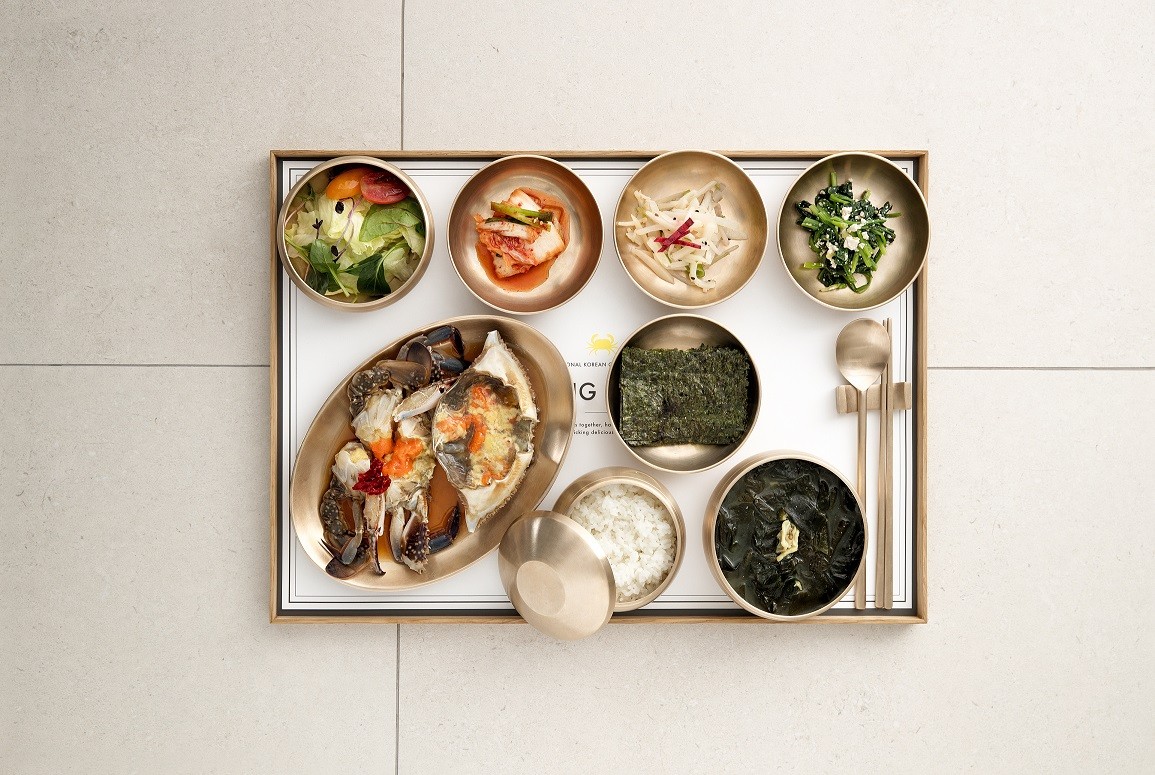
4. Kkotdol Gejang 1beonga: A Yeosu Crab Feast
Kkotdol Gejang 1beonga (꽃돌게장1번가) is a well-known stop in Yeosu (여수), where gejang meals are an established part of the city’s food identity. Its large dining room and substantial set meals suit travelers who want crab as the centerpiece of a regional food outing.
The flower-crab set combines soy-marinated crab with other dishes; Yeosu’s municipal listing gives a published price of KRW 35,000 per person. Confirm the current composition and price when ordering.
Pay attention to the crab itself. Yeosu is also famous for dolge, smaller, hard-shelled crabs commonly served in gejang meals. A dolge meal and a premium flower-crab set offer different amounts of accessible flesh. Ask which crab is included and which items, if any, are refillable.
Location: 36 Bongsan 2-ro, Yeosu. Telephone: +82-61-644-0003. The Korea Tourism Organization listing describes the restaurant and its set meal.
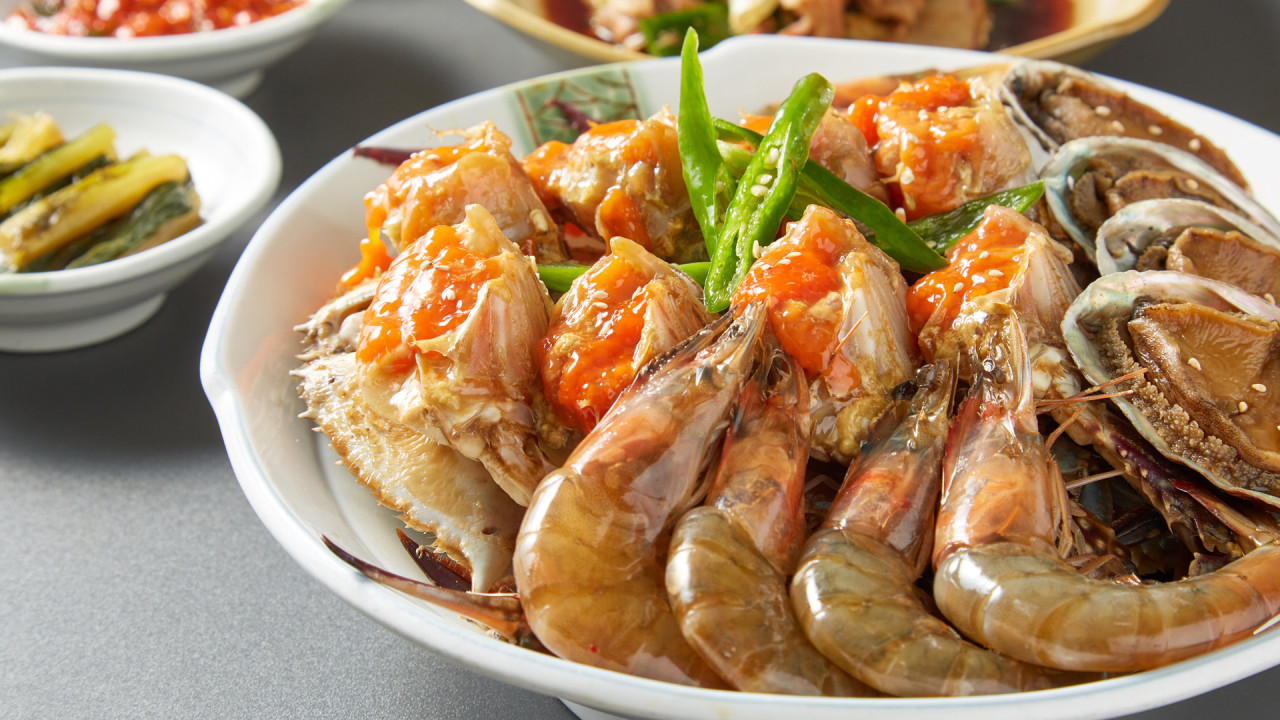
5. Gyegok Garden: A West-Coast Stop in Gunsan
Gyegok Garden (계곡가든) is a long-established flower-crab specialist in Gunsan (군산). Its seasoned soy marinade includes herbal ingredients, giving it a distinct house identity within the broader gejang tradition.
The restaurant’s published menu lists a ganjang gejang set at KRW 35,000 per person, alongside spicy crab and cooked crab dishes. That wider selection is useful for a group whose members have different levels of enthusiasm for raw seafood.
Location: 470 Geumgang-ro, Gaejeong-myeon, Gunsan. Telephone: +82-63-453-0608. Plan transport separately from a walking tour of central Gunsan. The restaurant also sells packaged products for domestic delivery; that service is distinct from a restaurant branch. Check its official restaurant page for menu and visiting information.
A Gunsan food itinerary can continue with a very different local attraction: Korea’s bread pilgrimage and its celebrated bakeries.
Raw Crab Safety and Practical Tips
Marinating does not make raw crab risk-free. Soy sauce, chili, alcohol, and freezing do not reliably eliminate all harmful microorganisms. Raw seafood can transmit bacteria, including Vibrio; reputation and careful handling reduce some risks but cannot provide a guarantee.
Pregnant travelers, children, older adults, and people with weakened immune systems should choose thoroughly cooked seafood. People with liver disease should be especially cautious because of the risk of severe Vibrio infection. Anyone with a crab or shellfish allergy should avoid the dish; diners avoiding wheat or soy should also check the marinade.
- Check the ordering unit. A price may cover one person, one crab, or a shared platter. Ask about minimum orders, particularly when dining alone.
- Confirm the crab species. A low-priced small-crab meal is not directly comparable with a large, roe-rich flower-crab set.
- Keep takeaway cold. Arrange refrigerated storage promptly and follow the producer’s storage and use-by instructions. An insulated bag does not make it suitable for a day of sightseeing.
- Choose cooked alternatives freely. Steamed crab or a thoroughly cooked crab stew offers another way to explore the ingredient.
For another satisfying cooked meal, Korea’s regional gukbap varieties offer a useful introduction to the country’s rice-and-soup culture.
Beyond Gejang: Korean Crab Dishes and Winter Markets
Gejang is only one expression of Korea’s affection for crab. Kkotgetang is a flower-crab stew, often spicy, in which the shells enrich the broth. Kkotgejjim may mean steamed crab or a seasoned steamed preparation, so check the description. Crab also appears in seafood noodles and ramyeon, where even a modest portion adds substantial flavor.
Winter’s Long-Legged Stars: Daege and Hongge
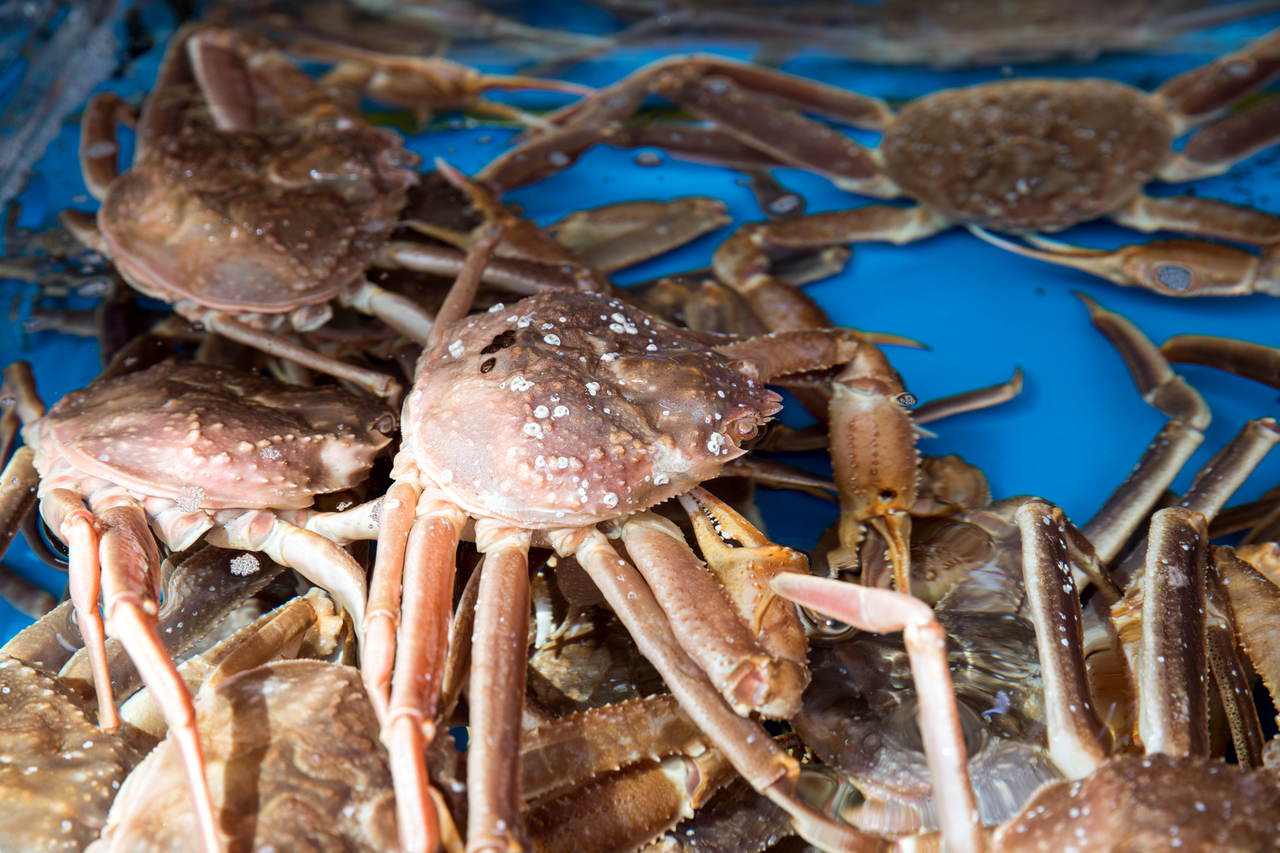
In winter, attention shifts toward the East Sea coast. Daege, or snow crab, is closely associated with Yeongdeok (영덕) and Uljin (울진). Ganggu Port (강구항) in Yeongdeok and Hupo Port (후포항) in Uljin are established destinations for crab meals. The domestic snow-crab eating season extends from winter into spring.
Hongge, or red snow crab, is a related but different crab from deeper East Sea waters. It is strongly associated with places such as Sokcho (속초) and Uljin. Popular in the colder months, it often offers a less expensive alternative to premium daege, although size and meat content vary considerably.
King crab is another familiar sight in Korean seafood tanks, but it is a different animal again and is generally imported. A restaurant’s location in a famous Korean crab town does not establish where every crab in its tanks was caught.
Why Crab Prices Cause Arguments—and How to Order Clearly
Eating near a fishing port does not guarantee a bargain. Premium crab can be expensive, and complaints about unclear quotes, unexpected totals, and poor value arise among Korean customers too. A high price alone does not establish overcharging: species, origin, size, and meat fullness all affect value.
The useful response is to settle the details before the crab is cooked:
- Identify the crab and origin: domestic daege, imported snow crab, hongge, or king crab.
- Check the pricing basis: per kilogram, per crab, or per set. If sold by weight, watch the weighing and confirm that the container is excluded.
- Ask about meat fullness: a large shell does not necessarily contain a generous amount of meat.
- Request the final total: include steaming, table-setting charges, side dishes, rice, and any optional additions.
- Compare equivalent offers: the same species, origin, grade, and included services.
Useful question: “What is the total price for these crabs, including cooking and all table charges?” Ask staff to show the amount on a calculator or write it down before agreeing.
For example, a hypothetical quote of KRW 70,000 per kilogram means KRW 140,000 for 2 kilograms before any extras. That arithmetic is simple; establishing exactly what the original quote covered is what prevents misunderstandings.
Whether the meal is cold gejang in Seoul or steaming crab on the east coast, the most rewarding approach is the same: understand the ingredient, agree on the order, and give yourself time to enjoy it.
More Korean Food to Explore
Continue exploring Korea’s food traditions, from everyday comfort meals to seasonal treats:
- What Is Tteok? Korea’s Chewy Rice Cake Culture introduces another very different side of Korea’s relationship with rice.
- Korean Traditional Desserts: Yakgwa, Yugwa & Hangwa History explores the sweets behind traditional celebrations and tea tables.
- Mudeungsan Watermelon (Puraengi): Korea’s $200 Giant Fruit considers another regional specialty with a premium reputation.
- Must-Try Korean Summer Fruits: A Traveler’s Tasting Guide helps visitors follow the changing produce calendar.
- Why Jajangmyeon & Jjamppong Are Korea’s True Soul Food explores the enduring appeal of Korea’s Chinese-style noodles.
Korean Culture portal KCulture.com

The KCulture Editorial Team is dedicated to providing deep insights and accurate information about the vibrant world of Korean culture.