Korean summer fruits—most notably Chamoe (Korean melon), uniquely textured peaches, and Campbell Early grapes—offer travelers an exclusive culinary adventure defined by distinct eating rituals and vibrant flavors rarely found outside the country. While advanced greenhouse farming means these seasonal gems begin appearing in local supermarkets as early as spring, they reach their absolute peak in sweetness, juiciness, and affordability during the high summer months of June to August. For any international visitor wanting to beat the monsoon heat, diving into Korea’s fruit culture and experiencing local specialties like Subak Hwachae (watermelon punch) is an essential, refreshing local experience.
- Why Korean Summer Fruits Are Unique
- 4 Signature Korean Summer Fruits You Must Try
- Where to Buy Fresh Local Fruits in Korea
- The Best Time to Visit for Fruit Lovers
- More Essential Korean Summer Guides
Why Korean Summer Fruits Are Unique
Many countries produce melons, peaches, grapes, and watermelons. What makes Korea special is not simply the fruit itself, but the deeply ingrained culture and specific habits surrounding it.
Koreans often evaluate fruit by its texture and eating method just as much as its sweetness. Some varieties are prized for being meltingly soft, while others are intentionally cultivated to be crisp and firm. Furthermore, certain fruits are eaten entirely differently than in Western countries—with seeds intact or skins expertly slipped off. For travelers, trying Korean fruit is less about checking another item off a food list and more about engaging in an authentic, everyday local summer lifestyle.
💡 Local Note: In Korea, premium fruit is highly regarded and often given as an expensive, beautifully packaged gift. However, during the summer peak season, everyday fruits become highly affordable and are a staple after-dinner dessert for families escaping the humidity.
4 Signature Korean Summer Fruits You Must Try
Chamoe (Korean Melon): The Golden Treasure
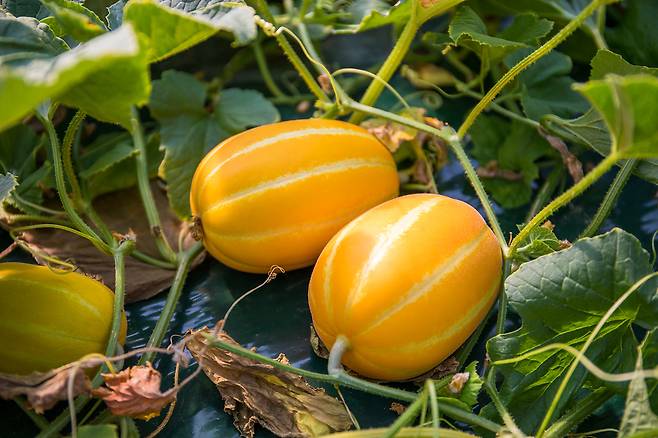
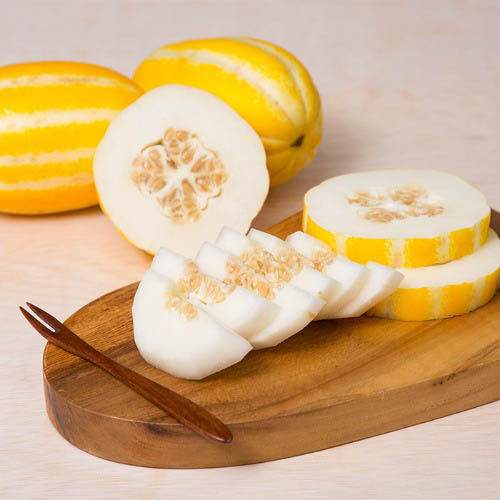
If there is one fruit that immediately feels exclusively Korean, it is Chamoe (참외). Although it belongs to the melon family, Korea has perfected its cultivation, making it a ubiquitous summer staple.
Recognizable by its bright yellow skin and white stripes, the flesh is crisp and refreshing, much like a cucumber, but carries the delicate sweetness of a honeydew. The biggest surprise for foreigners, however, lies in the center.
While visitors instinctively scoop out the seeds, in Korea, the soft white seed core—called Taejwa (태좌)—is strictly kept. Locals eat the crunchy flesh and the seed core together, as the core contains the highest concentration of natural sugars and juices.
The Peach Texture Debate: Mul-bok vs. Dtak-bok
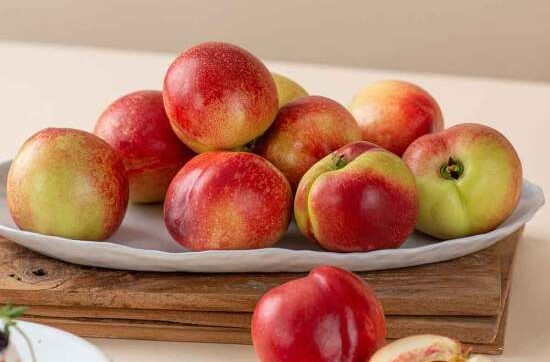
Few countries are as fiercely passionate about peach texture as Korea. The nation is playfully divided into two camps based on their preference for either soft or crunchy peaches.
- Mul-bok (물복): Meaning “water peach,” these are incredibly juicy, soft peaches. Their skins can often be peeled smoothly by hand, and biting into one means sweet juice will inevitably run down your fingers.
- Dtak-bok (딱복): Meaning “hard peach,” these are firm and crunchy. While some cultures might view a hard peach as unripe, in Korea, this crisp texture is intentional and beloved. They offer a clean sweetness and are eaten much like an apple.
Another must-try is the elusive Sinbi Peach (신비복숭아). Available for only a few short weeks in late June, it features the smooth skin of a nectarine on the outside but reveals the snowy, incredibly sweet, melting flesh of a white peach on the inside.
Campbell Early Grapes: The Slip-Skin Snacking Ritual
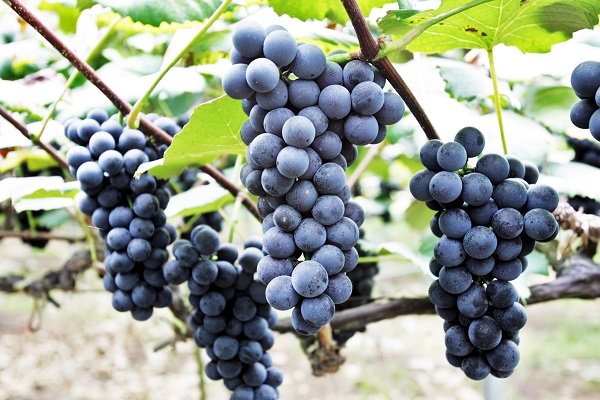
While seedless Shine Muscat grapes have surged in popularity, traditional Korean summers are defined by the dark purple Campbell Early Grapes (캠벨얼리 포도).
These grapes have a thick, slightly tart skin and a deeply sweet, jelly-like translucent interior. Because the skin is astringent, it is not meant to be swallowed, leading to a unique eating ritual.
Place one grape into your mouth and gently squeeze it between your tongue and palate. The sweet pulp effortlessly “slips” out of the skin. You swallow the sweet center and elegantly spit out the skin and seeds. It is a rhythmic, almost meditative snacking experience that defines Korean summer evenings.
Subak Hwachae: Korea’s Iconic Watermelon Punch
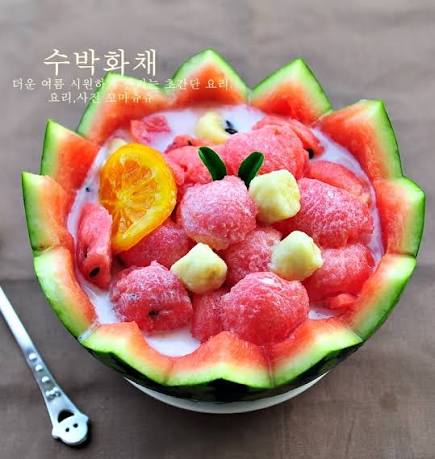
Watermelon is celebrated globally, but Korea elevates it into a vibrant communal dessert known as Subak Hwachae (수박화채). This is the ultimate antidote to the Korean monsoon heat.
To make it, a watermelon is cubed or scooped into a large glass bowl. It is then submerged in a sweet broth typically made of milk, a clear citrus soda (like Sprite) or a milky soda (like Milkis), condensed milk, and plenty of ice. The result is a fizzy, creamy, perfectly chilled punch that is visually stunning and incredibly refreshing.
Where to Buy Fresh Local Fruits in Korea
Depending on your travel style, finding high-quality fruit is an adventure in itself. Here is a guide on where to source these seasonal gems.
| Location | Vibe & Experience | Traveler Tips for Information Gain |
|---|---|---|
| Traditional Markets (e.g., Mangwon Market, Gwangjang Market) | Lively and authentic. Fruits are sold in bulk in colorful plastic baskets. | Perfect for bargains. Prices are fixed so no haggling is needed. Cash or the local ZeroPay (제로페이) app works best. |
| Large Supermarkets (e.g., E-mart, Hanaro Mart) | Modern, air-conditioned, with pristine produce sections. | Look for the “Brix” (브릭스) label on the packaging—this number scientifically guarantees the fruit’s sweetness level. |
| Convenience Stores (GS25, CU, 7-Eleven) | Accessible 24/7 on almost every corner. | Ideal for solo travelers. Look for “cup fruits” containing pre-washed, pre-sliced watermelon or Chamoe ready to eat on the go. |
| Neighborhood Fruit Trucks | Roving mini-trucks with megaphone announcements in residential areas. | If you hear a loudspeaker chanting “Subak! Chamoe!”, step outside. This is where you get the freshest daily harvests at the cheapest prices. |
The Best Time to Visit for Fruit Lovers
Although greenhouse cultivation allows early harvests to arrive in stores during spring (April to May), the heart of Korea’s fruit season remains the summer.
June brings a greater variety, including the rare Sinbi peaches and early grapes. However, if you want to enjoy the absolute widest selection, the highest Brix (sweetness) levels, and the best prices, July and August remain the undisputed peak months for fruit lovers visiting Korea.
More Essential Korean Summer Guides
A summer itinerary becomes even more rewarding when seasonal food is combined with other uniquely Korean traditions. Check out these guides to plan your perfect trip:
- 5 Must-Try Korean Fruits: Why Korea’s Seasonal Gems Taste Like Pure Magic
- What is Korean Boknal? Korea’s Hottest Summer Days Explained
- Yi-Yeol-Chi-Yeol: Inside Korea’s Traditional Hanjeungmak Kilns
- How to Spend a Perfect Indoor Day in Seoul (Heat & Rain)
- Woljeongsa Temple: Healing Forests & Historic Treasures
- Maekmundong: The Secret Purple Flowers of Korean Summer
- Korean Mudflat Experience: Clam Digging Guide
- Top 10 Autumn Festivals in South Korea to Experience in 2026
Korean Culture portal KCulture.com

The KCulture Editorial Team is dedicated to providing deep insights and accurate information about the vibrant world of Korean culture.