Maekmundong: The Secret Purple Flowers of Korean Summer
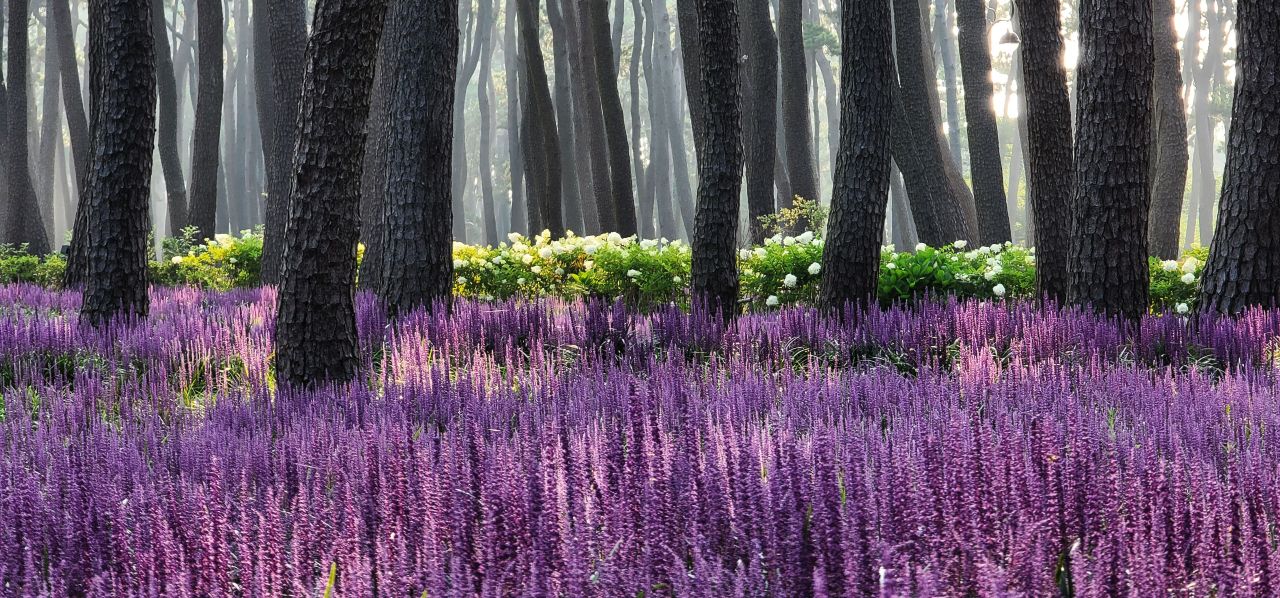
If you are wandering through a Korean park or forest in late summer and wondering about the stunning purple flowers blooming under the shade of large trees, they are Maekmundong (맥문동), also known as broadleaf liriope or Korean mondo grass. Blooming from late July to late August, this evergreen perennial is not just a landscaping favorite but a plant deeply rooted in traditional Korean medicine and royal history. Many first-time visitors mistake these vibrant carpets for lavender, but they are entirely different, thriving uniquely beneath ancient pine and willow canopies.
For travelers planning a summer trip to South Korea, the intense heat and humidity can be challenging, but spotting these purple waves in cool, shaded forests is a highly rewarding experience. This guide provides everything you need to know about Maekmundong, including why it covers Korean parks, the royal story behind it, the best local viewing spots for August 2026, and insider photography tips for capturing the perfect summer memory.
- What Is Korean Mondo Grass (Maekmundong)?
- Why Is Mondo Grass Planted in Korean Parks?
- The Royal History Behind the Purple Blooms
- Where to See the Most Beautiful Mondo Grass Flowers
- Experience the 2026 Janghang Mondo Grass Flower Festival
- Pro Photography Tips & Visitor Etiquette
- Frequently Asked Questions
What Is Korean Mondo Grass (Maekmundong)?
The purple flowers covering many historic sites and parks each summer belong to Maekmundong, scientifically known as Liriope platyphylla. Although many assume it is simply an ornamental flower, it is a highly resilient groundcover plant belonging to the asparagus family. It grows in dense clumps of narrow, dark green leaves and produces beautiful light-purple to violet flower spikes in the summer.
| Feature | Details |
|---|---|
| Scientific Name | Liriope platyphylla |
| Korean Name | Maekmundong |
| Flower Color | Light purple to vivid violet |
| Blooming Season | Late July to late August |
| Peak Viewing | Mid to late August |
| Winter State | Evergreen leaves remain lush year-round |
The Korean name itself reveals much about its nature:
- Maek (麥 – Barley): The roots and leaves resemble those of barley.
- Mun (門 – Gate/Door): It grows remarkably well even in the deep shadows of front gates and tall walls.
- Dong (冬 – Winter): It endures freezing Korean winters without losing its green color, earning it the nickname “immortal grass.”
Why Is Mondo Grass Planted in Korean Parks?
If you visit Korean royal tombs, temple grounds, or urban green spaces, you will notice these flowers blanketing the ground beneath massive trees. This is a deliberate, eco-friendly landscaping strategy used throughout the country.
Most common flowers and lawn grasses require direct sunlight and struggle to survive in deep shade. However, Maekmundong is a shade-tolerant plant that thrives under the thick canopy of pine and oak trees. Its deeply woven root system prevents soil erosion during Korea’s heavy summer monsoon rains and naturally blocks weeds from taking over. Because it offers purple flowers in summer, black berries in autumn, and green leaves in winter, it is the ultimate sustainable groundcover for Korean urban planning.
The Royal History Behind the Purple Blooms
Beyond its visual appeal, Maekmundong holds a prestigious place in traditional East Asian medicine. It has been historically prescribed to lower body heat, relieve dry coughs, and replenish hydration during scorching summers.
According to the Seungjeongwon Ilgi (Diaries of the Royal Secretariat), King Yeongjo—the longest-living monarch of the Joseon Dynasty who reached the age of 83—relied heavily on this plant. To survive the suffocating summer heat, royal physicians prepared Saengmaeksan (생맥산), a traditional herbal energy drink formulated primarily with Maekmundong roots. The same plant that provides a backdrop for modern travel photos was once a secret to royal longevity.
💡 Pro Tip: Cultural Storytelling
When exploring a Maekmundong forest with friends or family, sharing the story of King Yeongjo’s summer energy drink adds a fascinating layer of traditional K-wellness history to your sightseeing.
Where to See the Most Beautiful Mondo Grass Flowers
While these flowers are common across the country, certain destinations offer breathtaking, massive-scale blooms that attract photographers nationwide. Here are the top locations to add to your August itinerary.
1. Janghang Songnim Forest (장항송림산림욕장), Seocheon
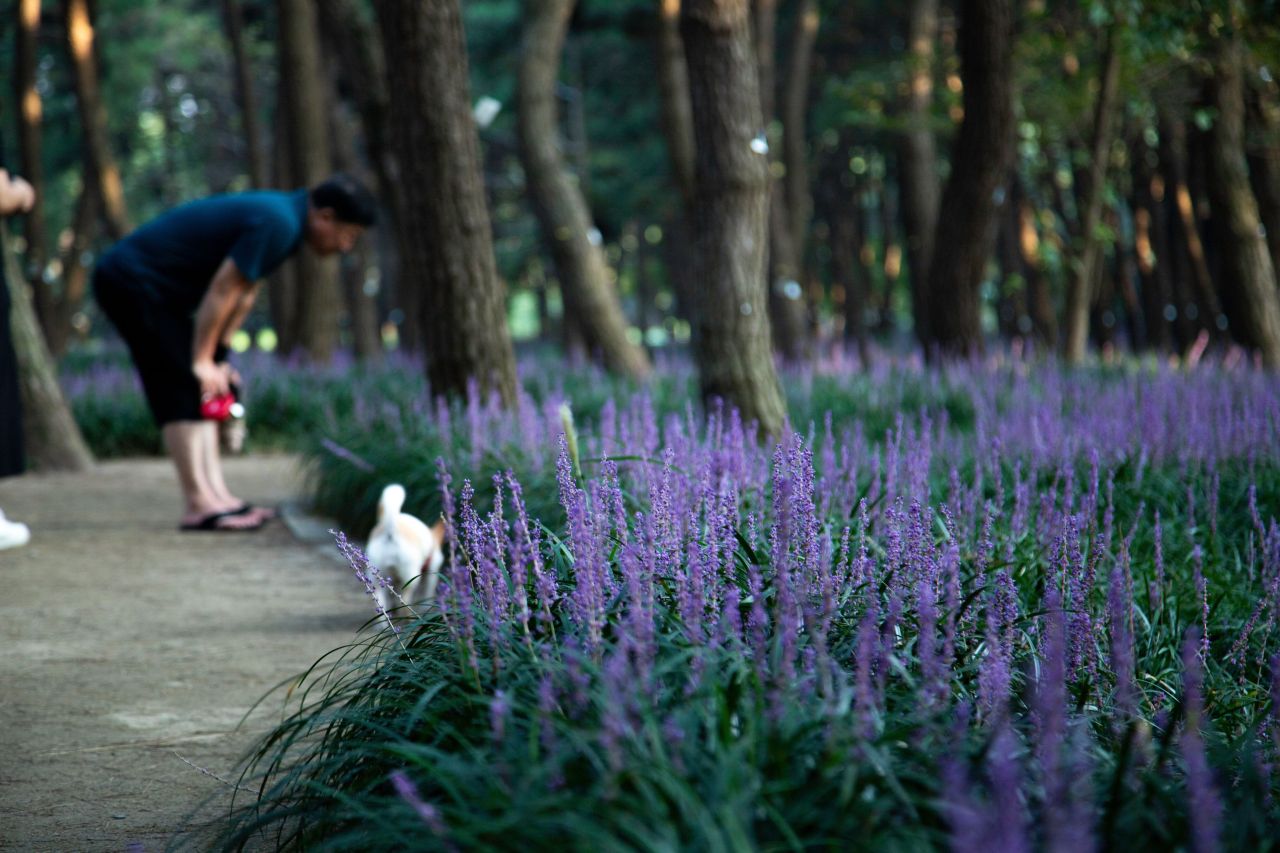
Located in Seocheon (서천) on the west coast, this is Korea’s largest Maekmundong colony. Over six million plants blanket the ground beneath a sprawling, centuries-old black pine forest right next to the ocean. Visitors can walk on elevated boardwalks and the famous Songnim Skywalk for panoramic views of the purple fields and the sea.
2. Seongbak Forest (성밖숲), Seongju
Designated as a Natural Monument, this historic forest in Seongju (성주) features 52 majestic willow trees that are 300 to 500 years old. The contrast between the twisted, ancient willow trunks and the delicate purple carpet below creates a mystical, fairy-tale atmosphere.
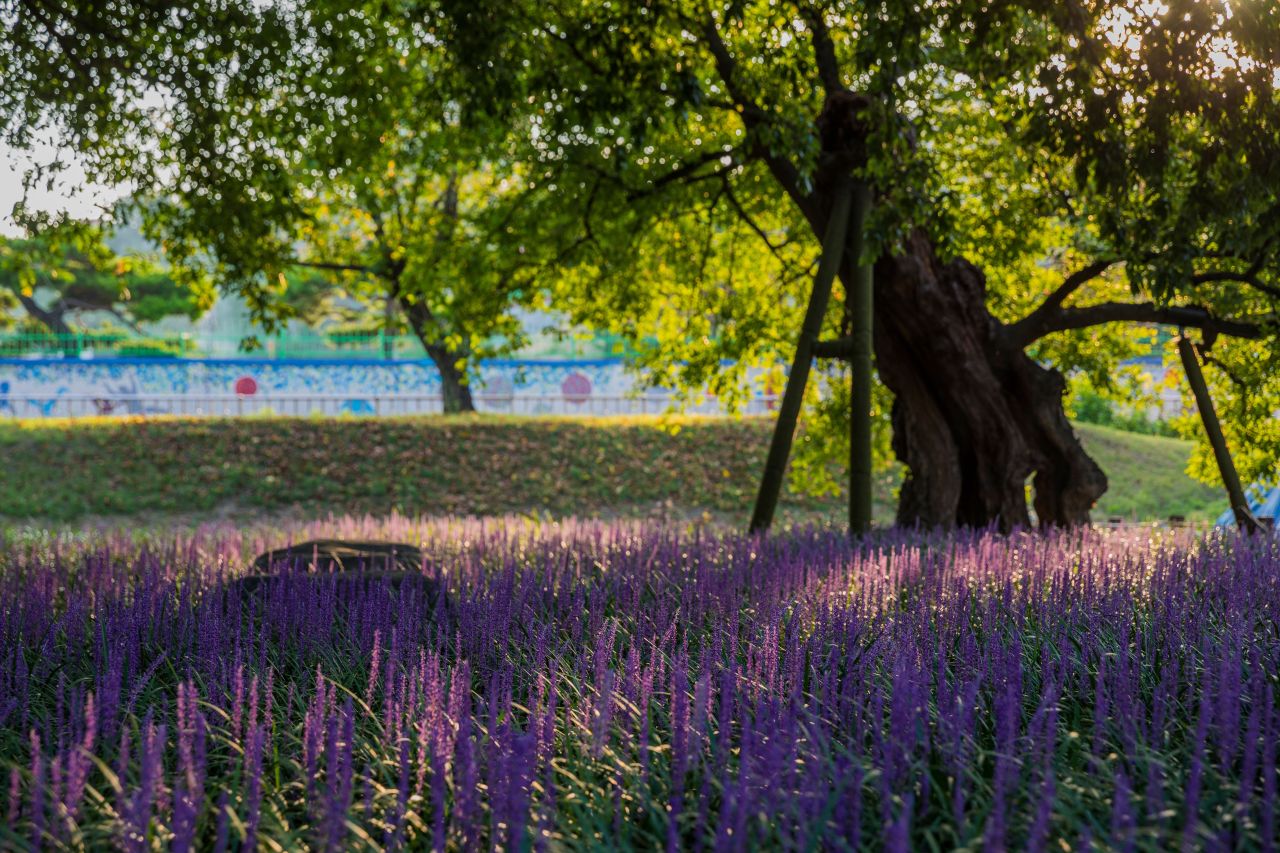
3. Hwangseong Park (황성공원), Gyeongju
If your travel plans include visiting the ancient capital of Gyeongju (경주), Hwangseong Park is a must-visit. The towering pine forest provides deep, cool shade, making it a perfect, relaxing photo stop after exploring the nearby Silla Dynasty ruins under the hot sun.
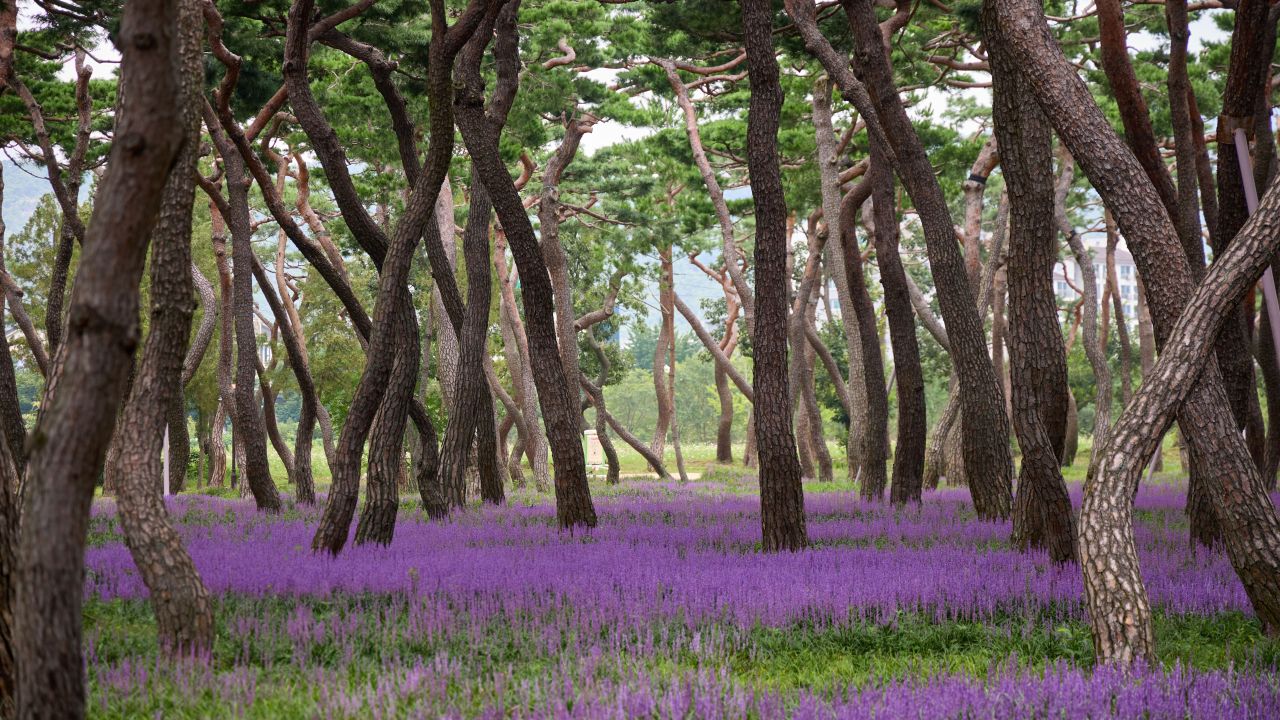
4. Munheung-dong Forest Trail (문흥동 맥문동 숲길), Gwangju
A hidden gem in Gwangju (광주), this urban trail is beloved by locals. Lined with giant oak trees, it offers a peaceful, uncrowded walking route surrounded by vibrant purple flowers, ideal for those seeking an off-the-beaten-path experience.
Experience the 2026 Janghang Mondo Grass Flower Festival
The best way to experience this seasonal phenomenon is by attending the Janghang Maekmundong Flower Festival at Janghang Songnim Forest. Scheduled to take place from August 28 to August 30, 2026, the festival transforms the quiet pine forest into a vibrant cultural hub, perfectly timed with the late-summer floral peak.
During the event, visitors can enjoy live acoustic busking, browse local food markets, and experience stunning night illuminations that cast an enchanting glow over the purple flowers. If you are scheduling a trip to Korea, aiming for this specific weekend is the ultimate way to experience both the breathtaking floral displays and the rich local celebrations.
Pro Photography Tips & Visitor Etiquette
Capturing the perfect Maekmundong photo requires knowing how to work with forest light and respecting the fragile environment. Local photographers use specific techniques to get those dreamlike, viral images.
- Chase the Morning Light: The ultimate time to visit is between 7:00 AM and 9:00 AM. When the morning sunlight cuts through the forest mist, it creates the “Tyndall effect”—dramatic rays of light illuminating the purple blooms.
- Get Low to the Ground: Drop your camera to knee-level. A low-angle shot aligns with the flower stalks, eliminating empty spaces and making the field look incredibly dense and endless.
- Use a Telephoto Lens: Using an 85mm lens (or 2x/3x optical zoom on a smartphone) compresses the background, creating a soft, continuous purple bokeh.
- Dress for Contrast: Since the environment is purely green and purple, wearing white, ivory, or pale yellow clothing ensures you stand out perfectly against the natural backdrop.
📌 Local Note: Protection & Comfort
Never step off the designated paths or coconut-fiber mats. Stepping into the soil instantly crushes the stems and kills the plants. Also, because these flowers grow in deep, damp forests, mountain mosquitoes and root gnats are very common. Always apply strong mosquito repellent and consider wearing light, breathable long pants.
Frequently Asked Questions
Is Maekmundong the same as lavender?
No, they are completely different plants. Lavender requires full, direct sunlight and dry soil, whereas Maekmundong is a shade-loving plant that naturally thrives under the canopy of large trees in humid environments.
Can I see these flowers in Seoul?
Yes, you can spot smaller patches in many Seoul parks and royal palaces. However, to witness the massive, awe-inspiring purple carpets, traveling to the dedicated forests in Seocheon, Seongju, or Gyeongju is highly recommended.
When exactly is the peak season in 2026?
While the first blooms appear in late July, the colors peak in intensity and density throughout August. Planning your visit to align with the Janghang Festival from August 28–30 guarantees an unforgettable viewing experience and cultural immersion.
Continue Exploring Korea’s Best Experiences:
- 5 Best Beaches in South Korea for Foreigners: 2026 Guide
- Top 10 Autumn Festivals in South Korea to Experience in 2026
- Korean Mudflat Experience: Clam Digging Guide
- Exploring Donggureung: Korea’s Largest Royal Tombs
- Ganghwa Island Day Trip Guide: Korea’s Historic Time Machine
- How to Spend a Perfect Indoor Day in Seoul (Heat & Rain)
- Why Visiting a Korean Saju Cafe is the Best Cultural Experience
- Suwon Hwaseong Festival 2026: Dates, Parade & Travel Tips
Korean Culture portal KCulture.com

Founder of Kculture.com and MA in Political Science. He shares deep academic and local insights to provide an authentic perspective on Korean history and society.