
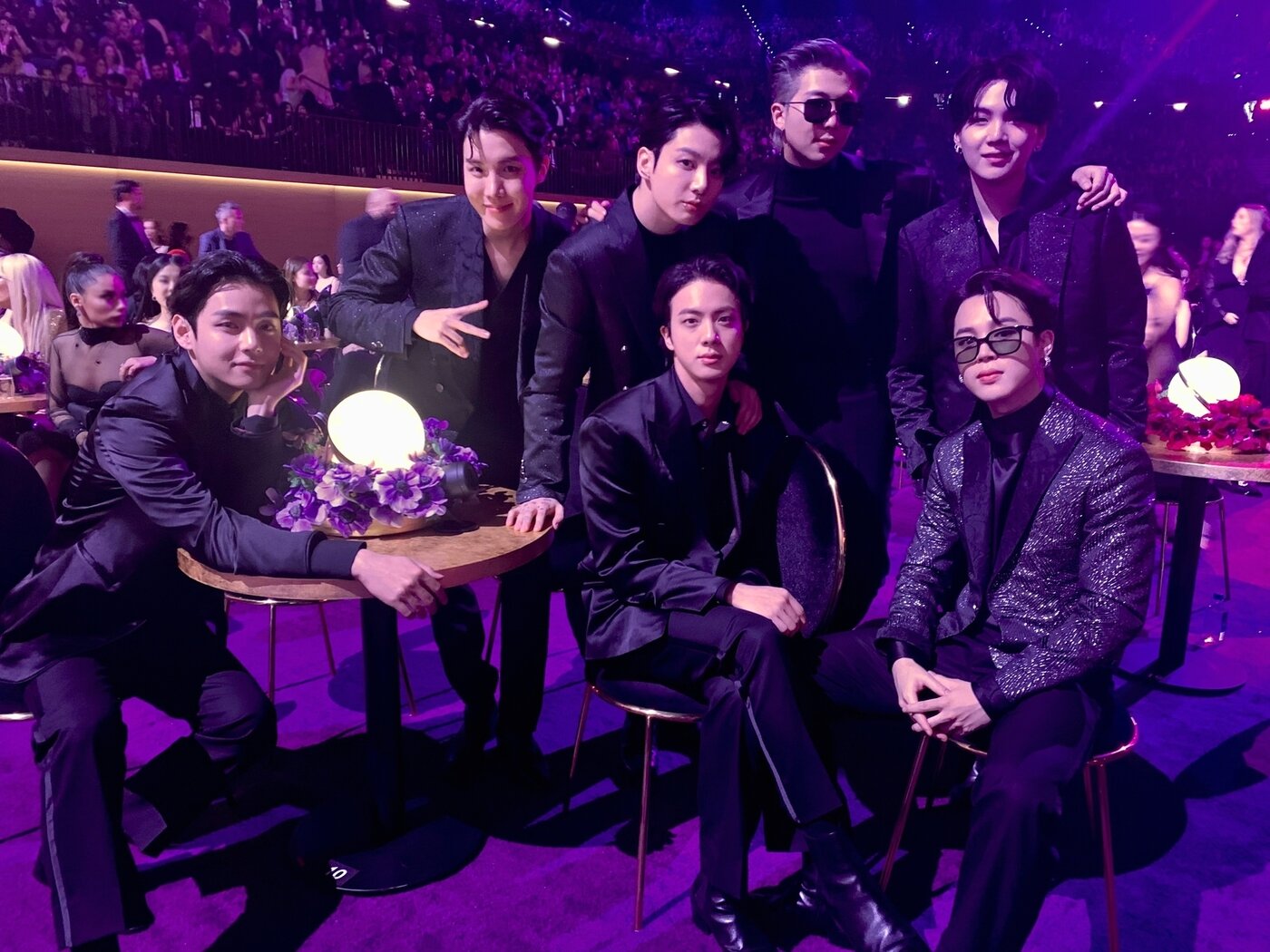
On July 29, 2026, all seven members of BTS officially announced a full boycott of the 69th Grammy Awards, refusing to submit their comeback album ARIRANG to protest the newly created Best Asian Pop Music Performance category. For fans and industry observers living in Korea, this unified decision is widely understood not just as a scheduling conflict, but as a profound declaration against the institutional ghettoization of non-Western artists. By pushing back against a system that attempts to isolate Asian music based on geography and language, BTS is challenging the institutional biases of the American music industry and demanding a fair global ecosystem.
Watching this story dominate morning news broadcasts and online communities, it is clear that this standoff is no longer just about trophies. It is about who gets to define “mainstream” in global pop music. This article explores the structural discrimination behind the Grammys’ new category, the global reactions to BTS’s dignified passive resistance, and what this boycott means for the future of K-pop.
- What Happened: The BTS Grammy Boycott, Explained
- The Illusion of Inclusion: Inside the New Category
- The “Ghettoization” Problem: Why a Genre Box Isn’t Neutral
- Echoes of Segregation: Recognition Without Equality
- The Deleted Videos Controversy
- What This Means for K-Pop’s Future
- FAQ
What Happened: The BTS Grammy Boycott, Explained
The timeline of events highlights why BTS’s move landed as a strategic protest. In June 2026, the Recording Academy (레코딩 아카데미) announced the addition of the Best Asian Pop Music Performance category for the upcoming 69th Grammy Awards. The headline addition was meant to recognize K-pop, J-pop, and other pop music originating from Asian markets.
However, on July 29, all seven members of BTS posted an identical statement across their personal social media accounts. They confirmed they would not submit their music for Grammy consideration this year, expressing a hope that music could be “heard and loved for what it is,” rather than being divided by region or language. The stakes are immense: ARIRANG, BTS’s first album since all members completed South Korea’s mandatory military service, shattered global records and topped the Billboard charts, yet none of it will be in contention for a Grammy.
| Date | Key Event | Details & Official Stance |
|---|---|---|
| June 2026 | Category Announcement | The Recording Academy announces five new categories, including “Best Asian Pop Music Performance.” |
| July 29, 2026 | BTS Boycott Declaration | All 7 members of BTS post a unified statement refusing to submit their new album to the Grammys. |
| July 29, 2026 | Academy Response | CEO Harvey Mason Jr. states he respects their decision but defends the category as a way to spotlight Asian artists. |
The Illusion of Inclusion: Inside the New Category
To fully grasp the backlash, one must look at the Recording Academy’s fine print. According to the eligibility guidelines, songs submitted for the Asian Pop category must feature “meaningful use” of one or more Asian languages. However, the Academy has not published a specific percentage threshold defining what “meaningful use” actually entails.
Because the tracks on ARIRANG are predominantly in English, the album might have been excluded from the Asian Pop category regardless. Furthermore, Grammy rules often restrict a track to a single performance category per year, meaning artists forced into the regional box cannot simultaneously compete for the prestigious Best Pop Duo/Group Performance. Ultimately, BTS was not just declining a box built for them; they were rejecting a fundamentally flawed framework.
The “Ghettoization” Problem: Why a Genre Box Isn’t Neutral
The Recording Academy has framed the new category as an act of inclusivity. Yet, critics point out a severe structural flaw: creating a separate lane for Asian pop while implicitly treating the General Field (Record, Song, and Album of the Year) as the domain of Western artists is a textbook example of institutional ghettoization. It adds a side door while quietly bolting the main gates.
Voices from Korea’s cultural establishment were quick to point out the hypocrisy. Ted Chung, CEO of Hyundai Card (현대카드) and a prominent figure in global music curation, questioned the logic directly:
“Is it a misunderstanding to see this as isolating Asian musicians into their own separate box? By this logic, should Bad Bunny or Ricky Martin also be separated and only given Latin music awards? Most BTS songs use English, so how does that fit? I have never heard of dividing music by language.”
💡 Pro Tip for Understanding Grammy Voting: The “General Field” represents the highest tier of peer recognition. When artists are placed into regional categories, their voting pool shrinks, making it exponentially harder for them to sweep the major, all-genre awards.
Echoes of Segregation: Recognition Without Equality
The controversy has sparked comparisons to the historical “separate but equal” doctrine. By placing non-Western artists in their own enclosed category, institutions can reap the benefits of massive global viewership and social media engagement without ever challenging the traditional, Eurocentric hierarchy of the music industry.
Global media outlets like TIME and The Guardian have echoed these sentiments, noting that a well-intentioned separate category still functions as a subtler form of exclusion. BTS’s diplomatic yet razor-sharp statement targets this historical marginalization, declaring that artistic excellence should not be contained within arbitrary geographic borders.
The Deleted Videos Controversy
Adding fuel to the fire, fans noticed that archival performance footage of BTS had disappeared from the Grammys’ official website mere days after the boycott announcement. This immediately sparked rumors of retaliation from the Academy.
📌 Local Note: While this detail has been heavily cited on Korean entertainment forums as evidence of bad faith, the Recording Academy explained that the removal was due to standard 1-year licensing expirations. In the music industry, timing alone—no matter how suspicious—does not always equal malicious intent.
What This Means for K-Pop’s Future
The ripple effects of BTS’s passive resistance are already altering the landscape of the Korean music industry. Other K-pop agencies now face a difficult dilemma: submit to the new Asian Pop category and risk accepting a marginalized lane, or skip the Grammys in solidarity.
For years, the Grammy Awards served as a “North Star” for K-pop’s global expansion. However, by stepping away from the Recording Academy’s validation, BTS exposes the shrinking legitimacy of an institution struggling to adapt to modern music. Their stance proves that for top-tier Korean acts, artistic dignity and a demand for a truly equal playing field now outweigh the desire for a golden gramophone.
FAQ
Did BTS boycott the entire Grammy Awards, or just the new Asian Pop category?
BTS declined to submit any music at all for the 69th Grammys. This effectively removes them from consideration across all fields, including the General Field awards for which they have previously been nominated.
Would BTS’s new music have qualified for Best Asian Pop Music Performance?
Not necessarily. The category requires “meaningful use” of an Asian language, and much of the ARIRANG album consists of English-language tracks, which could have disqualified them from this specific category regardless.
Are other K-pop acts joining the boycott?
As of late 2026, no other major K-pop acts have confirmed a matching boycott. However, many entertainment agencies are closely reevaluating their submission strategies in light of the controversy.
If you are interested in exploring the broader context behind Korean artists pushing back against institutional boundaries and the rich history of Korean music, check out these related guides:
- Who Are CORTIS? The K-pop Group Breaking Billboard Records
- Beyond K-Pop: The Timeless Music of Kim Kwang-seok
- Inside AKMU: The Inspiring Journey of K-Pop’s Genius Siblings
- March for the Beloved: The Anthem of Asian Democracy
- South Korea’s Journey to Democracy: From Gwangju 1980 to the 2024 Martial Law Attempt
Korean Culture portal KCulture.com

Founder of Kculture.com and MA in Political Science. He shares deep academic and local insights to provide an authentic perspective on Korean history and society.