Beyond K-Pop: Why Kim Kwang-seok Still Defines the Soul of Korean Music
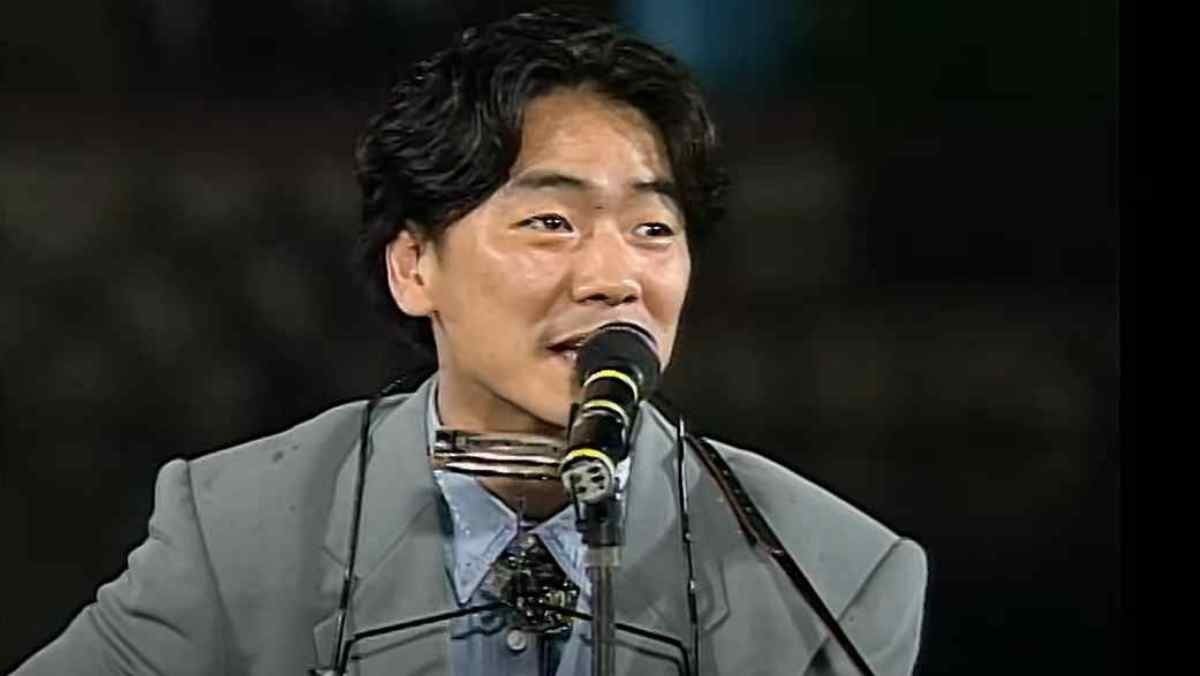
For many international listeners, Korean music begins and ends with K-pop idols, flashy choreography, and global groups like Seo Taiji and Boys or g.o.d. But Korea’s musical identity runs far deeper than idol culture. One of the most beloved examples is Kim Kwang-seok (김광석), a folk singer whose voice still moves millions of Koreans decades after his death.
Unlike modern idol performers, Kim Kwang-seok stood on stage with little more than an acoustic guitar, a harmonica, and raw emotion. Yet his songs became timeless anthems about youth, loneliness, love, aging, and the quiet struggles of ordinary life. Even today, especially among Koreans now in their 40s to 60s, his music remains deeply personal and unforgettable.
This article explores Kim Kwang-seok’s debut, his legendary songs, the emotional power of his lyrics, his cultural impact during Korea’s democratic transition, and the tragic story behind his untimely death.
- Beyond K-Pop and Idol Music
- Who Was Kim Kwang-seok?
- From Student Movements to National Icon
- The Songs That Defined Generations
- Why His Lyrics Still Feel Timeless
- Why Koreans in Their 40s to 60s Still Love Him
- His Legendary Live Performances
- The Tragedy of His Death
- How Younger Generations Discovered Him Again
- Where to Start Listening
- Related Korean Music Stories
Beyond K-Pop and Idol Music
K-pop is undeniably Korea’s biggest global cultural export. Groups with polished performances and sophisticated production have transformed Korean music into a worldwide phenomenon. But inside Korea, many people still turn to older folk and ballad musicians when they want comfort, nostalgia, or emotional honesty.
Kim Kwang-seok represents that side of Korean music perfectly. If BTS reflects Korea’s modern global identity, Kim Kwang-seok reflects its emotional memory.
For English-speaking readers, he is often described as a mix between Bob Dylan and Bruce Springsteen. Like Dylan, he used poetic lyrics to reflect society and ordinary people. Like Springsteen, he sang with warmth and humanity about everyday struggles.
💡 Local Note: In Korea, it is very common to hear Kim Kwang-seok songs in small bars, acoustic cafés, university festivals, and even family karaoke rooms. His music has become part of Korean collective memory.
Who Was Kim Kwang-seok?
Kim Kwang-seok was born in 1964 and grew up during a turbulent era of Korean history marked by political tension, rapid modernization, and democratization movements.
He first became active in music through “Song Seekers” or Noraereul Channeun Saramdeul (노래를 찾는 사람들), often shortened to “Nochatsa,” a socially conscious folk music collective formed in the 1980s. The group became closely connected with university students and democracy activists.
Later, Kim joined the folk-pop band Dongmulwon (동물원), whose emotional acoustic sound quickly became popular. Songs such as “On the Street” and “A Letter Written on a Cloudy Autumn Sky” introduced audiences to his uniquely clear yet melancholic voice.
In 1989, he officially began his solo career, and that is when Kim Kwang-seok became a cultural icon rather than simply a singer.
From Student Movements to National Icon
To understand why Kim Kwang-seok became so beloved, it helps to understand Korea in the 1980s and 1990s.
During the 1980s, South Korea was still under authoritarian rule, and university students were heavily involved in democratization protests. Music played a powerful role during this era. Folk songs were not simply entertainment; they were emotional support, political expression, and social solidarity.
Kim Kwang-seok’s early music carried that spirit.
But the Korea of the 1990s changed rapidly. Democracy had finally arrived, and the country entered a period of aggressive economic growth and capitalism. Many young people suddenly felt emotionally lost. The collective struggle had ended, but personal loneliness remained.
This is where Kim Kwang-seok’s solo music became transformative.
Instead of singing about political movements, he began singing about ordinary life: heartbreak, aging, uncertainty, friendship, regret, and the fear of time passing too quickly. His songs captured the emotional transition of an entire generation.
The Songs That Defined Generations
Kim Kwang-seok released only a handful of studio albums, but many of his songs became permanent classics in Korean music history.
| Song | Meaning and Cultural Impact |
|---|---|
| Although I Loved You (사랑했지만) | A heartbreaking ballad showcasing his emotional vocal style and deep sincerity. |
| A Soldier’s Letter (이등병의 편지) | Perhaps the most iconic Korean military farewell song. Nearly every Korean man recognizes its emotional weight because of Korea’s mandatory military service. |
| Around Thirty (서른 즈음에) | Widely considered one of the greatest Korean songs ever written. It reflects the fear of aging and the realization that youth quietly disappears. |
| Story of an Old Couple in Their 60s (어느 60대 노부부 이야기) | A devastatingly emotional song about lifelong love, aging, and loss. Even younger listeners often cry hearing it. |
Among these songs, “Around Thirty” remains especially legendary.
Many Koreans say they truly understand the song only after reaching their late twenties or thirties. The lyrics speak not dramatically, but quietly, about dreams fading and time slipping away.
📌 Local Note: In Korea, “Around Thirty” is almost treated as a life ritual song. People often revisit it during career struggles, breakups, or moments of emotional burnout.
Why His Lyrics Still Feel Timeless
One reason Kim Kwang-seok continues to resonate is his extraordinary lyrics.
Unlike modern pop songs focused mainly on trends or hooks, Kim’s music feels almost literary. His lyrics are filled with poetic imagery, emotional restraint, and quiet reflection.
He rarely sang with dramatic anger or exaggerated sadness. Instead, he expressed emotion in a deeply human and conversational way. That subtle honesty became his greatest strength.
Another important cultural concept connected to his music is “Han” (한), a uniquely Korean emotional feeling often described as unresolved sorrow, longing, endurance, and quiet resilience.
Kim Kwang-seok never explicitly tried to represent Han, but many Koreans feel his voice naturally carried it.
Why Koreans in Their 40s to 60s Still Love Him
For Koreans now in their 40s, 50s, and 60s, Kim Kwang-seok is more than a singer. He represents their youth.
His generation experienced extraordinary change: dictatorship, democratization, economic transformation, military service, intense academic pressure, and the rise of modern Korean society. His songs became emotional companions during all of it.
Many middle-aged Koreans today still associate his music with university campuses, cassette tapes, rainy streets, cheap student bars, first love, and uncertain futures.
That emotional connection never disappeared.
Even younger Koreans who did not live through that era often feel the sincerity in his music. In a highly competitive and fast-moving society, his songs still provide comfort.
His Legendary Live Performances
Kim Kwang-seok was famous not only for his studio recordings but also for his live performances.
At a time when large arena concerts were becoming common, he focused on intimate small-theater performances where audiences could feel every breath and lyric. He eventually achieved more than 1,000 live small-theater concerts, an extraordinary accomplishment in Korea.
These performances helped build his reputation as an artist who genuinely communicated with listeners rather than simply entertaining them.
💡 Pro Tip: If you visit Daegu (대구), Kim Kwang-seok’s hometown, you can explore Kim Kwang-seok Street (김광석 다시그리기길), a mural-filled cultural street dedicated to his life and music.
The Tragedy of His Death
On January 6, 1996, Kim Kwang-seok was found dead at the age of 31. Authorities concluded that he had died by suicide.
The news shocked the entire country.
Because he had continued performing actively and discussing future projects shortly before his death, many fans struggled emotionally to accept the tragedy. Over the years, public discussions and speculation continued, and documentaries revisited unanswered questions surrounding the case.
However, beyond the controversy, most Koreans remember the overwhelming sadness of losing a voice that had comforted an entire generation.
His death also transformed him into a symbolic figure frozen in youth forever. For many fans, Kim Kwang-seok remains emotionally alive through his songs.
How Younger Generations Discovered Him Again
One fascinating aspect of Kim Kwang-seok’s legacy is how younger generations continue discovering his music.
Modern Korean artists frequently cover his songs on television programs, survival competitions, and live concerts. Artists like IU and many indie musicians have reinterpreted his classics for younger audiences.
This constant rediscovery keeps his music culturally relevant.
Where to Start Listening
If you are listening to Kim Kwang-seok for the first time, these songs are the best introduction:
- Around Thirty — for understanding Korean nostalgia and adulthood
- A Soldier’s Letter — for understanding Korean youth and military culture
- Although I Loved You — for emotional ballad storytelling
- Story of an Old Couple in Their 60s — for emotional depth and lyrical beauty
- On the Street (거리에서) — for his earlier folk-pop sound
Even without fully understanding Korean lyrics, many listeners are surprised by how emotionally direct his voice feels.
That may be the secret behind Kim Kwang-seok’s lasting legacy. Trends change, genres evolve, and global music industries transform. But honest emotion never becomes outdated.
Related Korean Music Stories
- Inside AKMU: The Inspiring Journey of K-Pop’s Genius Siblings
- Who is HANRORO? The Voice of Korea’s Indie Rock Wave
- The Rose Korean Band: Indie Journey to Global Stardom
- Who Are CORTIS? The K-pop Group Breaking Billboard Records
Korean Culture portal KCulture.com

Founder of Kculture.com and MA in Political Science. He shares deep academic and local insights to provide an authentic perspective on Korean history and society.