Introduction & Synopsis: The War We Weren’t Meant to See
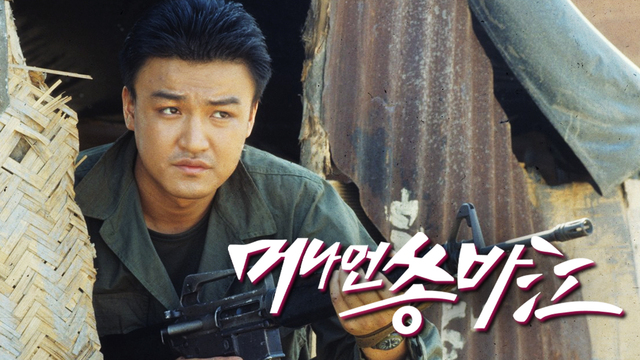
Long before the global K-drama phenomenon brought us slick thrillers and epic romances, Korean television grappled with its own painful history. Aired in 1993, The Faraway Ssongba River (머나먼 쏭바강) stands as a monumental work in this tradition. Produced by a then-fledgling SBS, this is not a glorious war epic but a raw, unflinching anti-war drama. The series follows a platoon of South Korean soldiers dispatched to the Vietnam War, chronicling their harrowing experiences on the battlefield. It navigates the brutal realities of combat, the deep bonds of camaraderie forged in chaos, and a tragic, poignant love story between a Korean soldier and a Vietnamese woman, forcing a nation to confront a chapter of its past it had long preferred to romanticize.
Beyond the Battlefield: A Nation’s Reckoning
To understand the seismic impact of The Faraway Ssongba River, one must understand the context of South Korea in the early 1990s. For decades following the conflict, South Korea’s participation in the Vietnam War (1964-1973) was framed almost exclusively through a lens of national pride and anti-communist duty. As a key ally of the United States, Korea dispatched over 300,000 troops, and the official narrative celebrated their prowess and sacrifice in the fight for democracy.
This drama shattered that simplistic narrative. Emerging from a newly democratized Korea where censorship had loosened, the show dared to ask uncomfortable questions. It was one of the first mainstream media portrayals to shift focus from heroic exploits to the deep psychological trauma—the deep-seated “Han” (한, a sense of unresolved grief and resentment)—inflicted upon the young soldiers. More radically, it humanized the Vietnamese people, portraying them not as a faceless enemy but as civilians and fighters caught in the crossfire, suffering immense loss at the hands of all foreign powers, including Koreans. This was a profound and necessary course correction in the national consciousness.
Narrative Analysis: The Human Cost of Conflict
At its core, the drama’s storytelling is deeply humanistic. It eschews grand military strategy for intimate, ground-level perspectives. The plot isn’t driven by victorious battles but by the day-to-day struggle for survival and the erosion of innocence. The soldiers are not superheroes; they are scared, flawed, and morally conflicted young men forced to make impossible choices. The violence is not glorified; it is depicted as chaotic, tragic, and ultimately futile.
The central romance is more than a simple love story. It functions as a powerful symbol of a human connection that transcends the political and military divides. This relationship forces the protagonist—and by extension, the audience—to see the humanity of “the other,” making the anti-war message personal and devastatingly effective. The narrative powerfully argues that in a war of ideologies, the greatest casualty is always our shared humanity.
The Pulse of the Time: A National Phenomenon
Upon its release, The Faraway Ssongba River was not just a hit; it was a cultural event. The series captivated the nation, achieving exceptionally high viewership ratings that reflected its resonance with the public. It sparked widespread debate in households and media across the country, forcing veterans and civilians alike to re-examine a difficult period of their history. For many, it was the first time they had seen the war portrayed with such honesty, acknowledging the suffering on all sides. The drama’s raw realism and empathetic tone validated the unspoken trauma of countless veterans and opened a new chapter in how Korea remembered its role in the Vietnam War.
Cast Spotlight: An Unforgettable Performance
Park Joong-hoon as Sergeant Hwang Il-cheon
Already a superstar on the big screen, Park Joong-hoon’s decision to lead a television series was significant. His portrayal of the central character is nothing short of legendary. He masterfully captures the transformation of a naive young man into a hardened, traumatized soldier. Park’s performance is visceral, conveying immense pain, fear, and moral anguish often with just a look, creating one of the most memorable portraits of a soldier in Korean media history.
A Powerful Ensemble
Supporting Park was a formidable cast, including stellar actors like Lee Geung-young and Kwon Hae-hyo. They brought the platoon to life, creating a believable and heartbreaking depiction of “jeonwoo-ae” (전우애)—the unbreakable, familial bond between comrades-in-arms. Their collective performance is the emotional anchor of the series, making the inevitable losses feel personal and profound.
Global Viewing Guide
Finding classics from this era can be challenging, but dedicated fans have options. Here are the most likely places to find The Faraway Ssongba River:
- SBS All VOD / SBS World YouTube: The official broadcaster is often the primary source for its classic library, sometimes with subtitles available on their international YouTube channel.
- Wavve / Kocowa: As Wavve is a joint venture that includes SBS, its international partner Kocowa is a potential platform for classic titles.
Final Verdict
The Faraway Ssongba River is essential viewing. It is more than just a drama; it is a historical document and a landmark piece of television that forever changed a national conversation. For global fans seeking to understand the deeper currents of Korean history and the origins of K-drama’s narrative power, this challenging, heartbreaking, and profoundly important series is an absolute must-watch.

The KCulture Editorial Team is dedicated to providing deep insights and accurate information about the vibrant world of Korean culture.