Introduction & Synopsis
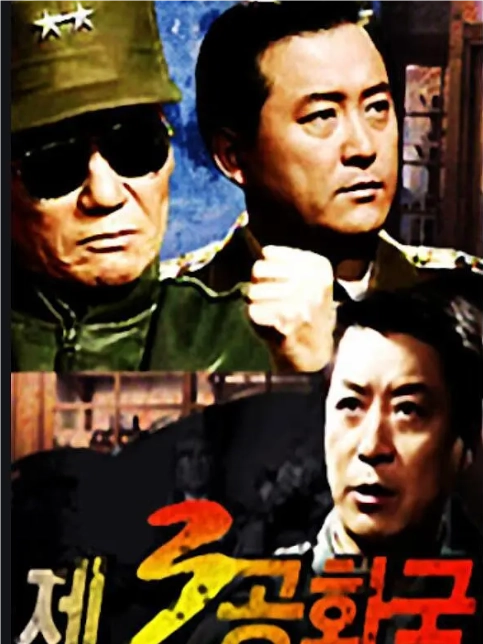
Long before slick thrillers and global romances defined the K-drama landscape, there was a genre of television that dared to chronicle a nation’s turbulent soul. MBC’s 1993 masterpiece, The Third Republic (제3공화국), is the crown jewel of this tradition. This is not a fictional tale but a gripping political docudrama that meticulously reconstructs one of the most pivotal and controversial periods in modern Korean history: the rise of President Park Chung-hee. The story begins with the military coup of May 16, 1961, and follows the subsequent decade of authoritarian rule, rapid industrialization, and intense political strife leading up to the 1972 Yushin Constitution that forged the South Korea we know today. It’s a dense, powerful narrative driven by real historical figures grappling with the weight of a nation’s destiny.
A Nation’s Reckoning on Screen
To understand the impact of The Third Republic, one must understand the Korea of 1993. For the first time in over three decades, the country had a civilian president, marking a definitive end to military-led rule. The air was thick with a desire to re-examine the recent past, particularly the legacy of Park Chung-hee. He was—and remains—a deeply polarizing figure: the dictator who crushed democracy, but also the architect of the “Miracle on the Han River,” the economic boom that lifted South Korea from post-war poverty into the global spotlight. This drama was a national conversation starter, allowing a generation to openly debate the light and shadows of the leader who had defined their lives. By putting these events on television, MBC wasn’t just creating entertainment; it was facilitating a form of public history, forcing viewers to confront the complex trade-offs between economic progress and human rights.
Narrative Analysis: The Documentary Heartbeat
What makes The Third Republic timeless is its quasi-documentary storytelling. The series eschews fictional embellishments for a sober, fact-driven narrative. Using a narrator to bridge scenes and provide historical context, the drama unfolds less like a typical series and more like a living history book. Its compelling nature doesn’t come from invented conflicts but from the raw tension of real political maneuvering: backroom deals, intelligence agency plots, constitutional crises, and diplomatic standoffs. The story’s power lies in its authenticity, showing how monumental decisions that shaped millions of lives were made by flawed, ambitious men in smoke-filled rooms. It’s a masterclass in political thriller storytelling where the stakes are not just a character’s fate, but the entire country’s future.
The Pulse of the Time
Upon its release, The Third Republic was a sensation. In an era without streaming services, families across the nation would gather to watch each episode. It dominated conversations at workplaces and dinner tables. The drama was lauded for its courage in portraying powerful figures, many of whom were either still alive or had passed away only recently. Its meticulous research and commitment to historical accuracy set a new standard for political dramas, cementing the reputation of MBC’s “Republic” series (which includes dramas about the First, Second, Fourth, and Fifth Republics) as prestigious, must-watch television events.
Cast Spotlight: Embodying History
The series’s phenomenal success rests on the shoulders of its cast, who delivered career-defining performances by transforming into historical icons.
- Lee Jin-soo as Park Chung-hee: This is arguably one of the most legendary portrayals in Korean television history. Lee Jin-soo didn’t just play the President; he inhabited him. He captured Park’s quiet but immense intensity, his Gyeongsang dialect, and the complex mix of steely determination and deep-seated insecurity that characterized the leader.
- Park Geun-hyung as Kim Jong-pil: As Park’s chief co-conspirator in the coup and a brilliant political strategist in his own right, Park Geun-hyung portrayed the intellectual and often conflicted “number two” man with nuance and gravitas.
- Lee Jung-gil as Kim Dae-jung: Portraying the charismatic opposition leader who emerged as Park Chung-hee’s fiercest political rival, Lee Jung-gil delivered a powerful performance capturing Kim’s eloquence and determination.
Global Viewing Guide
Finding this classic with subtitles can be a challenge, but it’s not impossible for dedicated fans of Korean history and television. Here are the best places to look:
- MBC Drama Classic YouTube Channel: MBC has been actively uploading its vast archive to YouTube. This is the most likely place to find official uploads of the series, sometimes with community-contributed or official subtitles.
- Wavve: For viewers in South Korea, the drama is available for streaming on the platform Wavve.
Final Verdict
The Third Republic is not a casual watch. It is essential viewing. For any K-drama fan who wishes to look beyond modern trends and understand the historical and political foundations of contemporary South Korea, this drama is an unparalleled educational and artistic achievement. It is a powerful, unflinching look at the forging of a nation—a television epic that proves the most dramatic stories are the ones that actually happened.

The KCulture Editorial Team is dedicated to providing deep insights and accurate information about the vibrant world of Korean culture.