
Korean Actors With Theater Backgrounds: The Stage Behind the Screen
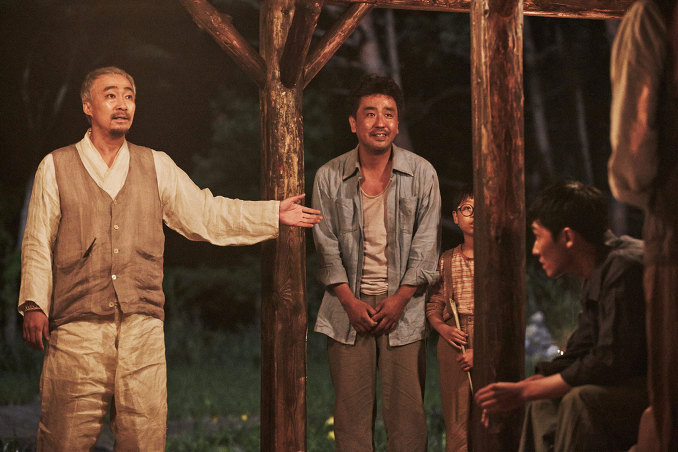
A supporting character appears for only a few minutes in a Korean drama, and somehow the scene stays with you longer than the plot twist. You look up the actor and discover a name you had never heard before. Korean actors with theater backgrounds are part of the answer: many performers spent years working in plays and musicals before wider audiences met them on camera. Their stories lead from Seoul’s small theaters to Parasite, Squid Game, and some of television’s most memorable supporting roles.
That is part of the answer, rather than a secret formula for every actor. Some were spotted during a performance; others spent years doing theater and small screen parts at the same time. And a stage reputation could be substantial even while the same performer looked like a newcomer to television viewers. Here is how those paths crossed—and what the stage may have given them.
- Daehangno: Seoul’s Theater Neighborhood
- Korean Actors With Theater Backgrounds You Know
- When Directors Went to the Theater
- What Stage Work Can Teach an Actor
- Why Screen Stars Return to the Stage
- Other Paths: Idols, Schools, and Acting Classes
- The Work and Economics Behind the Curtain
- How to Experience Korean Theater in Seoul
- Keep Exploring Korean Screen Culture
Daehangno: Seoul’s Theater Neighborhood
To understand this story, start in Daehangno (대학로), the performing arts neighborhood around Hyehwa Station (혜화역) in central Seoul. Its theaters range from intimate rooms where the audience sits close to the actors to larger venues staging plays and musicals. The Korea Tourism Organization describes the area as a place where performances take place daily. For an international viewer, it offers a surprising thought: someone you know from a streaming hit may once have been working a few blocks away in a production that never reached your screen.
Daehangno is an important center of the story, but it is not every actor’s birthplace. Theater companies, university productions, regional stages, and musical productions have also shaped the performers now seen in Korean films and dramas. Nor was stage work merely a waiting room for television. For many of these artists, it was a career in its own right.

Korean Actors With Theater Backgrounds You Know
The next time a small part catches your eye, it is worth asking what the actor was doing before the camera found them. These careers give a sense of the range:
| Actor | Where international viewers may know them | Stage-to-screen path |
|---|---|---|
| Song Kang-ho | Parasite, Memories of Murder | Joined the theater company Yeonwoo Stage in 1991; later drew director Lee Chang-dong’s attention in a play. |
| Yeom Hye-ran | The Glory, When Life Gives You Tangerines | Performances drew the attention of both a film director and, years later, a television writer. |
| Park Hae-soo | Squid Game, Prison Playbook | Worked in theater and musicals before Prison Playbook became a television breakthrough. |
| Kim Shin-rok | Hellbound, Reborn Rich | Made her stage debut in 2004 and spent years in theater before becoming widely familiar on screen. |
| Jin Seon-kyu | The Outlaws, Extreme Job | Built a theater career while auditioning and taking smaller film roles; The Outlaws brought wider recognition. |
| Jeon Mi-do | Hospital Playlist | Was already an established musical and theater performer when television audiences discovered her. |
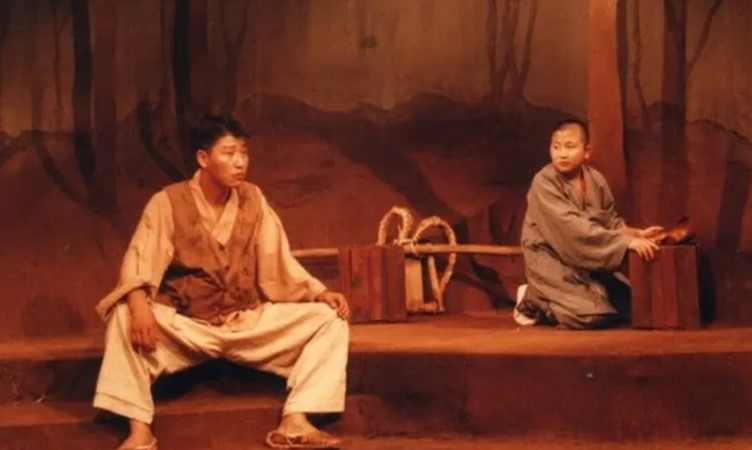
Take Song Kang-ho. Before the Oscar-winning Parasite, before he became one of Korean cinema’s defining actors, he performed with Yeonwoo Stage. His first film appearance was a small role in The Day a Pig Fell into the Well (1996). Director Lee Chang-dong subsequently saw him in the play Bi Aeonso (비언소) and cast him in Green Fish (1997); No. 3 later that year made a far bigger public impression. The first movie, the theater discovery, and the breakthrough are three different steps.
For another version of that delayed recognition, think of Park Hae-soo. He had appeared on television before Prison Playbook (2017), so calling it his acting debut would erase earlier work. Yet it was the drama that made a long-working stage performer feel new to many viewers; Squid Game later introduced him to a global audience. Or think of Kim Shin-rok: her commanding work in Hellbound felt like a discovery to many streaming viewers, even though her theater career stretched back to the early 2000s.
The pattern is especially vivid in supporting roles. Jin Seon-kyu helped establish the theater group Ganda and accumulated stage and smaller screen credits before his formidable turn as Wi Seong-rak in The Outlaws (2017). A viewer seeing him for the first time could reasonably mistake a breakthrough for a beginning.
When Directors Went to the Theater
Sometimes the connection between the two worlds is wonderfully concrete: a future collaborator was sitting in the audience.
Yeom Hye-ran: Two Performances, Two Doors
Yeom Hye-ran performed with Yeonwoo Stage long before audiences knew her as Kang Hyeon-nam in The Glory. Director Bong Joon-ho saw her in the play Yi and cast her in Memories of Murder (2003). Years later, writer Noh Hee-kyung saw her in ‘night, Mother, a connection that led to the series Dear My Friends (2016). This is not a tale of one magical audition: it is a career in which distinct theater performances opened distinct screen opportunities.
Kim Seon-ho and Lee Kyu-hyung: A Role Seen Live
Kim Seon-ho began onstage in New Boeing Boeing in 2009 and attracted a theater following before Start-Up and Hometown Cha-Cha-Cha made his face familiar worldwide. He has described being invited to audition for Good Manager after its team saw him in Closer. For theatergoers he was already a known performer; for many television viewers he was suddenly a fresh discovery.
Lee Kyu-hyung’s casting offers an even sharper example. Prison Playbook director Shin Won-ho described seeing him in the play Come See Me and connecting that performance to the character Han-yang, nicknamed “Looney.” Lee had worked in film, television, theater, and musicals before the series; the director was responding to a skill he had seen in a live role, not discovering a person who had never acted on camera.
These are memorable cases, not a rule for how casting always works. Performers still audition, take tiny parts, meet collaborators, and wait for the right character. But they explain why the face that steals a scene can arrive with far more experience than a short screen résumé suggests. If that is the part of a show you enjoy most, try watching the ensembles in our Made in Korea Season 2 review or our review of Our Sticky Love with the supporting cast in mind.
What Stage Work Can Teach an Actor
In a play, the actor must carry a character through the entire performance, react to partners in real time, and find the emotional turn again the next night. Rehearsal can give the cast time to test how a scene changes when one person pauses, moves, or listens differently. The same role may deepen over dozens of performances.
On screen, a close-up can register a tiny shift of expression, and scenes may be filmed out of story order. Those are different demands. Stage experience does not automatically create a great camera performance; actors have to adapt their timing, physical scale, and attention to the lens. Lee Jung-eun, who played the housekeeper Moon-gwang in Parasite, worked for years in theater and musicals and has described an early struggle with the camera. Her later precision on film was built through screen work as well as stage work.
The stage gives actors repeated chances to build and sustain a person. The camera gives them another set of tools for letting an audience see that person up close. The strongest performances can draw on both.
Consider Ryoo Seung-ryong, familiar from Extreme Job and Moving. His route included physical performance with Nanta, a long-running nonverbal show, as well as plays before film. It is a reminder that “theater background” need not mean only spoken dialogue in a small room. After seeing him on screen, our look at the Moving universe offers another way to follow the characters and performances.
Why Screen Stars Return to the Stage
If theater were simply a stepping-stone, the story would end when an actor became famous. It often does not. Park Hae-soo returned in the 2023 production of Faust after years of screen work. Kim Sun-young, familiar from Reply 1988 and Crash Landing on You, performed in the National Theater Company of Korea’s Mother of Him in 2025. Discussing Mother of Him, Kim described returning repeatedly to the script to work through her character’s conflicting emotions. Their returns show that performing for a live audience remains an artistic choice even after television success.
Musicals belong in this picture too. Jeon Mi-do began in the musical Mr. Mouse in 2006 and had years of respected stage work before Hospital Playlist (2020) made her a household name to television viewers. Her fellow cast member Jo Jung-suk likewise built a major musical career before his 2012 film and drama breakthroughs. Describing either performer as someone who only “made it” after leaving the stage misses the audience and achievements they already had there. Jeon has explained that, after Doctor Zhivago, she felt her growth onstage had stalled and accepted screen auditions as a new challenge. Working on Hospital Playlist helped her rediscover her enjoyment of performing live, and she returned to musicals.
This continuing exchange is one reason a cast can feel so alive. People who act on screen today may be rehearsing, singing, or performing live again between projects. Their careers do not always travel in one direction.
Other Paths: Idols, Schools, and Acting Classes
None of this means most Korean actors came from theater, or that singers who act have skipped training. Idol and singer actors can study with acting coaches, take classes, or pursue theater and film roles of their own. EXO’s Suho, for example, studied acting at K-Arts before his idol debut and has since worked in television and musicals. Individual preparation varies; a music career says little by itself about whether someone has worked on a character.
Formal education is another substantial route. Korea National University of Arts, often called K-Arts or HanYeJong (한국예술종합학교), has a School of Drama that teaches character analysis, movement, voice, stage performance, and acting for the camera. Actors Park Jung-min and Byun Yo-han studied in the school’s drama program. Other Korean universities, arts schools, studios, and productions also train performers. A diploma is no guarantee of a compelling performance, but the work behind a seemingly effortless scene can start long before the first screen credit.
These paths can overlap: an actor might study in school, perform in a play, then keep learning through auditions and filming. The practical takeaway for viewers is simple. A new face on Netflix is often new to us, not new to acting.
The Work and Economics Behind the Curtain
There is a less glamorous side to this discovery story. According to Korea’s Performing Arts Box Office Information System, plays generated about KRW 78.1 billion in ticket sales in 2025, compared with about KRW 498.9 billion for musicals. The figures show how different the markets can be even for actors who work in both. The number of play productions rose 19% from 2024, while ticket bookings increased just 4.6%. More shows did not bring a matching rise in audiences. In the first half of 2026, play ticket revenue rose sharply, but the ten biggest productions accounted for 56.6% of it. These are market totals before production and operating costs, not actors’ paychecks; they cannot tell us what an individual performer earned.
That distinction matters when celebrating long years in theater. Yeom Hye-ran has recalled wishing she could continue performing without worrying about making a living, and that more people would see her work. We can admire the persistence behind a performance without treating financial uncertainty as a necessary ingredient of good art.
How to Experience Korean Theater in Seoul
If this story makes you curious about the actors before they became screen regulars, visit Daehangno. Start near Marronnier Park (마로니에공원), browse the theaters around it, and choose a production that interests you rather than assuming every show features a familiar screen star. The experience is different from watching a drama: you share the same room and the same uninterrupted stretch of time as the cast.
- Check the actual cast and performance date. Stage productions can rotate actors, so a famous name on a poster may appear only on selected dates.
- Check language access before buying. Many plays are performed in Korean, and subtitles or English guidance are not guaranteed. Nonverbal shows and some musicals can be easier starting points if you do not speak Korean.
- Confirm the venue. A show described as a “Daehangno production” may be playing at a different theater or elsewhere in Seoul.
The Korea Tourism Organization’s Daehangno guide is a useful place to orient yourself. If your trip is inspired by dramas as well as plays, you can pair an evening at the theater with a day exploring a filming location.
Keep Exploring Korean Screen Culture
Once you start looking beyond the lead actors, even a brief scene can become an invitation to explore someone’s earlier work. These KCulture stories offer more performances and places to discover:
- For action ensembles, see A Shop for Killers Season 2 and Why Agent Kim Reactivated.
- For a drama that invites discussion beyond its cast, read Teach You a Lesson.
- For a trip from the screen into Korea, explore Gwanghalluwon Pavilion (광한루원) in Namwon, Gukje Market (국제시장) in Busan, and Haenggung-dong (행궁동) in Suwon.
The next time an unfamiliar actor makes a tiny role feel like a whole life, there may be a long story behind those few minutes. Some of it might have unfolded years earlier on a stage.
Korean Culture portal KCulture.com

Founder of Kculture.com and MA in Political Science. He shares deep academic and local insights to provide an authentic perspective on Korean history and society.