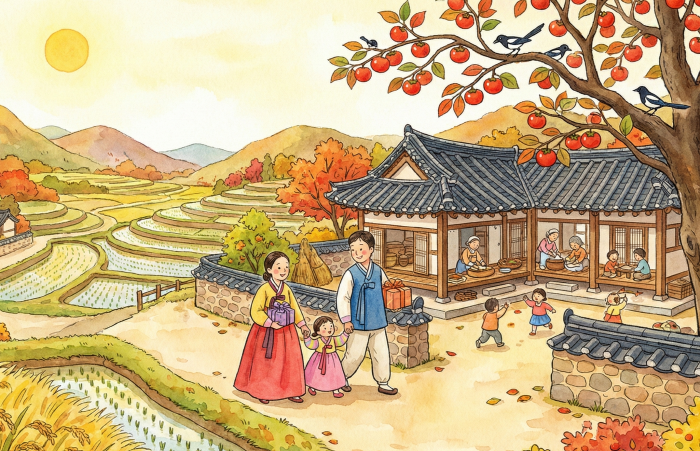
The Korea winter travel guide 2026–2027 is your guide to experiencing South Korea from December through February, including Christmas markets, New Year celebrations, skiing, snow festivals, and traditional Korean holidays. December is best for Christmas lights and festive cities, January offers the strongest opportunities for snow and winter sports, and February brings Lunar New Year traditions and spectacular full-moon fire festivals.
For travelers from tropical countries, a winter trip to Korea can be especially exciting. Imagine touching snow for the first time, walking through a frozen landscape, or watching a giant ceremonial bonfire light up the night. These are experiences that reveal an entirely different side of Korea, beyond its famous palaces, K-pop, and modern cities.
But timing matters. Seoul does not remain covered in snow all winter, and many seasonal festivals depend on freezing temperatures. This guide explains what to experience each month, which established festivals are worth planning around, and how to make the most of winter 2026–2027. Confirmed schedules and provisional dates are distinguished using information available as of November 13, 2026.
- Korea Winter Travel Guide 2026–2027: Which Month to Visit
- December 2026: Christmas Markets and Winter Lights
- New Year’s Eve in Korea: Bosingak Bell and Countdown Events
- January 2027: Snow and Ice Festivals Worth Traveling For
- Experience Snow for the First Time: Skiing and Sledding
- February 2027: Seollal and Late-Winter Experiences
- Jeongwol Daeboreum 2027: Where to See Daljip Burning
- Suggested Winter Itineraries in Korea
- Winter Travel Tips and Booking Advice
- FAQ: Korea Winter Travel 2026–2027
Korea Winter Travel Guide 2026–2027: Which Month to Visit
South Korea has four distinct seasons, and winter transforms much of the country. Mountain villages become covered in snow, rivers freeze, ski resorts open, and cities decorate their streets with elaborate Christmas displays.
However, winter does not look the same everywhere. Seoul (서울) can be freezing cold without any snow on the ground, while the mountainous areas of Gangwon State (강원특별자치도) may have deep snow. Busan (부산), on the southern coast, generally has milder temperatures and very little lasting snowfall.
December 2026: Christmas and Year-End Celebrations
Best for: Christmas markets, romantic city experiences, illuminated streets, ice skating, and New Year’s Eve celebrations.
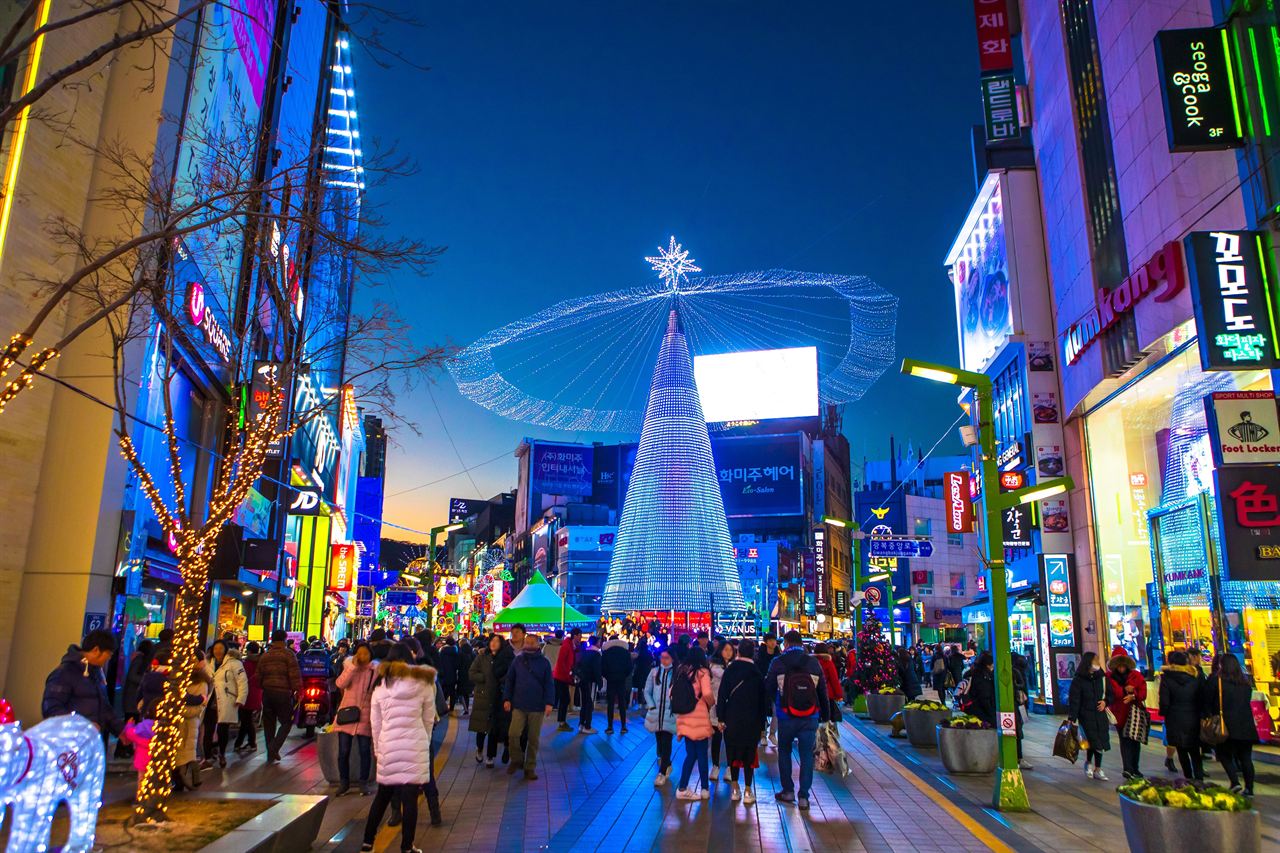
December is an excellent month for visiting Seoul and Busan. Christmas decorations begin appearing in November, but the atmosphere becomes especially festive in December.
Many ski resorts also begin operating during late November or December, depending on weather conditions, although natural snow coverage can still be limited early in the season.
January 2027: The Heart of Korean Winter
Best for: Snow festivals, skiing, sledding, ice fishing, and snow-covered mountain landscapes.
January is generally the coldest part of the winter and the best overall choice for travelers who want to experience snow.
It is also the busiest period for Korea’s famous ice-fishing and snow festivals, particularly in Gangwon State.
February 2027: Snow, Traditional Holidays, and Fire Festivals
Best for: Late-winter skiing, Korean Lunar New Year celebrations, traditional cultural experiences, and Jeongwol Daeboreum festivals.
February is particularly interesting in 2027 because Korean Lunar New Year falls on February 7, while Jeongwol Daeboreum, the first full moon of the lunar year, falls on February 21.
It is an opportunity to experience Korean winter alongside traditions that have survived for centuries.
Local Tip: If seeing snow is your highest priority, choose January or early February and spend at least one night in the mountains of Gangwon State. Seoul is a wonderful winter city, but snow in the capital is never guaranteed on specific dates.
December 2026: Christmas Markets and Winter Lights
Christmas in Korea has developed into a fascinating mixture of Western holiday traditions, Korean pop culture, shopping, romantic experiences, and spectacular urban lighting.
Unlike countries where Christmas is primarily a large family gathering, Christmas Eve and Christmas Day in Korea are especially popular occasions for couples and friends to enjoy restaurants, cafes, shopping, and seasonal attractions.
Christmas Day, December 25, is a public holiday, but major shopping malls, restaurants, and tourist attractions generally continue operating.
Here are some of the most worthwhile Christmas destinations for winter 2026.
Gwanghwamun Christmas Market: Seoul’s Signature Holiday Attraction
Confirmed dates: December 11, 2026 – January 10, 2027
The Gwanghwamun Christmas Market (광화문 마켓), held at Gwanghwamun Square (광화문광장) and nearby Sejongno Park (세종로공원), is one of Seoul’s most recognizable Christmas events.
Now in its fifth edition, the 2026 market features the theme of a Santa village where time stands still.
Visitors can enjoy a large Christmas tree, seasonal merchandise, food stalls, immersive photography installations, and various activities.
What makes this market special is its location. The Christmas decorations stand near Gyeongbokgung Palace (경복궁), creating an unusual combination of Korea’s historic royal architecture and contemporary holiday celebrations.
Admission: Free.
Best experience: Explore Gyeongbokgung Palace in the afternoon, visit the Christmas market after sunset, and continue toward the illuminated Cheonggyecheon Stream (청계천).
The market is part of the larger Seoul Winter Festa, scheduled from December 11, 2026, through January 31, 2027.
Official information: Seoul Winter Festa.
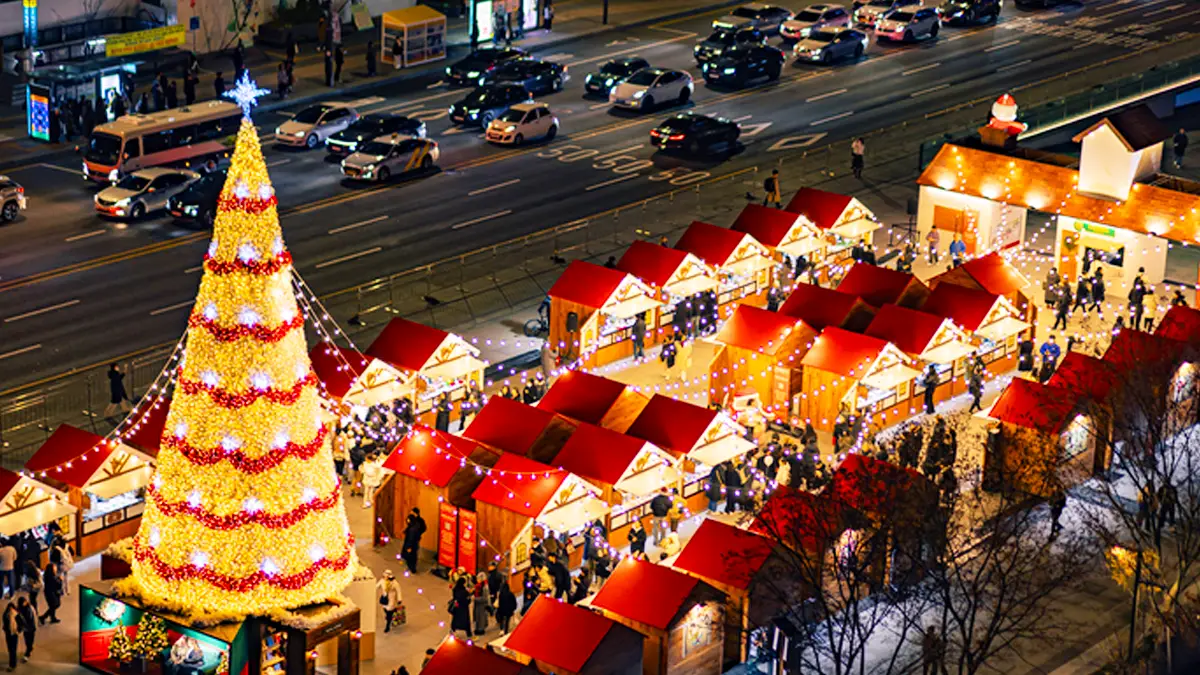
Lotte Town Christmas Market: Victorian Christmas in Jamsil
Confirmed dates: November 19, 2026 – January 3, 2027
The Lotte Town Christmas Market (롯데타운 크리스마스 마켓) takes place at World Park near Lotte World Tower in Jamsil (잠실).
The 2026 market recreates the atmosphere of a 19th-century British Christmas market, featuring decorative stalls, a large Christmas tree, a carousel, and a 17-meter clock tower.
Visitors can shop for Christmas gifts, enjoy seasonal food, and take photographs among elaborately decorated installations.
The surrounding area also offers Lotte World Mall, Lotte World Adventure, and Seokchon Lake (석촌호수), making it easy to turn the visit into a full-day outing.
Admission: General admission is free, although reservations or entry procedures may be required. Paid priority-entry options are available.
This is an especially attractive choice for families and couples who enjoy a traditional European-style Christmas atmosphere.
The Hyundai Seoul Christmas Village: A Holiday Spectacle Indoors
Confirmed dates: November 10 – December 31, 2026
The Hyundai Seoul (더현대 서울) in Yeouido (여의도) has become famous for its elaborate indoor Christmas installations.
The 2026 Christmas Village occupies the fifth-floor Sounds Forest area and features a Christmas-in-New-York theme.
Although it is more of an immersive Christmas exhibition than a traditional outdoor market, it is one of Seoul’s most popular seasonal attractions.
Admission: Free, but advance reservations are important. The venue has scheduled closure days, including November 26 and December 18.
Official reservations: The Hyundai Seoul Christmas Village 2026.
Christmas Village Busan: Celebrate by the Southern Coast
Confirmed dates: November 26 – December 25, 2026
Visitors spending December in Busan should consider Christmas Village Busan (크리스마스 빌리지 부산), held at the Busan Cinema Center (영화의전당).
The event transforms the venue into a Christmas-themed village with seasonal food, decorative stalls, Santa characters, choir performances, entertainment, and immersive attractions.
Unlike the free Christmas markets in Seoul, this event requires paid admission. Operating days and hours vary throughout the season.
Busan also offers Christmas lighting around Gwangbok-ro (광복로) and the popular Haeundae Light Festival (해운대빛축제) near Haeundae Beach (해운대해수욕장).
For travelers who prefer a relatively mild coastal winter rather than the extreme cold of inland Korea, Busan is a good alternative.
Official information: Christmas Village Busan 2026.
Seoul Lantern Festival and the City Hall Ice Rink
Christmas markets are only part of Seoul’s winter atmosphere.
The Seoul Lantern Festival (서울빛초롱축제), scheduled from December 11, 2026, through January 31, 2027, illuminates the Cheonggyecheon area with elaborate light installations.
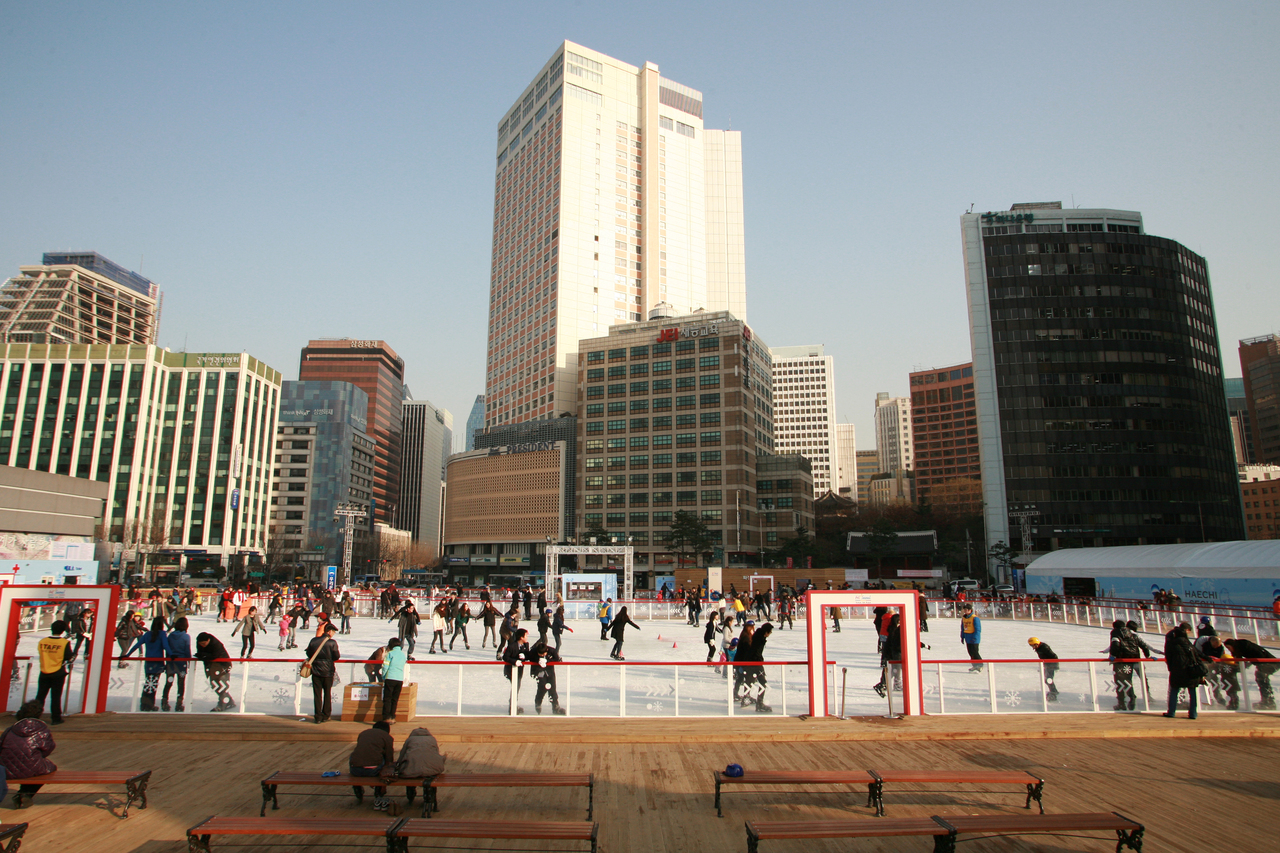
Meanwhile, the Seoul Plaza Ice Rink (서울광장 스케이트장), in front of Seoul City Hall, is scheduled to operate from December 18, 2026, through February 9, 2027.
The published admission price is just 1,000 KRW for a one-hour skating session, including skate and helmet rental.
The rink is scheduled to remain open until 1 AM on Christmas Eve and New Year’s Eve, making it a particularly attractive seasonal experience.
Operations may be interrupted by unfavorable weather or air-quality conditions.
Local Tip: December 24 and 25 are among the busiest dates for Christmas attractions. For easier photography and shorter queues, visit popular markets on weekday evenings earlier in December. Seoul’s winter sunset comes early, so Christmas sightseeing can begin around 5 PM.
New Year’s Eve in Korea: Bosingak Bell and Countdown Events
New Year’s Eve in Korea is more than a countdown to midnight.
While Christmas is closely associated with shopping, entertainment, and romantic celebrations, the transition from December 31 to January 1 is also an occasion for traditional ceremonies and public expressions of hope for the coming year.
The most famous celebration takes place at Bosingak Pavilion (보신각) in central Seoul, where a historic bell is rung 33 times at midnight.
Bosingak: The Historic Bell That Welcomes the New Year
Confirmed dates: December 31, 2026 – January 1, 2027
Bosingak’s New Year’s Eve bell-ringing ceremony, known as the Jeya-ui Jong (제야의 종), is one of Korea’s most recognizable New Year traditions.
The custom has its origins in the Joseon Dynasty, when the ringing of bells played an important role in regulating daily life in the capital.
Traditionally, the bell was rung 33 times at dawn to announce the end of the nighttime curfew and the opening of the city gates. In the evening, 28 strikes signaled the closing of the gates.
Modern New Year’s Eve bell-ringing ceremonies at Bosingak began in 1953 and developed into a major public celebration.
Today, selected citizens and public figures participate in the midnight ceremony. The 33 bell strikes mark the beginning of the new year and symbolize the hopes and aspirations of the community.
For international visitors, joining the crowds around the historic pavilion as the bell begins to ring can be a uniquely Korean experience.
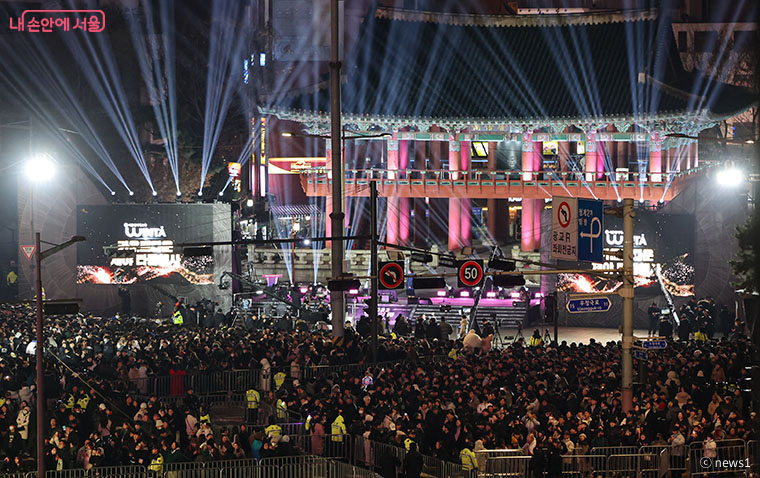
Countdown Performances, Media Art, and Celebrations
The modern Bosingak celebration extends well beyond the bell-ringing itself.
For December 31, 2026, the Seoul Metropolitan Government has announced plans for pre-ceremony performances, the traditional bell-ringing, media-art presentations, a public countdown, and celebratory entertainment.
The event is part of Seoul Winter Festa, which brings together seasonal cultural attractions across the city.
Visitors can look forward to several types of activities:
- Pre-ceremony performances: Live entertainment leading up to midnight, potentially including traditional and contemporary music.
- Public countdown: Spectators join together to count down the final moments of 2026.
- The 33 bell strikes: The central ceremony welcoming 2027.
- Media-art displays: Lighting and digital visual effects associated with the historic pavilion and surrounding celebration.
- Celebratory performances: Music and entertainment marking the arrival of the new year.
The celebration welcoming 2026 featured innovative media projections around Bosingak, visually connecting the historic bell-ringing tradition with contemporary digital art.
The exact performers and detailed schedule for the 2026–2027 ceremony have not yet been finalized. The previous year’s program provides an example of what visitors might experience rather than a confirmed lineup.
Official event information: Bosingak New Year’s Eve Bell-Ringing Ceremony.
Other Seoul Countdown Events: Gwanghwamun and DDP
One of the advantages of celebrating New Year’s Eve in Seoul is that visitors can choose between several different atmospheres.
Gwanghwamun Square: Seoul Light Gwanghwamun (서울라이트 광화문) features spectacular media projections on the historic Gwanghwamun Gate, illuminated installations, and a New Year countdown program. The event begins December 11, 2026, and continues into early January 2027.
With royal palace architecture serving as the background for large-scale digital artwork, this is one of the city’s most visually striking winter attractions.
Dongdaemun Design Plaza: DDP (동대문디자인플라자) offers a more futuristic setting, featuring media-art presentations and a New Year countdown.
SeoulCon (서울콘), scheduled from December 29, 2026, through January 1, 2027, brings together creators, influencers, entertainment, K-pop-related events, fashion, and beauty programs.
Some programs may require separate tickets or advance reservations.
Which countdown should you choose?
- Bosingak: Best for experiencing a traditional Korean New Year ceremony.
- Gwanghwamun: Best for historical architecture, dramatic lighting, and photography.
- DDP: Best for contemporary entertainment, media art, and K-culture experiences.
The main midnight countdowns take place simultaneously, so it is better to choose one location rather than attempting to visit several at midnight.
A Suggested New Year’s Eve in Central Seoul
Visitors attending the Bosingak ceremony can enjoy a memorable evening without spending the entire night standing outside in the cold.
- Early evening: Explore Gwanghwamun Square and enjoy the festive lighting and media-art installations.
- After sunset: Walk along Cheonggyecheon Stream to see the Seoul Lantern Festival.
- Dinner: Enjoy Korean food or warm drinks in the Jongno (종로) district.
- Before midnight: Move toward an officially designated viewing area near Bosingak and enjoy the performances.
- Midnight: Welcome 2027 with the 33 bell strikes and the surrounding celebrations.
These attractions are relatively close together, making this a convenient walking itinerary. However, the streets become increasingly crowded as midnight approaches, and access may be restricted.
Local Tip: During previous New Year’s Eve celebrations, some subway trains passed through Jonggak Station (종각역) without stopping during peak crowd-control periods, while selected public transportation services operated later than usual. Similar measures may be introduced for December 31, 2026, but exact arrangements should be checked shortly before the event. Avoid driving into central Seoul.
January 1: Welcome 2027 with the First Sunrise
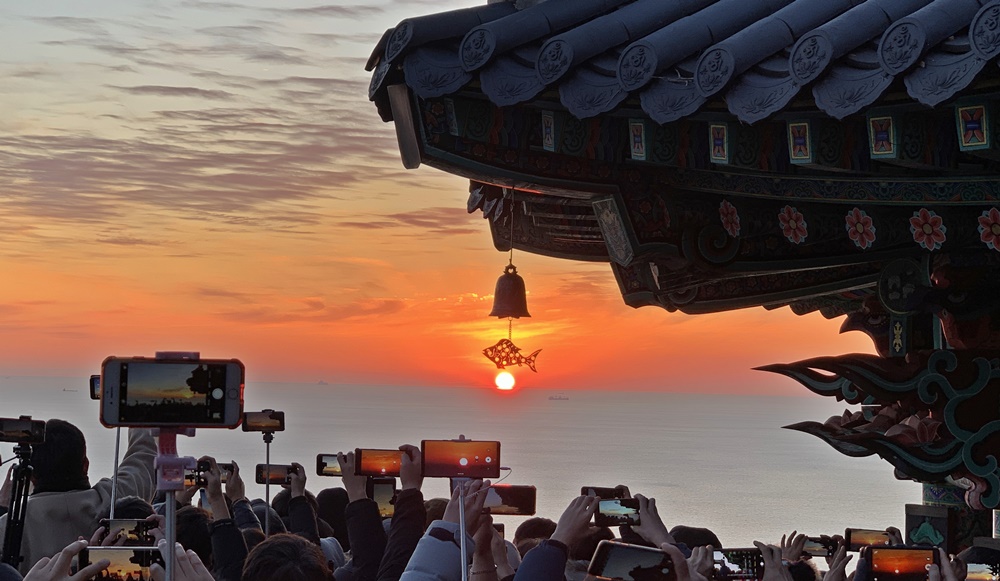
Another important Korean New Year tradition is watching the year’s first sunrise, known as haemaji (해맞이).
On January 1, people gather at beaches, mountains, and scenic viewpoints to watch the sun rise and make wishes for the coming year.
Among the most famous destinations are:
- Jeongdongjin (정동진), Gangneung: Famous for its seaside railway station, sunrise celebrations, and Sandglass Park. The Jeongdongjin Sunrise Festival is scheduled for December 31, 2026, through January 1, 2027.
- Homigot (호미곶), Pohang: Known for the giant Hand of Harmony sculpture rising from the sea and its traditional New Year sunrise gathering.
- Hyangiram Hermitage (향일암), Yeosu: A historic Buddhist hermitage overlooking the sea, offering a more spiritual setting for watching the first sunrise.
Jeongdongjin is particularly attractive for travelers who want to combine a New Year celebration with a winter trip to Gangwon State.
These sunrise events attract large crowds, and accommodations near popular coastal viewpoints often sell out well in advance. Final event schedules should be checked with local organizers.
Start the New Year with Tteokguk
Korean New Year traditions also include a memorable food experience.
Tteokguk (떡국) is a soup made with thinly sliced rice cakes, traditionally eaten to welcome the new year and symbolically become one year older.
Although it is especially associated with Lunar New Year, it is also enjoyed around January 1.
After watching the sunrise over the cold East Sea, a warm bowl of tteokguk makes an especially fitting breakfast.
January 2027: Snow and Ice Festivals Worth Traveling For
January is the highlight of Korea’s winter festival calendar.
This is when frozen rivers, ice fishing, snow sculptures, and traditional winter games become major attractions, especially in the colder inland regions.
For people who have grown up in tropical climates, these festivals can feel like discovering an entirely different world.
The following events have established histories and recognizable festival programs. Some 2027 dates are already listed by official tourism authorities, while others remain preliminary.
Hwacheon Sancheoneo Ice Festival: Korea’s Famous Ice-Fishing Festival
Published 2027 dates: January 9–31
The Hwacheon Sancheoneo Ice Festival (화천 산천어축제) is among Korea’s most internationally recognized winter festivals.
Held in Hwacheon (화천), Gangwon State, it transforms a frozen stream into an enormous winter playground.
The signature attraction is ice fishing. Visitors sit beside holes cut into the frozen water and try to catch sancheoneo, a type of mountain trout.
Other attractions traditionally include ice sledding, snow slides, winter games, and the unusual experience of catching fish with bare hands in cold water.
Visitors can also enjoy freshly caught fish, usually prepared grilled or as raw fish.
The festival is especially appealing because many activities are designed for beginners. You do not need previous fishing experience to participate.
Best for: Families, first-time snow travelers, and visitors looking for a distinctly Korean winter experience.
Official information: Hwacheon Sancheoneo Ice Festival.
Pyeongchang Trout Festival: Winter Activities in the Mountains
Expected period: January 2027; final organizer schedule pending
The Pyeongchang Trout Festival (평창송어축제) takes place around Odaecheon Stream (오대천) in Jinbu (진부), Pyeongchang (평창).
The festival offers trout fishing and a variety of winter activities, creating a lively atmosphere around the frozen river.
Pyeongchang is also famous for its ski resorts and winter sports heritage, making it a good destination for travelers who want to combine several winter experiences.
Although preliminary tourism listings suggest January 2027, visitors should wait for the organizer’s final schedule before booking accommodation specifically for the festival.
Official website: Pyeongchang Trout Festival.
Daegwallyeong Snow Festival: Giant Snow Sculptures
Preliminary organizer schedule: January 30 – February 9, 2027
The Daegwallyeong Snow Festival (대관령눈꽃축제) is one of the most appealing winter events for travelers who want to experience snow-covered scenery.
Daegwallyeong (대관령) is a highland area famous for its cold winters and dramatic mountain landscapes.
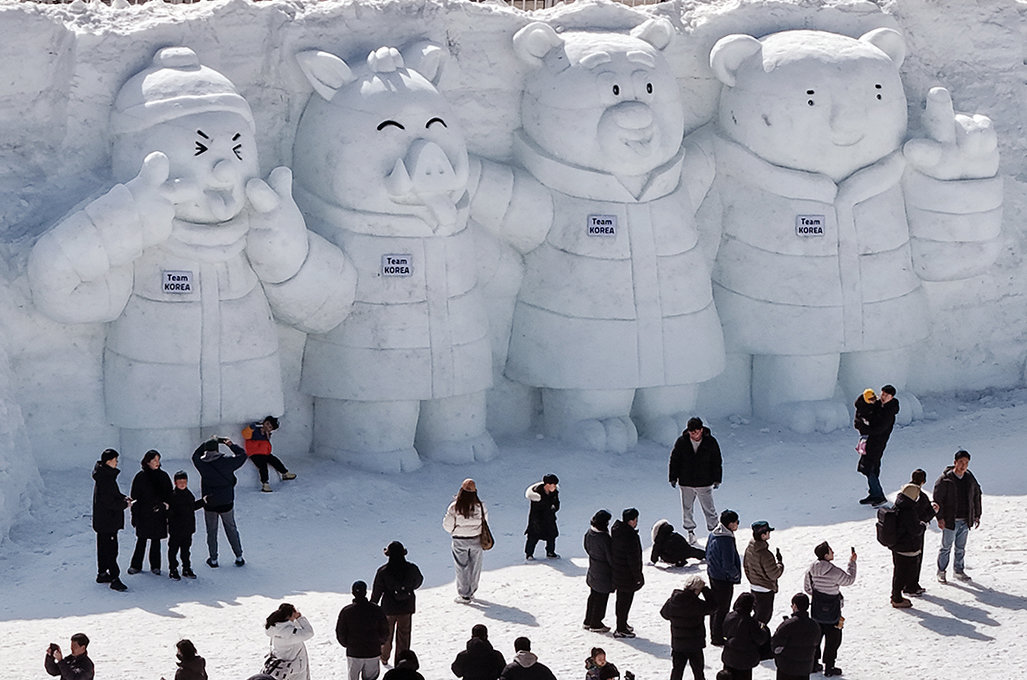
The festival traditionally features large snow sculptures, snow-themed installations, sledding, and family-friendly winter activities.
The 2027 festival organizer’s preliminary announcement lists January 30 through February 9. These dates remain subject to final confirmation and weather conditions.
This is an excellent destination for visitors who want to enjoy snow without necessarily learning to ski.
Official updates: Daegwallyeong Snow Festival.
Cheorwon Hantangang Ice Trekking Festival: Walk Through a Winter Gorge
Published tourism listing: January 16 – February 14, 2027; detailed program pending
The Cheorwon Hantangang Ice Trekking Festival (철원 한탄강 얼음트레킹 축제) offers an experience very different from conventional snow festivals.
Held along the Hantangang River (한탄강) in Cheorwon (철원), it allows visitors to explore a remarkable winter landscape of cliffs, volcanic rock formations, and the river gorge.
The area is part of the UNESCO-designated Hantangang River Geopark.
The festival is associated with the Hantangang Waterway Trekking Route, which uses managed walking routes and floating structures where necessary.
The Korea Tourism Organization currently lists January 16 through February 14, 2027, but the detailed festival program is still being updated. The duration should therefore be reconfirmed with the organizer.
Best for: Nature lovers, photographers, and travelers who prefer scenic walking to amusement rides.
Other Established Snow and Ice Festivals
Two additional winter events deserve consideration, although their final 2027 schedules have not yet been confirmed.
- Taebaeksan Mountain Snow Festival (태백산눈축제): Traditionally associated with large snow sculptures and mountain scenery around Taebaek (태백). Its annual schedule and format should be verified before planning a visit.
- Chilgapsan Ice Fountain Festival (칠갑산 얼음분수축제): Held at Alps Village in Cheongyang (청양), this event is famous for its enormous frozen fountains, ice formations, and family-oriented winter activities. It generally takes place during the coldest months.
Both are recognizable winter destinations, but published dates from previous years should not be mistaken for confirmed 2027 schedules.
Important: Ice festivals depend heavily on temperatures and ice thickness. Even when a festival opens as scheduled, certain activities may be suspended for safety reasons. Never enter frozen rivers or lakes outside officially controlled areas.
Experience Snow for the First Time: Skiing and Sledding
For visitors from Singapore, Malaysia, Indonesia, the Philippines, Thailand, and other places where snowfall is rare or nonexistent, one of the greatest attractions of a Korean winter vacation is simply experiencing snow.
Walking across fresh snow, making a snowball, watching snowflakes settle on your clothes, or riding a sled for the first time can be as exciting as visiting Korea’s famous cultural landmarks.
And you do not need to know how to ski.
Where Should First-Time Snow Travelers Go?
Three areas are particularly practical for international visitors.
- Hongcheon (홍천): Home to Vivaldi Park, a popular choice for ski lessons and winter activities within reach of Seoul.
- Pyeongchang and Daegwallyeong: Well suited to longer winter stays, with major ski resorts, mountain scenery, and seasonal snow festivals.
- Chuncheon (춘천) and Gangchon (강촌): Convenient for travelers seeking an accessible ski experience at Elysian Gangchon, along with surrounding winter attractions.
Among Korea’s major winter sports destinations, Mona Yongpyong and Phoenix Pyeongchang are particularly well known because of the region’s skiing heritage, including the 2018 PyeongChang Winter Olympics.
You Do Not Have to Ski to Enjoy a Ski Resort
Many international visitors hesitate to book ski resorts because they have never worn skis or snowboards before.
In Korea, winter resorts often offer several alternatives:
- Snow sledding and tubing areas for children and beginners.
- Beginner ski and snowboard lessons with rental equipment.
- Gondola or cable-car rides providing panoramic mountain views, where available.
- Snow playgrounds and designated photography areas.
- Resort cafes and indoor facilities where visitors can relax between outdoor activities.
Some attractions require separate tickets, and individual facilities may not operate throughout the entire ski season.
For detailed comparisons of major resorts, transportation, beginner-friendly options, rentals, and snow sledding attractions, see our Korea Ski Guide: Best Resorts & Sledding Near Seoul.
The guide covers the 2025/26 season, so its resort descriptions and general planning advice remain useful, while opening dates, prices, and transportation arrangements should be updated for 2026/27.
Natural Snow Is Different from Ski Resort Snow
One of the most common misunderstandings among foreign visitors is assuming that all of Korea remains covered in snow during winter.
In reality, Seoul often experiences long periods of cold, dry weather without accumulated snow. Even in January, its streets may be completely clear.
Ski resorts can maintain operating slopes using artificial snow, so a resort may be open even when the surrounding countryside has little natural snow.
Higher mountain elevations generally offer better opportunities for natural snow, but conditions vary from year to year.
If your dream is to walk through a snow-covered forest or watch snowflakes falling, check recent weather reports and allow flexibility in your itinerary.
Local Tip: For a first snow experience, consider spending one night at a mountain resort rather than making a short day trip from Seoul. An afternoon playing in the snow, a warm dinner, and a quiet winter morning can be far more memorable than a rushed visit.
February 2027: Seollal and Late-Winter Experiences
February is an interesting transitional month. Winter sports often continue in the mountains, but the cultural atmosphere changes dramatically as Korea celebrates Lunar New Year.
For travelers interested in Korean traditions, February 2027 is particularly attractive because both Seollal and Jeongwol Daeboreum fall within the month.
Seollal 2027: Korean Lunar New Year
Lunar New Year’s Day: February 7, 2027
Public holiday period: February 6–9, 2027
Seollal (설날) is one of Korea’s most important traditional holidays.
Unlike the modern Christmas celebrations found in shopping districts, Seollal is strongly associated with family gatherings, respect for elders, ancestral remembrance, and traditional food.
Families travel across the country, often returning to their hometowns. Children perform the traditional New Year greeting called sebae (세배), and family members share meals that commonly include tteokguk.
For visitors, Seollal can offer fascinating cultural experiences. Museums, cultural centers, and some historic sites organize traditional games and seasonal programs.
However, Seollal also creates practical travel challenges.
- Long-distance trains and express buses can be difficult to book.
- Highways may become extremely congested.
- Some family-run restaurants and small businesses close for the holiday.
- Major tourist attractions may operate on special holiday schedules.
- Traditional cultural programs may be available, but opening dates and times must be checked individually.
If visiting Korea during February 6–9, consider staying in one city rather than planning frequent long-distance transfers.
For detailed advice on transportation, restaurant closures, shopping districts, tourist attractions, and suggested itineraries during major Korean holidays, read our How to Travel in Korea During Chuseok and Lunar New Year.
Is February Still Good for Skiing?
Yes. February is still a major ski month in Korea, although conditions depend on altitude, weather, and individual resort operations.
Early February is often suitable for skiing and snow activities. As the month progresses, warmer temperatures can affect snow quality, especially at lower elevations.
Travelers planning a ski holiday in late February should check individual resort operating schedules rather than assuming that all slopes will remain open.
Another Side of February: Jeju’s Winter Flowers
Not every Korean winter vacation needs to revolve around snow.
Jeju Island (제주도) offers a contrasting experience with winter camellias, citrus orchards, coastal scenery, and generally milder temperatures than inland Korea.
Camellia flowering periods vary by location and variety, but winter is an important season for these flowers. Citrus-related farm experiences also remain popular.
For travelers spending two weeks or more in Korea, combining snowy Gangwon State with the comparatively mild atmosphere of Jeju can make the seasonal contrast especially memorable.
Jeongwol Daeboreum 2027: Where to See Daljip Burning
Jeongwol Daeboreum in 2027 falls on Sunday, February 21.
For visitors interested in traditional Korean culture, this may be one of the most fascinating dates of the winter season.
Jeongwol Daeboreum (정월대보름) celebrates the first full moon of the lunar year. Historically, it was associated with hopes for a good harvest, the well-being of families, and protection from misfortune.
Various customs continue today, including eating five-grain rice called ogokbap (오곡밥), eating seasoned dried vegetables, cracking nuts as part of the bureom (부럼) tradition, and playing folk games.
One of its most visually impressive customs is Daljip Taeugi (달집태우기), literally meaning “burning the moon house.”
What Is Daljip Burning?
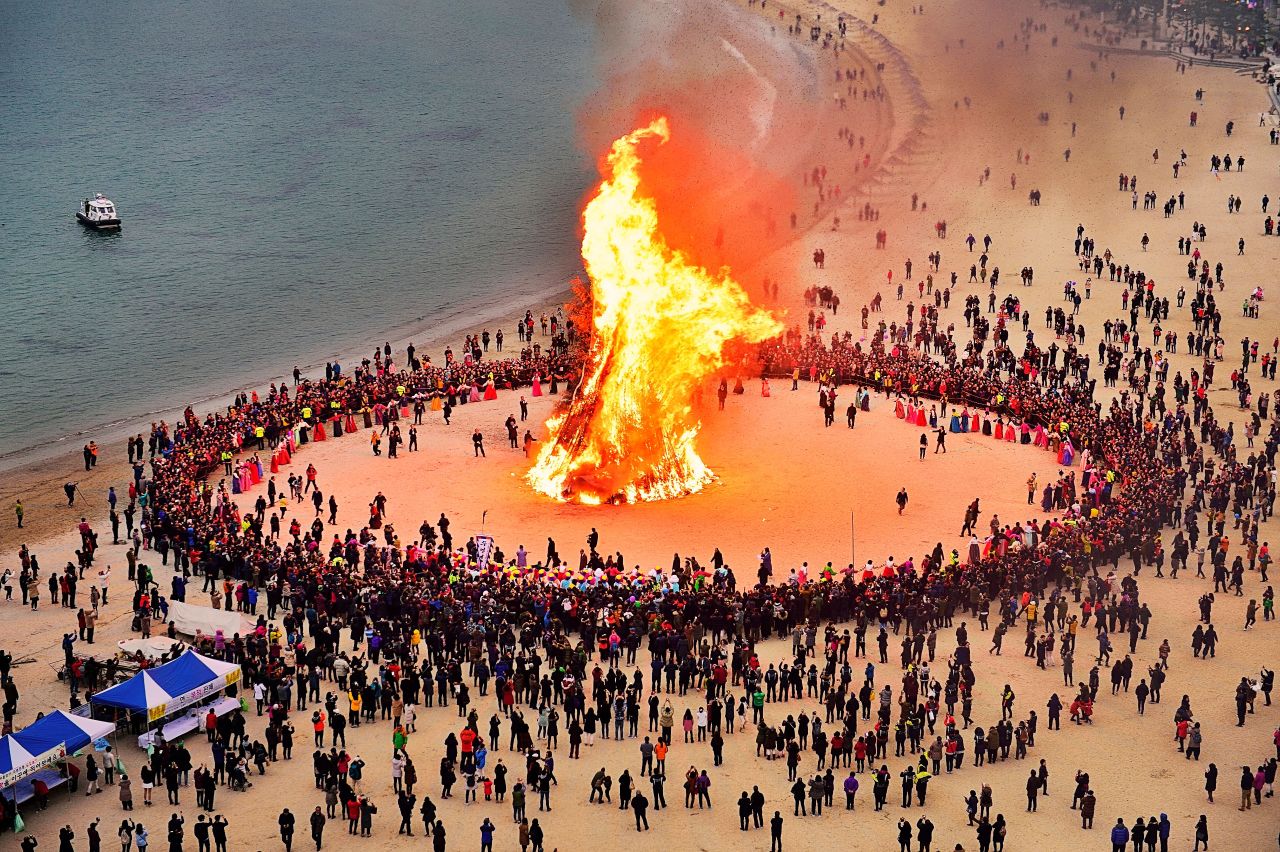
Communities build a large structure from branches, straw, or other combustible natural materials, often resembling a tall hut or tower.
At the appropriate ceremonial moment, the structure is set on fire.
As the flames rise into the night sky, participants traditionally wish for good fortune, protection from misfortune, and prosperity in the coming year.
The fire is not simply entertainment. It represents an old agricultural worldview in which the moon, the changing seasons, and the well-being of the community were deeply connected.
Although Korea is now a highly urbanized society, these ceremonies remain an important expression of traditional community culture.
Cheongdo: One of Korea’s Most Spectacular Daljip Bonfires
Expected period: Around February 21, 2027; schedule not yet announced
Cheongdo (청도), in North Gyeongsang Province, is especially famous for its large-scale Daljip burning ceremony.
The Cheongdo Jeongwol Daeboreum Folk Festival (청도 정월대보름 민속한마당) has featured an enormous wooden-and-straw structure erected beside Cheongdocheon Stream (청도천).
At the 2026 festival, the structure was approximately 20 meters high, creating a dramatic spectacle when it was set ablaze.
The festival also features traditional percussion performances, folk activities, and opportunities for visitors to write down New Year wishes.
For travelers who want to see one of the most visually powerful examples of this tradition, Cheongdo deserves serious consideration.
Samcheok: Traditional Culture Beyond the Bonfire
Expected period: Around February 21, 2027; schedule not yet announced
The Samcheok Jeongwol Daeboreum Festival (삼척정월대보름제) in Samcheok (삼척), Gangwon State, offers more than a bonfire ceremony.
Its cultural centerpiece is Samcheok Gijul-darigi (삼척 기줄다리기), a traditional rope-pulling game associated with communal agricultural traditions.
This tradition is part of Korea’s wider tugging rituals and games heritage, recognized by UNESCO as Intangible Cultural Heritage.
The festival also typically features traditional ceremonies, folk games, and performances.
It is an excellent destination for travelers interested in understanding Korean traditions rather than simply photographing an impressive fire.
Busan: Watch Daljip Burning Beside the Sea
Expected period: Around February 21, 2027; schedules not yet announced
For international visitors, Busan may be the most convenient place to experience Daljip burning.
The Haeundae Dalmaji Oncheon Festival (해운대 달맞이온천축제) has a long history of celebrating Jeongwol Daeboreum with community activities and a ceremonial bonfire on Haeundae Beach.
In recent years, other Busan locations, including Gwangalli Beach (광안리해수욕장) and Dadaepo Beach (다대포해수욕장), have also hosted traditional full-moon celebrations.
Watching a large ceremonial fire rise against the dark winter sea is an unforgettable experience.
Because February 21, 2027, falls on a Sunday, the date may be convenient for visitors. However, individual festivals may schedule activities on adjacent days or weekends.
Important: Daljip burning involves substantial fire-safety considerations. Events can be modified or canceled because of strong winds, dry weather, fire restrictions, or other safety concerns. Attend only officially organized ceremonies, respect designated viewing boundaries, and never attempt to make your own bonfire.
Suggested Winter Itineraries in Korea
The most rewarding winter trips combine different experiences rather than spending every day visiting similar tourist attractions.
Here are three suggested itineraries based on the season and the kind of winter experience you want.
Itinerary A: Four Days of Christmas in Seoul
Best period: December 11–25, 2026
- Day 1: Explore Gyeongbokgung Palace, Insadong (인사동), and traditional neighborhoods. Visit Gwanghwamun Christmas Market after sunset.
- Day 2: Enjoy Christmas shopping and light displays in Myeongdong (명동). Visit the Seoul Plaza Ice Rink if operating.
- Day 3: Explore Jamsil, visit the Lotte Town Christmas Market, and enjoy the surrounding attractions.
- Day 4: Take a relaxed winter excursion outside Seoul, or spend the day visiting seasonal exhibitions, cafes, and indoor attractions.
This itinerary is particularly suitable for couples and visitors who want a festive city holiday without complicated long-distance travel.
Itinerary B: Five Days of Snow and Winter Adventures
Best period: Mid-January to early February 2027
- Day 1: Arrive in Seoul and explore its winter streets and seasonal attractions.
- Day 2: Travel to a Gangwon ski resort for beginner lessons, sledding, or snow activities.
- Day 3: Enjoy snowy mountain scenery and visit a nearby winter attraction or festival if scheduled.
- Day 4: Visit Hwacheon or Pyeongchang for an ice-fishing festival, choosing whichever is operating during your visit.
- Day 5: Return to Seoul and relax at a Korean sauna or enjoy a final shopping and food experience.
This is particularly suitable for first-time snow travelers and families with children.
Because Gangwon destinations are spread across a large region, arrange the itinerary around one primary accommodation base. Combining several distant festival sites in a single day is often unrealistic.
Itinerary C: Korean Winter Traditions and the First Full Moon
Best period: February 19–22, 2027
- Day 1: Travel to Busan, Samcheok, or Cheongdo and explore the local area.
- Day 2: Discover traditional markets, regional food, and cultural landmarks.
- Day 3: Attend an officially scheduled Jeongwol Daeboreum celebration, including Daljip burning if permitted.
- Day 4: Explore nearby historic sites or coastal scenery before returning.
This route is ideal for visitors seeking an authentic cultural experience that differs significantly from conventional sightseeing.
Since the 2027 festival programs have not all been announced, select the destination only after confirming the relevant local event schedule.
Winter Travel Tips and Booking Advice
Korea is a convenient country for independent travel, but winter introduces several practical challenges.
Dress for Cold Weather, Not Just for Photographs
December and January temperatures in Seoul can fall well below freezing, and the mountain regions can be considerably colder.
For outdoor winter festivals, bring a warm insulated jacket, thermal layers, gloves, a hat, and waterproof footwear with good traction.
Visitors who have never experienced freezing temperatures often underestimate the effect of wind, especially near the coast or on exposed mountain slopes.
Cold-weather accessories and disposable hand warmers are widely available in Korean convenience stores and other shops.
Use Trains and Shuttle Buses When Practical
Korea’s KTX rail network makes winter travel relatively convenient, especially for trips between major cities and parts of Gangwon State.
For example, the Gangneung Line provides access to the Pyeongchang region through stations such as Jinbu Station (진부역).
However, reaching a ski resort or regional festival from the nearest station may require a local bus, shuttle, taxi, or organized tour.
Do not assume that every destination has frequent public transportation. Rural bus services can be limited, particularly in the evening.
For navigation, Naver Map and KakaoMap are often more practical than relying exclusively on international mapping services.
Reserve Early for These Periods
- December 24–25: Christmas restaurants, popular hotels, seasonal attractions, and entertainment venues.
- December 31–January 1: Sunrise destinations, coastal accommodations, and major New Year celebrations.
- January weekends: Ski resorts and popular ice festivals.
- February 6–9: Seollal holiday travel, particularly long-distance transportation.
- February 20–21: Accommodation near major Jeongwol Daeboreum festival locations.
Always Check Outdoor Festival Announcements
Winter festivals are unusually dependent on weather conditions.
Warm temperatures may prevent rivers from freezing sufficiently. Heavy snowfall can cause transportation problems, while high winds may make outdoor installations unsafe.
Even previously announced festival dates are not guarantees that every attraction will operate.
For updated national festival information, the Korea Tourism Organization’s official website is a useful starting point.
For broader advice on Korean winter food, independent farm experiences, transportation, and cold-weather preparations, see our Korea Winter Travel Guide: Festivals, DIY Farms & Safety.
Leave Some Flexibility in Your Itinerary
Winter is a season when rigid travel schedules can become frustrating.
A beautiful snowy day may be the perfect opportunity for a mountain excursion. On another day, high winds or heavy snow may make indoor cultural attractions a better option.
Instead of scheduling every hour, plan around a few essential experiences and keep alternative activities available.
Most importantly, do not try to fit too many distant destinations into a short winter holiday. Travel is considerably more enjoyable when you have time to warm up, enjoy a meal, and appreciate the scenery.
FAQ: Korea Winter Travel 2026–2027
What Is the Best Month to Visit Korea for Snow?
January is generally the best month for travelers whose main goal is experiencing snow and winter sports. Higher-altitude areas in Gangwon State are more reliable than Seoul, but natural snowfall cannot be guaranteed on a specific day.
Will It Snow in Seoul During Christmas 2026?
It is possible, but a white Christmas is not guaranteed. Seoul often experiences dry winter weather, and snow may melt quickly. Travelers should not plan their entire holiday around seeing snow fall in the capital.
Can Beginners Go Skiing in Korea?
Yes. Many ski resorts offer beginner slopes, equipment rentals, and lessons. Non-skiers can often enjoy sledding, snow parks, and other winter attractions. Check the resort’s current season program before booking.
Are Christmas Markets in Korea Free?
Several major Christmas attractions, including Gwanghwamun Market, offer free admission. Others require reservations or paid tickets. Some indoor Christmas villages are free but have limited entry capacity.
Where Should Visitors Celebrate New Year’s Eve in Seoul?
Bosingak is the best choice for experiencing Korea’s traditional midnight bell-ringing ceremony. Gwanghwamun offers impressive media art and illuminated historical architecture, while DDP provides a more contemporary cultural atmosphere.
Is Korea a Good Destination in February?
Yes. February offers skiing, late-winter scenery, and traditional Korean celebrations. In 2027, Seollal falls on February 7 and Jeongwol Daeboreum on February 21, making the month particularly interesting for cultural travelers.
When Is the Best Time to Experience Daljip Burning in 2027?
Jeongwol Daeboreum falls on February 21, 2027. Established Daljip burning events in places such as Cheongdo, Samcheok, and Busan are worth monitoring. Their exact schedules and fire ceremonies should be confirmed with local organizers before visiting.
Is Winter in Korea Worth Experiencing If You Come from a Tropical Country?
Absolutely. For travelers who have never experienced freezing temperatures, snow-covered mountains, ice fishing, sledding, and winter festivals can be completely new experiences. Korea combines these attractions with convenient transportation, major cities, traditional culture, and modern tourism facilities.
The most rewarding approach is to combine a few days of Korean cultural sightseeing with a dedicated snow experience in the mountains.
Final Thought: Korea’s winter is not simply a colder version of its other seasons. December’s Christmas lights, January’s frozen rivers, and February’s traditional full-moon bonfires each reveal a different side of the country. Whether your dream is to touch snow for the first time, welcome the sunrise over the East Sea, or watch an enormous ceremonial fire illuminate the night, winter 2026–2027 offers experiences that are difficult to find during any other season.

Founder of Kculture.com and MA in Political Science. He shares deep academic and local insights to provide an authentic perspective on Korean history and society.