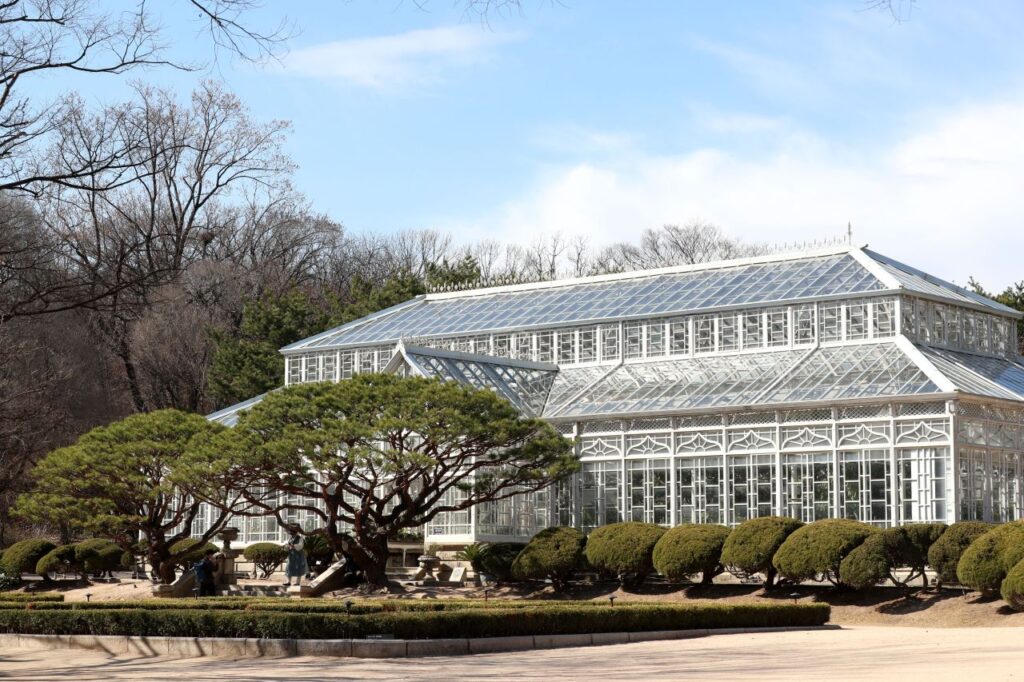
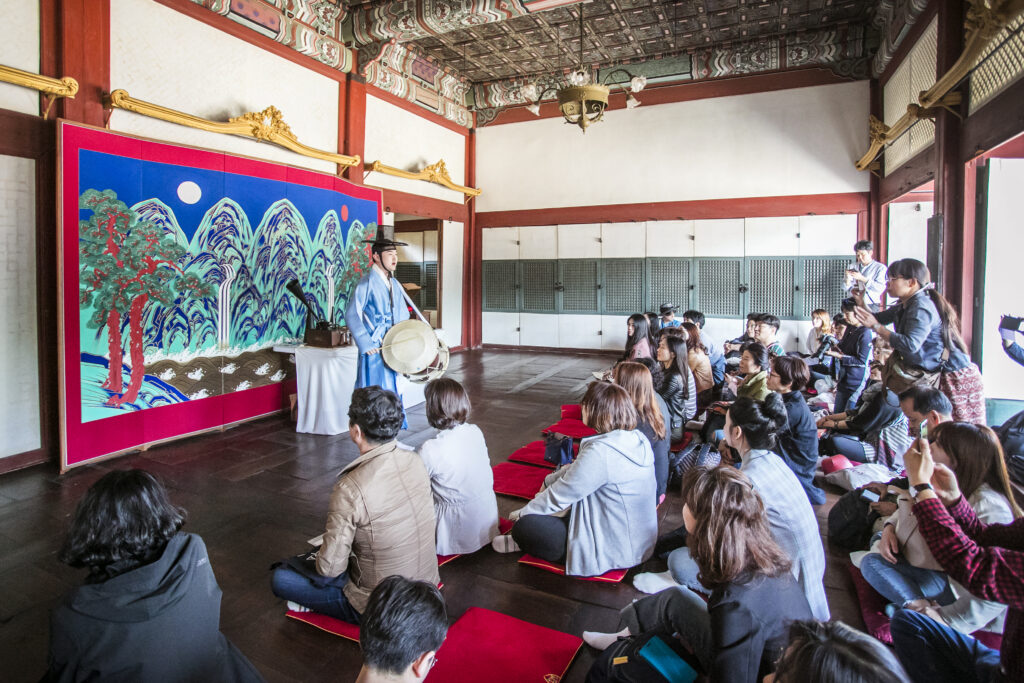
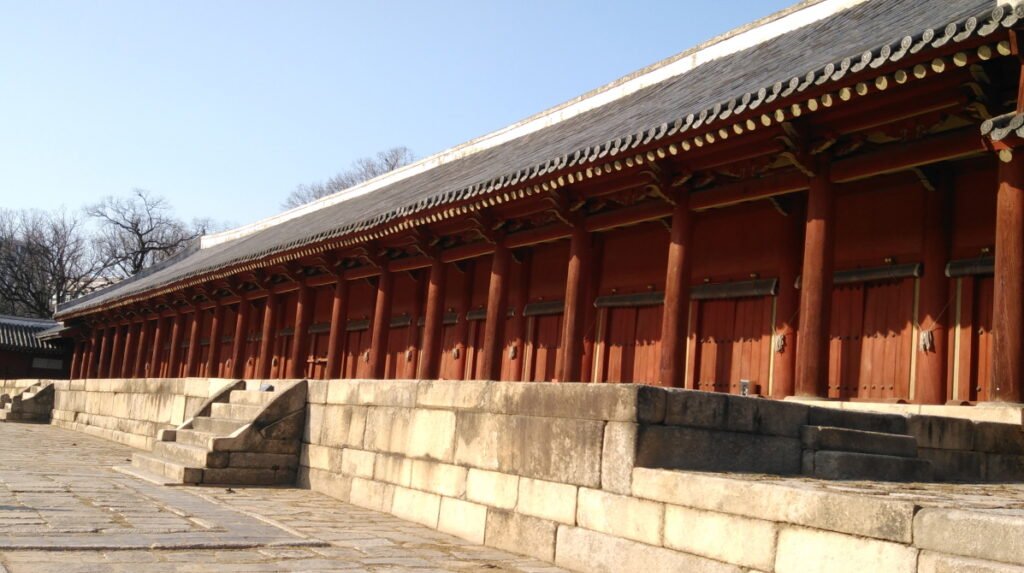
In Korean historical dramas, a scholar opens a wooden door onto a mountain view, or a royal conversation unfolds beside a pond beneath tiled eaves. Why does the landscape seem to belong to the room? Korean traditional gardens often connect buildings with existing terrain, water, and surrounding views; chagyeong, or borrowed scenery, brings scenery beyond a garden or building into the experience of the space.
That quiet connection helps explain their appeal. A garden may reveal itself through a pavilion rather than a flowerbed, and its most memorable feature may stand beyond its walls. From Seoul’s royal woodland to a scholar’s retreat in Damyang, understanding where to look makes these places much more rewarding to visit.
- What Are Korean Traditional Gardens?
- Chagyeong: Borrowed Scenery in Korean Architecture
- How Korean Gardens Compare with Other Traditions
- History and Philosophy: A Landscape for Living
- Seven Places to Experience Korean Gardens and Borrowed Scenery
- Planning Your Visit: Tickets, Seasons, and Transport
- How to Look at a Korean Garden
- Frequently Asked Questions
- Explore More Korean Culture
What Are Korean Traditional Gardens?
A Korean traditional garden is a historical landscape shaped around architecture and human activities, combining natural features with constructed elements. Trees and flowers matter, but so do slopes, streams, rocks, ponds, walls, and the places where people sit, study, entertain, or look outward.
The term covers several settings. Royal gardens accommodated court life and recreation. Household gardens accompanied everyday living. Scholar retreats provided places for reading, reflection, and conversation. Confucian academies and Buddhist temples also developed distinctive relationships with their landscapes.
- Huwon: a rear garden, especially familiar through the royal garden at Changdeokgung.
- Byeolseo garden: a garden associated with a separate residence or retreat; many celebrated examples belonged to scholars.
- Wonrim: a term useful for understanding a garden together with its woods and wider landscape. It does not mean that the place is entirely untouched.
- Hwagye: terraced planting beds that turn a slope into a sequence of garden spaces.
- Jeongja: a pavilion used for resting, enjoying scenery, and gathering with others.
A relatively bare courtyard can therefore be part of a rich landscape experience. Look beyond the ground immediately in front of a house: the garden may extend visually toward a grove, stream, or mountain.
Local Note: The natural appearance is often carefully achieved. Builders chose sites and viewpoints, constructed ponds and retaining walls, directed water, and planted vegetation. Appreciating that work makes the apparent simplicity more interesting.
Chagyeong: Borrowed Scenery in Korean Architecture
Chagyeong means incorporating a view beyond the immediate garden or building into its visual composition. A distant ridge becomes a backdrop to a courtyard; a river appears between pavilion columns; an open doorway connects a room with trees outside.
Picture a wooden pavilion facing a river. Its roof shades the foreground, its columns divide the view, and the mountain beyond provides depth. The river and mountain remain where they are, but from that position they become part of the space you experience.
This helps explain why architecture is essential to the subject. A pavilion offers a place from which to appreciate the landscape. The height of its floor, the direction it faces, and the openness of its sides affect what people see. Windows, doorways, walls, and planting can reveal a view or conceal distractions.
Chagyeong also changes with the observer. Standing near a building and looking at its roof produces a different scene from looking outward at the height of its raised wooden floor. Changing position can reveal how the near columns, middle-distance trees, and distant hills work together.
The basic definition is visual, but the experience can be richer. At Soswaewon, the sound of water and wind in bamboo accompanies the view. Landscape researcher So Hyunsu’s 2011 study interprets the garden’s borrowed scenery through sensory, temporal, and imaginative dimensions as well as sight. That is a scholarly interpretation of this particular landscape, rather than a universal definition of chagyeong.
Borrowed scenery belongs to a shared East Asian vocabulary: jiejing in Chinese and shakkei in Japanese. The Chinese garden treatise Yuanye, published in 1634 by Ji Cheng, is an important historical discussion of the concept. Soswaewon’s development began earlier, so using that treatise to interpret the garden today does not mean its founder followed the book. Korean examples have their own settings and cultural meanings, and a beautiful mountain view alone does not prove that a building was deliberately designed according to a named theory.
How Korean Gardens Compare with Other Traditions
The most useful comparison is between particular garden types. Each country contains centuries of variation, regional differences, and changing tastes.
| Garden tradition | A useful feature to notice | What the comparison reveals |
|---|---|---|
| Joseon scholar retreats and some Korean royal gardens | Existing slopes, streams, and woods connected with pavilions, ponds, and terraces | The surrounding landscape can carry much of the composition, although the garden itself is also constructed. |
| Chinese scholar gardens of Suzhou | Rock formations, water, architecture, and successive views within a contained space | Natural landscapes can be recreated in miniature; poetry and borrowed scenery also matter. |
| Japanese pond, dry landscape, tea, and strolling gardens | Different approaches to water, stone, paths, and viewing positions | There is no single Japanese style, and borrowed scenery is also used. |
| French formal gardens, exemplified by Versailles | Strong axes, symmetry, fountains, and long perspectives | Geometric organization gives the visitor a very different way of reading space. |
| English landscape gardens, exemplified by Stourhead | Picturesque scenes arranged around water, planting, and architectural landmarks | A natural-looking landscape can result from extensive planning and maintenance. |
UNESCO describes Suzhou’s classical gardens as miniature recreations of natural landscapes. Soswaewon offers a useful contrast: much of its character comes from occupying and interpreting an existing stream valley. Both approaches involve craftsmanship and cultivated ideas about nature.
In a 2021 comparative study, JiHoon Yun examines Soswaewon alongside Suzhou’s Humble Administrator’s Garden. His analysis emphasizes Soswaewon’s relationship with surrounding scenery and the Chinese garden’s concentrated composition within its boundaries. The two sites make the comparison tangible without requiring every garden in either country to fit the same pattern.
Japanese gardens also complicate easy comparisons. Kyoto’s Tenryu-ji Temple incorporates the hills of Arashiyama as borrowed scenery. Strolling gardens offer changing scenes along a path, while dry landscape gardens use stone and gravel in different ways. Comparing every Korean garden with a Japanese gravel garden misses much of Japan’s garden tradition.
Likewise, Versailles and Stourhead show how varied Western gardens can be. The distinction worth exploring is how a particular garden organizes the relationship between architecture, terrain, and the observer. Korean gardens are especially rewarding when approached through that relationship.
History and Philosophy: A Landscape for Living
Royal gardens long before Joseon
Korean garden history reaches far earlier than the Joseon dynasty. The Samguk Sagi records a royal pond created in 634 under Baekje’s King Mu, associated with Gungnamji Pond (궁남지) in Buyeo. Its island evoked a mythical mountain of immortals, showing that symbolic, deliberately constructed scenery was already important.
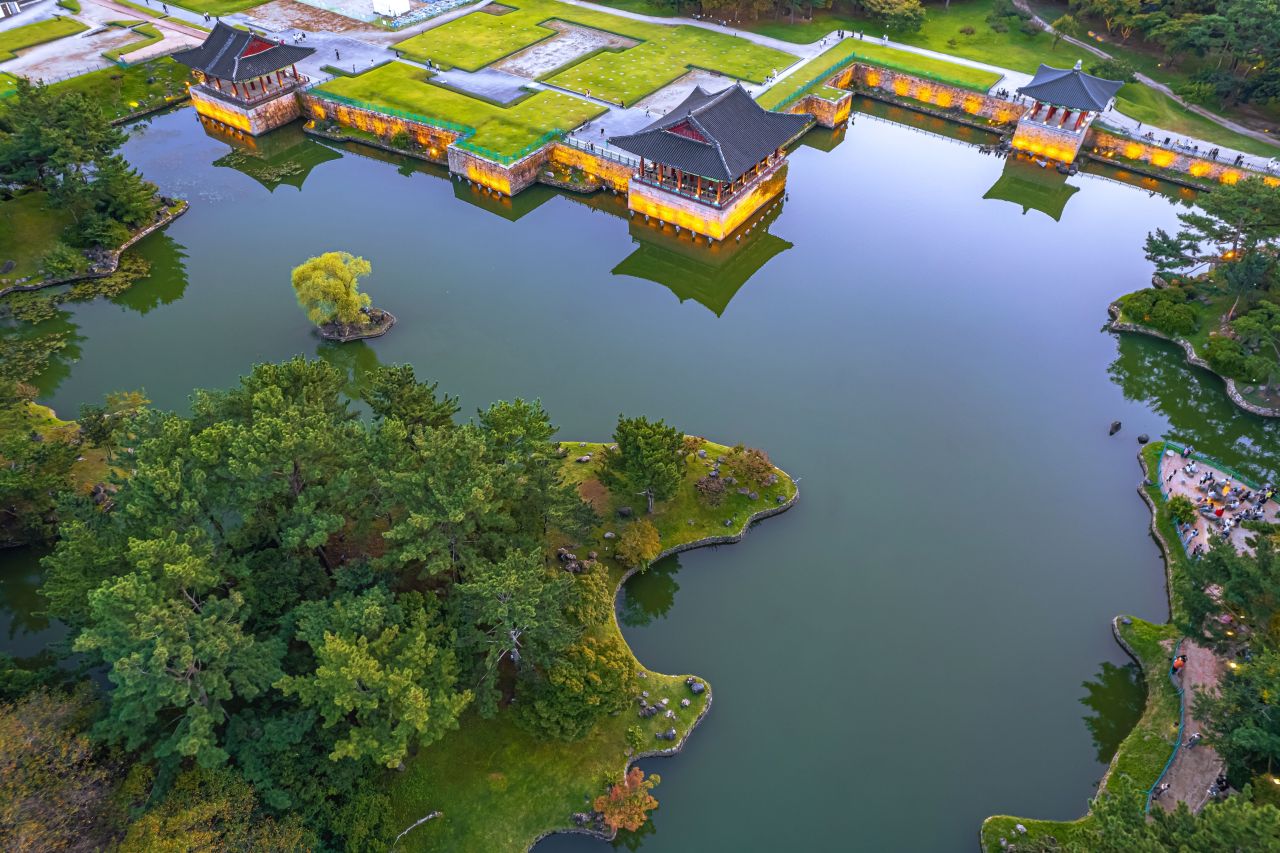
Another account records Silla’s King Munmu creating a palace pond and artificial hills in 674, with flowers, trees, birds, and animals. The site now known as Donggung Palace and Wolji Pond (동궁과 월지) in Gyeongju preserves archaeological evidence of that royal landscape. Its present visitor setting includes reconstructed buildings.
Joseon: learning, retreat, and sociability
During Joseon, Confucian learning helped shape the culture of many surviving gardens. Reading, writing poetry, welcoming friends, and contemplating nature could form parts of a cultivated life. A retreat might express withdrawal from political turmoil while remaining a lively meeting place.
Soswaewon is an especially moving example. Its creator, Yang San-bo, returned to his hometown following the persecution and death of his teacher, the reformer Jo Gwang-jo. The garden developed during the sixteenth century and continued to change under later generations. Friends and poets gathered there; retreat and companionship coexisted.
Kim Inhu’s Forty-Eight Poems on Soswaewon, written in 1548, preserve attention to such details as shade, water, bamboo, and seasonal sensations. Soswaewondo, a garden plan carved on a woodblock in 1755, offers another record of its layout. These works help explain why a modest-looking place can carry so many layers of meaning.
That connection between landscape, poetry, and cultivated character is explored further in Understanding Muninhwa and Korea’s Scholar Artists. Readers interested in the wider visual tradition can also explore Korean traditional painting and its masters.
Several philosophies within one landscape
Confucian self-cultivation, Daoist images of retreat and immortality, and the siting principles of pungsu, Korean geomancy, all contribute to particular landscapes. They should be understood in context: geomancy concerns siting and relationships within the terrain, while chagyeong concerns the experience of a view.
Changdeokgung Palace was founded in 1405, with its rear garden first established in 1406. Expansion, destruction, rebuilding, and later additions shaped the place visitors see today. UNESCO highlights the palace complex’s adaptation to uneven terrain and harmony with its surroundings.
These were also landscapes of status and labor. Many celebrated surviving examples belonged to royalty or wealthy scholar families. Their quiet beauty depended on resources and upkeep, and should not be presented as the everyday experience of everyone in historical Korea.
Seven Places to Experience Korean Gardens and Borrowed Scenery
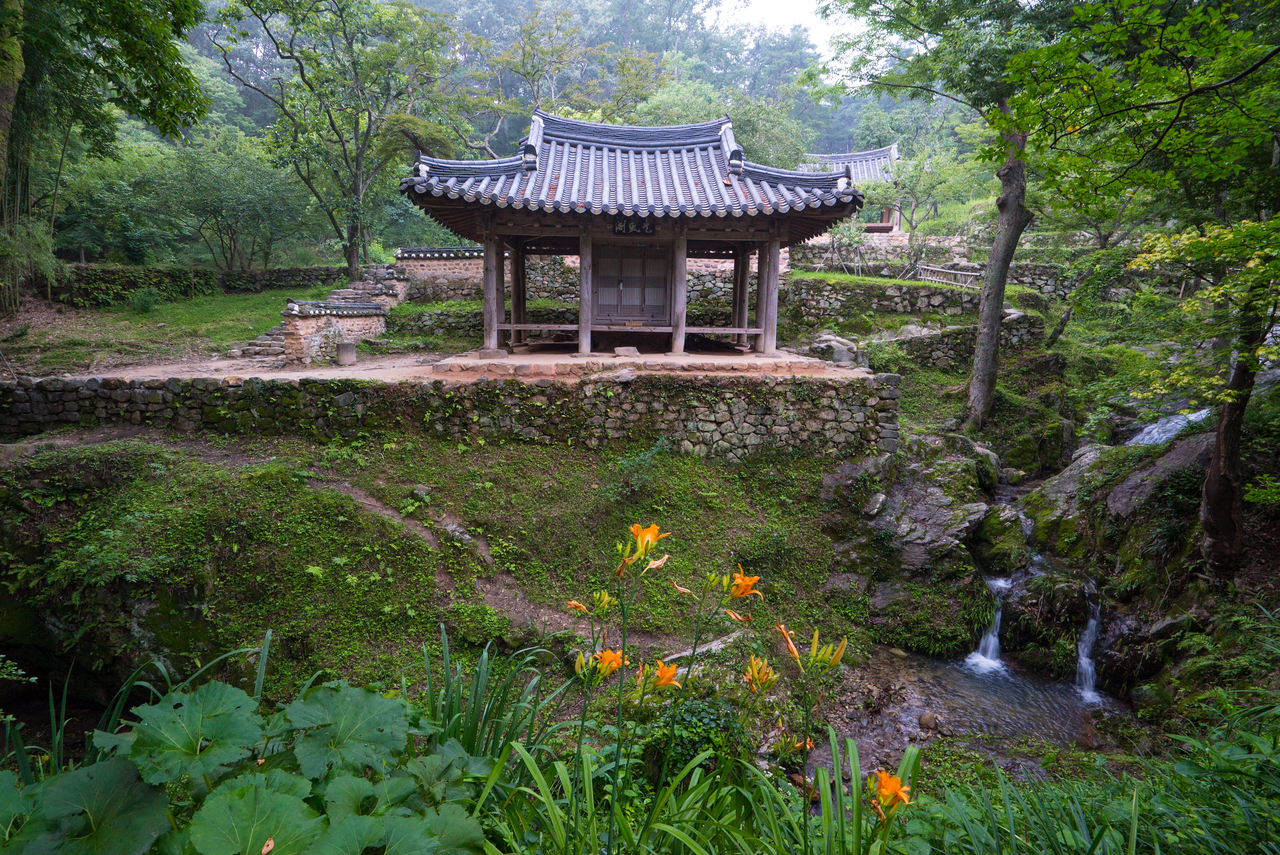
Soswaewon Garden, Damyang: a scholar’s stream valley
Best for: understanding a Korean scholar retreat through one compact, layered landscape.
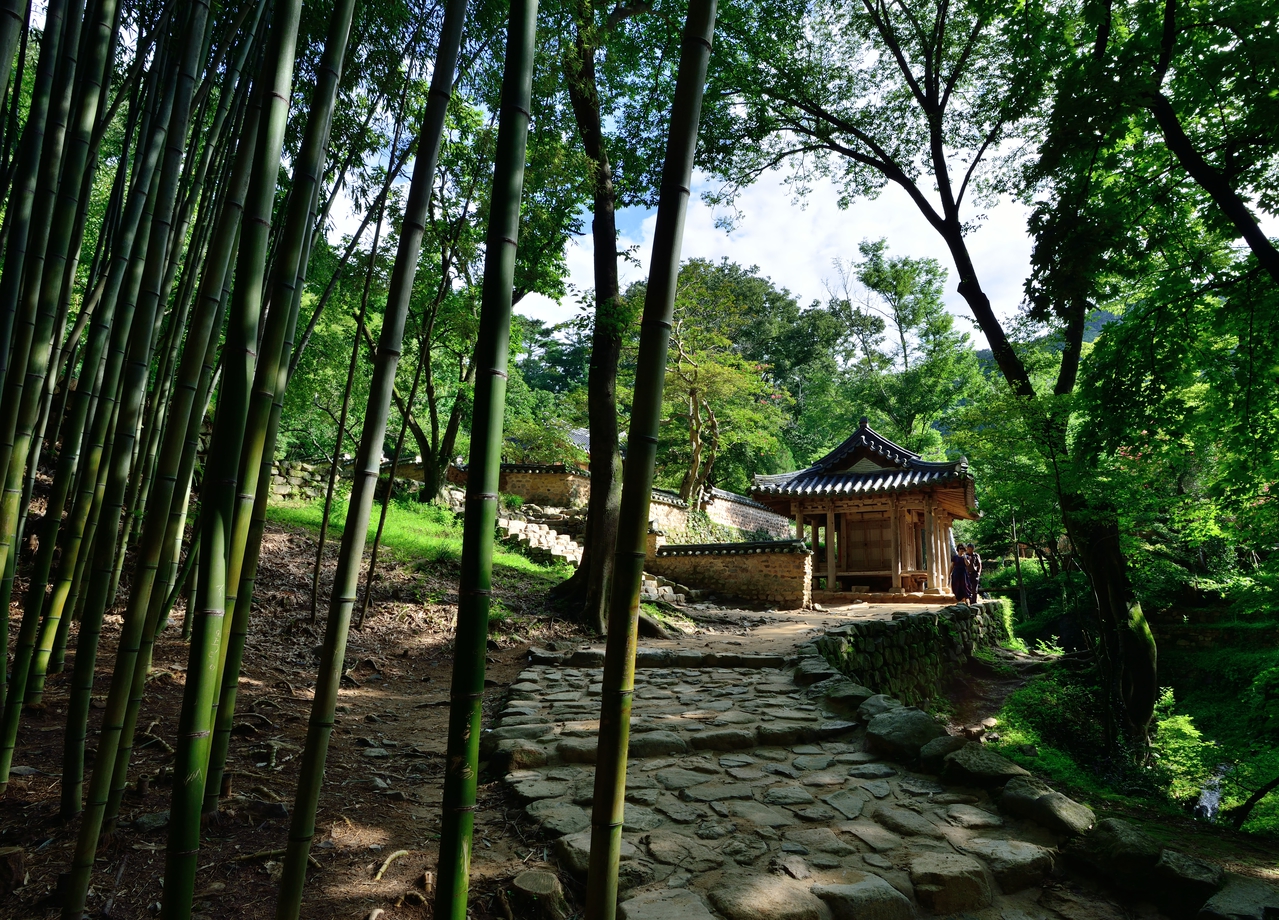
At Soswaewon Garden (소쇄원), bamboo, a stream, walls, terraces, and buildings form a close relationship. Look toward Gwangpunggak Pavilion (광풍각) beside the water and Jewoldang Hall (제월당) above it. Then notice how water passes beneath the wall: a boundary contains the garden while the stream continues through it.
Allow roughly an hour as a starting point for an unhurried visit. The garden lies outside central Damyang, so check the final bus or taxi connection carefully. Nearby literary sites make a better companion itinerary than trying to cross several distant regions in one day.
Changdeokgung Secret Garden, Seoul: royal woodland
Best for: a first encounter with Korean garden design during a Seoul trip.
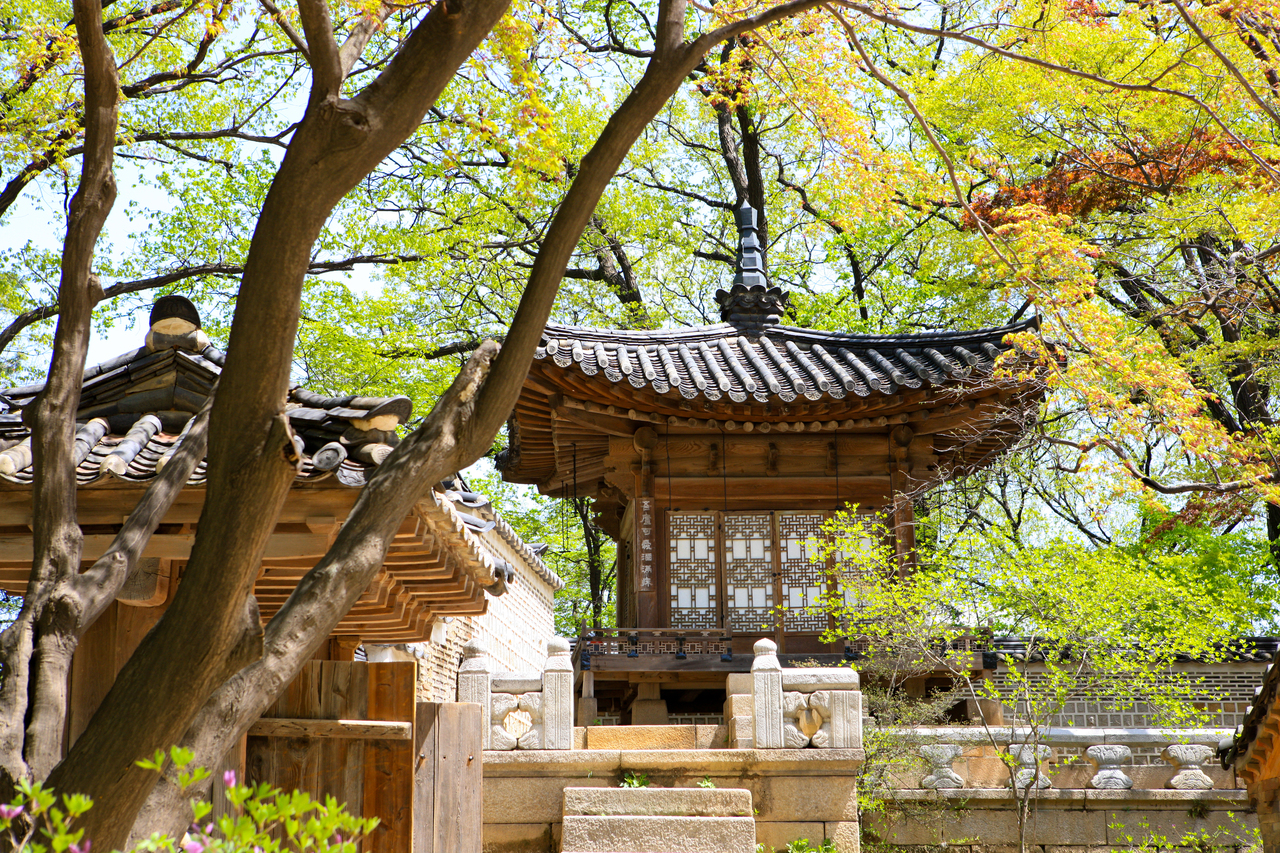
The Huwon, commonly called the Secret Garden, lies behind Changdeokgung Palace (창덕궁). Woodland paths connect ponds and buildings across uneven terrain. At Buyongji Pond (부용지), the shaped pond and pavilion composition show how deliberate design can sit within a wooded setting.
Look closely at Buyongji’s rectangular outline and round island. Their geometry expresses the traditional idea of “round heaven, square earth,” connecting a physical landscape with a view of the cosmos. It is a useful reminder that Korean gardens can be both natural in setting and precise in symbolism.
Reserve a garden entry separately from ordinary palace admission. Before booking online, register on the Changdeokgung ticketing website, then log in to reserve your preferred date and session. For the practical steps, use How to Book Changdeokgung Secret Garden and Jongmyo Online, then confirm the current schedule on the official palace website.
Byeongsanseowon Confucian Academy, Andong: landscape through architecture
Best for: seeing why borrowed scenery is also an architectural subject.
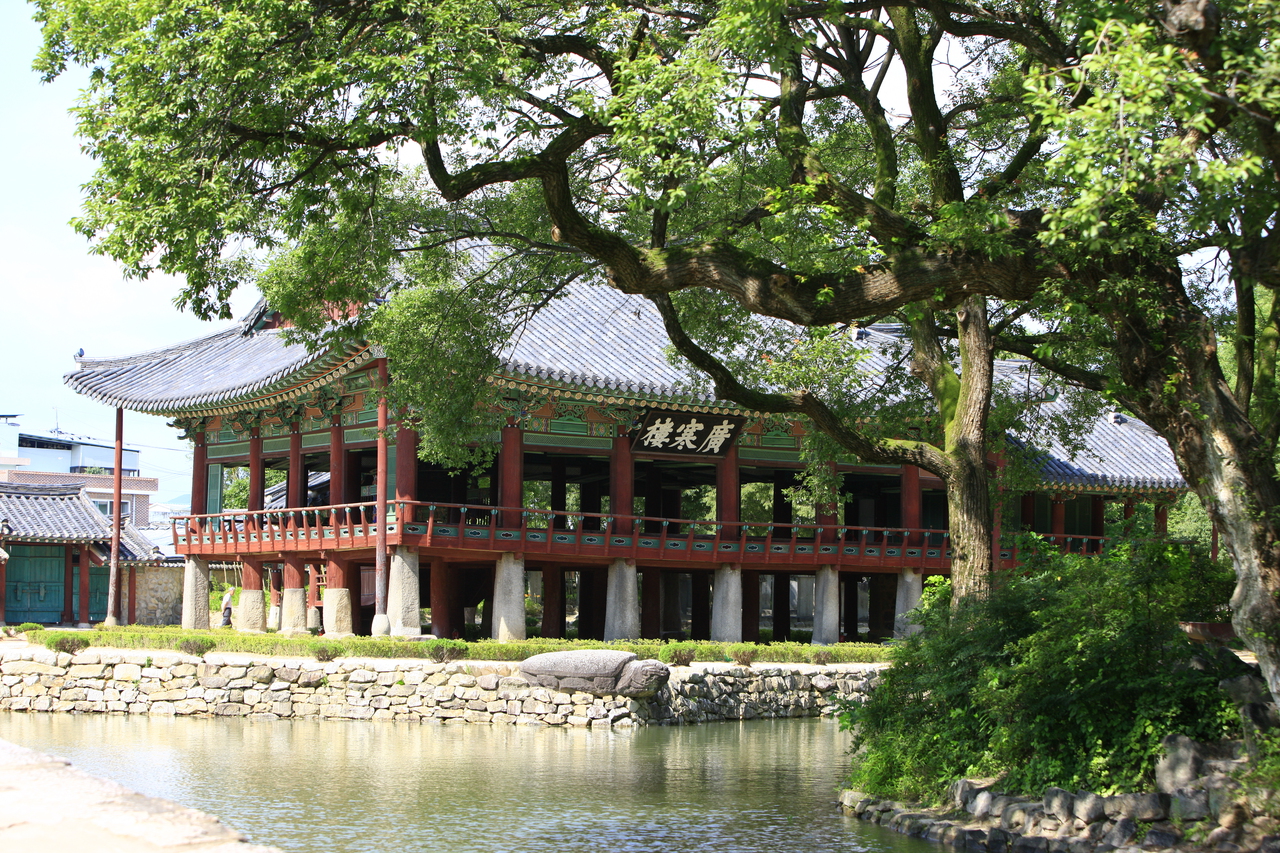
Byeongsanseowon Confucian Academy (병산서원) faces the Nakdong River (낙동강) and the mountain landscape beyond. Mandaeru Pavilion (만대루), with its open structure, makes the relationship between columns, shade, river, and hillside particularly clear.
Mandaeru’s name comes from a verse by the Tang poet Du Fu about facing a green, screen-like landscape toward evening. Students also used the pavilion to relax, compose poetry, and sing. Here, the view connects architecture with a shared literary culture.
This is an academy landscape, with spaces for learning and ancestral rites, rather than a standalone pleasure garden. Observe pavilion access restrictions on the day. Pairing it with Hahoe Folk Village (하회마을) is sensible, provided you arrange the connecting transport and return journey.
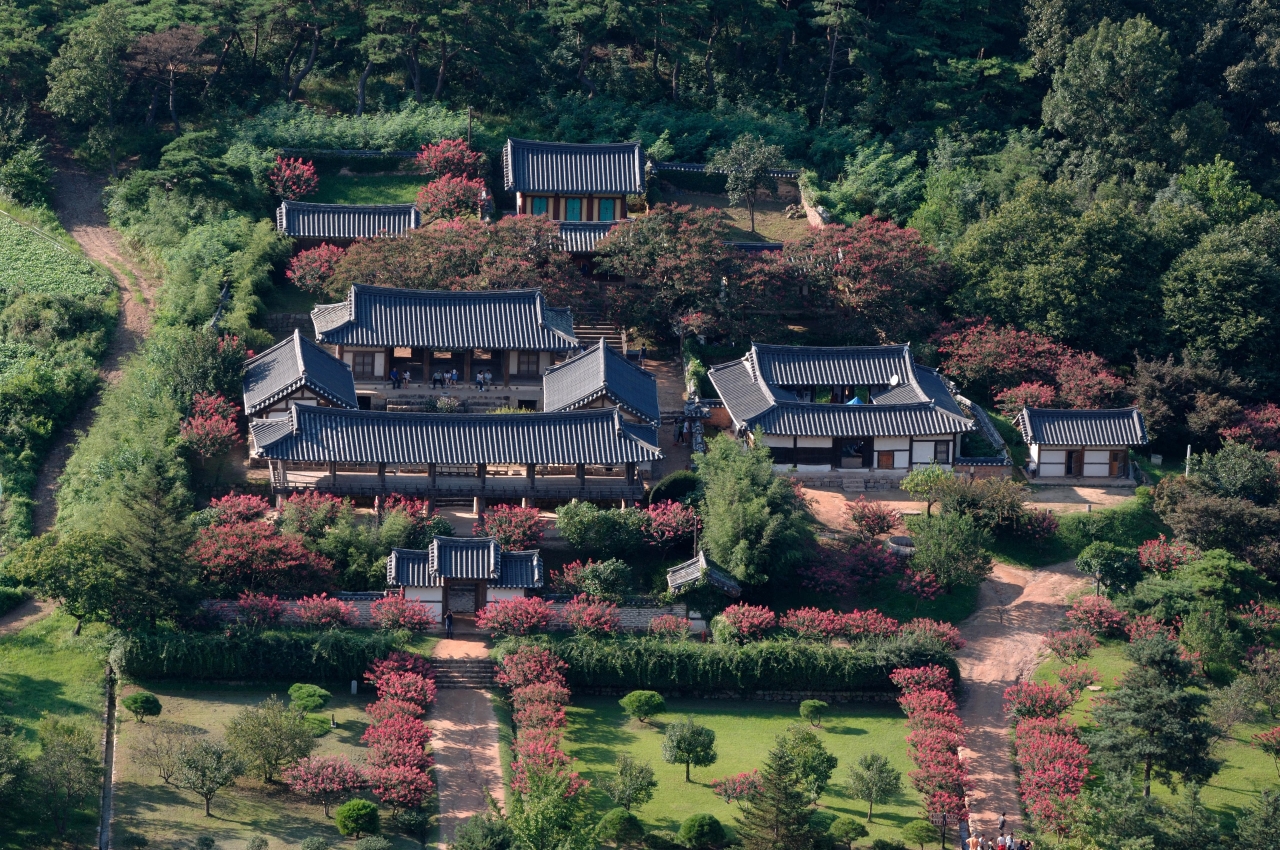
Yun Seon-do’s Garden, Bogildo: a landscape of poetry and pleasure
Best for: travelers combining literary history with a southern island trip.
On Bogildo Island (보길도), Yun Seon-do’s Garden (보길도 윤선도 원림) extends beyond the celebrated Seyeonjeong Pavilion (세연정). The broader landscape includes the residential area around Nakseojae (낙서재) and the elevated retreat of Dongcheonseoksil (동천석실).
Its ponds, exposed stones, and engineered water features demonstrate the work behind its beauty. Historical accounts also associate the Seyeonjeong area with music and dance. Readers curious about Korea’s wider musical culture can explore Joseon’s royal court instruments and their acoustic philosophy.
Yun’s The Fisherman’s Four Seasons is a Korean-language sequence of forty sijo poems. Plan the island journey around ferry operations, onward transport, and the return sailing. The garden’s different areas require separate time allocations, with a climb involved in reaching Dongcheonseoksil.
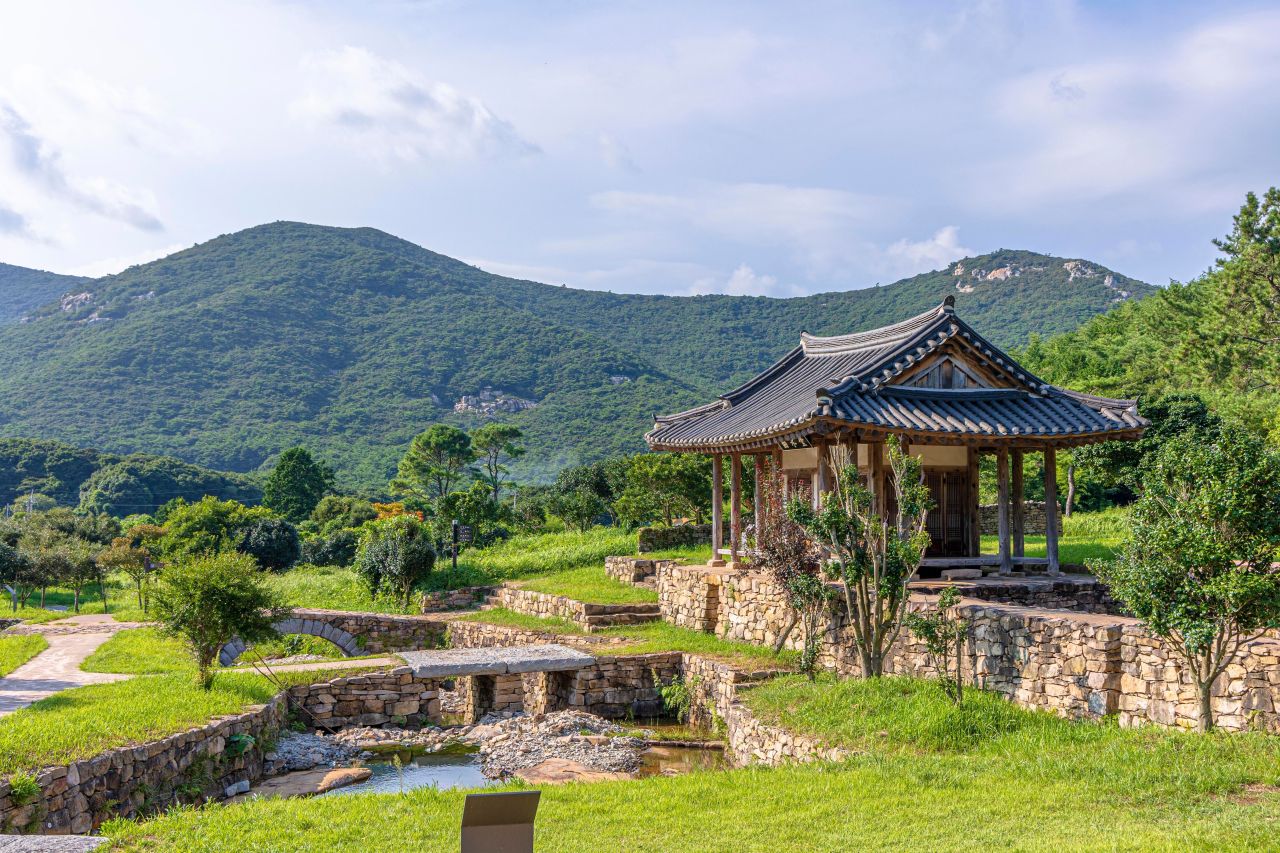
Seongyojang House, Gangneung: a garden beside a home
Best for: connecting garden design with the organization of a historic household.
Seongyojang House (선교장) brings domestic buildings, courtyards, and garden spaces together. Near the entrance, Hwallaejeong Pavilion (활래정) stands beside an artificial pond, offering a lovely example of the relationship between a place to sit and a composed view.
The estate grew through additions over time. Looking at it as a working residence helps explain why its outdoor spaces differ from a modern ornamental park. Check any tea, accommodation, or cultural programs separately; a general admission ticket should not be assumed to include them.
Published visiting hours are 9:00 a.m.–6:00 p.m. from March through October, and 9:00 a.m.–5:00 p.m. from November through February.
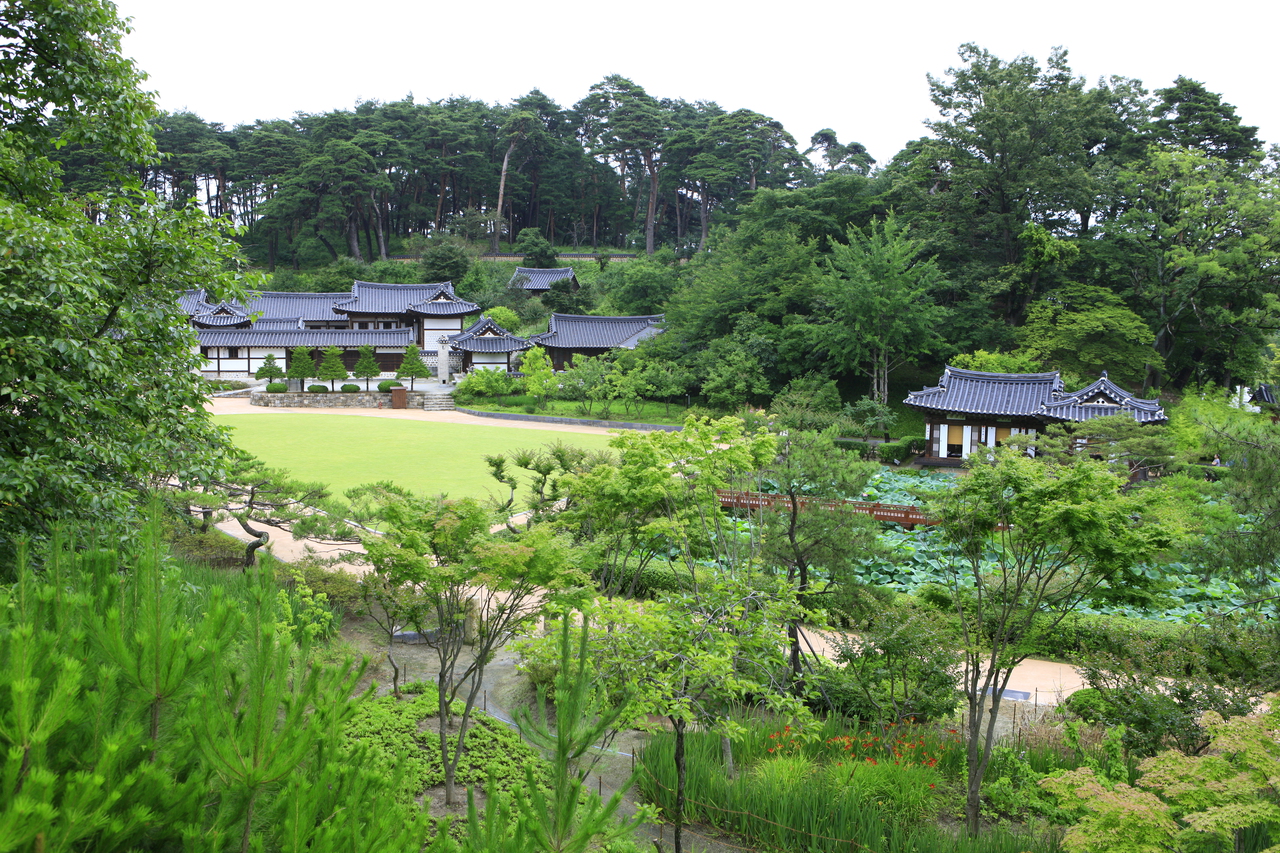
Seoseokji Garden, Yeongyang: stone, water, and meaning
Best for: a deeper exploration of scholar-garden symbolism.
Seoseokji Garden (서석지), associated with the scholar Jeong Yeong-bang, combines a pond, exposed natural stone, and buildings arranged for viewing and study. The Korea Tourism Organization’s current guide places the pond and pavilion around 1645. Individually named stones turn physical features into a landscape of ideas.
Its Four Friends Terrace brings together pine, bamboo, plum, and chrysanthemum. That combination differs from the familiar Four Gentlemen of painting, which include orchid instead of pine. This is a rewarding detour for a regional itinerary, with opening arrangements and local transport best confirmed before traveling.
Baegundong Garden, Gangjin: a landscape preserved in poetry and painting
Best for: connecting a garden visit with Korea’s literary and artistic history.
Baegundong Garden (백운동 원림) in Gangjin combines terraced planting beds with a winding water channel through the courtyard. The scholar Jeong Yak-yong, also known as Dasan, celebrated twelve scenes there in poetry and asked the Buddhist monk Choui to paint the garden.
Together, those records show how a landscape could be experienced, named, and reinterpreted through art. It makes a rewarding additional stop on a southern regional itinerary. Confirm current access arrangements and transport before making a dedicated journey.
Planning Your Visit: Tickets, Seasons, and Transport
The following are published standard adult charges checked for this guide on October 5, 2026. Age concessions, special programs, and temporary changes may affect your visit.
| Place | Standard adult admission | Planning priority |
|---|---|---|
| Changdeokgung palace and Secret Garden | KRW 8,000 total for foreign visitors aged 19–64: palace KRW 3,000 plus garden KRW 5,000 | Secure a timed garden entry and arrive early. |
| Soswaewon | KRW 2,000 | Check seasonal hours and your return connection. |
| Byeongsanseowon | Free | Confirm transport and permitted building access. |
| Yun Seon-do’s Garden | KRW 3,000 | Check closure days, ferry operations, and island transport. |
| Seongyojang | KRW 5,000 | Check seasonal hours and any separately booked programs. |
| Seoseokji | Confirm locally | Verify current access arrangements before a dedicated journey. |
| Baegundong | Confirm locally | Plan it within a Gangjin-area itinerary and verify current access. |
Changdeokgung booking details that matter
- Online release: reservations open at 10:00 a.m. Korean time six days before the visit date, excluding the visit day.
- Capacity: each session has 100 places, divided between 50 online reservations and 50 same-day tickets.
- Same-day sales: start at 9:00 a.m.; spring and autumn places can sell quickly.
- English sessions: currently listed at 10:30 a.m., 11:30 a.m., and 2:30 p.m., with an additional 3:30 p.m. session from March through November.
- Arrival: the walk from the palace entrance to the garden entrance takes at least 15 minutes. Aim to reach the palace about an hour early during busy periods.
- Current route: official guidance lists approximately 70 minutes; Okryucheon (옥류천) remains closed for heritage repairs until further notice.
- Viewing: entry is at the booked time. The official FAQ permits joining the guided tour or individual viewing within the open areas after entering with the guide.
Check the official Changdeokgung tour schedule for language sessions and route changes. The palace normally closes on Mondays, with holiday exceptions that can shift the closure to another day.
Seasonal hours and choosing a season
Soswaewon’s published hours are 9:00 a.m.–6:00 p.m. in March, April, September, and October; until 7:00 p.m. from May through August; and until 5:00 p.m. from November through February. Some travel listings give simplified hours, so check the garden’s visitor information when planning a late visit.
Yun Seon-do’s Garden lists 9:00 a.m.–6:00 p.m., with last entry at 5:30 p.m. It closes on Mondays, January 1, and the main days of Seollal and Chuseok, with a substitute closure when Monday is a public holiday. Check Wando’s current visitor guidance before arranging your sailing.
- Spring: fresh leaves and blossoms bring a changing range of colors.
- Summer: shade, water sounds, and lush foliage are rewarding, but humidity and heavy rain affect comfort and paths.
- Autumn: foliage adds color and draws visitors, particularly at Changdeokgung. Peak dates vary with weather and location.
- Winter: bare branches make slopes, rooflines, and distant views easier to read, although ice and shorter days require care.
Transport, footwear, and accessibility
For rural sites, plan the return journey before setting off. Getting to a regional station is only part of the trip; a garden may still require an infrequent bus, a taxi, or both. Naver Map and KakaoMap are useful for checking local routes. Saving the Korean place name, the actual entrance, and your return bus stop helps when arranging that final connection.
Wear shoes with reliable grip. Old stone, roots, steps, and damp paths can make a short visit surprisingly demanding. Changdeokgung’s garden contains steep sections and unpaved paths, so wheelchair and stroller users should ask about the current route rather than assuming it matches the more accessible palace grounds.
How to Look at a Korean Garden
Give yourself a few minutes without searching for the next landmark. The most revealing change may come from shifting your position rather than walking farther.
- Find the viewpoint. Look for a pavilion, doorway, or place where someone could sit and face the landscape. Where seating is permitted, compare the view from standing and seated positions.
- Look through the architecture. Notice how columns and eaves relate to the trees, water, and hills beyond.
- Follow the water. Observe where a stream enters, how a pond receives it, and how it leaves the space.
- Listen. Wind, leaves, birds, and flowing water make the experience different from a photograph.
- Read one name or poem. A translated inscription can explain why a particular tree, stone, or view mattered.
Pro Tip: When photography is allowed, include part of the pavilion or doorway in the frame. A close view of its posts or eaves with the landscape beyond can communicate borrowed scenery more clearly than a picture taken entirely outside the building.
Enter raised floors only where permitted and follow shoe-removal signs. Keep voices low near other visitors, avoid leaning on fragile structures, and leave plants and stones in place. Permission to enter a garden does not automatically include access to every pavilion or room.
On a warm day, a hand fan is a practical companion. Traditional Korean fans also offer another small connection between everyday comfort, painted landscapes, and cultural expression.
Frequently Asked Questions
Is borrowed scenery unique to Korea?
No. It is shared across East Asian garden traditions. Korean examples are distinctive through their particular terrain, architecture, uses, and cultural histories.
Which garden should a first-time visitor choose?
For a Seoul itinerary, Changdeokgung’s Secret Garden is the most practical starting point if you can secure entry. For a focused introduction to a scholar retreat, choose Soswaewon. For understanding landscape through architecture, consider Byeongsanseowon.
Are these places mainly about flowers?
Flowers can be part of the appeal, but a visit also rewards attention to water, terrain, buildings, shade, and views. A garden can be absorbing even when little is blooming.
Do I need to understand Korean or classical poetry?
You can begin with what is visible: where buildings face, how water moves, and which views open as you walk. An English tour or translated poem adds context, especially where names and inscriptions carry symbolic meanings.
Can I sit in the pavilion like people in a historical drama?
Only if access is permitted. Heritage protection, maintenance, or ceremonies may restrict a building. Enjoy the available viewpoints and follow the site’s signs and staff guidance.
Are historical dramas reliable guides to these gardens?
They offer an inviting visual starting point, but an individual production may use a filming set or a location from a different period. Visit the actual heritage site for its own history, layout, and atmosphere.
Explore More Korean Culture
Gardens belong to a wider world of objects, images, gatherings, and performances. Continue exploring through these related guides:
- Traditional Korean Alcohol Guide: Soju and Makgeolli — the drinks and traditions behind Korean social gatherings.
- Onggi: Korea’s Traditional Breathing Pottery — food storage and the material culture of Korean households.
- Najeonchilgi: Korean Mother-of-Pearl Lacquerware — craftsmanship and the decorative arts.
- Goryeo Buddhist Paintings — another major tradition within Korea’s artistic and religious history.
- The Five Epics of Pansori — stories, voices, and the pleasures of listening.
- Saingeom: The Real Sword of K-Pop Demon Hunters — a different side of traditional symbolism and belief.
The next time a historical drama pauses beneath a pavilion roof, look at what lies beyond the actors. At a real garden, that relationship between shelter and scenery becomes something you can explore yourself, one viewpoint at a time.
Korean Culture portal KCulture.com

Founder of Kculture.com and MA in Political Science. He shares deep academic and local insights to provide an authentic perspective on Korean history and society.