Weight Loss Treatments in Korea: A Traveler’s Guide to Body Contouring and Obesity Care
Weight loss treatments in Korea fall into two different categories: liposuction and device treatments reshape a specific area, while medical obesity care aims to reduce overall weight and related health risks. If you are traveling for a flatter abdomen, slimmer thighs, or a prescription injection, the right first step is to decide which problem you actually want to solve. This guide explains the options, real published price examples, risks, and the follow-up questions that matter after you fly home.

- Why Consider Korea for Weight Loss Treatments?
- Choose Weight Loss or Body Contouring First
- Does “Body Correction” Mean Posture Correction?
- Liposuction and Minimally Invasive Fat Removal
- Fat Freezing and InMode Body Treatments
- Prescription Injections and “Korean Diet Pills”
- What About Hanbang Diet Prescriptions?
- What Treatments Cost in Korea
- How to Plan a Safe Medical Trip
- Frequently Asked Questions
- More Medical Travel Guides
Why Consider Korea for Weight Loss Treatments?
Korea offers a useful combination for international patients: a wide choice of surgical and nonsurgical services, clinics experienced with self-paying patients, and a public system for checking whether a medical institution is registered to serve foreign patients. Consultations, treatment, and some follow-up visits can often be coordinated within one trip. Published promotional prices can also be attractive, particularly for a small device treatment, but the total cost depends on the area treated, number of sessions, medication, and time spent recovering in Korea.
That convenience is most valuable when it helps you make a good decision. A registered institution has met the requirements of Korea’s foreign-patient registration system, including medical malpractice liability insurance, but registration is not a promise of a particular result. It is also distinct from the separate accreditation program for international-patient services. Check the Medical Korea registered-institutions directory for the actual branch you will visit, then ask who will perform the treatment and who will respond if a problem appears after you leave.
Local note: Korean clinic menus may group treatments under “diet” or “obesity management” even when they only address one patch of subcutaneous fat. Ask what change the treatment is intended to produce: kilograms lost, waist measurement, skin appearance, or a change in body outline.
Choose Weight Loss or Body Contouring First
A protruding abdomen can involve soft fat under the skin, fat around internal organs, loose skin, weakened abdominal muscles, or more than one of these. A photograph cannot reliably sort them out. Liposuction removes subcutaneous fat; a cooling or heating device treats a limited area near the skin. Neither removes visceral fat or serves as a primary treatment for obesity-related illness. If your goal is to lose 10 kilograms, improve blood pressure, or manage diabetes risk, begin with a medical assessment rather than a contouring package.
| Your main goal | Options to discuss | What to expect |
|---|---|---|
| Change one persistent bulge | Liposuction, fat freezing, or another suitable contouring treatment | A local shape change; the scale may barely move |
| Improve mild cellulite or skin appearance | A suitable radiofrequency or other device treatment | Often subtle or temporary changes; repeat visits may be proposed |
| Lose substantial overall weight or address health risks | Nutrition and activity support, medical evaluation, prescription treatment where appropriate | Ongoing care and monitoring, including after you return home |
| Address loose skin after major weight loss | Assessment for skin-removal surgery or another tailored approach | Fat removal alone may leave the main concern unchanged |
Korean obesity guidelines use a BMI of 25 as a diagnostic threshold, lower than the familiar BMI 30 threshold in some other countries. That does not mean every person with a BMI of 25 qualifies for every prescription weight-loss injection. Product-specific Korean indications, medical history, and the prescribing doctor’s judgment are separate considerations.
Does “Body Correction” Mean Posture Correction?
Sometimes it does. In Korea, chehyeong gyojeong (체형교정), or “body correction,” may refer to rounded shoulders, spinal alignment, movement, or persistent neck and back discomfort. Those concerns call for a different consultation from fat reduction. An orthopedic or rehabilitation medicine clinician can assess symptoms and decide whether examination, imaging, or rehabilitation is appropriate. Licensed Korean medicine doctors may offer Chuna (추나) manual therapy. Pilates and stretching studios provide exercise services, but a fitness class is not a diagnosis or a treatment for a medical condition.
If an advertisement promises to “correct your body,” ask what is being corrected, who will assess you, and whether the appointment is medical care or exercise instruction. Neither posture therapy nor a body-contouring device should be expected to solve the other problem.
Liposuction and Minimally Invasive Fat Removal
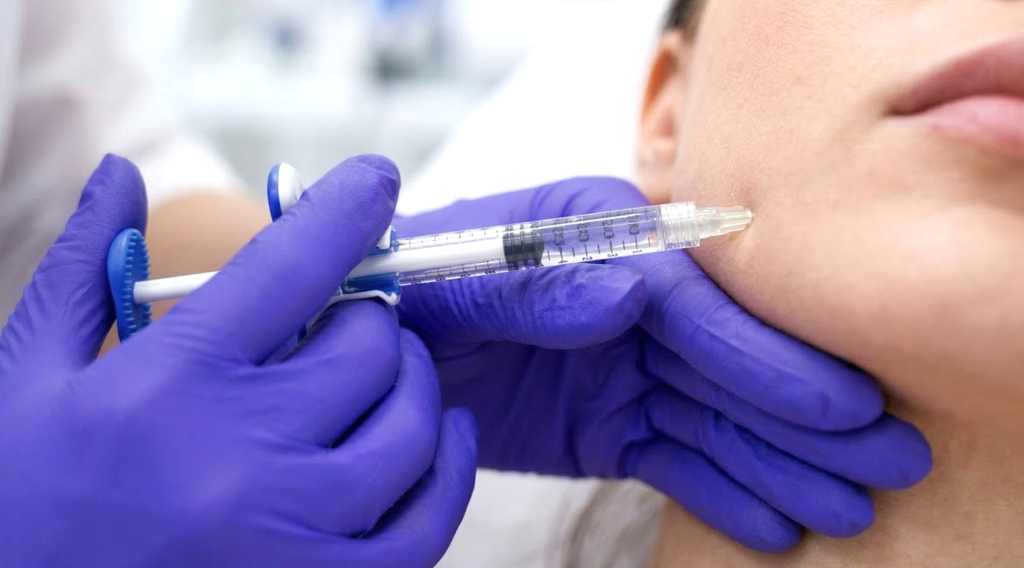
Liposuction uses a narrow cannula through small skin openings to suction fat from a planned area. It can make a larger local contour change than a brief surface-device session, but it is surgery. Consultation should cover the exact boundaries of the area, the surgeon’s plan, anesthesia, expected scars, compression garments, follow-up appointments, and how long swelling can obscure the result. Risks include bleeding, infection, uneven contours, anesthesia complications, and blood clots. The right approach depends on an in-person examination, not a promise made from a promotional photo.
You may also see LAMS or other branded descriptions of fat extraction under local anesthesia. A smaller incision and local anesthesia can change the experience, but a cannula still enters the body and removes tissue. Ask about the amount and location of fat to be removed, anesthesia and pain control, and the same practical questions about recovery and complications. It should not be compared with a completely noninvasive device as if the two require identical aftercare.
If loose skin, an abdominal wall problem, or visceral fat is the dominant issue, removing subcutaneous fat may disappoint. Discuss whether the proposed operation addresses what bothers you before paying a deposit. Anyone with a history of clots, significant heart or lung illness, prior abdominal surgery, or medicines that affect bleeding should disclose that history to the treating team for an individual risk assessment.
Fat Freezing and InMode Body Treatments
CoolSculpting and other fat-freezing treatments
CoolSculpting is a brand of cryolipolysis, often called fat freezing. An applicator draws in a pinchable bulge and cools it. The body clears affected fat cells gradually, so the visible change may take two to three months. The consultation should specify the applicator and number of cycles for each side, whether a second session is anticipated, and what result is realistic for your anatomy.
Bruising, soreness, temporary numbness, and occasionally a cold injury are possible. A particularly important rare complication is paradoxical adipose hyperplasia: the treated fat enlarges and firms up instead of shrinking, sometimes becoming apparent months after the traveler has returned home. It may require surgery. Cold-sensitive conditions, a hernia, or an abdominal wall weakness can also make treatment inappropriate. Review these issues with the clinician rather than booking from a photo alone.
InMode Body FX and other radiofrequency treatments
Body FX uses radiofrequency energy with suction; it is a different technology from fat freezing. Clinics may offer it for localized contour or cellulite concerns, but a short session is not equivalent to surgical fat removal or long-term weight management. Some radiofrequency effects on circumference or cellulite can be temporary. Bruising, redness, discomfort, blistering, and burns are possible; tell the clinician about implants, metal in the treatment area, skin problems, and relevant medical history.
Ask whether the quoted service is Body FX rather than a facial InMode treatment. In Korea, an advertised “two areas” can mean two small handpiece-sized patches, not two entire thighs. Confirm the mapped treatment area and minutes on the written plan. These details matter more than the device name alone.
Prescription Injections and “Korean Diet Pills”
Saxenda is a daily liraglutide injection; Wegovy (semaglutide) and Mounjaro (tirzepatide) are weekly injections. They are prescription treatments for eligible patients as part of an ongoing weight-management plan, not a one-time cosmetic add-on to a weekend in Seoul. Korean regulators have warned against misuse and describe GLP-1 obesity medicines as prescription-only for adults meeting the applicable initial BMI and health-condition criteria. A visitor may request an assessment, but a prescription is never guaranteed by a booking or a promotional price.
The clinician needs to review medical history, current medicines, pregnancy plans where relevant, side-effect risks, and the product’s Korean-approved indications. Nausea and vomiting can disrupt a trip; severe or persistent symptoms need medical advice. Doses are normally started and adjusted over time under supervision. Before beginning in Korea, arrange a clinician at home who can review the records, continue or reconsider treatment, and confirm that the same medicine and formulation are available there.
Check the package carefully when comparing “per pen” prices. A Korean Wegovy multidose pen contains four weekly doses at its labeled strength. That does not make one pen a complete long-term course. A Saxenda pen’s duration changes with the daily dose, and products differ in packaging and supply. Ask for the exact generic and brand name, strength, number of pens, needles, dispensing pharmacy, storage instructions, consultation charge, and total amount due. A low-priced “two-week diet-pill prescription” may refer to the consultation or prescription service rather than the price of the tablets.
Other oral appetite-suppressing medicines may be offered under the broad label “Korean diet pills.” Do not assume they are equivalent to GLP-1 injections or suitable to import into your home country. Ask the doctor for the full ingredient names, intended duration, interactions, monitoring plan, and a written prescription record.
What About Hanbang Diet Prescriptions?
Hanbang is Korean traditional medicine. A Korean medicine doctor may prescribe an individualized herbal formula as pills, granules, or liquid. There is no single standardized “Hanbang diet pill” whose price, contents, or effects apply to everyone. Some formulas contain mahuang (Ephedra), which deserves a specific discussion about the amount prescribed, palpitations, sleep problems, blood pressure, existing heart conditions, and possible interactions with medicines or supplements.
Korea has a clinical practice guideline for traditional-medicine obesity care, but the strength of evidence varies by intervention. An individualized herbal prescription should not be presented as a proven substitute for a medicine with a different evidence base or as an automatically safe natural product. Bring the complete ingredient list to both your Korean medicine doctor and your regular physician, particularly if you also use a prescription injection or an oral appetite suppressant. Ask about the full 30-day consultation and dispensing cost, follow-up, and whether each ingredient can legally enter your destination and any transit country.
What Treatments Cost in Korea
The following are publicly displayed examples checked on September 29, 2026 from individual branches found in Medical Korea’s foreign-patient registration directory, whose displayed list was last updated in July 2026. They are not national averages or guaranteed prices for a foreign patient. The institutions are deliberately unnamed here; independently verify the exact branch and obtain a fresh quote before traveling.
| Service | Published example | What the number does and does not tell you |
|---|---|---|
| Abdominal liposuction | From US$4,490 | A registered Seoul clinic’s starting price; anatomy, area, anesthesia, and aftercare may change the total. |
| Thigh liposuction | From US$5,240 | A starting price at the same registered clinic; confirm which parts of both legs are included. |
| Additional liposuction area | From US$2,990 | An add-on area in that clinic’s price guide, not a standalone quote for every arm or flank procedure. |
| Body InMode FX | KRW 159,000 for two small areas, 12 minutes | A promotional session at a registered Seoul branch; its regular displayed two-area price is KRW 250,000. Check conditions and repeat-session cost. |
| Prescription-injection promotions | KRW 120,000 for a daily-injection listing with needles; KRW 400,000 for a listed starting-stage weekly-injection pen | A registered branch masks product names on its promotional page and uses “prescription” wording. Product, dose, dispensing, doctor’s fee, and final medicine cost require confirmation. These are not reliable monthly treatment estimates. |
| CoolSculpting or an individualized Hanbang prescription | Written quotation needed | No comparable current final public price was verified at the checked registered providers; cycles, ingredients, and follow-up vary. |
A strong value comparison uses the total written price in Korean won: exactly which areas and sides, number and duration of sessions, tests, anesthesia, garment, medicines, interpretation, follow-up, and any taxes. Promotional offers can end early or have first-visit conditions. Add flights, lodging, lost work time, and potential care after returning home before deciding that a treatment is cheaper than one available locally. For 2026 treatment, do not budget for the former foreign-tourist cosmetic-procedure VAT refund; the statutory special provision specifies services supplied by December 31, 2025. Ask whether the quote already includes applicable VAT.
How to Plan a Safe Medical Trip
- Before booking: Verify the exact clinic branch in the registration directory. Ask for the treating doctor’s name and qualifications, an English-language consultation, the device or medicine’s exact name, and a written itemized quote. Share your medical history privately through the clinic’s secure channel.
- At the consultation: Explain whether you want a smaller measurement, a different silhouette, or improved health. Ask what will not change, what alternatives exist, whether a package is necessary, and who handles emergencies after hours. Confirm who will personally perform the procedure. Request consent forms and aftercare instructions in a language you understand, and check that the coordinator’s explanation agrees with the doctor’s. Decline any procedure if the consultation does not answer those questions.
- Build in recovery time: Surgery requires a personal follow-up and travel plan. The safe date to fly depends on the operation, complications, clot risk, and length of flight; ask the surgeon before buying a fixed return ticket. Even device treatments can leave bruising or delayed effects that you may notice after departure. Consider suitable recovery accommodation in Seoul.
- Prepare the handover: Request an English summary of the procedure, anesthesia, medicines, any complications, and instructions for follow-up. Arrange a clinician at home for ongoing injections or a concern that arises weeks later. Check the medical tourism insurance guide and confirm specifically whether elective treatment complications are covered.
- Plan the flight and medicine transport: Keep prescribed medicines in labeled original packaging with documentation. Check both destination and transit-country rules for drugs, needles, and herbs; also ask about required temperature control for an injectable product. The return-home checklist covers the broader paperwork.
Seek prompt medical assessment for worsening pain, fever, spreading redness, significant bleeding, chest pain, shortness of breath, or a swollen painful leg after surgery. Do not rely on a messaging app alone for urgent symptoms. Sensitive choices about eligibility, drug combinations, anesthesia, and when to fly belong in a consultation with the treating doctor.
Frequently Asked Questions
Can liposuction or CoolSculpting make me lose 10 kilograms?
Neither is a primary treatment for substantial overall weight loss. They target a local contour. Ask for an obesity-care assessment if body weight or metabolic health is your main concern.
Is a nonsurgical session risk-free and easy to fit into a one-day trip?
No. A device treatment can be convenient, but bruising, burns, sensory changes, or delayed complications are possible. LAMS and similar cannula procedures are minimally invasive fat removal, not surface-only device sessions.
Can I start Wegovy or Mounjaro while visiting Korea?
Only after a Korean doctor assesses whether a specific product is suitable and you have a realistic follow-up plan at home. A few days in Korea are not enough to complete dose adjustments and long-term monitoring. Check home-country availability before starting.
Can I combine a Hanbang formula with an injection?
Do not decide that combination on your own. Show both clinicians the complete herbal ingredients and doses, prescriptions, over-the-counter drugs, and supplements so they can assess interactions and individual risks.
How do I find an appropriate clinic without relying on advertising?
Start with Find Clinics, confirm the actual branch in the official Medical Korea directory, and compare consultations and itemized estimates. Registration helps you check a basic requirement; your own medical assessment and clear follow-up plan remain essential.
More Medical Travel Guides
For a broader view of Korean care, read advanced treatments for travelers. If you are planning other appointments on the same trip, these guides explain the different consultation and recovery needs of Korean head spas, facelift and stem-cell discussions, acne and scar care, SMILE LASIK, dental tourism, and hair transplantation. For a gentler beauty appointment rather than medical weight treatment, see the AI skin analysis and personal color guide.
Korean Culture portal KCulture.com

The KCulture Editorial Team is dedicated to providing deep insights and accurate information about the vibrant world of Korean culture.