Traditional Korean alcohol is far broader than the green bottles of soju and sweet plastic bottles of makgeolli familiar from K-dramas. It is a family of cloudy grain brews, clear rice wines, distilled spirits, flower wines, fruit drinks, and fortified summer liquors, many shaped by Korea’s distinctive fermentation starter, nuruk. This traditional Korean alcohol guide explains how those drinks developed, what makes them different, and how to taste them intelligently while visiting Korea.
The easiest way into this world is to begin with soju and makgeolli—but not to stop there. Behind them lies the culture of gayangju, alcohol once brewed in homes for ancestral rites, seasonal gatherings, farm work, honored guests, and family celebrations.
- Traditional Korean Alcohol Guide: What Counts as Sool?
- Soju: From Goryeo Distillation to Green Bottles
- Traditional Distilled Soju Worth Seeking Out
- Makgeolli: Korea’s Cloudy Farmhouse Brew
- Why Regional Makgeolli Tastes Different
- Nuruk: The Microbial Heart of Korean Sool
- Beyond Soju and Makgeolli: Other Korean Drinks
- Rituals, Hospitality, and Korean Drinking Culture
- The Modern Revival: Heritage, Craft, and New Rules
- Where to Experience Traditional Korean Alcohol
- A First-Tasting Plan and Practical Tips
- Traditional Korean Alcohol FAQ
- Continue Exploring Korean Traditional Culture
Traditional Korean Alcohol Guide: What Counts as Sool?
The Korean word sool or sul (술) simply means alcohol. “Traditional liquor” can be used culturally for drinks connected to inherited Korean ingredients and methods, while the legal and tax definitions used on modern labels are narrower and sometimes confusing. A bottle can be historically inspired without qualifying for a government category called “traditional liquor,” and a legally classified yakju does not necessarily contain medicinal herbs.
A useful map begins with one fermented grain mash:
| Style | How It Is Made | Typical Character |
|---|---|---|
| Takju / makgeolli | Fermented grain drink strained while retaining fine solids | Cloudy, tangy, grainy, lightly sparkling; often about 4–9% ABV |
| Cheongju / yakju | The clearer liquid is separated, filtered, and sometimes matured | Clear to amber, fragrant, sweet or dry; often about 12–18% ABV |
| Distilled soju | A fermented grain base is distilled | Concentrated grain and fermentation aromas; roughly 20–50% ABV or higher |
| Gwasilju and liqueurs | Fruit may be fermented or infused in alcohol | Fruit-led; sweetness and strength vary greatly |
This family resemblance matters. Historically, cloudy liquor, clear liquor, and distilled liquor were not three unrelated inventions. They could be different outcomes from the same brewing knowledge. That is why learning about makgeolli makes traditional soju easier to understand.
Soju: From Goryeo Distillation to Green Bottles
A spirit whose name means “burned liquor”
The characters behind soju (燒酒) can be read as “burned liquor,” a reference to heating a fermented brew and collecting its distilled vapor. Fermented grain alcohol existed on the peninsula much earlier, but the prevailing historical view connects the spread of distillation in Korea to the 13th-century Goryeo period, when Mongol-led Yuan forces moved people and technologies across Eurasia. Distillation itself did not originate in Korea or with the Mongols; the empire was a transmission route for techniques with deeper West and Central Asian histories.
The Yuan-led invasions of Japan in 1274 and 1281 turned parts of Goryeo into staging and supply zones. Regions associated with Yuan military movement—including Gaegyeong (개경), today’s Kaesong (개성), and Andong (안동)—became famous for distilled liquor. The old Kaesong expression arakju is sometimes cited as a linguistic echo of Middle Eastern araq, although a word resemblance alone cannot prove the entire transmission route. Jeju (제주) later developed its own millet-based distilling tradition.
Early soju was expensive because distillation concentrates alcohol but reduces volume. It was suitable for court use, elite households, medicine, ritual, and valued guests rather than everyday inexpensive drinking. Its strength also caused concern. The 1393 entry for Prince Jinan (진안대군) Yi Bang-u, King Taejo’s eldest son, says that he habitually drank heavily and became ill and died after drinking soju. The record cannot provide a modern medical diagnosis, but it shows that distilled liquor was already familiar—and recognized as dangerous when abused—at the beginning of the Joseon Dynasty.
How the modern green-bottle style emerged
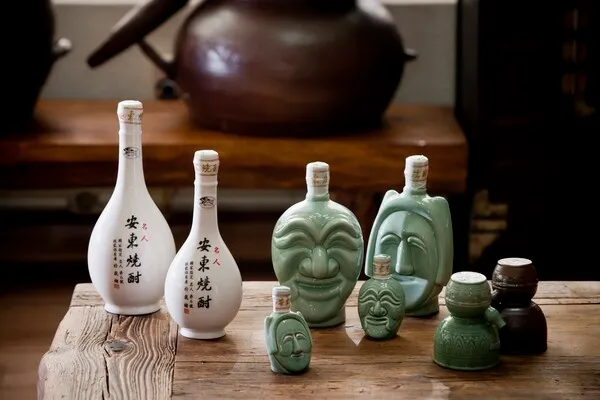
The green bottle most visitors meet is usually hwiseoksik soju, or diluted soju. Its industrial rise was accelerated by food scarcity. In 1965, the South Korean government restricted the use of food grains for alcohol production under grain-management policy. Traditional grain distillers could not continue normally, while large producers could obtain highly rectified neutral spirit made from economical starch sources.
Modern diluted soju begins with neutral alcohol distilled to a very high purity from materials that may include cassava or tapioca, sweet potato, or grains. Producers blend it with water and, depending on the recipe, sweeteners, acidity regulators, or flavoring. The result is consistent, inexpensive, and usually in the mid-teens to low twenties in alcohol. Recipes differ, so it is inaccurate to say that every green-bottle brand uses the same raw material or the same sweetener.
Restrictions were gradually relaxed, and grain-distilled soju re-emerged commercially from the 1990s onward. Today the word soju therefore covers two very different experiences:
| Feature | Diluted Soju | Distilled Soju |
|---|---|---|
| Starting point | Highly rectified neutral alcohol purchased or produced at industrial scale | A fermented mash made from rice, wheat, barley, millet, sweet potato, or another starch source |
| Distillation | Continuous distillation removes most source aroma before blending | Usually batch, atmospheric, or vacuum distillation designed to retain selected character |
| After distillation | Blended with water and, depending on the product, sweeteners or acidity regulators | Usually rested and adjusted with water; additions depend on the individual product |
| Typical strength | Often in the mid-teens to low twenties ABV | Approximately 20–50% ABV, with exceptions |
| Main appeal | Consistency, affordability, and easy pairing | Grain, fermentation, and distillation aroma |
📌 Local Note: A green bottle is packaging, not a guarantee of production method. Check the Korean label for 희석식 소주 (diluted soju) or 증류식 소주 (distilled soju).
Traditional Distilled Soju Worth Seeking Out
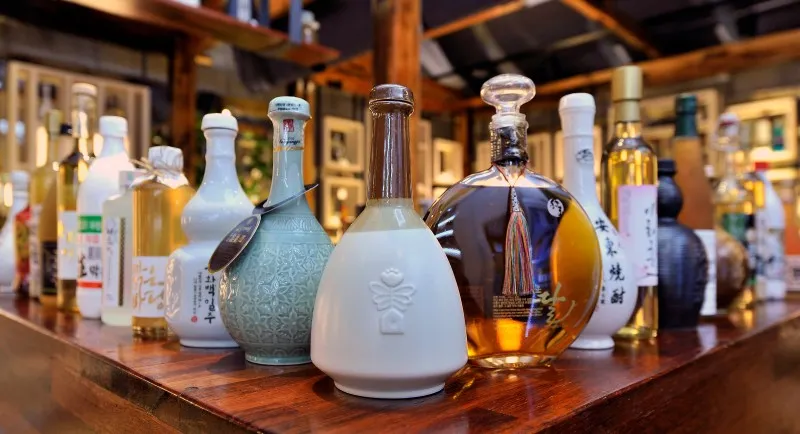
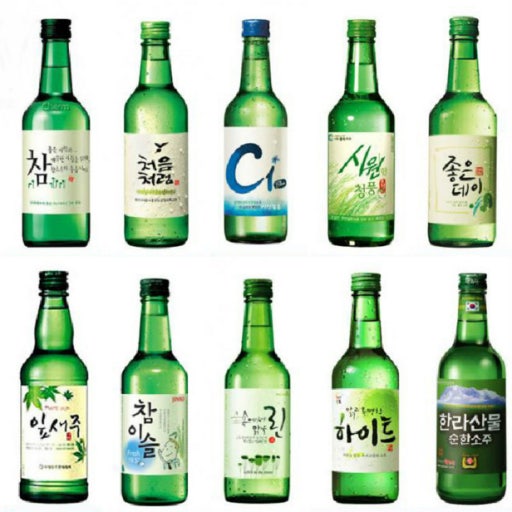
Traditional soju is not simply stronger green-bottle soju. The pleasure is in aroma: steamed grain, cereal sweetness, flowers, ripe fruit, nuts, herbs, or savory fermentation can remain after distillation. In the traditional sojugori (소줏고리), a fermented brew is heated in the lower vessel; alcohol-rich vapor rises, is cooled in the upper chamber, and condenses before flowing from a side spout. Surviving stills may be ceramic or metal, and their shapes vary by region.
Many contemporary distillers combine inherited recipes with modern equipment. Atmospheric distillation tends to produce a fuller, more forceful profile, while vacuum distillation works at a lower boiling temperature and can create a lighter, cleaner spirit. Neither method is automatically superior, and “distilled soju” does not by itself guarantee traditional nuruk, pot distillation, or an additive-free recipe.
| Drink | Origin and Identity | What to Notice |
|---|---|---|
| Andong Soju (안동소주) | Andong’s clan and ritual culture preserved several rice- and wheat-based distilling lineages | Dry grain, toasted or fruity aromas, and a warming finish; versions range from approachable low-proof bottlings to spirits above 40% ABV |
| Munbaeju (문배주) | A northern Korean tradition associated with Pyongyang (평양), commonly made from grains including millet and sorghum | Its celebrated wild-pear-like fragrance is fermentation-derived; pear is not the defining ingredient |
| Igangju (이강주) | A Jeonju (전주) specialty based on distilled liquor flavored with pear and ginger, often joined by turmeric, cinnamon, and honey | Fragrant, gently spicy, and rounded rather than neutral |
| Gosori-sul (고소리술) | Jeju spirit traditionally linked to millet fermentation and the island’s ceramic still, the gosori | Earthy grain, nutty tones, and a distinctly Jeju story shaped by an island where rice was once scarce |
Andong is particularly rewarding because “Andong Soju” is not a single universal recipe. Different makers use different grains, starters, stills, proofs, and resting periods. Comparing two bottles is more informative than treating one brand as the final definition.
Makgeolli: Korea’s Cloudy Farmhouse Brew
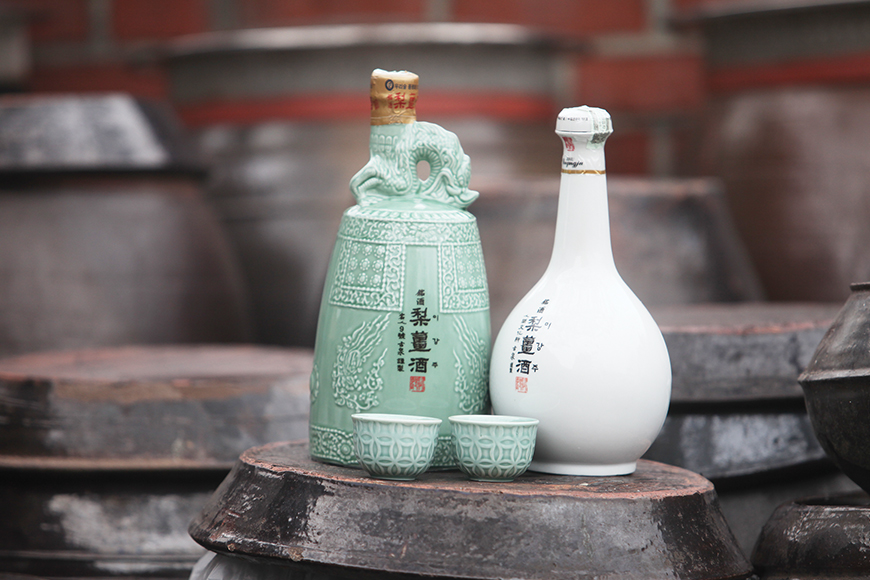
Makgeolli belongs to one of Korea’s oldest documented families of grain alcohol. Ancient and medieval records describe brewed and cloudy liquors, but those references should not be mistaken for proof that every early drink tasted exactly like the refrigerated bottle sold today. The modern word comes from an expression meaning liquor that has been “just” or “roughly” strained.
In a basic process, cooked grain, water, and a fermentation starter are mixed and left to ferment. Enzymes turn grain starch into fermentable sugar while yeasts convert sugar into alcohol. The brew is strained but not polished into complete clarity, leaving suspended rice material, proteins, acids, and aromatic compounds. That is why makgeolli can taste creamy, cereal-like, tart, fruity, earthy, or sparkling at the same time.
From ritual table to farmers’ refreshment
For centuries, households made alcohol for ancestor memorial rites, weddings, seasonal observances, and guests. Rural workers also drank cloudy liquor as nongju, or “farmers’ alcohol,” often with a between-meal snack during hard labor. That history explains makgeolli’s enduring image as nourishing and communal, but it should not be read as modern health advice: it is still alcohol.
Joseon-era household books reveal just how sophisticated home brewing became. Sangayorok, compiled in the 15th century, and the 17th-century Eumsik Dimibang recorded multiple recipes, brewing stages, seasonal methods, and ways to control flavor and preservation. Suunjapbang (수운잡방), compiled in the Andong area in the 16th century, also preserves recipes including wheat-based distilled liquor. There was no single national household recipe. This culture of family brewing is called gayangju (가양주).
Colonial liquor taxation and licensing, beginning in the early 20th century and tightening under the 1916 Liquor Tax Ordinance, pushed production away from homes and toward licensed businesses. Postwar poverty and the 1965 grain restrictions transformed the drink again: wheat-flour makgeolli and standardized commercial starters became common when rice was protected as food. Rice-based brewing later returned, followed by today’s craft revival.
Live, pasteurized, sweet, dry, and everything between
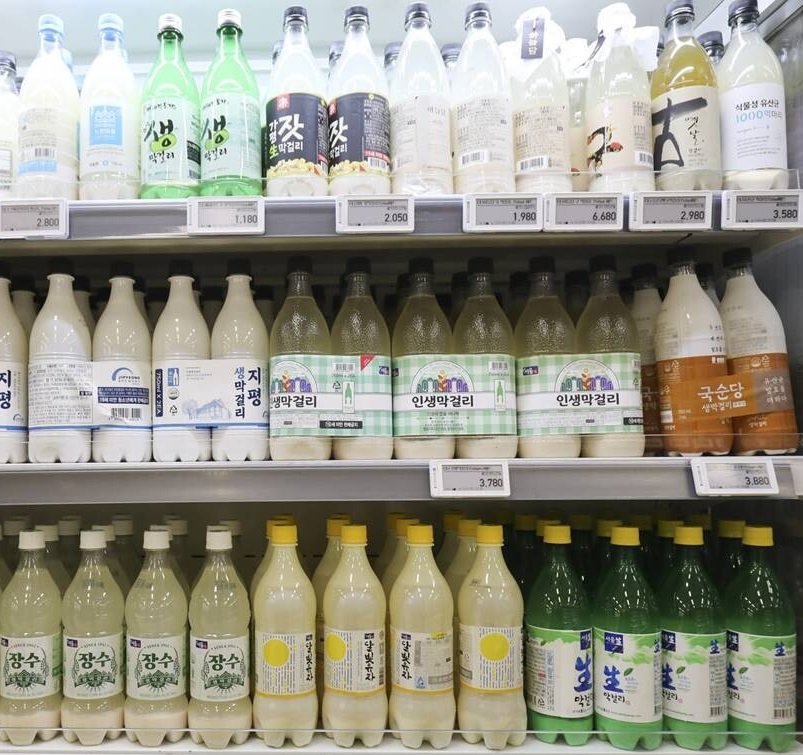
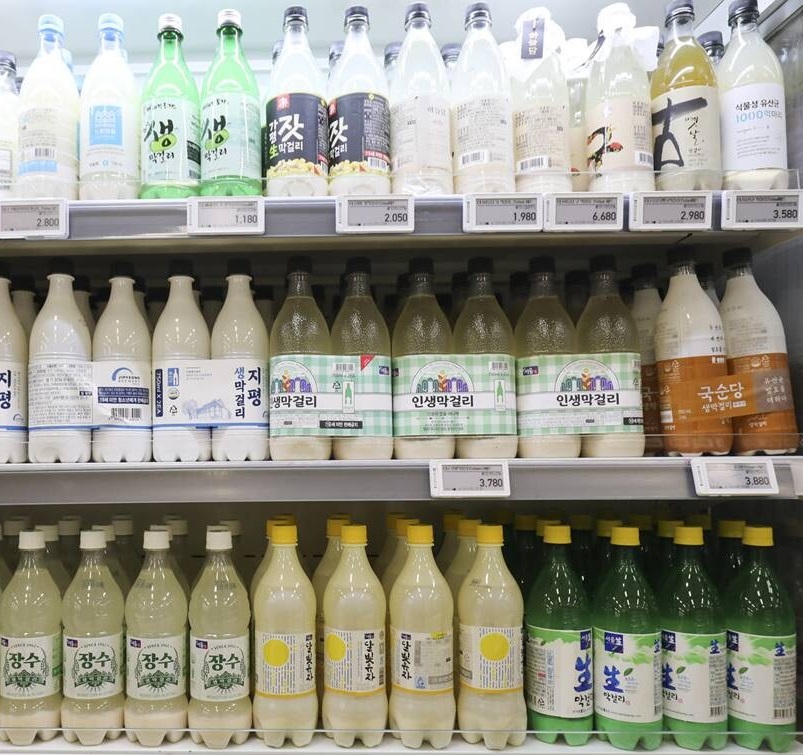
- Saeng makgeolli: unpasteurized makgeolli whose surviving yeast and other microorganisms can continue changing the drink in the bottle. It needs refrigeration and may build pressure.
- Pasteurized makgeolli: heat-treated for stability and longer distribution. It is often easier to take home or export.
- Sweetened commercial makgeolli: may use approved sweeteners to keep flavor consistent without leaving large amounts of fermentable sugar.
- Craft makgeolli: not one legal flavor category. It may be dry or sweet, still or sparkling, highly polished or deliberately rustic.
💡 Pro Tip: Never shake a cold bottle of live makgeolli violently. Keep it upright, gently roll or invert it if you want the sediment mixed, then loosen the cap slowly and pause if foam rises. Some tasting bars first pour the clear upper layer and then the mixed portion so you can compare them.
Why Regional Makgeolli Tastes Different
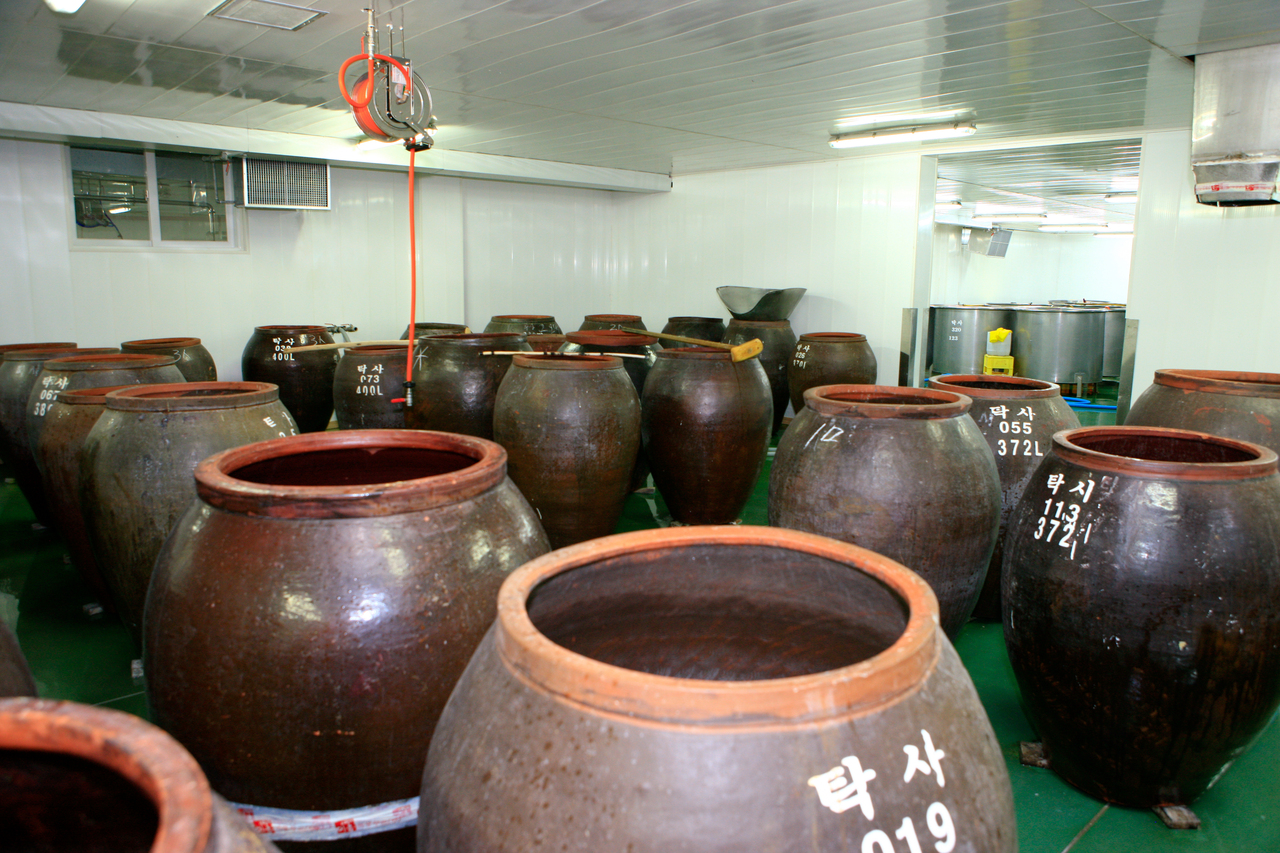
Nearly every part of Korea developed local breweries because fresh, unpasteurized makgeolli historically did not travel well. Water can influence fermentation and mouthfeel, but “terroir” is only part of the story. Grain variety, nuruk or cultured starter, rice preparation, fermentation temperature, filtration, dilution, carbonation, sweeteners, and cold-chain logistics often make an even larger difference.
| Place or Style | Why It Is Interesting |
|---|---|
| Yangpyeong (양평): Jipyeong Makgeolli (지평막걸리) | A local brewery founded in 1925 that grew into a national name; wheat makgeolli recalls the era when rice brewing was restricted. |
| Ganghwa (강화): Geumpung Brewery (금풍양조장) | A multigenerational brewery in a historic 1930s building, now associated with local rice and hands-on visitor programs. |
| Ulsan (울산): Boksoondoga (복순도가) | A modern premium example known for lively bottle fermentation, pronounced carbonation, and a fruit-forward impression. |
| Haenam (해남): Haechang Makgeolli (해창막걸리) | A rich southern style widely sought for generous rice character and a comparatively dense texture. |
| Pocheon (포천) and Gapyeong (가평) | Pocheon has a long modern reputation for makgeolli, while pine-nut versions reflect Gapyeong’s famous local crop. |
| Gongju (공주) and Udo (우도) | Chestnut makgeolli in Gongju and peanut makgeolli on Jeju’s Udo use crops strongly associated with their destinations. Many current versions are tourism-era specialty products rather than unchanged ancient recipes. |
| Bongpyeong (봉평) and Jindo (진도) | Buckwheat connects Bongpyeong products to a famous Gangwon State (강원도) crop, while turmeric gives some Jindo makgeolli a striking golden color. Recipes and the percentage of local ingredients vary by maker. |
A useful distinction is between a historic local brewing lineage and a modern drink flavored with a local crop. Both can be enjoyable; they simply tell different stories.
Nuruk: The Microbial Heart of Korean Sool
Nuruk (누룩) is often translated as “fermentation starter,” but that modest phrase hides its complexity. Traditional nuruk is made by moistening crushed wheat, rice, barley, or other grain, pressing it into cakes or blocks, and allowing a community of microorganisms to grow under controlled conditions. Molds provide starch-breaking enzymes, yeasts create alcohol and aroma, and lactic-acid bacteria contribute acidity and microbial stability.
This allows saccharification and alcoholic fermentation to proceed together: starch becomes sugar while sugar becomes alcohol. Brewing science calls this multiple parallel fermentation. Traditional nuruk may contain diverse molds, yeasts, and bacteria, so it behaves more like a managed grain ecosystem than a packet of one commercial yeast strain. A sourdough starter is a helpful analogy for English-speaking readers, although the organisms, substrate, and purpose are not identical.
| Starter System | Main Approach | Likely Flavor Effect |
|---|---|---|
| Traditional nuruk | Mixed microbial community develops on a grain cake | Potentially earthy, nutty, fruity, tangy, and highly variable |
| Japanese koji | Selected mold is cultivated on steamed grain, usually with added yeast later | Predictable enzyme activity and a clean, controlled profile |
| Modern Korean ipguk | Selected mold is cultured on individual grains for reliable production | Consistency and efficient fermentation; common in commercial brewing |
These are tendencies, not a quality ranking. Some excellent modern Korean drinks combine cultured starters, selected yeast, and precise temperature control. Others emphasize traditional nuruk for complexity. The fermentation vessel matters too. Earthen jars can help manage temperature and gas exchange, a broader material culture explored in Onggi: The Science Behind Korea’s Traditional Breathing Pottery.
Beyond Soju and Makgeolli: Other Korean Drinks
If you only order soju and makgeolli, you miss the middle of the Korean alcohol spectrum—the clear fermented wines, seasonal brews, flower-scented drinks, and fortified liquors that once displayed a household’s skill.
| Drink | What It Is | Flavor and Context |
|---|---|---|
| Yakju (약주) / cheongju (청주) | Clear fermented grain liquor separated from sediment | Can be dry, sweet, floral, or savory. Despite the word yak, modern yakju does not automatically contain medicinal herbs. |
| Gyeongju Gyodong Beopju (경주교동법주) | A clear rice wine preserved by Gyeongju’s Choi family tradition | Rich rice sweetness, gentle acidity, and layered fermentation aroma. |
| Hansan Sogokju (한산소곡주) | A strong, often sweet clear rice wine from Seocheon (서천) with recipes documented in Joseon sources | Glutinous-rice richness and a long finish; its Baekje-refugee origin is a cherished local legend rather than a fully verifiable production record. |
| Myeoncheon Dugyeonju (면천두견주) | A glutinous-rice wine scented with edible azalea petals | Floral, sweet, and associated with spring in Dangjin (당진). Only correctly identified edible azaleas belong in brewing. |
| Gwahaju (과하주) | Fermented rice wine fortified with distilled soju | Historically designed to survive hot weather; Korea’s answer to the logic of fortified wine. |
| Omegisul (오메기술) | A Jeju fermented drink traditionally based on millet and local nuruk | Soft, earthy, and tied to Jeju’s grain ecology; it can become the base for distilled gosori-sul. |
| Gamhongro (감홍로) | A reddish, aromatic distilled liquor historically associated with Pyongyang and flavored with spices and medicinal botanicals | Sweet, warming, and highly perfumed; recipes and reconstructed versions differ. |
| Juknyeokgo (죽력고) | A Jeolla region (전라도) spirit made with juknyeok, liquid obtained by slowly heating bamboo, combined with distilled liquor and aromatics | Herbal, smoky, cooling, and gently bittersweet. |
| Bokbunja-ju and maesil-ju | Black raspberry and green-plum drinks made by fermentation or infusion, depending on the product | Fruity and often sweet. Read the label: “fruit wine” and fruit-infused liqueur are not the same process. |
Igangju, Gamhongro, and Juknyeokgo are frequently introduced as the “three great liquors of Joseon.” That familiar grouping was popularized by historian and writer Choe Nam-seon in the 20th-century book Joseon Sangsik Mundap; it should not be mistaken for the result of an official Joseon-era competition.
National heritage status also needs precision. Munbaeju, Myeoncheon Dugyeonju, and Gyeongju Gyodong Beopju were nationally designated as three traditional liquor-making heritages in 1986. Other important drinks may be protected through provincial heritage designations or Korean Food Grand Master recognition. Such status belongs to a transmitted method, holder, or community—not automatically to every commercial bottle using a famous regional name.
Dongdongju deserves special caution. The name evokes rice grains floating “dongdong” on the surface, but restaurant usage is inconsistent. It may mean a rustic rice brew, a clearer top portion, or simply a makgeolli-like house drink. Ask whether it is sweet, cloudy, filtered, and house-made instead of relying on the name alone.
Rituals, Hospitality, and Korean Drinking Culture
Korean alcohol historically connected the living, the ancestors, the agricultural calendar, and the guest table. Clear, carefully made rice wine was suited to ancestral rites; households prepared special recipes for weddings or holidays; farmers shared cloudy liquor with food; and distilled spirits welcomed important visitors. Brewing knowledge was often maintained within families, frequently through women whose culinary manuscripts preserved recipes that official political histories ignored.
At the table, a few customs remain useful:
- Pour for another person with two hands, or support your pouring arm with the other hand in formal company.
- Receive a drink with two hands when the other person is older or the setting is formal.
- Turning slightly away to drink in front of a much older person is a traditional gesture, not a requirement among casual friends.
- A “one shot” is never necessary. It is acceptable to sip, keep the same glass partly full, or say you are drinking slowly.
- Sharing one glass around the table is an older custom that can be declined for hygiene or personal comfort.
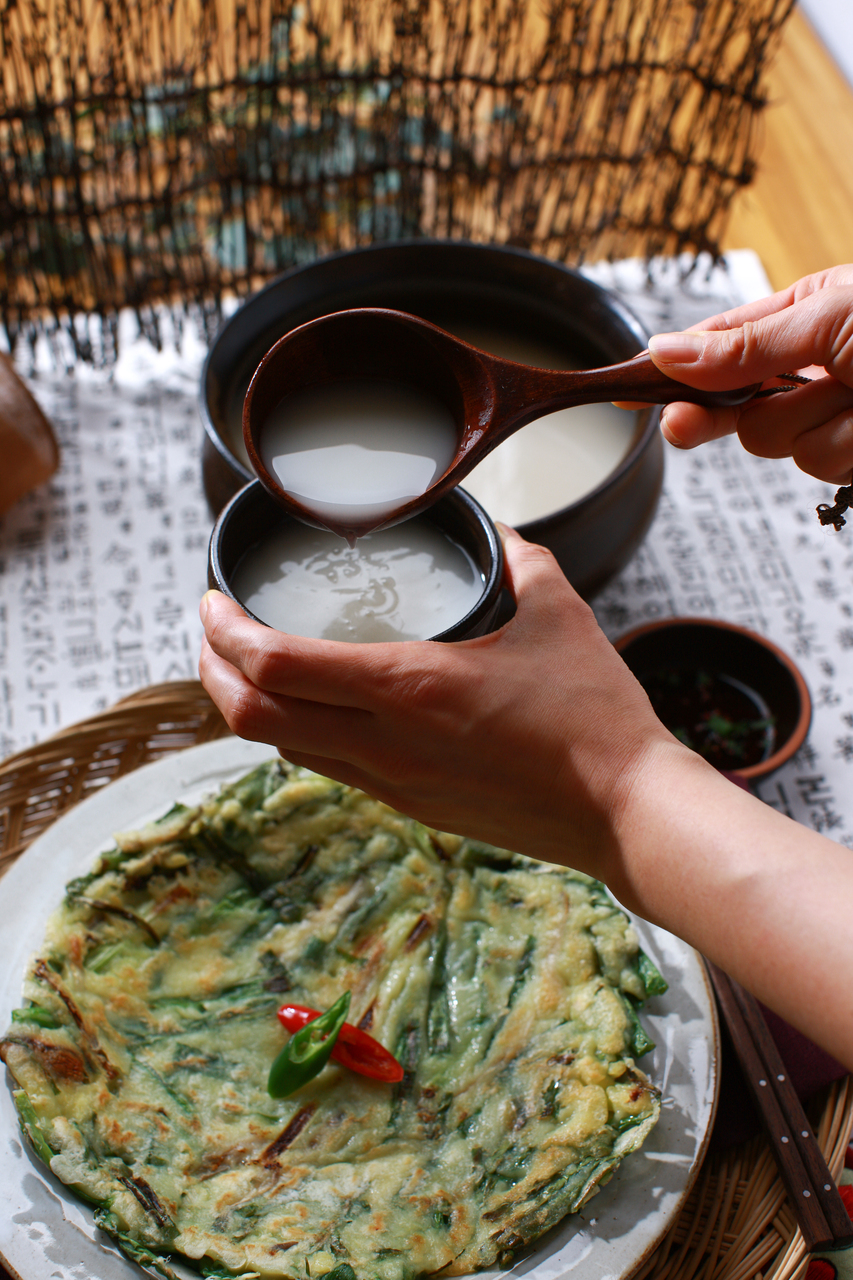
Makgeolli with pajeon on a rainy day is one of Korea’s favorite sensory pairings: the sound of rain is popularly compared to batter sizzling in oil. Traditional alcohol also works beyond old formulas. Dry yakju can accompany raw fish or vegetable dishes, rich makgeolli can handle spicy pancakes and pork, and distilled soju can be sipped with grilled meat, aged cheese, or nuts.
Like pansori storytelling, Korean drinking culture is social and responsive: the setting, food, season, and people at the table matter as much as the object itself.
The Modern Revival: Heritage, Craft, and New Rules
Colonial liquor taxation and licensing, industrial consolidation, war, and food policy severely reduced the diversity of household brewing. Revival did not happen through one dramatic rediscovery. It grew through cultural-heritage designation, the work of surviving brewing families, research into old cookbooks, the return of grain-based distilling, and gradual regulatory reform.
The approach to the 1986 Asian Games and 1988 Seoul Olympics encouraged the government to identify regional liquors that could represent Korea to visitors. During the 1990s, restrictions on using grain for distilled spirits were relaxed further, making commercial revival more practical. New small-scale licensing rules later lowered some entry barriers, while legally recognized traditional liquor gained access to broader online sales channels from 2017.
That online privilege helps explain why the legal meaning of “traditional liquor” matters. Under Korean policy, it generally covers alcohol made by designated heritage holders or food masters, and qualifying regional-specialty alcohol made primarily with agricultural products connected to the producer or neighboring area. It does not include every drink marketed with traditional imagery, and even a historically familiar brand may fall outside the statutory category.
The current craft movement includes both reconstruction and invention. Some brewers reproduce recipes from Joseon manuals; others use local rice and nuruk with temperature-controlled equipment; still others add basil, tea, coffee, hops, or seasonal fruit. Artificial sweetener-free products are increasingly visible, but this is not universal and is not the sole measure of quality. A modern flavored makgeolli can be creative without being an ancient regional recipe.
Where to Experience Traditional Korean Alcohol
Begin in Seoul
The Sool Gallery (전통주갤러리) in Bukchon (북촌) is the easiest orientation point for international visitors. It introduces bottles from across the country and runs themed tastings, including selected English-language sessions. Programs, languages, and reservation rules change, so check The Sool before visiting rather than relying on an old blog schedule.
Next, book a traditional-alcohol bar or pairing restaurant in neighborhoods such as Insadong (인사동), Seochon (서촌), Bukchon (북촌), or Eulji-ro (을지로). Search terms such as 전통주 바, 우리술, and 전통주 페어링 work well on Naver Map. A specialist bar can serve several 50–100 milliliter pours, which is far more useful than buying full bottles blindly.
Make a brewery part of the trip
- Andong: Compare regional distillers and visit the Andong Soju & Traditional Food Museum (안동소주·전통음식박물관). Combine it with Andong’s head houses and Confucian heritage to understand why ritual brewing survived here.
- Pocheon: Sansawon (산사원) offers an extensive introduction to traditional alcohol and aging culture, with exhibits and tastings.
- Dangjin: Shinpyeong Brewery (신평양조장) and the Myeoncheon Dugyeonju tradition connect local brewing with hands-on programs.
- Ganghwa Island: Geumpung Brewery (금풍양조장) pairs a historic brewery setting with contemporary rice makgeolli.
- Seocheon: The Hansan Sogokju Gallery (한산소곡주갤러리) lets visitors compare products from a region with many small producers.
📌 Local Note: Brewery tours in Korea are often small, reservation-based, and conducted mainly in Korean. Confirm the date, language, minimum group size, tasting availability, and transportation before making a long detour. Never plan to drive after a tasting.
A First-Tasting Plan and Practical Tips
For a balanced introduction, try four small pours in this order:
- A dry or lightly sweet live makgeolli to understand grain, acidity, sediment, and carbonation.
- A clear yakju or cheongju to see what refinement and separation do to a related fermented base.
- A traditional distilled soju around 25% ABV for an approachable comparison with diluted soju.
- A higher-proof Andong Soju, Munbaeju, or Igangju sipped slowly for aroma and finish.
Then compare one familiar green-bottle soju. The point is not to declare the mass-market version “fake.” Diluted soju is a genuine product of Korea’s 20th-century food shortages, industrial growth, restaurant culture, and desire for an affordable national drink. It simply represents a different chapter.
How to read a Korean bottle
- 생: live or unpasteurized; keep refrigerated and open carefully.
- 살균: pasteurized for greater stability.
- 탁주: legally labeled cloudy fermented liquor.
- 약주 / 청주: clear fermented liquor categories; the production rules are not identical even if English menus call both “rice wine.”
- 증류식 소주: distilled soju.
- 원재료명: ingredients list. Look for rice origin, nuruk or cultured starter, sweeteners, fruit, and other additions.
- 알코올: alcohol by volume. Never assume a traditional-looking bottle is low-proof.
For a hotel picnic, buy one live local makgeolli, one pasteurized bottle you could take home, and simple anju such as jeon, tofu with kimchi, sliced pork, or nuts. Department-store liquor sections and specialist bottle shops usually offer better explanations than a convenience store. If buying a souvenir, confirm your airline and destination-country rules; live makgeolli can leak, continue fermenting, and require refrigeration.
Korean online shops can be useful for locating small-batch bottles, but domestic age verification, a Korean payment method, and a deliverable local address may be required. For a short visit, a specialist bottle shop or reserved tasting is usually simpler.
Traditional Korean Alcohol FAQ
Is soju Korean vodka?
No. Diluted soju can resemble light neutral vodka after blending, but traditional distilled soju begins with a Korean grain fermentation and may preserve strong cereal, fruit, and nuruk aromas. Its history, serving culture, and common alcohol strength are also different.
Is makgeolli always rice wine?
No. Rice dominates the modern market, but wheat, barley, millet, and other grains have been used. “Rice wine” is convenient English shorthand, not a complete definition.
Is makgeolli probiotic?
Unpasteurized products may contain living microorganisms, while pasteurized products generally do not. Strains and survival vary, and drinking alcohol should not be treated as probiotic therapy or a health intervention.
Is rice-based Korean alcohol gluten-free?
Not necessarily. A rice drink may use wheat-based nuruk, and shared equipment can also matter. Anyone with celiac disease or a serious wheat allergy should rely on explicit certified labeling or direct confirmation from the producer.
Should makgeolli be shaken?
Gently mix it if you want an even, creamy pour, but do not shake a carbonated live bottle hard. Open it cold and slowly. You can also taste the clearer top and sediment-rich bottom separately.
What is the best traditional Korean drink for a beginner?
Start with a balanced live makgeolli or a fragrant yakju, then move to a lower-proof distilled soju. Sweet fruit makgeolli is easy to enjoy, but it may teach you more about flavoring than about the grain-and-nuruk foundation of traditional brewing.
Is every craft makgeolli legally classified as traditional liquor?
No. “Craft,” “traditional method,” and the statutory Korean category of traditional liquor are different ideas. A small brewery can make an excellent nuruk-based drink without meeting the legal requirements tied to a heritage holder, food master, or qualifying regional agricultural product.
Continue Exploring Korean Traditional Culture
Korean alcohol makes more sense when viewed beside the crafts, music, painting, and ritual objects that once shared the same household and ceremonial spaces:
- Explore aristocratic Buddhist aesthetics in Goryeo Buddhist Paintings: Korea’s Rarest Art Treasures.
- See how patient materials become luminous art in Najeonchilgi: The Art of Korean Mother-of-Pearl Lacquerware.
- Follow changing artistic lineages in History of Modern Korean Traditional Painting & Masters.
- Enter the sound world of ritual and hierarchy through The Acoustic Philosophy of Joseon: Royal Court Instruments of Korea.
- Discover the symbolism of historic weapons in The Real Sword of K-Pop Demon Hunters: Saingeom History.
- Read how practical objects became status symbols in Traditional Korean Fans: History, Art, and Cultural Meaning.
- Meet the ideals behind scholar painting in Understanding Muninhwa and Korea’s Scholar Artists.
The best conclusion is a tasting, not a definition. Order one cloudy brew, one clear brew, and one distilled spirit; ask what grain and starter each producer used; and notice how dramatically three branches of Korean sool can differ. Beyond the green bottle is not one forgotten drink, but an entire fermentation culture coming back into view.
Korean Culture portal KCulture.com

Founder of Kculture.com and MA in Political Science. He shares deep academic and local insights to provide an authentic perspective on Korean history and society.