Men of the Bath House: The 1990s K-Drama That Made Everyday Family Life Feel Epic
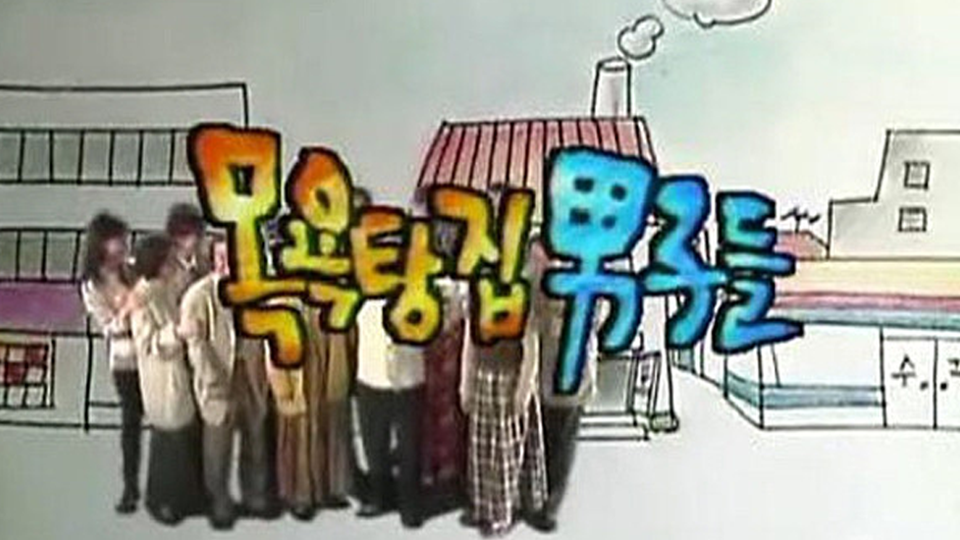
Men of the Bath House (목욕탕집 남자들) is one of the defining Korean family dramas of the 1990s. Set around a public bathhouse run by Kim Bok-dong and his extended family, the 1995–1996 KBS2 weekend series turns ordinary domestic life—marriage, work, money, pride, divorce, and generational conflict—into absorbing television. Written by acclaimed screenwriter Kim Soo-hyun, it remains a vivid portrait of a family negotiating the rapid social changes of its era.
- Introduction & Synopsis
- The Bathhouse as a Cultural Hub
- The Art of Everyday Life
- Why It Became a National Phenomenon
- Cast Spotlight
- Viewing Guide
- Final Verdict
Introduction & Synopsis
Aired on KBS2 from November 18, 1995, to September 1, 1996, Men of the Bath House follows the large Kim family, whose patriarch Kim Bok-dong has spent decades operating a neighborhood public bathhouse. The bathhouse is not merely the family business: it is the setting through which the drama observes the pressures, arguments, compromises, and affection that shape several generations living closely together.
The story does not depend on a single hero or an elaborate mystery. Instead, it moves through the lives of parents, adult children, spouses, and younger family members as they confront changing expectations around romance, marriage, careers, independence, and filial responsibility. That ensemble approach is precisely what gives the drama its lasting warmth and emotional range.
The Bathhouse as a Cultural Hub
For many international viewers, a neighborhood public bathhouse may seem like an unusual setting for a major family drama. In Korea, however, the mokyoktang was long more than a place to wash. Before private bathrooms became standard in modern apartment homes, public bathhouses were practical facilities and familiar neighborhood gathering places.
By the mid-1990s, private bathrooms were increasingly common, and traditional bathhouses were already facing gradual change. The drama captures that transition without treating the bathhouse simply as nostalgia. It is a working business, a social crossroads, and a place where characters meet without the distance created by offices, status, or formal family occasions. The setting also reflects jeong (정), the deep sense of attachment and accumulated care that often binds people through daily contact rather than grand declarations.
Narrative Analysis: The Art of Everyday Life
The strength of Men of the Bath House lies in its attention to daily life. Kim Soo-hyun’s dialogue is fast, observant, and frequently funny, allowing family members to reveal themselves through interruptions, complaints, silences, and small acts of consideration. The conflicts can be sharp, but the drama does not divide its world into simple heroes and villains.
A daughter-in-law may feel unappreciated, a parent may resist a younger relative’s choices, and an adult child may want a life that does not fit the family’s expectations. These situations may look modest on paper, but the drama understands that such tensions can carry enormous emotional weight inside a close-knit household. Its central questions—what family members owe one another, how women’s roles were changing, and how tradition can coexist with independence—still feel recognizable today.
The Pulse of the Time: A National Phenomenon
Men of the Bath House was one of the most successful Korean television dramas of its period and is widely remembered as a classic “national drama.” Its popularity came not from spectacle but from recognition: audiences saw familiar family arguments, generational tensions, and ordinary neighborhood life reflected on screen with unusual detail.
The series also received major recognition at the 1996 KBS Drama Awards, where Kang Bu-ja won the Grand Prize for her performance. Its success helped confirm the continuing power of the Korean weekend family drama, a format that would remain central to television culture even as Korean dramas later became more internationally oriented.
Cast Spotlight: An Ensemble of Legends
The drama’s impact depends heavily on its exceptional ensemble rather than on a single star.
- Lee Soon-jae as Kim Bok-dong: The family patriarch and longtime bathhouse owner. Lee gives Bok-dong authority, stubbornness, comic timing, and a deep attachment to the family he struggles to manage.
- Kang Bu-ja as Lee Ki-ja: Bok-dong’s wife and the emotional center of the household. Her performance balances practical resilience with the frustrations and tenderness of a woman holding a large family together.
- Jang Yong as Kim Bong-soo and Go Doo-shim as Jang Young-ja: As an older son and daughter-in-law, they embody the pressures placed on the generation expected to preserve family stability.
- Nam Sung-hoon as Kim Hee-soo and Youn Yuh-jung as Noh Hye-young: Their marriage adds wit, tension, and a more openly modern perspective to the family’s changing dynamics.
- Kim Hee-sun, Bae Jong-ok, Lee Jin-woo, and Kim Sang-joong: The younger and extended-family storylines helped the drama explore romance, divorce, career ambitions, and changing ideas of adulthood in 1990s Korea.
Global Viewing Guide
Because this is a long mid-1990s weekend drama, international availability can vary by country and change over time. KBS maintains official programme and episode information in Korea, but English-subtitled access is not consistently available across every region or streaming service.
For viewers who find a licensed version, the best approach is to watch it as a family chronicle rather than as a fast-moving binge drama. Its pleasure comes from the accumulation of relationships and from seeing how seemingly small domestic conflicts develop over time.
Final Verdict
Men of the Bath House remains essential viewing for anyone interested in the foundations of modern K-drama. It is funny, emotionally precise, and deeply rooted in the lived texture of 1990s Korea. More importantly, it shows why family dramas could become cultural events: they made viewers feel that their own parents, siblings, neighbors, and arguments had found a place on television.
For international viewers, the series is also a valuable introduction to the family-centered storytelling, rapid dialogue, and social observation that continue to shape Korean television. Step into the steam, meet the Kim family, and let this classic reveal the drama in everyday life.
“`

The KCulture Editorial Team is dedicated to providing deep insights and accurate information about the vibrant world of Korean culture.