An Earth-Oven Masterpiece
Imagine a dish so special it requires hours of preparation and is cooked inside the very earth itself. Welcome to the world of Jinheuk-gui, Korea’s spectacular clay-roasted duck. This isn’t your everyday meal; it’s a culinary event reserved for celebratory feasts, important family gatherings, and impressing honored guests. Often found in specialty restaurants that dot the Korean countryside, Jinheuk-gui is a ‘boyangshik’—a restorative, nourishing meal meant to boost vitality. Its flavor profile is a testament to the beauty of simplicity: deeply savory, incredibly tender, and surprisingly light, allowing the natural essence of the ingredients to take center stage.
Ingredients & Flavor Profile
Key Ingredients
The magic of Jinheuk-gui lies in a harmonious blend of simple, high-quality ingredients:
- Whole Duck: The star of the show, selected for its rich flavor and tender meat.
- Sticky Rice (Chapssal): Stuffed inside the duck, it soaks up all the delicious juices as it cooks, becoming wonderfully fragrant and chewy.
- Nuts: A medley of nuts such as chestnuts, ginkgo, and jujubes are often mixed with the rice, adding a delightful texture and earthy sweetness to every bite.
The Secret of Taste
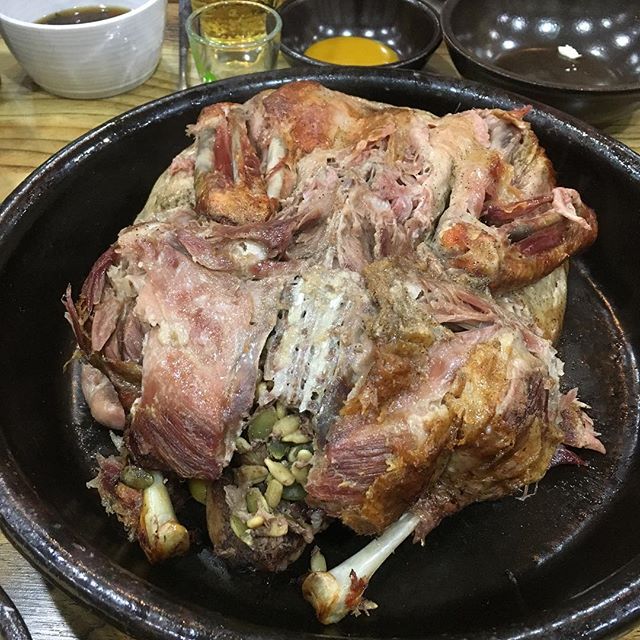
You might be surprised to learn that the primary seasoning for this elaborate dish is simply salt. The true secret isn’t in a complex sauce, but in the unique cooking method. By encasing the duck in clay and slow-roasting it for hours in a kiln, all the natural moisture and flavor are sealed inside. This process renders out excess fat, leaving behind incredibly succulent, fall-off-the-bone meat and skin that is unbelievably crisp. The salt perfectly enhances the rich taste of the duck, complemented by the nutty, slightly sweet stuffing inside.
Dietary Information
Jinheuk-gui is a meat-based dish and is therefore Not Vegetarian. As duck is the primary ingredient, it cannot be adapted for a vegetarian diet. Visitors with nut allergies should also be cautious and inquire with the restaurant staff about the specific types of nuts used in the stuffing, as recipes can vary.
How It’s Cooked
The preparation of Jinheuk-gui is a true labor of love and a testament to traditional Korean cooking techniques. The process begins with a whole duck, which is carefully prepared and stuffed with a flavorful mixture of sticky rice and assorted nuts. This stuffed duck is then meticulously wrapped, first in a clean cotton cloth and then entirely encased in a thick shell of mineral-rich clay, forming a sort of natural, earthy oven. The entire clay parcel is placed into a scorching hot kiln (gama) and left to bake slowly for several hours. This ancient, slow-cooking technique steams the duck from the inside out, making the meat exceptionally tender while allowing the clay to draw out excess oil. The dramatic moment comes when the hardened clay shell is cracked open at your table, releasing a cloud of aromatic steam and revealing the perfectly cooked golden-brown duck within.
This is a standard method based on general recipes. Every restaurant has its own secret twist and unique style!
Nutritional & Health Benefits
Beyond its incredible taste, Jinheuk-gui is revered in Korea for its health-giving properties. Here are a few benefits:
- High-Quality Protein: Duck is an excellent source of protein, essential for muscle repair and building energy. The slow-roasting method makes it more digestible while reducing the overall fat content.
- Stamina Boosting: The combination of protein from the duck, complex carbohydrates from the sticky rice, and healthy fats and minerals from the nuts makes this a powerful dish for restoring strength and fighting fatigue.
- Rich in Nutrients: Depending on the nuts used, the stuffing can be rich in vitamins and minerals like iron, magnesium, and vitamin B, contributing to overall wellness.

The KCulture Editorial Team is dedicated to providing deep insights and accurate information about the vibrant world of Korean culture.